Author: FijiDream Admin

  • Is Seventh Heaven Fiji the Perfect Honeymoon Destination?

    Is Seventh Heaven Fiji the Perfect Honeymoon Destination?

    A honeymoon comes with its own kind of planning. There’s no group to manage, no long list of preferences to balance — just the two of you and what feels right. The focus shifts to just the two of you and what makes the trip feel special. And if you’ve ever googled honeymoon spots in Fiji, you already know the usual results. Every search shows the usual stuff — calm beaches, bright water, and luxury places. Pretty, sure, but it eventually feels like you’re looking at the same picture on repeat. A distinct alternative eventually surfaces in these searches. This image departs from the standard. It is not a shoreline or a traditional villa. Instead, it depicts a sleek, contemporary platform, isolated and adrift upon the open sea. This is Seventh Heaven Fiji. The place is featured frequently on travel blogs and social media. It looks exceptional. But its unique design prompts a practical question: is a day spent on a floating platform a suitable cornerstone for a honeymoon, or is it simply an impressive day trip? This is a reasonable doubt. Reviews from recent visitors and details from travel providers offer substantial insight. The key is to separate the compelling imagery from the actual experience. Determining whether Seventh Heaven delivers a complete romantic getaway or serves as a supplemental activity is essential for making the right choice.

    First Things First: What Even Is This Place?

    I had the same question. It’s not a hotel. You don’t check in and stay the night (at least, not on the platform itself). Think of Seventh Heaven Fiji less as a place you sleep, and more as an experience you step into. From your resort in the Mamanuca Islands, you take a short boat ride. As the boat gets closer, you see a simple two-level spot floating on the water. There’s nothing over the top about it. It’s just somewhere to chill for the day. Swim if you want, sit on the nets, eat, or do nothing at all. It’s a simple, peaceful hangout floating on the water. For a honeymoon, this concept is either genius or a bit confusing. The genius part? It offers absolute focus. No land in sight means no temptation to “go explore.” It’s just you, your person, the sun, and the sea. The confusing part? You need to pair it with a resort stay on a nearby island. It’s not your entire trip; it’s the spectacular cherry on top.

    The Honeymoon Magic: Why Couples Are Obsessed

    Let’s talk about why this place tugs at the heartstrings of so many newlyweds. It’s not just the ‘Gram.
    1. The “It’s Just Us” Feeling. This is the big one. In a regular resort, you’re sharing the beach with families, other couples, and activity groups. At Seventh Heaven Fiji, the crowd is limited, and the entire world is water. That view—360 degrees of open ocean—does something psychological. It shrinks your world down to just the two of you. Every conversation feels more intimate. Every quiet moment feels more profound. It makes you slow down and actually enjoy the moment — something you can’t get sitting on a crowded beach.
    2. Effortless Romance (You Can’t Screw It Up). Some places try too hard. Heart-shaped baths and rose petals can seem a bit much. But the romance here comes naturally. It’s in the way the afternoon sun makes the water glow. It’s in the thrill of jumping off the platform into the deep blue. It’s in deciding to leave your phones behind and just enjoy the moment. You don’t schedule the sunset — it just happens. Watching it with a drink in hand makes a Fiji honeymoon feel genuine, not staged.
    3. Playful & Chill Vibes Only. Your mood on a honeymoon can flip fast. One moment you’re up for adventure, the next you just want to rest. This place gets that. Feeling active? Grab paddleboards and race each other (or, more likely, laugh as one of you falls in). Snorkel right off the deck. Feeling lazy? The daybeds are calling. The staff are brilliant at reading the room—attentive but never intrusive. You can craft the perfect day together, moment by moment.

    Beyond Lounging: Actually Doing Stuff Together

    A common worry is, “Won’t we get bored on a platform?” From what I’ve gathered, not really. The activities are simple but perfectly curated for couples.
    • The Snorkeling is Shockingly Good. You don’t need a boat trip. Just jump off the platform. The reefs are alive with fish. Swim hand-in-hand, point out the bright ones—it’s a small adventure you enjoy together.
    • Paddleboarding for the ‘Gram (and for Fun).The water’s calm most of the time, making it easy for anyone. It’s fun, relaxing, and you get an awesome view of the platform while swimming.
    • The Main Event: Lounging. I’m calling this an activity because you’ll do it artfully. Rotating from pool to sunbed to overwater net, discussing important topics like “what should we order next?” This is the core memory you’re making.

    Planning Your Day

    Here’s the practical stuff to make it easy:
    • Getting There: Most people book through their resort or a tour. The speedboat from islands like Malolo or Mana takes about 15–45 minutes. It’s quick, fun, and already feels like the trip is starting.
    • Best Time: Go in the dry season, May to October.
    • Budget: This isn’t cheap — it’s a premium experience.

    Who Might It Not Be For? Let’s Keep It 100.

    Seventh Heaven Fiji isn’t a universal fit, and that’s okay! It might not be your vibe if:
    • You want a single, all-inclusive resort where everything is in one place. This requires a bit more logistics.
    • You truly despise other people. While not crowded, it’s a social space. If you want 24/7 utter isolation, a private island villa is a better bet.
    • Your budget is very tight. This is a splurge.

    The Final Take: Is It Your Perfect Honeymoon?

    Perfect honeymoon destination? Seventh Heaven certainly can be, but only if your version of perfect involves stunning views, total privacy, and a beautifully simple day. It’s less of a full resort and more of a brilliant, immersive event—the kind of standout memory that becomes the centerpiece of your entire Fiji honeymoon. However, as a singular day defined by a profound sense of escape and shared wonder, few alternatives compare. The romance is inherent in the environment—a sunset viewed from the edge of the ocean, the quiet companionship with no land in sight. This defines a genuine romantic getaway in Fiji. It is not a universal choice. However, for couples whose priorities align with its offering—luxurious focus over extensive activity—Seventh Heaven Fiji has the potential to surpass standard expectations and redefine a key moment of the marital journey. For many, that outcome is the ultimate goal.
  • Is South Sea Island Resort Fiji the Best Day Trip in Fiji?

    Is South Sea Island Resort Fiji the Best Day Trip in Fiji?

    The moment you walk out of the airport in Fiji is funny. One second you’re indoors, the next you’re hit with warm air, sun, and that “wow, this feels like a holiday already” kind of feeling. And almost instantly, most people start wondering how quickly they can get to an island. Not everyone’s in the mood for a long island stay or a big travel mission. Sometimes you just want something quick and pretty — a little escape you can squeeze into a single day. That’s where South Sea Island Resort Fiji keeps popping up. Tour desks mention it. Travelers recommend it in forums. Even people who’ve only heard about Fiji seem to recognize the name. It’s one of those islands that gets described as cute, colorful, and very easy to visit — basically a little slice of paradise without much effort. Many travelers still debate it. Is it truly the best Fiji day trip, or just the easiest one to plan? Let’s break down what the island offers and see if it holds up.

    Why South Sea Island Resort Fiji, Is So Popular

    One of the first things that sets South Sea Island Resort apart is something straightforward: it’s close. The boat ride from Port Denarau is quick. Before you know it, you’re stepping onto the sand. For anyone who doesn’t want to spend half the day on boats and traveling, that makes it really easy. Another reason is its tiny size. The island is tiny. You can walk all the way around in a few minutes, and everything you need is right there. Instead of choosing between “the beach on this side” or “the beach on that side,” you just pick a spot and enjoy the same blue ocean all around you. And because the island is often sold as an all-inclusive Fiji day trip, you don’t have to keep reaching for your wallet. The convenience factor is real — snorkeling gear is included, the drinks flow easily, and the lunch setup usually covers a wide mix of options. People like not having to calculate whether every little thing costs extra. All these small reasons stack up and help explain why so many travelers pick South Sea Fiji without overthinking it.

    What You Can Actually Do on South Sea Island Fiji

    Here’s what most people end up trying:

    Snorkeling and Marine Life

    The go to activity is snorkeling for almost everyone. Beginners find it easy. A short swim from the shore leads to fish and coral. Unlike other Mamanuca Islands, this area is more accessible. The reef is easily accessible without a boat.

    Kayaking and Paddleboarding

    These are part of the day pass. You can hop on a kayak or board and just float around. The island’s tiny, so you won’t drift far. It feels calm and simple, and the water is nice to look at from up close.

    Just Laying

    You are under no obligation to do anything. A lot of folks simply sit in the shade. Some put their feet in the water. Some read a book. Somate, just look at the ocean. It’s quiet. It’s slow. That’s the whole point.

    Cultural Entertainment

    Most day-trip packages include a bit of Fijian culture — singing, dancing, or short demonstrations. It’s not a long, formal show. It’s more like a warm introduction to local traditions, and it adds a friendly touch to the experience.

    What Makes It Stand Out From Other Fiji Day Trips?

    1. The size

    The tiny footprint makes everything feel close-knit. You don’t spend time figuring out where things are. You just go from swimming to lunch to a drink to another activity without much effort.

    2. The atmosphere

    There’s a relaxed, social energy. People chat, kids play, travelers mix without trying. You can keep to yourself if you want, but the island naturally feels a little more friendly than larger resorts.

    3. The all-inclusive setup

    South Sea Island Resort, Fiji, keeps things straightforward — you arrive, and everything is ready.

    4. Time efficiency

    For anyone with limited time in Fiji south sea Island, it’s honestly one of the easiest options. The short boat ride gives you more hours actually enjoying the island instead of traveling between locations.

    Before You Go

    Best Time to Go

    The ideal months tend to be from May to October.

    What You Should Pack

    A few things that really help:
    • Reef shoes (parts of the shoreline can be rocky)
    • Reef-safe sunscreen
    • A hat, sunglasses, and something light to throw over your shoulders
    • A waterproof case or camera
    • A towel
    The sun hits differently in Fiji, especially around midday, so good sun protection matters.

    Weather Reality

    You might feel a light shower even on a sunny day. It’s just the usual island weather — warm, quick, and honestly a bit refreshing.

    Duration

    If you go for the full-day trip, it usually starts in the morning, and you’re back by mid-afternoon. There are shorter trips, too, but most people end up picking the full one since the boat ride is honestly so short that you might as well stay longer.

    Facilities

    The island has the basics covered — showers, bathrooms, plenty of shade, and spots where you can just sit and unwind. It’s good for families too, although pushing a stroller through sand isn’t exactly fun.

    Who It’s For — And Who Might Skip It

    To help travelers decide, here’s a balanced breakdown of who the island suits.

    Great For:

    • First-time Fiji visitors
    • Families
    • Snorkeling beginners
    • Solo travelers who enjoy social spaces
    • Anyone with limited time who still wants the “island experience.”

    Not the Best Fit For:

    • Travelers looking for a high-end luxury resort
    • People want near-empty beaches
    • Experienced snorkelers who want deep reefs or bigger coral walls The island is nice, but it’s more about convenience and easy fun than quiet, remote spots.

    Is South Sea Island Resort the Best Day Trip in Fiji?

    So, is the South Sea Island Resort in Fiji the best choice? For a lot of people, it probably is. It’s easy to reach, the views are great, and the day is simple to manage. You don’t have to plan much. You get there, enjoy the water, have your meal, relax for a bit, and go back in the afternoon. But the experience depends on your style. If you want something high-end or very quiet, this island won’t feel that way.  Some travelers prefer something more remote. But for most visitors — families, couples, solo travelers, first-timers — it gives a good mix of the things people expect from Fiji in a short amount of time. If you want a day that’s easy and fun, South Sea Island will probably work well for you.

  • How to Experience Like a Local During Summers in Fiji

    How to Experience Like a Local During Summers in Fiji

    You’ve seen the Fiji from the brochures. Outstanding beaches, great resorts. Although it’s stunning, let’s face it: it could be anyplace in the globe. You are probably looking for the real Fiji that exists. It’s the smell of rain on hot earth and the taste of a mango so juicy you have to eat it on the grass. It is ultimately the sound of a village coming together. The greatest time to locate it in Fiji is during summers in Fiji. The islands are loud with life. The heat is heavy, the fruit is ripe, and people live outside. This isn’t about fancy tours. It’s about simple things. Eating what locals eat. Going where they go. Slowing down to their pace. If you’re ready to see Fiji, here’s how to start.

    So, What’s the Deal with Summers in Fiji Anyway?

    The summers in Fiji hit different. It’s not a harsh, baking heat. It’s a thick, green, living warmth that comes from the jungle and the sea. And those famous downpours? It’s just part of the day. The guy next to you might just smile and say, “Typical afternoon.” And he’s right. You learn pretty quickly to just enjoy the cool break. The sun comes back out, the whole place steams for a bit, and the air feels clean and new. It’s why everything is so impossibly green. This is the season of “too much.” Too many mangoes on the trees. Too many fish in the nets. And honestly, too much fun to be had indoors. This abundance makes everyone more communal. Doors are open, cooking takes place outside, and the beach becomes everyone’s garden. This vibe—this giving, cheerful, and a little crazy energy—makes a Fiji summer the ideal time to come if you want to experience the real thing.

    Where the Heck Do I Even Go?

    Skip the planned tours if you want to see the real Fiji during the summer season. Just use your senses. Follow the noise and the smells. Start with a local market. Not the hotel gift shop, but a proper one like Suva Market. Get there early. Grandmothers in vibrant robes labor quickly, sifting stacks of taro and cassava. The air smells like soil and spices. Here’s what you do: find a fruit vendor. Point to a pineapple. Let her choose one for you, then watch her chop it right there. Eat it standing up, letting the juice get everywhere. That’s a real Fijian breakfast. Next, find the “local” beach. Every resort has its perfect, groomed coastline. But the real party is often happening just a little further down. Be brave! Just ask a taxi driver where his family spends their Sunday. He’ll probably point you to a beach where local families gather. You’ll find kids playing rugby with a worn-out ball, someone’s uncle grilling fresh fish on a small barbecue, and Fijian music playing from a speaker. It’s not quiet or perfect like the resort beach. It’s louder, a bit messy, and completely real. Pull up a patch of sand and just soak it in.

    Let’s Talk About Food. Seriously, Let’s.

    If you truly want to experience Fiji as a native, you must eat like one. And summers in Fiji are an excellent time of the season for your taste senses.
    • Fruit is a Game-Changer. You haven’t tried fruit until you’ve eaten it here. We’re talking mangoes that trickle down your arm due to their ideal ripeness. And don’t be put off by the green spiky things – that’s soursop. Cut it open to find creamy white flesh that tastes like heaven.
    • You Have to Try Kokoda. Make sure you order the Kokoda. It’s fresh raw fish that gets firm from sitting in lime juice, then they mix in creamy coconut milk, onions, and a little chili. It is simultaneously chilly, rich, and crisp. After a day in the sun, it’s the most wonderful cuisine available. You’ll eventually crave it.
    • Find a Lovo. Just Do It. Look for a place doing a lovo. It’s where they cook food in a dirt oven underground. The meat gets so soft it falls apart, and everything tastes like smoke and banana leaves. Eat it with your hands. That’s how you know it’s real Fijian food.

    How to Act in Fiji: A Few Simple Rules

    This part matters. Getting it right shows respect. Getting it wrong marks you as just another tourist. The most important custom is the Sevusevu. You can’t just stroll into a village if you want to visit (which you really should). Keep in mind that you are at someone’s house. A gift of sevusevu, or kava root, is the appropriate means to gain in. You present it to the village chief. This tradition shows respect and asks for permission to visit. You’ll then likely be invited to a kava ceremony. No need to stress about the ceremony. When they pass you the coconut cup, just follow along. Clap once before you take it. Drink it all in one go—yes, the whole thing. It does taste earthy, but you’ll manage. After you drink, clap three more times and say “Bula!” with a smile. That’s it. This simple act shows your respect and helps you connect with the community. Oh, and clothing! In villages, modesty is key. Guys, gals—everyone should cover their knees and shoulders. A sulu (a sarong) is your best friend. You can buy them everywhere for a few dollars. It’s a simple sign of respect that goes a very, very long way.

    So, What Does a Local Actually Do For Fun during the summers in Fiji?

    Forget your packed schedule for a minute. Let me tell you what Fijians are actually doing this weekend while you’re rushing between tourist spots.
    • The All-Day Beach Picnic. This isn’t a “lie on a towel for an hour” situation. You’ll see whole families set up camp for the day. They bring everything – massive coolers, fold-up tables, beat-up footballs. Kids are everywhere, splashing in the water. Someone’s always grilling nearby. The food just gets passed around. People chat for hours. Nobody even looks at the time. Do this. Go to a supermarket, grab some snacks, and just post up on a local beach for the day. You’ll see what I mean.
    • Get Sweaty at a Rugby Match. You need to see a local rugby game. Here, rugby is like a religion. Ask around to find where a village team is playing. These guys play hard. Really hard. And the crowd? They live for this. Before long, you’ll be on your feet yelling with everyone else. It just happens.
    • Go Chasing Waterfalls. Want a waterfall without the crowds? The good ones aren’t on the main maps. You will require a local guide. You may anticipate mud, roots, and the sound of water leading you on this unpaved trek. You’ll see why the trip was worthwhile once you arrive.
    • Hop on a “Local Boat.”Try taking a local ferry instead of a tourist boat. It’s slower and louder, but you’ll be traveling with islanders heading home, taking goods to market, or visiting family. You’ll see the real Fiji on these boats.

    A Few Parting Shots of Advice for visiting during the summers in Fiji

    • Water is Life. Chug it. Drink water constantly. Always have a bottle with you.
    • The Sun is No Joke. Seriously, wear a hat. And sunscreen.
    • Embrace “Fiji Time.”Your schedule will go out the window. Things start when they start. Let it go. It’s incredibly liberating.

    Your Turn to Explore.

    Look, stepping outside the resort can feel a little intimidating. This is the real Fiji. Not the perfect resorts, but the messy, happy moments with real people. Sharing a kava bowl. That’s how you really experience this place. Don’t worry about seeing everything. Worry about feeling something. Vinaka!
  • The Top 7 Sweet and Savory Snacks in Fiji

    The Top 7 Sweet and Savory Snacks in Fiji

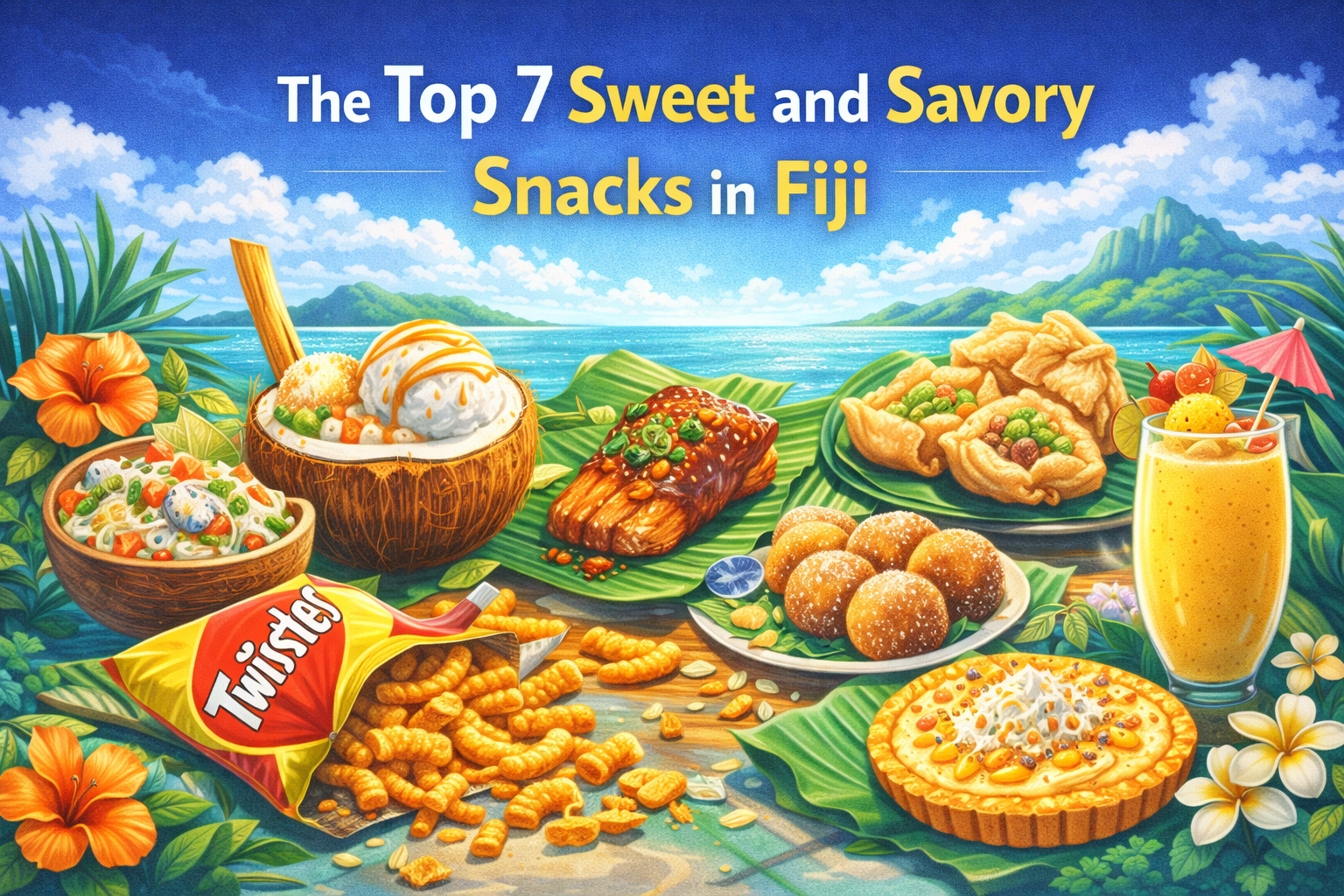
    Look, everyone shows you the pictures of Fiji’s perfect beaches. And yeah, they’re amazing. But no one tells you about the finest part: the stuff you eat when you’re not seated. I’m referring to the items you grab from a market booth because they smell too wonderful to pass up. The real travel memories? For me, they’re standing on a street corner in Suva, trying not to drip curry on my shoes from a warm roti parcel. That’s the good stuff. Finding these snacks isn’t some complicated mission. It’s actually the easiest part of your day. Just keep your eyes open. The best food isn’t at the resort—it’s in the places where life is already happening. Follow the crowd to the local market. Pop inside a bakery that appears to have been unchanged since the 1980s. And, for goodness’ sake, pull over for that modest wooden stall by the side of the road with a few items heaped up. That is where you will find exactly what you’re looking for. Snacks in Fiji have strong roots. The foundation is simple: take what the land provides—taro, cassava, coconut. Now bring in the spices, curries, and breads from Indian traditions. These styles are combined. They created a new category of local food. This is why the snacks here are unique. They are a direct mix of island and spice. You will find this blend in every popular treat. Here are the essential ones to look for.

    1. Cassava Chips

    Forget the imported potato chips. The real snack is cassava chips. The chips are sliced thin and fried so they break with a sharp crackle. The flavor is uncomplicated—mostly just the root itself with a good hit of salt, which is what makes them so easy to eat. You buy them in a paper cone at the market. They don’t get soggy, even in the island heat. This is the crunch people actually eat here.

    2. The Legendary Roti Parcel: A Flavor Hug

    Oh, the roti parcel. The roti parcel is a common handheld meal. A warm, flat roti bread is wrapped around a serving of curry. Fillings commonly include dhal, spicy potato, or minced chicken. The vapor emitted when the parcel is opened smells like cumin and turmeric. The practical design contains the filling effectively for eating without utensils.

    3. Vakalolo: A Sweet, Sticky Tradition

    Vakalolo is often overlooked on the market since it appears to be nothing more than a basic bundle in a leaf. But it is the goal. It’s just boiling taro or cassava with coconut milk until the flavors combine to produce something entirely distinct. This dessert isn’t airy and light. It’s a hearty, sweet mouthful that lets the flavors of Fijian ingredients do the talking. A true star among the unique snacks in Fiji.

    4. Babakau: Fiji’s Answer to the Doughnut

    Calling all doughnut lovers! You have to meet Babakau. Babakau are simple fried dough rounds. The texture is their main feature—airy with a satisfying chew, and far less sweet than standard doughnuts. They’re typically enjoyed, torn apart by hand while still warm, and often dipped into a morning cup of tea. It’s a common, comforting start to the day here.

    5. The Humble Bakery Pasty: A Savory Savior

    A legacy from the British, the pasty has been totally adopted by Fiji and made its own. At any nearby bakery, look for the piles of golden-brown packages. When you bite into the flaky pastry, it breaks. There may be a basic but substantial stuffing of diced potatoes, seasoned chicken or fish, and a few peas. The combination’s capacity to offer a substantial, portable, and filling snack is responsible for its popularity as a fast lunch alternative.

    6. Coconut Balls: Pure, Simple Joy

    Sometimes you just need a little sweet bite. That’s where these come in. Just two things are needed to make mitii, or coconut balls: sugar and freshly shredded coconut. Small, sticky mounds are formed by hand rolling the material. Baking is unnecessary since the sugar and coconut oils bind naturally. They are a popular choice for a rapid energy boost due to their powerful sweetness and portability, especially during the warmer hours of the day.

    7. Fried Taro: The Earthy Crisp

    We started with a chip, let’s end with one. Compared to other root delicacies, fried taro has a distinct type of crunch. The chips have a delicate, almost lacy texture and fry extremely thin and crisp. With each bite, their distinct flavor—which is slightly earthy—is increasingly obvious. Their moderate flavor and gentle texture make them simple to consume in large numbers, according to many. A bag of these, a cold drink, and a sunset? Now that’s the good life. What’s the big deal? Why do I go on about these Snacks in Fiji so much? Because they’re more than just food. They’re a connection. That roti parcel you bought from a smiling vendor, the Vakalolo shared at a village visit—these moments stick with you. Every taste seems like a true part of the culture, and the flavors are honest and fresh. Want to find the real deal? Watch where the locals go. Early morning at the market is when you get the good stuff. See a crowd? That’s your signal. Don’t stress about the language – just point. It always works. To be honest, you haven’t truly experienced Fiji unless you’ve eaten at a market stand. That’s where the true taste lies. Do not overthink it. Just try something. The food and snacks in Fiji tell the story better than any tour guide ever could. One last thing. Bring small bills. It makes buying from market stalls and roadside carts much easier. Also, carry a thermos of water with you—some of those spicy treats are best enjoyed with a cold drink. That’s about all there is to it. Good snacks are everywhere in Fiji. You just have to be willing to stop and try them. Your stomach will figure out the rest.
  • Are You Ready to Meet the Giants of Marine Life in Fiji?

    Are You Ready to Meet the Giants of Marine Life in Fiji?

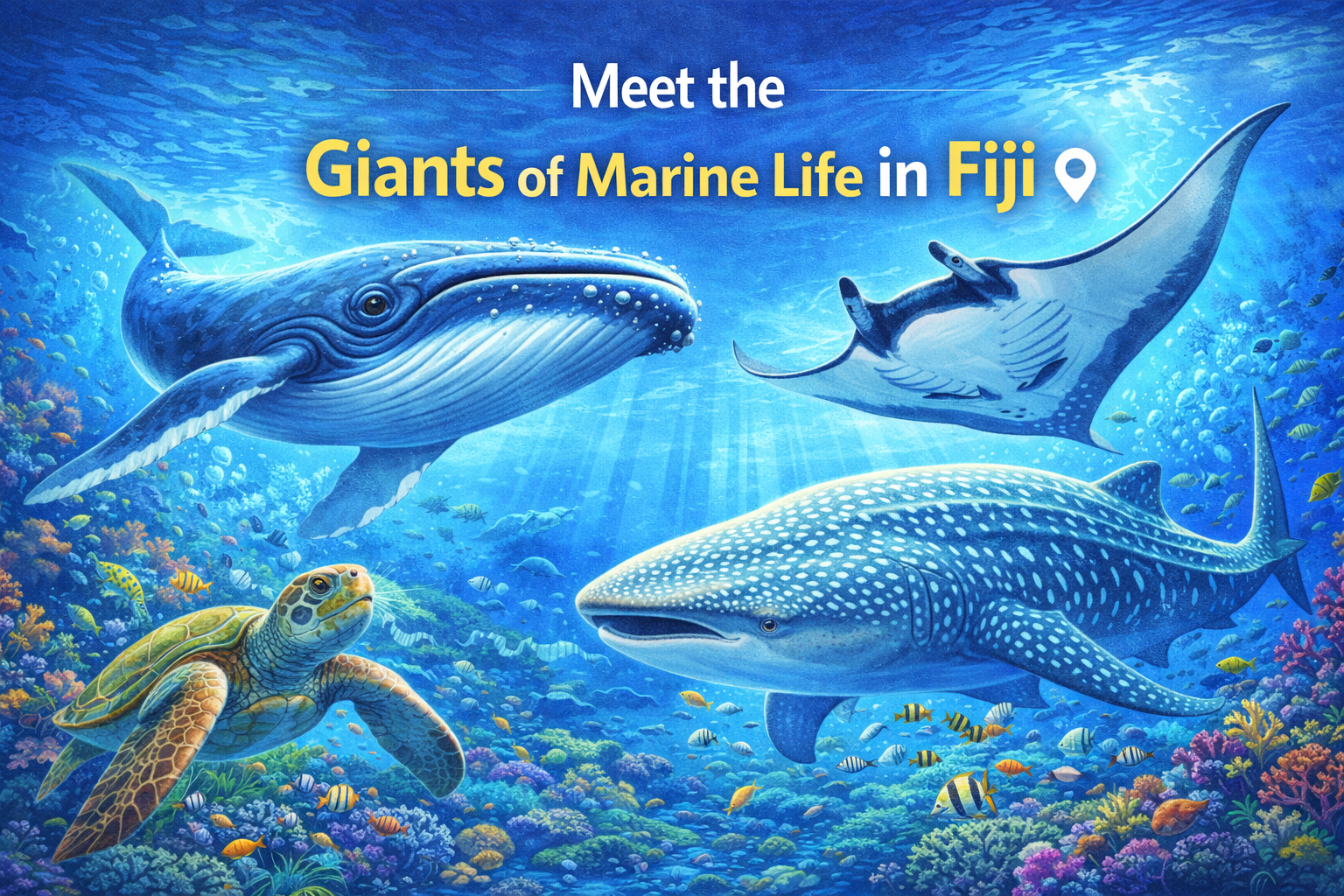
    Let us get one thing straight right now. Fiji’s ocean is not an aquarium where creatures follow a routine. It’s a real, breathing planet where enormous creatures go about their everyday existence. You are the visitor here. The guest. And what incredible hosts await beneath those famous blue waves. Imagine yourself floating there and gazing down at a vibrant coral reef. Then something shifts. The small fish scatter. A shadow falls across the reef that’s way too big to be ordinary. You suddenly realize that you are no longer the biggest object in this ocean when your heart makes that amusing little skip.

    What Makes Fiji’s Waters So Special?

    Food and shelter are the two key reasons Fiji’s seas are perfect. The entire ecosystem is fed from the bottom up by the constant influx of plankton and tiny fish brought in by the ocean currents. Concurrently, the complex undersea structure is formed by the coral reefs. This gives larger animals places to hide, hunt, and reproduce safely. It’s this combination that allows incredible marine life in Fiji to not just visit, but to truly thrive here. But here’s the real secret: Fijians take ocean protection seriously. They understand that healthy waters mean healthy animals. Those marine protected areas aren’t just lines on a map – they’re working conservation zones where fish populations can thrive without pressure. This careful balance is why your chances of encountering giants here are better than almost anywhere else.

    Finding These Creatures Takes Some Know-How

    You’ve got two choices for meeting the giants that define the marine life in Fiji. You can go it alone, or you can tap into local knowledge. Let me be direct – option two works better every single time. Local guides don’t just know where the animals are. They understand their routines, behaviors, and preferred hangouts. They understand that manta rays visit particular coral heads at various times of day to clean. They recognize the water conditions that bring whale sharks close to shore. This isn’t guesswork – it’s generations of observation and respect for the ocean. Float still. Watch carefully. So, how do you pick a good guide? It is simpler than you think. Look for small groups. A boat with fewer people is always better. Ask them what their rules are for interacting with the animals. A good guide will talk about keeping a distance. They will explain why they do not feed the wildlife. You can also read recent reviews online. Other travelers will often mention if a guide was respectful to the ocean or if they rushed the experience. This little bit of research makes a big difference. It helps you find someone who will give you a better, more genuine encounter.

    Meet the Residents You’ll Never Forget

    Now for the main event – the legendary giants of the marine life in Fiji. The whale sharks come first. The elegance with which these speckled giants glide through the water seems unattainable for anything of their size. Although they are filter feeders and pose no threat to people, swimming beside one is both exhilarating and serene. It’s similar to having an audience with underwater kings and queens. You will also witness manta rays. They don’t truly swim; they fly across the water. Their large, black wings propel them along so effortlessly that it appears easy. They stop at certain spots on the reef to get cleaned by smaller fish. It’s a quiet thing to watch. It feels old. Come July, the whales show up. These humpbacks travel to Fiji to give birth in our protected waters. You might see a mother and calf swimming together. But nothing prepares you for seeing a giant whale throw its whole body into the air. The crash when it hits the water again is like nothing else you’ve ever heard. The crash is incredibly loud. It shows you how strong nature really is. And don’t forget the regulars—the fish that live here all year. Then there are the locals. A bold, blue Napoleon wrasse will often come right up to your face. Sea turtles paddle past, never rushing. You’ll see reef sharks too. They’re not risky. They simply swim back and forth, doing their own business. They belong here and are simply going about their day.

    How Not to Be “That Tourist”

    Listen carefully, because this matters. These are wild animals, not photo props. Your behavior in their home reflects on all of us who love the ocean. Allow the animals their room. Here’s a decent rule: if the animal behaves differently because you’re around, you’re too near. It might swim off or stop eating. Do not follow it. Do not reach for it. You are a guest watching from the sidelines, not someone who gets to join in. Watch your fins. Coral isn’t rock – it’s a living animal that takes years to grow. One wrong kick can break the coral. It grows very slowly. Please watch where you put your fins. Your guide knows this water better than anyone. Your guide isn’t being difficult. Keeping you safe and keeping the animals safe are their two main priorities.  Their rules come from experience and respect.

    Why This Experience Changes People

    There’s something about looking a giant in the eye that stays with you. It’s not just a vacation memory – it’s a perspective shift. You finally understand that the magnificent marine life in Fiji is real and thriving. Some moments stick. Like locking eyes with a manta ray. Or being close enough to a whale shark to trace its spot pattern with your finger. That feeling stays with you. It’s why people keep coming back to Fiji, hoping to see these giant animals again. The boats are ready. The water’s waiting. Just walk into the water from the beach. The real magic is right below you. Your giant is out there. The only question is – are you ready to meet it?
  • Have You Tried the Popular Fruits in Fiji? What Makes Them So Unique?

    Have You Tried the Popular Fruits in Fiji? What Makes Them So Unique?

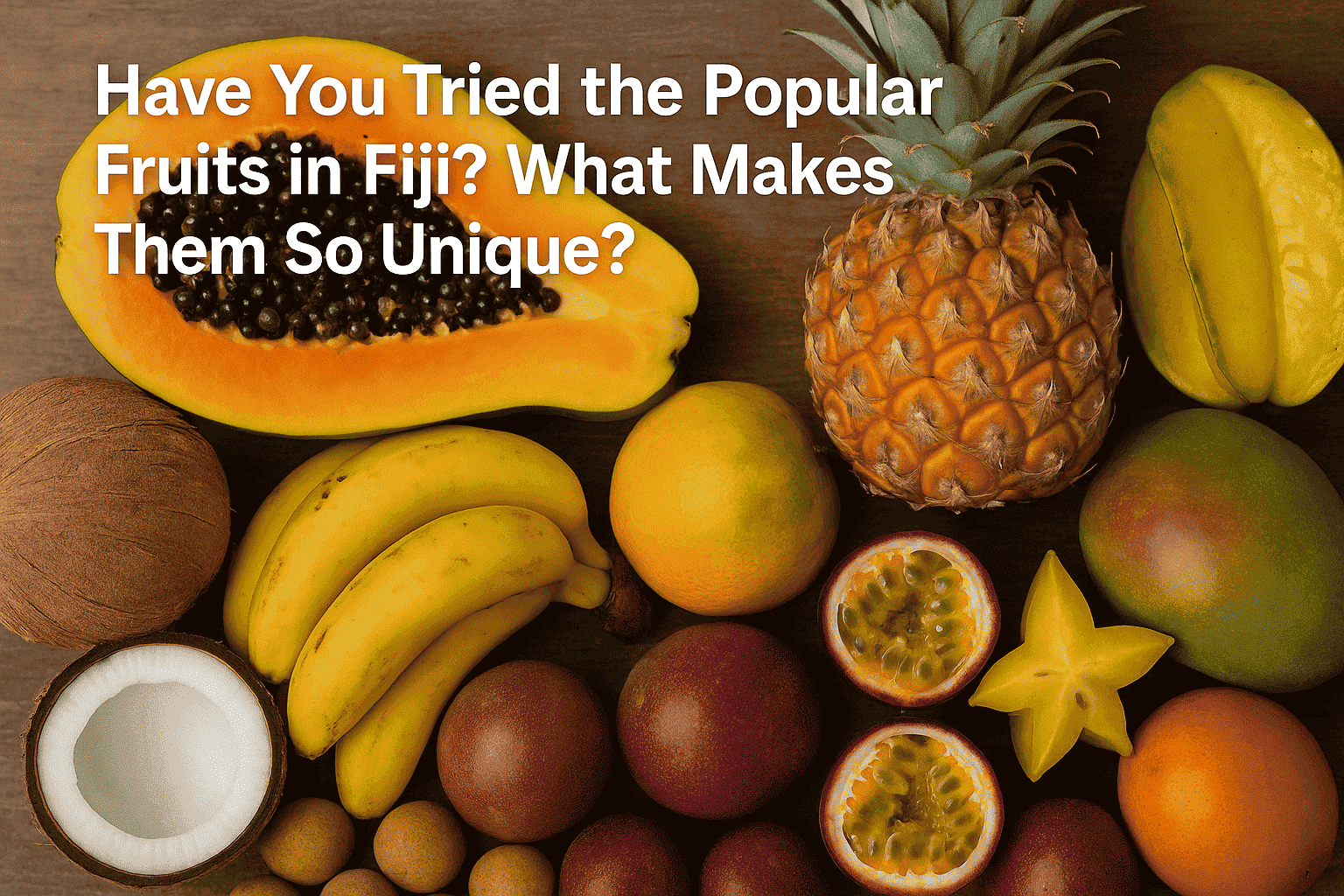
    Visitors to Fiji quickly discover a simple truth. The islands give more than simply lovely beaches. A world of diverse flavors awaits at roadside vendors and little marketplaces. A seller provides a slice of unknown fruit. The first bite reveals a taste entirely different from supermarket fruit back home. This is the authentic Fiji experience. The true essence of the islands is often found in their food. The fruits in Fiji are a central part of this discovery. They are not merely snacks. Each one provides a direct taste of the place. A Fijian mango defines tropical sweetness, its juice and flavor standing out even in a region known for fruit. This level of quality is typical for the popular fruits in Fiji, making eating them a highlight of a trip. The secret to their vibrant taste is found in the islands’ natural environment. An exploration reveals the reasons.

    It’s All in the Dirt and the Sun

    The unique quality of Fijian fruit begins with the soil. Fiji’s soil comes from volcanoes. It is rich in essential minerals for plants. The sun shines most days. It is always warm. This is what fruit needs to grow well. The fruit is picked when it is ready to eat. It is sold close by. It does not travel far. It is never put in cold storage for shipping. This means it tastes exactly how it should – like real fruit. It’s allowed to soak up every last ray of sun, developing a sweetness you can almost feel in the air. The reason that these tropical fruits of Fiji have become popular fruits in Fiji is that they don’t just taste different; they taste more: more flavor, more scent, more life.

    How Fruit Weaves Its Way into Fijian Days

    Fruit in Fiji is not merely a food item, but a constant presence in daily life. It appears in nearly every setting. Morning markets burst with activity, featuring tall stacks of papaya and bananas of various sizes, all amid the sweet smell of guava. A common gesture of welcome involves offering fresh fruit, such as a cold coconut or pineapple slice, and extending a simple and refreshing greeting. Even within upscale resorts, morning meals prominently feature displays of locally grown fruits. This deep connection means that when you try these fruits, you’re not just snacking. You’re sharing in a little piece of daily Fijian life. Ready to meet the characters in this delicious story? Here are the popular fruits in Fiji you absolutely have to get to know.

    Your Handy Guide to Fiji’s Fruit All-Stars

    Think of this as your cheat sheet for the market.

    1. Mango (Maqo):

    The king of the Fijian summer. When they’re in season, it’s a national celebration. They’re smaller, often a bit fibrous, but my goodness, the flavor is an intense, sticky, tropical punch. Eat them over the grass unless you fancy a sticky shirt for the rest of the day!

    2. Papaya (Pawpaw):

    This was my breakfast every single day. Its soft, orange flesh is subtly sweet, almost buttery. The standard way to eat papaya in Fiji is with lime. This combination makes the overall flavor brighter.

    3. Fijian Pineapple:

    This isn’t your standard supermarket pineapple. I bit into one expecting that familiar sharp tang and was blown away by pure, unadulterated sugar. It’s so sweet and low in acid that you can eat a whole lot without that prickly feeling on your tongue.

    4. Banana (Jaina):

    Forget the one variety you know. Bananas in Fiji appear in countless varieties. A perfect, natural snack for a busy day of sightseeing.

    5. Coconut (Bu):

    In Fiji, a coconut serves a direct purpose. You receive a freshly opened green coconut, providing cool water to drink and soft jelly to eat, straight from the shell. The water inside? Clean and sweet. Then you scoop out the soft jelly. It’s the real thing.

    6. Soursop (Serasera):

    Looks strange – green and spiky. But the inside is what counts. The white flesh is soft. The taste is hard to pin down. Maybe like strawberry and pineapple had a fruit. It’s strong. Good in a smoothie if you’re trying it first.

    7. Breadfruit (Uto):

    Important: don’t eat this raw. It’s not that kind of fruit. Cook it over a fire or boil it. Then it gets soft, like a fluffy potato. The flavor is plain, a bit nutty, like fresh bread. People eat it with meals instead of rice.

    Where Your Fruit Adventure Begins

    You can easily find fantastic fruit all over Fiji. Local markets offer the most authentic selection. Vendors can identify any unfamiliar fruit you point to. For a quicker stop, roadside stalls provide immediate access to fresh, sweet pineapples and coconuts. And your resort breakfast is the easiest place to start trying the local favorites. Just ask a staff member what’s good. They are usually very helpful. Fijian fruit does more than taste good—it creates a lasting impression. The unique flavors become permanently linked to the memories of where and when you tried them. The memory of trying a new fruit stays with you long after your trip is over.

    The Flavor That Stays With You

    What makes these popular fruits in Fiji so special, in the end, isn’t just the science of soil and sun. That first taste of coconut water after a hot day. The sticky, sweet mess of sharing a mango. These are the moments you take home. The flavor and the memory stick together. Long after you leave, the taste brings you right back. The flavor becomes part of the story. That’s what you actually carry home. The taste and the memory become one thing. A simple flavor can send you right back to the islands. These fruits become edible souvenirs – impossible to pack but unforgettable to carry home. The best approach is simple: choose local over familiar. Pass on the imported fruits and select something unfamiliar from a market stall. This single decision will lead to a more authentic and rewarding travel experience.
  • Top 10 Common Birds in Fiji

    Top 10 Common Birds in Fiji

    When you get to Fiji, you see pretty quickly it’s not only about the beaches. There are birds everywhere. You don’t have to go birdwatching or anything — they just show up around you. You’ll spot some bright little birds in the gardens, and then there are the seabirds that just kind of drift along the coast. This list is just to help you figure out what’s what without overthinking it.

    An Island Stage for Winged Wonders

    So, why is Fiji such a hotspot for unique birds? It ultimately boils down to real estate. These islands are beautiful, remote sanctuaries floating in a wide blue ocean. The deep forest interiors give way to tangled mangroves, which kiss the famed sandy beaches. This variety of neighborhoods supports all kinds of residents. Many of the birds in Fiji have developed into unique species as a result of their prolonged separation. You are witnessing living gems that are unique on our planet. There’s a cultural layer, too. For locals, these aren’t just “birds”; they’re part of the soundscape of life. An elder might note that a certain call means rain is coming soon. This deep, intuitive connection to nature is something you can feel, a rhythm that you, as a visitor, get to step into.

    Birding Without Trying: The Easiest Safari You’ll Ever Have

    The absolute best part? You don’t have to try to see these common birds in Fiji. You will. Full stop. They are the confident locals who know they own the place. That cheeky bird eyeing your toast at the breakfast buffet? You’ll know him. The piercing call that becomes your 6 a.m. wake-up call? You’ll learn it. They’re in the resort flowerbeds, on the power lines along the coastal road, and singing from the roof of your bure. This is birdwatching for the rest of us. You only need to be willing to sometimes look up from your reading; no special equipment is needed. Are you prepared to get to know the characters?

    The Top 10 Common Birds in Fiji

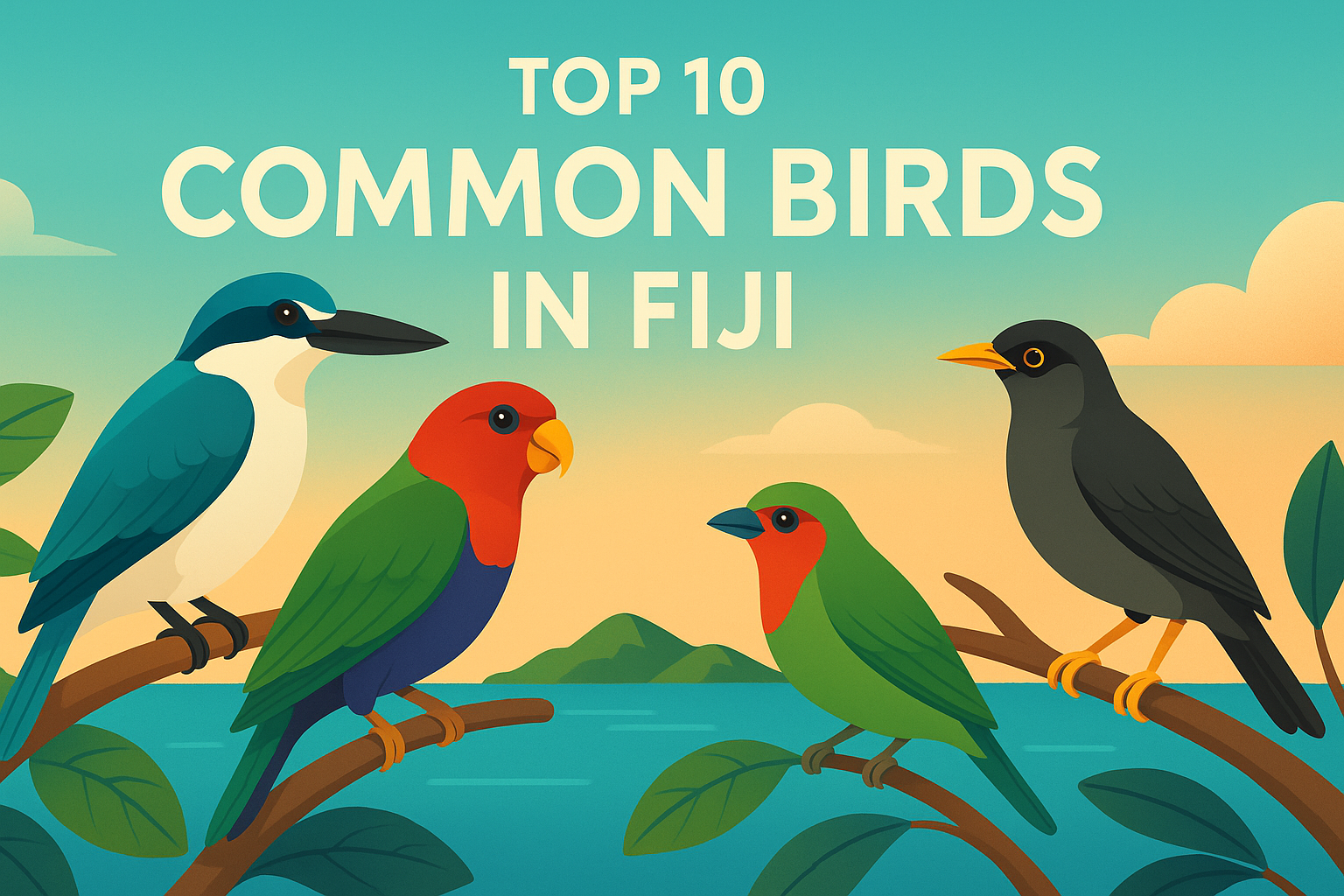
    1. The Fiji Parrotfinch: The Garden Gem

    This tiny man is so attractive. Imagine a little bird with a head dipped in crimson paint, and painted the brightest shade of green. They walk down garden walkways in happy, chatting groups, frequently at your feet, nibbling at seeds. It’s like witnessing live confetti emerge from the grass in a flock.

    2. The Orange Dove: The Forest Flame

    The first time you see one, it will always stick in my memory. It doesn’t appear real. The male is stunning, nearly bright orange, as though it had ingested a portion of the sun.

    3. The Wattled Honeyeater: The Town Crier

    You will 100% hear this bird first. It’s call is a loud, raspy, and persistent cha-klee-chak! that becomes the soundtrack to your trip. It’s a bold, charcoal-grey bird with a funny little black blob of skin (the wattles) behind its eye. They have no fear and will inspect your lunch with zero shame.

    4. The Red-Vent Bulbul: The Cheeky Newcomer

    Think of this as the common sparrow of Fiji, but with more flair. It’s sleek and brown with a cool black head and a secret splash of red under its tail (that’s the “vent”). Introduced long ago, they’ve taken over towns and gardens, and their noisy squabbles in fruit trees are a constant source of entertainment.

    5 The Fiji Woodswallow: The Sky Dancer

    Look up. On a clear day, you may witness these incredible birds flying and gliding with grace. They have a cute, tiny black mask over their eyes and a wonderful, dreamy blue-grey color. They enjoy forming a line on telephone wires, much way a choir pauses before performing their next aerial ballet.

    6. The Spotted Fantail: The Energetic Acrobat

    This bird is pure, joyful energy. It never, ever stops moving. You’ll see it in the forest, constantly flitting about, fanning its beautiful tail into a perfect semi-circle to scare up insects. It’s a tiny, spotted grey thing with a friendly white eyebrow, and it might just come check you out on a quiet trail.

    7. The White-Collared Kingfisher: The Blue Flash

    Don’t be confused if you see a stunningly blue kingfisher far from the water. This one enjoys mangroves and gardens. Its hue is an almost amazing electric turquoise, accented by a pristine white shirt front. What’s that booming, rattling cry coming from the trees? That’s probably him.

    8. The Lesser Frigatebird: The Sky Pirate

    And finally, look to the open ocean. Soaring high above is the magnificent frigatebird, a living pterodactyl. It’s a massive, black bird with long, bent wings and a forked tail. They can glide for hours without a single flap, masters of the wind. Seeing one circle your boat is a humbling reminder of the wildness of the Pacific.

    9. The Collared Lory

    This bird is the national bird of Fiji. It makes loud, sharp calls. You will often see it hanging upside down in flowering trees while it eats.

    10. The Pacific Kingfisher: The Patient Fisherman

    This bird often sits very still on fence posts or low branches. It has a blue-green back and a large head. It stays motionless while it watches for insects or lizards to eat. You will often see it near beaches, always watching and waiting.

    Your Simple Spotting Guide

    • Just Open Your Door: Your resort garden is a front-row seat. Lories, parrotfinches, and bulbuls are all regulars.
    • Listen in the Village: The Wattled Honeyeater’s call is the sound of village life.
    • Walk a Forest Trail: Even a short walk can reward you with the Spotted Fantail’s acrobatics or a glimpse of the legendary Orange Dove.
    • Gaze Seaward: Any boat trip or afternoon on a less-crowded beach will feature the soaring Frigatebirds.

    The Real Magic of Birds in Fiji

    The sight of a bright red lory or the distinct call of a honeyeater are the details you’ll remember later. These birds add life to the entire Fijian landscape. This guide should help you recognize them. Now you know what to look for. Next time a shadow moves nearby or you hear a strange call, just look up. It’s likely one of Fiji’s common birds going about its day.
  • Did You Spot These Common Flowers in Fiji?

    Did You Spot These Common Flowers in Fiji?

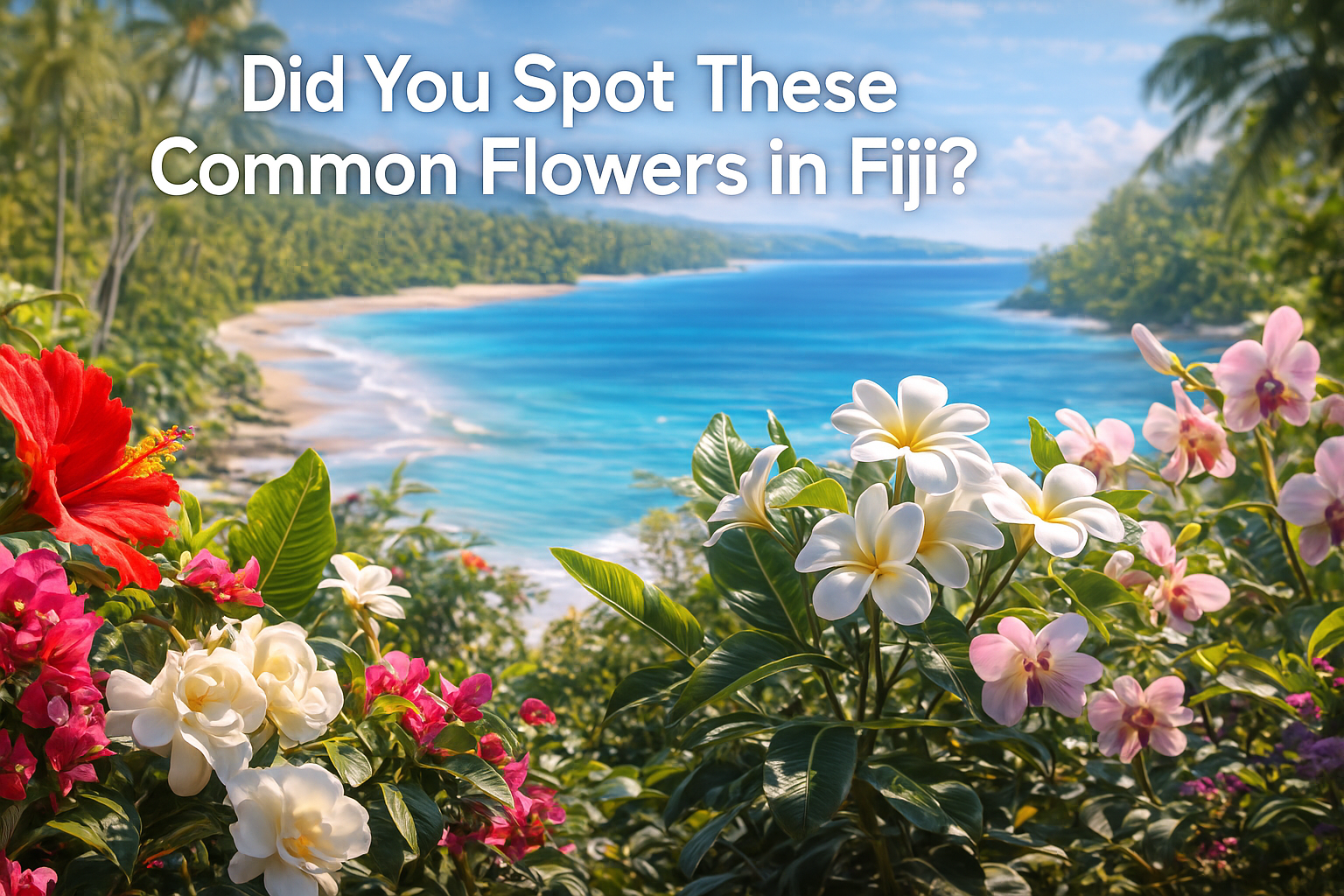
    That first moment in Fiji really gets you. The first thing you notice about Fiji isn’t only the heat on your skin. It is the fragrance. A sweet, tropical perfume from thousands of blooms hits you right away, a promise of the island’s beauty. This is your real welcome to the islands, the flowers in Fiji. And as you drive along, the view confirms it. You can’t miss the bursts of color—like that vivid pink flower spilling over a fence in a tangled, beautiful mess. A perfect red bloom smiling at you from a garden. A delicate white flower was scattered on the path. It’s pure magic. But after a day or two, you start to wonder. What are these beautiful blooms? You see them everywhere, yet they’re nameless beauties. Been admiring the flowers, but don’t know their names? This is for you. We’re not getting technical—just having a chat about Fiji’s most common blooms. Soon, you’ll be pointing them out like a local. Ready to learn who’s who?

    More Than Just Pretty Petals: Why Fiji is a Flower Lover’s Dream

    Fiji doesn’t just have flowers; it drowns you in them. And there’s a good reason for it. The islands are basically a perfect nursery for anything that wants to grow. Fiji’s climate is perfect for flowers. The sun shines most days, brief rains water everything, and the soil is fertile. Things don’t just grow slowly here—they burst out quickly and with amazing color. But what really brings the scene to life is how Fijian people wear and use these Fiji flowers. It’s part of the culture. You will often see a Fijian man with a bright red flower behind his ear as he serves your coffee. You might also receive a salusalu, a fresh flower garland, around your neck. This is a common welcome. These traditions show that flowers are part of daily life in Fiji. You’ll see them at festivals, used in simple hellos, and even brightening up ordinary days. This isn’t random beauty; it’s deliberate. Flowers are part of how Fijians live. It’s shared. Once you see that connection, every flower you pass feels like a little nod of welcome.

    The “Oh, I Saw That One!” Feeling

    The best part? You don’t have to be a botanist on a safari to enjoy this show. The most common flowers in Fiji are right there in the open, almost showing off. They line the walk from your resort room to the beach. They climb up the sign for a local shop. They’re the living confetti that makes a simple stroll feel like an event. These aren’t shy, hiding flowers. They’re the outgoing, colourful personalities of the island. So, let’s get to know them. Here are five you’re almost guaranteed to have seen.

    Meet the Island’s Floral Superstars – Some of the beautiful flowers in Fiji

    1 The Hibiscus: The Show-Off

    The hibiscus blossom might be considered Fiji’s mascot. Hibiscus grows everywhere in Fiji. It produces enormous trumpet-shaped blooms with slender petals. A lengthy stamen frequently protrudes from the middle. The colors are bright—look for red, yellow, and pink blooms. Resorts use them as hedges, and they grow in village gardens too. It’s the classic Fijian flower that seems to say, “you’re on vacation.”

    2. The Frangipani: The Sweet Soul

    That sweet, heavy scent you notice in the evening air? That is a frangipani. The petals are soft and form a circle. The color is usually white with yellow in the middle. You’ll see the trees near pools and walkways. The fallen flowers often cover the ground like a natural carpet. This is the same flower used to make the welcome garlands. For me, that smell will always mean Fiji.

    3. Bougainvillea

    You will see bougainvillea all over Fiji. The plant is known for its bright pink and purple leaves. Many people mistake these for flowers. The real flower is the small white part in the center. It grows quickly over walls and fences. You will see it on most walks around the islands.

    4. The Torch Ginger: The Jungle Diva

    The torch ginger is hard to miss. You will usually find it in shady, green areas of resorts. When you see one, it feels like finding a special piece of the Fijian forest.

    5. The Orchid: The Elegant Whisper

    Orchids offer a more delicate beauty compared to Fiji’s brighter flowers. They may look fragile, but they are strong and grow well here. You can find local types in white and purple. They often grow on tree bark instead of in soil. Look for them in shady garden trees. Finding one feels like discovering a small, natural treasure.

    Your Personal Flower-Spotting Map

    So, where’s the best place to play “spot that flower”? Honestly, everywhere.
    • Your Resort: This is the easiest place. The gardens are basically a curated tour of the best Fiji flowers.
    • Walking Through a Village: This is where you see flowers in their true element, brightening up homes and community spaces.
    • On a Drive: Keep an eye on the roadside. Bougainvillea and hibiscus often line the roads, creating a colourful runway beside the ocean.
    • At the Market: Look for the ladies weaving frangipani into leis. It’s a flower in action!
    • A Gentle Hike: Venture just a little into the green, and you’ll find torch ginger and orchids living their best life in the dappled light.

    The Real Magic Isn’t Just in the Petals

    In the end, these flowers do more than just look pretty. They shape your memory of the place. That frangipani aroma in the air will always transport you back. These tropical flowers in Fiji are the confetti at your personal Fijian celebration, the welcoming party that never ends.

    A Final Thought

    The flowers in Fiji do more than just look pretty—they create the feeling of the islands. Their colors and scents turn a simple vacation into a real experience. So, keep your eyes open. The islands are showing off for you, and now you’re in on the secret. Happy flower spotting.
  • Districts and Towns within Ba Province Fiji

    Districts and Towns within Ba Province Fiji

    You want to see the real Fiji? Not just the postcards? Then you head to the west, to Ba Province, Fiji. It is dispersed over the Viti Levu shoreline, an untidy, stunning, and crucial region of the nation. It has everything—quiet villages clinging to the mountains, cities humming with trade and trucks, and sugar cane. So much sugar cane. What you notice first is the people. Ba’s soul is made up of humans. Ba is in the sight of a temple and a church sharing the same street. This combination evolved organically and is now the norm. And it gives the entire room a raw, honest vitality that you won’t find anywhere else.

    Sugar, Ships, and Slow Villages

    Let’s be honest, for ages, Ba’s lifeblood has been sugar. The landscape tells you that. It’s a sea of green cane stalks, right up against the rugged interior hills. But there’s a modern pulse here too. Nadi’s airport is the country’s front door, buzzing with tourists. Lautoka’s port is where Fiji sends its goods out into the world. It’s a province of industry. But drive twenty minutes inland, and you’re in another time entirely. Life slows down. Traditions hold strong. It’s this contrast that makes Ba Province so fascinating.

    Ba District: The Main Event

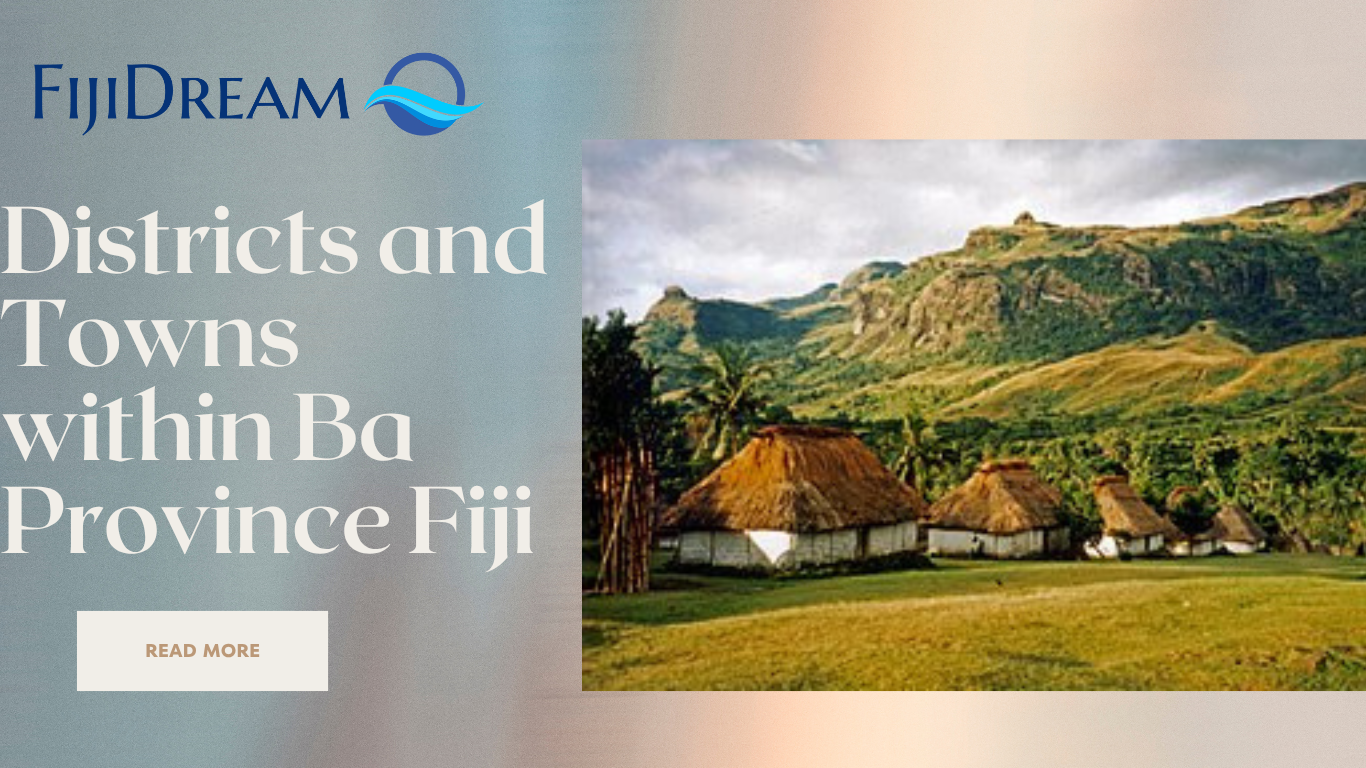
    Now, the district of Ba itself—this is the gritty, agricultural core. The main town, Ba Town, literally grew in the shadow of the Rarawai Sugar Mill. That mill is the town’s heartbeat. During the crushing season, the region vibrates. The roads are packed with tractors conveying cane, and the air smells sticky-sweet, indicating that money is being earned. You haven’t gone to Ba Province, Fiji unless you’ve explored its market. It’s complete pandemonium in the greatest way. Farmers from the valleys brought down their mounds of taro and bananas. The talk is incessant. And the people here are sports-mad. The local football team, the “Men in Black,” is a proper obsession. When they play at Govind Park, the whole town seems to shut down to watch. The passion is palpable. However, Navala Village is my favorite location—the one that truly remains with you. Each house is a classic bure with bamboo walls and a tall thatched roof. This group has consciously chosen to preserve its ancient buildings. It is their home, not a museum. You get a strong, almost humble feeling of connection to a Fiji that was and, fortunately, still is when you stand there.

    1. Lautoka District: The Sugar City’s Pulse

    They call it the “Sugar City,” the reason is that there is a massive mill in the heart of town. Compared to other towns in the province, Lautoka feels more planned. Vuda Point is located just up the road. Old-timers would tell you that this is where our forefathers originally landed their boats. That legacy lives on in adjacent Viseisei Village, where you can watch dance and weaving every day of the week. Need to get somewhere? Lautoka’s your spot. The port sends boats out to the islands, while the road links you to Nadi, Ba, and everywhere else that matters.

    2. Nadi District: Fiji’s Welcome Mat

    For nearly everyone, Nadi is where Fiji begins. The airport dumps you right into its busy heart. But Nadi has its own soul. The true town is beyond the main strip. It’s a town of cheap eats and fancy resorts, all buzzing with people on the move. And you’ll spot the Sri Siva Subramaniya Temple instantly. Its wild colors and huge size demand your attention. This temple demonstrates the strong Indo-Fijian origins that formed Nadi. Need a break? Go to Sabeto Valley. Get muddy, soak in the springs, then find peace in the Garden of the Sleeping Giant—a quiet world of flowers away from the crowds. And let’s be real—Nadi is your ticket out. It’s the gateway to Denarau Island, with its perfect resorts and the marina where boats leave for paradise every morning. Nadi doesn’t just let you into Fiji; it launches you into your entire holiday.

    3. Tavua District: Gold in the Hills

    Head north, and the land opens into Tavua’s quiet hills. This district runs on a different kind of wealth: gold. Gold is Tavua’s life. Since the 1930s, the Vatukoula mine has extracted riches from these hills. Here, families have gone underground for generations. The town is pure slow living. Grab a drink. Watch the day go by. The only rush is the sugarcane trucks on the King’s Road.  For adventure, you may hit Koroyanitu Park. It’s this raw, untouched beauty that captures the true spirit of Ba province Fiji—a place where adventure is never far from a quiet moment to simply take it all in.

    4. The Yasawa Islands: A World Apart

    The Yasawas are wild Fiji. Sharp volcanic hills rising straight from the deep ocean may be seen on a short boat trip from the main island. They are all seated in their own vivid blue lagoons. Every island feels different. Locations like Nacula and Nanuya Lailai have ideal beaches and tiny, welcoming resorts. Or visit the fabled Sawa-i-Lau caverns. The swim is cool, but the ancient legends of spirits and chiefs are unforgettable. Here, life follows the tide. Villages welcome you as a guest with heartfelt songs. Tourism is quiet and respectful, letting the islands hold onto their peaceful magic.

    Why You’ll Remember Ba Province, Fiji

    Ba Province is Fiji in one place. It’s the sound of two Fijis: the factory hum of a sugar mill and the quiet lap of a wave in the Yasawas. It’s the noise of Lautoka’s port against the deep quiet of a mountain village at dusk. Here, history isn’t in a museum. You see it in Navala’s thatched-roof homes, a choice to live as their ancestors did. And the future isn’t abstract—it’s in the students in Lautoka’s schools and new businesses in Nadi. You’ll carry Ba with you wherever you go, not just in pictures but in your heart and memories.
  • 10 Reasons Why You Should Go to Beachcomber Island, Fiji

    10 Reasons Why You Should Go to Beachcomber Island, Fiji

    When people think of Fiji, two pictures usually come up. One is a quiet resort where everything feels still and untouched. The other is an island buzzing with music, laughter, and stories shared over the sound of waves. If that second picture feels more like home, Beachcomber Island is it. Many hear the “party island” label and imagine loud music, crowds, and chaos. But Beachcomber is not like that. It’s a small island in the Mamanucas with palm trees that appears to be both lively and calm. It’s the kind of place where visitors are enticed to come even before they leave! Convinced? Let me count the ways this place will steal your heart.

    1. The “Wow” Moment of Arrival

    No picture really gets it right. The island comes into view, small and bright against the blue, with palm trees scattered along the sand. There’s a quiet feeling about it before you even arrive.

    2. Snorkeling So Easy It Feels Like Cheating

    You know how sometimes snorkeling feels like a whole production? Not here. At Beachcomber Island, the reef basically starts at your beach towel. Beachcomber’s reef is so accessible it feels like cheating. Forget the formalities. You just float there, looking down at everything. There are parrotfish scraping at the coral. There are starfish that are such a bright blue that it seems wrong. And trumpetfish will swim so close to you that it feels like they want to be friends.

    3. The “Bula Spirit” is Real (and Contagious)

    You’ll hear “Bula” everywhere here. It’s never just a word. It’s always with a real smile. The staff aren’t just doing a job. They make you feel like you’re visiting their family. Here, the staff remembers more than your room number. They remember your favorite drink, your smile, and the way you start your morning. It’s those quiet details that linger long after the tan fades.

    4. How Day Turns to Night

    Evenings start with the light softening and turning golden. Then the sky turns pink and orange. That’s when the music at the bar changes. As night falls, the island changes rhythm. Music drifts across the beach, and soon everyone’s barefoot in the sand, dancing and laughing together. It isn’t a big party — just easy, genuine fun. And if you want quiet, the stars are never far away.

    5. Your Wallet Will Thank You

    Let’s talk numbers. Fiji can be eye-wateringly expensive, but Beachcomber Island is the glorious exception. As a budget-conscious traveler, I found it incredibly manageable. You can opt for a dorm bed if you’re watching your pennies or splurge on a private room without breaking the bank. With so many free activities—snorkeling, volleyball, or just lounging magnificently—your days can be packed without ever opening your wallet.

    6. It’s the Ultimate Social Hub

    Traveling solo? You won’t be for long. The layout of the island forces camaraderie in the best way possible. People connect easily here — over a game, a meal, or the kind of sunset that gets everyone watching quietly for a while.

    7. A Ready-Made Community

    Days on Beachcomber Island Fiji have their own easy rhythm. Travelers come and go, but somehow everyone ends up together before the day is done. Meals, music, and adventures easily turn strangers into friends.

    8. Adventure Comes Easy

    For anyone chasing a bit of thrill, the activities desk keeps things simple. Things unfold easily here. Someone finishes breakfast, then decides to try parasailing or a ride across the lagoon. The water hums with activity, and the laughter drifting back to shore says it all. That’s part of Beachcomber’s charm: adventure feels spontaneous, not scheduled.

    9. The Easiest Trip from Nadi

    Reaching Beachcomber couldn’t be easier. From Nadi, a quick ride and a half hour by boat delivers you to turquoise shallows and open skies. The journey itself feels like the first chapter of the escape — slow, bright, and full of promise.

    10. A Gateway to the Mamanucas

    Anchored in the Mamanucas, Beachcomber is the perfect springboard to nearby treasures like Modriki Island — all the seclusion you want by day, with the warmth of Beachcomber waiting by sunset.

    What Stays With You

    Long after the trip ends, Beachcomber stays with you — in a familiar scent, a sound, a taste. It’s the calm between moments, the lightness that travel sometimes gives and rarely lets you keep.

    Leaving Beachcomber Island Fiji

    Leaving Beachcomber feels slower than arriving. When the boat leaves the island, things go quiet for a while. The sound of the engine takes over, and the people who were talking a moment ago just watch the water. The island gets smaller until it’s a thin line behind you. Maybe it’s the people who make it so special. The staff who remember how you take your coffee. The travelers who start strangers and end up watching the sunset together, saying things they’d never say back home. The quiet moments between all that noise — sitting by the water, thinking about nothing in particular. When you finally reach the mainland, life feels faster again. Notifications, noise, and the next plan waiting. But a part of you stays behind on that tiny stretch of sand, where time slows down and everything feels enough. The sound of waves that feels like silence. The faces you only knew for a few days, but somehow remember years later. Beachcomber Island gives you those pieces without asking for much in return. It’s the kind of place that doesn’t just fill your camera roll — it slows your heart down long enough to make you listen.