Author: FijiDream Admin

  • Best Fiji Resorts with Water Sports

    Best Fiji Resorts with Water Sports

    Fiji is one of the top water activity holiday spots. Fiji has more than 330 islands, warm turquoise waters, and some of the world’s most colourful coral reefs, making Fiji resorts water sports offerings truly world-class. From a sun-kissed Coral Coast home base for barrel waves, to a shark-watching dive spot on the Mamanuca Islands, to an ideal kitesurfing location on the Yasawas, Fiji has got you covered. This guide will answer a few questions about finding the best fiji resorts for water sports, what they have to offer, and what you need to know prior to booking.

    Why Fiji Is a Top Destination for Water Sports

    Fiji is located in the South Pacific region, between two big oceanic systems. It is also located in a geographical area that is perfect for surfing, diving, snorkeling, kayaking, and sailing nearly all year long. On average, water temperatures are 26-29°C (79-84°F), underwater visibility routinely exceeds 30 meters, and reef systems, especially Bligh Waters and the Great Astrolabe reef, are among the healthiest in the Indo-Pacific. The dry season (May to October) offers the best time for most water sports, including calmer waters and more consistent swells for surfers.

    Top Fiji Resorts for Water Sports

    1. Tokoriki Island Resort – Mamanuca Islands

    Tokoriki is an adults-only resort with a serious water sports facility. It is located right in the centre of the Mamanucas, with some of Fiji’s most iconic surf breaks at the centre of Cloudbreak and Restaurants being within easy reach of guests. Water sports available:
    1. Snorkeling and reef tours guided by experts
    2. Kayaking and stand-up paddleboarding
    3. Sailing around sunrise and sunset with the traditional Fijian outrigger canoes.Sailing around sunrise and sunset with the traditional Fijian outrigger canoe.
    4. Scuba diving with certified instructors (PADI courses are available)
    The house reef is also in good condition and open to the beach, which is practical for the snorkelers who don’t want to boat out to all the activities.

    2. Navutu Stars Resort – Yasawa Islands

    Navutu Stars is one of the more authentic of the fiji resorts in the Yasawa chain, for guests seeking a true sense of remoteness. The islands here are much less developed than the Mamanucas, resulting in less boat traffic and a cleaner environment below the surface. Water sports available:
    1. Snorkeling is a factor at the Blue Lagoon.
    2. Sea kayaking from island to island
    3. Diving on relatively untouched walls and drop-offs
    4. Fishing trips (Deep sea & reef)
    The resort is small, with under 10 villas, and water sports are personal, not packaged. This dive guide-to-guest ratio is good here as opposed to bigger all-inclusive.

    3. Jean-Michel Cousteau Resort – Savusavu, Vanua Levu

    If you’re looking for a diving resort, this will be the most purposeful on this list. It is on Vanua Levu (Fiji’s second largest island), next to one of the most biodiverse dive sites in the Pacific, the Namena Marine Reserve. Water sports available:
    1. Excellent fishing opportunities (trawler and landing facilities available)
    2. Snorkeling safaris with naturalist guides
    3. Kayaking in mangrove estuaries
    4. Village paddling excursions
    The resort is genuinely dedicated to the environment, and collaborates with marine biologists, and promotes environmental programming as well as guests’ activities. This dive is more demanding than normal resort dive centers for serious divers.

    4.Likuliku Lagoon Resort, Mamanuca Islands

    Likuliku is Fiji’s sole overwater bungalow resort, and one of the finest fiji resorts for water sports in a luxury setting. Due to its position on the outer edge of a protected lagoon, its flat water conditions make it an ideal spot for paddleboarding or kayaking. Water sports available:
    1. Non-motorized watersports (kayaks, paddle boards, outriggers)
    2. Snorkeling and a guided tour to the lagoon
    3. Scuba diving and PADI certificate
    4. Hobie Cat sailing
    Resort transfers are easy to get to the open ocean and the local surf. Cloudbreak is about a 40-minute boat ride from the resort; the resort will provide surf charters.

    5. Uprising Beach Resort, Pacific Harbour, Viti Levu

    Pacific Harbour’s market positioning is that it’s the adventure capital of Fiji, and Uprising does a bang-up job of backing that. It’s not the luxury property, but it is the practical base for high-volume water sport activity. Water sports available:
    1. Shark diving in Beqa Lagoon (bull sharks, tiger sharks)
    2. River Surfing on the Navua River.
    3. Jet Skiing/ Wakeboarding
    4. Kitesurfing lessons (seasonal)
    5. Deep-sea fishing
    This is one of Fiji’s all-time favourite shark dives, and it’s a responsible dive with decades of responsible dive operators. If it’s on your list, Uprising is very geographically convenient.

    What to Know Before You Book

    Seasonality matters. Most fiji resorts’ water sports will be best when the month is between May and October. Especially during November to April, there is an increased amount of rain and wind, and sometimes rough seas. During the wet season, the surf can be better, depending on the break. Skill levels differ from resort to resort. For more advanced divers, Jean-Michel Cousteau and Navutu Stars are their options. Tokoriki or Likuliku will be more suited for beginners and casual snorkelers. The cost of transferring adds up. There are several upscale resorts located on the outlying islands, which are accessible by boat or seaplane from Nadi. This is an additional expense to account for: $200-$600 USD round-trip per person per island. Welcome to all-inclusive, but not all-inclusive means no free water sports. Please read the inclusions very carefully. Many resorts will charge you extra for scuba, surf transfer, or fishing charter packages to go along with your package.

    Frequently Asked Questions

    Which water sports are popular at Fiji resorts?

    Most resorts offer snorkeling, scuba diving, kayaking, and stand-up paddleboarding. These are more ,location-specific such as surfing, kitesurfing, and shark diving. For surfing, the Mamanuca Islands are the best, for shark diving, the Pacific Harbour, and for kayaking and snorkeling, the Yasawas.

    Is Fiji great for beginners?

    Yes. The majority of the major dive resorts in Fiji have PADI-certified dive centers that provide entry-level courses. Water is warm and calming, providing a forgiving learning environment. Some resorts, such as Tokoriki and Likuliku, are ideal for novices.

    What are the best times to participate in water sports in Fiji?

    The dry season is from May to October and is the best time to sail and kitesurf due to the lesser sea state, visibility, and more consistent wind. The swells will be more consistent from June until August for those surfers seeking Cloudbreak and nearby breaks.

    Are there any resorts in Fiji that offer equipment for rent?

    The majority of resorts provide non-motorized equipment such as kayaks, paddleboards, and snorkel gear free of charge in the room rate. Most scuba, surfing, and motorized activities are charged separately. Check with the resort prior to arrival.

    Are non-swimmers allowed to do water sports activities at Fiji resorts?

    Yes. No swimming skills are needed for glass-bottom boat, semi-submersible, or sunset sail tours. Non-swimmers can also be included in some of the snorkeling trips with flotation vests.

    Is shark diving in Fiji safe?

    Commercial shark diving in Beqa Lagoon has a strong safety record and has been running since the early 2000s. Dives are done with qualified guides and with strict adherence to safety protocols. Not suitable for those who are inexperienced or anxious.

    Final Assessment

    The water sports industry in Fiji is well developed, geographically spread, and is on a competitive level with other water sports destinations in the Indo-Pacific region. The resorts on this list are not just selling proximity to the ocean; they’ve created programs around it. It is really up to your skill level, budget, and what type of holiday you are looking to have – diving depth, surfing access, or a combination of paddling and snorkeling. Consider the expenses associated with moving in and out of the property before purchasing properties on outer islands. For those who plan to dive, the Jean-Michel Cousteau Resort and the Namena Marine Reserve package can’t be beat in the Pacific.
  • What Is Kokoda? Fiji’s Famous Raw Fish Dish Explained

    What Is Kokoda? Fiji’s Famous Raw Fish Dish Explained

    It has already drawn attention, whether on a menu or as discussed at a local feast on the beach, if you have ever heard about Kokoda Fiji. There can be no denying that this is the jewel in Fiji’s crown of cuisine and lifestyle; it’s a basic dish, with a strong taste, and an authentic piece of Pacific Island culture. Here’s all you should know.

    What Is Kokoda?

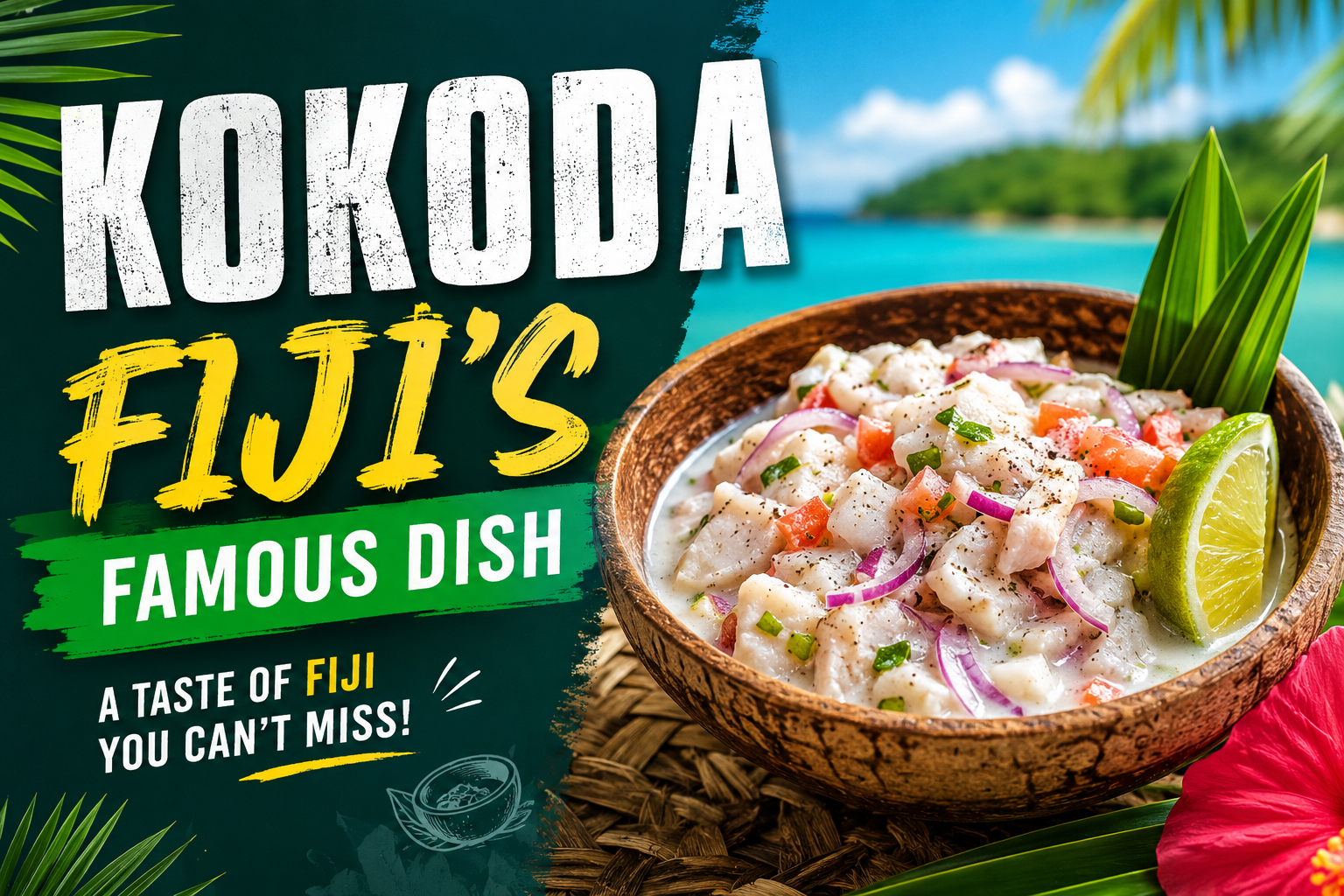
    Kokoda (ko-kon-da) is a traditional raw fish dish in Fiji, akin to ceviche in Latin America or the Hawaiian poke bowl. The fish is marinated (or “cooked”) in citrus juice, usually fresh lime juice. The proteins in the fish get cooked without heating, due to the acid denaturing them. After curing, it’s mixed with creamy coconut cream, which mellows out the tangy lime, and richness can be added. The outcome is a dish that’s vibrant and fresh and also indulgent — a taste that mirrors Fiji itself.

    The Key Ingredients

    Kokoda Fiji’s short list of fresh, quality ingredients is:
    1. White fish – wahoo (ono), snapper or mahi-mahi are most prevalent; fish should be very fresh
    2. Curing agent: lime juice, lemon juice can be used, but it is traditional to use lime juice.
    3. Coconut cream (fresh preferred to canned) for body and sweetness
    4. Chilli — for heat, usually added to taste
    5. Let it cool down a bit before adding the spring onion and coriander (add them for freshness and aroma)
    6. The fruit or vegetables are often served with tomato and cucumber, which are added for texture and colour.
    7. Rolls — to roll the nose and hands
    It’s the cook who makes the difference in the fish-to-lime ratio and curing time. Very short = fish too raw; very long = rubbery and dry.

    How Is It Made?

    It’s very simple, but it’s important that it happens at the right time:
    1. Cube the fish into even, small pieces (1-2cm).
    2. Cover completely with fresh lime juice and refrigerate for 20–40 minutes until the flesh turns opaque.
    3. Remove the excess lime juice — this is very important, or otherwise, it will become watery and sour.
    4. Add coconut cream, chilli, spring onion, tomato, cucumber and seasoning.
    5. Gently stir and serve right away, preferably in a coconut shell for the true Fijian experience.
    Some recipes do this, and add a little lime back in after mixing the coconut cream in, adding acidity when it is ready for consumption not at the start.

    Kokoda’s origins.

    Kokoda is native to Fiji and has been used as a staple food source for generations within the coastal communities of Fiji. Fish has always been an important staple in Pacific island people’s diet, and the curing method using citrus, which is found throughout the Pacific from Tahiti to Peru, has a distinctly Fijian flavour, particularly in the use of coconut cream. A dish more closely associated with the coastal villages on the main islands of Fiji, Viti Levu and Vanua Levu, where fresh fish and fresh coconuts are plentiful throughout the year.

    The best places to eat in Kokoda, Fiji.

    Kokoda Fiji can be found at almost all local markets, hotel restaurants and resorts throughout the islands. To find the most authentic versions, go for:
    1. The local village feasts (lovo nights) — communal feasts, in which Kokoda is usually eaten as a starter
    2. Suva Municipal Market is the main market in the capital, where locals sell fresh produce at low prices.
    3. Beachside warungs and small restaurants — less slick than the resort restaurants but usually very good.
    4. Resort versions are generally tidied up and uniform; village versions are more unpredictable, but usually more memorable.

    The interactive workshop took place in Kokoda and Fiji Food and Drink Culture.

    Kokoda is never alone. It is an integral part of Fiji’s food and drinking culture, together with the dishes lovo (meats cooked in the earth oven), palusami (taro leaves with coconut cream), and rourou (taro leaf soup). What they all have in common is coconut, used in almost every traditional Fijian dish. Kokoda is normally eaten as an appetiser or light lunch, with a cold Fiji Bitter beer or fresh coconut water. It is often used to dip into crackers or taro chips at the resort.

    Frequently Asked Questions

    If the fish is raw, is Kokoda safe to eat?

    In Kokoda, the fish are not “cooked” by heat but instead are acid-cured. The protein structure may be changed by the lime juice, but the lime is not as effective as heat in killing all pathogens. Only have sushi-grade or very fresh fish from a reliable source, and only eat fish that has been prepared that day. Precautions should be taken by pregnant women and immunocompromised persons.

    Which fish is ideal for Kokoda Fiji?

    A firm white-fleshed fish with low fat content is ideal; wahoo (ono) is considered a traditional fish used in Fiji. Good alternative fish to fish snapper, mahi-mahi and grouper. Stay away from oily fish such as salmon or mackerel—the fat doesn’t mix with the lime and coconut cream.

    How much time is required to cure the fish in lime juice?

    The average window is 20-40 minutes. Exterior is opaque, centre is still partially translucent at 20 minutes. The cure is more complete at 40 minutes. After 1 hour, the quality of the fish reduces; it becomes tough and chalky.

    May I pre-prepare Kokoda?

    The fish and vegetables can be prepped ahead, cured and chopped, but the coconut cream shouldn’t be mixed with the other ingredients until serving time. If left for too long, the coconut cream will turn watery.

    Is Kokoda the same as ceviche?

    They use the same core technique — acid-curing raw fish — but they’re not the same dish. Ceviche is Latin American in origin and uses different citrus profiles, herbs, and no coconut. Kokoda Fiji is distinctly Pacific, defined by its coconut cream base and specific spice profile.

    Where does the name “Kokoda” come from?

    The origin of the name is debated. Some trace it to a village or regional name within Fiji; others suggest it derives from older Fijian language terms related to fish preparation. It is not connected to the Kokoda Track in Papua New Guinea — that is an entirely different place name with separate origins. Kokoda Fiji is more than a dish — it’s a concise expression of where the islands sit: fresh ocean, tropical fruit, and the ever-present coconut. If you visit Fiji and skip it, you’ve missed the point.
  • Best Fiji Waterfalls to Visit: A Complete Travel Guide

    Best Fiji Waterfalls to Visit: A Complete Travel Guide

    While Fiji’s beaches are the stars of the show, the island also has a lot to offer in its interior. Whether you’re seeking adventure, a cultural experience, or family fun, Fiji waterfalls are among the best experiences the South Pacific has to offer, hidden behind jungle trails and rainforest canopy. Where to go, what to do, and how to enjoy your waterfall experience.

    Top Fiji Waterfalls You Shouldn’t Miss

    1. Tavoro Waterfalls (Bouma Falls) are located on Taveuni Island.

    Tavoro is not a single waterfall, but a set of three waterfalls, each one a varying height along a rainforest path, set in Bouma National Heritage Park. The first waterfall is a short and easy 10-minute walk from the entrance, while the second and third waterfalls will take around 3 hours to hike back to the entrance. All have a plunge pool to swim in. It’s the most iconic of all the falls in Fiji, and an excellent base for any adventure.

    2. Biausevu Waterfall (Magic Waterfall) – Viti Levu

    The most easily accessed cascade of the Coral Coast is Biausevu or Savu Na Mate Laya Falls. Enter the village at Biausevu, pay a small entry fee, and stroll the 30-minute walk through the rainforest to the two-tiered waterfall and swimming hole (20 metres high). This is one of the best walks around the waterfalls for kids in Fiji, as the path is short, fairly flat, and the swimming hole at the bottom is calm and shallow for younger ones.

    3. Orchid Falls – Nighon Nadi

    Orchid Falls is a place to see within 30 minutes of Nadi, on Denarau Island, and is a must-visit for visitors to the area. There is a small fee to enter to access a paved trail and to cool off in the refreshing plunge pool. Close to the resort strip in Nadi, and paved access makes it one of the best waterfalls for youngsters who are not able to trek long distances. Pair it with a day at the beach effortlessly.

    4. Waisila Falls — Colo-i-Suva Forest Park, Suva

    Waisila Falls is in Colo i Sua forest park outside Suva, and is readily accessible by a 750-metre track, which leads to several streams where guests can swim. It’s one of the best places to enjoy a waterfall without leaving the capital if you’re looking for a no-stress experience.

    5. Vuadomo Waterfall — Vanua Levu

    Vuadomo is the most easily accessible waterfall on Vanua Levu and is only 20 minutes drive from Savusavu town. Once you arrive at the village, you present your gift of kava (sevusevu), and pass through a short paved trail to the waterfall. This isn’t only a waterfall sighting, but also a village visit, and it is a very rich cultural one.

    6. Waitavala Natural Waterslide — Taveuni

    Waitavala is Fiji’s fastest natural waterslide (smooth rock faces & flowing cascades) if your group desires something other than swimming. It’s very popular with older children, but requires close adult supervision with younger children because of the speed of the slide.

    7. Savulelele Waterfall — Northern Viti Levu

    Savulelele is in the highlands of the Suncoast in northern Viti Levu. Involves a drive from Suva or Rakiraki, then a dirt road of 25km and a steep 1.5km hike; it pays off for the visitor since it is the highest waterfall in Fiji. Not for families with young ones, but great for families who desire solitude and scale.

    Best Time to Visit Fiji Waterfalls

    The best time to visit the waterfalls is during the rainy season (November through April), when water levels are highest, but the dry season (May through October) has the best hiking and swimming weather and is also the best time to visit the waterfalls. Both window types will do — the only choice is how much water to remove versus how easy it is to remove it from.

    What to Bring

    Hike in a pair of hiking shoes, bathing suit, insect repellent, sun tan lotion, water, and snacks. For waterfalls in remote areas, it is advisable to hire a guide. There are some falls which are located in private property, so please check access and pay any entry fees into the village, which is usual practice in Fiji and helps the local community.

    Fiji Waterfalls FAQs

    Which is the easiest waterfall to get to in Fiji?

    The two easiest to reach are Orchid Falls near Nadi and Biausevu Waterfall on the Coral Coast: Both are short and well-maintained trails, with less than a 30-minute walk on each side.

    Do you have any nice waterfalls for children in Fiji?

    Yes. Orchid Falls (paved trail, calm pool), Biausevu Waterfall (short hike, shallow swimming area), and Waisila Falls in Colo-i-Suva Forest Park are the best waterfalls for children. Tavoro’s first waterfall is also suitable for older children with a 10-minute flat walk.

    Is there a guide in Fiji to take me to the waterfalls?

    Not necessarily, but it is highly recommended for out-of-the-way areas such as Nakawaga Waterfall (Vanua Levu) or Savulelele. A guide is an integral part of the process for village entry falls such as Biausevu or Vuadomo.

    Which Fiji island has the most waterfalls?

    If you’re mainly interested in waterfalls, then Taveuni, or the Garden Island, is the place to go, with hundreds of waterfalls.

    Is it possible to swim in the waterfalls in Fiji?

    Many of them have natural plunge pools, and swimming is a big attraction. Water depth and current can alter; always evaluate on arrival and take any advice given by local guides.

    Which is the top waterfall to visit on a day trip from Nadi in Fiji?

    The most convenient is Orchid Falls. The Biausevu Waterfall on the Coral Coast is approximately 1 ½ to 2 hours from Nadi, but is a far more impressive waterfall with a village cultural experience to be enjoyed.   Fiji’s waterfall scene is really underrated. The jungle trails aren’t as crowded, the plunge pools aren’t quite as busy, and the adventures are far more interesting than anything you’d find on a beach. Most of the visitors stay on the coast. Schedule a waterfall day. You will most likely want to have planned two!
  • Best Day Trips from Nadi Fiji

    Best Day Trips from Nadi Fiji

    Though Fiji’s main gateway, Nadi, is really little more than a launchpad (but it deserves 1 or 2 nights). A half-day away by boat, car or short flight are some of the South Pacific’s more spectacular scenery, culture and marine life. These are the best day trips from Nadi, Fiji, based on what they really deliver.

    1. Mamanuca Islands

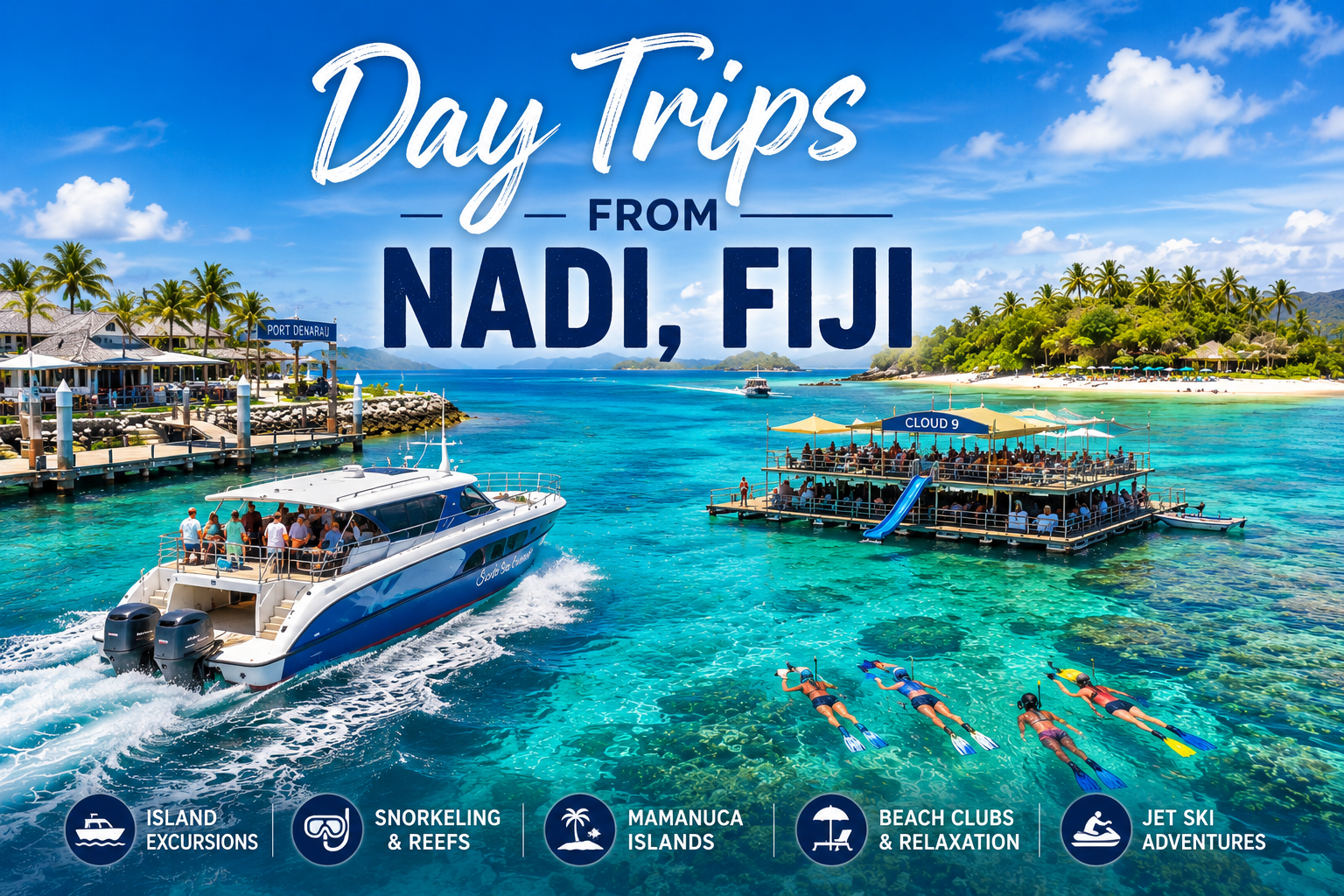
    Best for: Beaches, snorkelling, resort-hopping Of course, the Mamanucas are the top pick for day trips from Nadi Fiji, and they earned this acclaim. These islands, such as Mana, Malolo and Bounty Island, are offshore from Port Denarau Marina between 30 and 90 minutes by high-speed catamaran. South Sea Island and Beachcomber Island are the best-known destinations for day-trippers — both islands can be walked around in 10 minutes, and clear water is only a step off the beach. This island caters only to day visitors but offers a set program: free snorkelling gear, lunch included in the cost of your ferry ticket and the use of a guided reef walk. Practical note: daily departures from Denarau by Yasawa Flyer and South Sea Cruises. Book the earliest ferry (8:30 AM or so) to get a full island experience. Return leg departs at 4 PM usually.

    2. Garden of the Sleeping Giant

    Ideal for: Half-day nature stop, orchid lovers, limited mobility Just 20 mins north of Nadi near Lautoka, the Garden of the Sleeping Giant was originally grown by actor Raymond Burr in a bid to keep his orchid collection. This now features 50 acres of tropical forest home to over 2,000 orchid varieties. A much quieter, undiscovered stop — not a day-long commitment, but a good half-day that can be paired with a Sabeto visit or on the way to Yasawa ferry terminal. Entry fees are modest. Hit it before the heat becomes excruciatingly oppressive in the morning.

    3. Sabeto Hot Springs and Mud Pools

    Ideal Use: Inexpensive, unique, casual gameplay Buffalo tours — the dirt cheap buses that take you from city to city without any care in the world, love clouding their minds with high-definition backpackers brochures and selling you other people experiences This is where they show you a whole new side of Fiji up twenty minutes northeast of Nadi: natural volcanic mud pools that force you to slather yourself in grey mud, wait for it dry out before forcing you into an oversaturated fridge cold spring-fed pool. That sounds gimmicky, but it’s actually really fun and quite affordable. Pair it with the neighbouring Garden of the Sleeping Giant for a complete half-day loop before returning to Nadi Fiji for an afternoon activity or evening ferry.

    4. Sigatoka Sand Dunes National Park

    Ideal for: History, archaeology, unconventional scenery Located about 60 km south-east of Nadi along the Coral Coast, Sigatoka Sand Dunes is Fiji’s first National Park. The available date, pottery fragments and skeletal remains excavated near the beach 20 meters from the dune date to more than a maximum of 2,600 years. The park offers guided tours discussing the archaeological context, adding to its interest beyond simply striding up and down dunes. At the base is an expansive, open and at times vacant by Fijian standards beach. Renting a car or taking a taxi for a round trip takes over half a day. This is not the news of the day with the most visual impact, but it has one of the highest cultural weights.

    5. Nausori Highlands and Navala Village

    Ideal for: Real Fijian culture, one of the most beautiful mountain terrains in Fiji You can notice that most tourists to Nadi, Fiji, do not leave the beaches. A 90-minute drive inland brings you to another world — the Nausori Highlands, with rolling green hills, sugar cane fields and cooler temperatures. The main attraction: Navala has several traditional bure (thatched longhouses), which remain the dominant architecture of one of Fiji’s few traditional villages, not a novelty. Visits should be respectful — a sevusevu (the traditional kava root offering) should be made, modest dress and shoes off when within the home and preferably with a local guide to do the introductions. A number of operators out of Nadi offer half-day and full-day cultural tours. Note: If it’s your first time doing this, definitely don’t try it without a guide. Protocol is important, and showing up uninvited is not respectful behaviour.

    6. Yasawa Islands (Long Day Trip or Overnight options)

    Great for: Dramatic scenery, turquoise lagoons, swimming with sharks The Yasawa Islands chain is 80 km north of the Mamanucas. They are much more remote, less developed and way prettier. However, as a technically possible day trip from Nadi (the Yasawa Flyer gets Kuata or Wayasewa in around 2–3 hours), you will be on the boat for most of the day. Overnight instead of as a day trip from Nadi, Fiji if you have time. For those limited to a single day, Kuata Island is the closest with decent shark snorkelling in blue waters.

    7. Natadola Beach

    Ideal for: The best beach in Fiji, accessible without hopping on a plane Located 45 minutes south of Nadi, Natadola is regularly voted the best beach in Fiji on Viti Levu. The water is crystal-clear, the sand is white, and the waves crop gently enough for body surfing — also, there’s no resort development to block any access (the InterContinental sits as one end). The most common way you’re able to get here is by taxi, rental car or taking the Viti Levu coastal bus. An easy 1/2 day — no planning complexity required.

    FAQs: Visiting Fiji—Day Trips from Nadi

    How early in advance must I book island day-trips?

    Bookings should be made in advance for the Mamanuca Islands, at least 24–48 hours ahead during high season (July–September). Ferries get booked up quickly, particularly on weekends. This trip can be booked on the same day in the off-season, again from Port Denarau.

    Am I required to have a visa for Fiji day-trips?

    Short answer: No, a normal tourist entry will cover island hopping, but remember, you are only permitted to travel within Fiji.

    What is the absolutely most affordable excursion from Nadi, Fiji?

    Plus one will visit, say, Natadola Beach or the Sabeto mud pools. I did it for under FJD $50 total with transport taking local buses or sharing a taxi. There is a small entrance fee to the mud pools; Natadola beach is free

    Is it safe to travel independently, or should one go through a tour operator?

    Individual travel is also quite easy for shore and sea face jaunts. Visiting a cultural village such as Navala is great, but it is highly recommended that you take a local guide — both for information about how to behave properly and also simply for logistical reasons.

    What to pack for island day trips?

    What to bring: Reef-friendly sunscreen, Rash guard, Snorkel gear (you can rent, but it’s very basic) Cash in Fijian dollars Drybag Nearly all daytime ferries have little deck shade.

    Is it possible to do more than one island in a day?

    The South Sea Cruises ferry takes many islands along that route, but, technically, yes — more transit time means less hang-time on a few of the islands. Pick one and stay. A double island day is rarely as good as it sounds

    Day Trips from Nadi, Fiji: When are the best ones?

    May to October: This is the dry season — with drier air, less humid and a calmer sea, which means better visibility for snorkelling. Due to July and August being prime tourist months, advance booking is necessary. Cyclones and rough ferry crossings are more likely in the wet season (November–April); however, costs are lower during this time of year. For first-timers to Fiji, it remains the best single-day trip from Nadi: Mamanuca Islands — high reward, low logistics. And if you’re already done with the islands, it is the most truly unique experience you can get without departing for several days, being that the Navala Highland tour.

  • How Much Does a Fiji Vacation Cost? (Budget Breakdown)

    How Much Does a Fiji Vacation Cost? (Budget Breakdown)

    Thinking of a trip to Fiji and not sure how much to expect to spend? You’re not alone. Fiji is known as a haven for luxury holidays, but it can be done on a tight budget or with a private island. This article gives you a breakdown of the actual cost of a vacation to Fiji in all the major expense categories so you don’t find yourself surprised during your trip.

    Quick Summary: Total Fiji Vacation Cost by Travel Style

    This table provides a summary of vacation costs across the different travel styles in Fiji.
    Travel Style 1 Week (Per Person, Excl. Flights) With Flights (Approx.)
    Budget $800 – $1,500 $1,500 – $2,500
    Mid-Range $1,500 – $3,000 $2,500 – $4,500
    Luxury $5,000+ $8,000+
    These are approximate figures. The cost you will actually pay is influenced by your travelling route, the number of travellers and how you make your final decision on site.

    Flights to Fiji

    The cost of your Fiji vacation is likely to be mostly flights. Fares typically start at $500 per person and go up to $1,500 based on your departure city, season and booking lead time.
    1. From the US West Coast (LA, SF): $700 – $1,200
    2. From Australia/New Zealand: $400 – $800
    3. From Europe or the UK: $1,000 – $1,800
    During peak season (July – September) and school holidays, prices are 20-40% higher. The best time to travel by fares is the shoulder seasons (April – May or October – November) and booking 3-6 months ahead provides good weather and low fares.

    Accommodation is quite expensive in Fiji.

    Accommodation is more varied in Fiji than in most parts of the Pacific.
    Visit costs by night, USD Price Per Night
    Backpacker hostel / dorm $20 – $40
    Budget guesthouse / bure $50 – $100
    Mid-range resort (3–4 star) $150 – $300
    Luxury resort (5 star) $400 – $1,000+
    Private island resort $1,000 – $5,000+
    The average cost of a mid-range hotel’s standard double room is about $218.00 per night for two people. Holiday homes typically offer a lower per-person rate for groups of four or more than resorts and a kitchen will save you from most of the restaurant bills.

    Food and drinks prices

    Budget travellers make the best strides when it comes to food.
    1. Humayun’s Restaurant: $10 – $15 per meal
    2. Mid-range restaurant: $15 – $25 per meal
    3. Resort restaurant: $30 – $60+ per meal
    The cost of bottled water is $1–$3, which can be reduced by bringing your own water bottle to school. In a curry house, an FJD $12 curry will be a better deal than an FJD $55 pasta dish at a resort. Eating local doesn’t mean compromising on taste or price — it’s actually better! If eating a combination of tourist and local establishments, budget $25 – $50 daily.

    Transportation Within Fiji

    Fiji has low-cost transport options available, and it can be economically traveled if you plan ahead.
    1. Local bus: $1 – $3 per trip
    2. Taxi: $10 – $30 depending on distance
    3. Airport shuttle (Nadi to Coral Coast): $15 – $30
    4. Ferry: $30 – $80 per leg (purchase a Bula Pass if making more than one leg; it will pay for itself quickly)
    5. Domestic flights: $80 – $200 each way
    When traveling by island hopping, the Bula Pass is the best budget option for the Yasawa Flyer ferry.

    Activities and Experiences

    The activities are hugely different in price, and this is one area where your holiday can be easily costly.
    1. Snorkeling/diving day trip: $50 – $150
    2. Shark dive (Pacific Harbour): $150 – $250
    3. Scenic helicopter flight: $300 – $500
    4. Village visit / cultural tour: $30 – $80
    5. Cloud 9 floating bar day trip: $100 – $200
    Plan for one or two signature experiences—don’t try to do everything. Five less expensive excursions won’t have the same impact as a shark dive or scenic flight.

    Travel Insurance

    Don’t skip it. Without coverage, the cost of medical evacuation from an outer island to Suva or to your home country can be tens of thousands of dollars. The average cost of a week’s worth of regular coverage in Fiji is $50 – $200, depending on the provider. Take this into account in your initial budgeting.

    Sample Daily Budgets

    Category Budget Mid-Range Luxury
    Accommodation $30 $150 $500+
    Food $20 $50 $100+
    Transport $5 $15 $30+
    Activities $10 $40 $100+
    Total/Day ~$65 ~$255 $730+
     

    Here are some tips to help you cut the cost of your Fiji vacation.

    1. Buy during travel season (April-May or October-November) to get the best weather-to-price ratio
    2. Make bookings 3-6 months in advance, and set up price alerts.
    3. Avoid eating at resort restaurants—go to local curry houses.
    4. Purchase the Bula Pass when travelling multiple ferries in the Yasawas or Mamanucas.
    5. Travel as a group and share a holiday home — costs can be greatly reduced!

    FAQs: Fiji Vacation Cost

    How much does a 1-week Fiji vacation cost per person? Fiji per person (excl. flights): $1,429 – $2,500; including Accommodation, food & transport. From the USA, budget $2500 – $4500 for a mid-range. Is Fiji an expensive destination? Compared to other Pacific islands, Fiji is medium-priced. Not as cheap as the Maldives, but also not as pricey as elsewhere in Southeast Asia!!! Budget travellers need about $65/day; mid-range travellers need to budget for $200 – 300/day. When is the cheapest time to visit Fiji? The offseason (December–March) provides the lowest prices—accommodations are up to 30–50% off their busy season rates and flights to/from the US regularly find sub-$900 fares. If you want good weather without peak pricing, the best value is shoulder season (April–May, October–November). How much cash do I really need for Fiji for 2 weeks? For budget travel, you will need to budget $800 – $1,500 (budget flights) for two weeks of money. This means budget $3,000 – $6,000 for the same period if you are a mid-range traveler. Would $2,000 be enough for a Fiji holiday? Yes — a 7–10 day trip is absolutely doable for about $2,000 USD as a budget to mid-range traveller, especially if you’re arriving from Australia or New Zealand, where airfare is usually cheaper. When you factor in flights, that could help US travelers add a little bit more to their budget. How to save big on a Fiji vacation? Travel and budget tips—eat local, take public bus on Viti Levu, only book accommodation when the school holiday windfall (July–September) is finished and—with a group—a holiday home trumps resort every time. With these 4 decisions alone, you could reduce your entire cost of vacationing to Fiji by 30 -40%.
  • Fiji Local Market Guide: The Best Spots in Nadi, Suva, and Beyond

    Fiji Local Market Guide: The Best Spots in Nadi, Suva, and Beyond

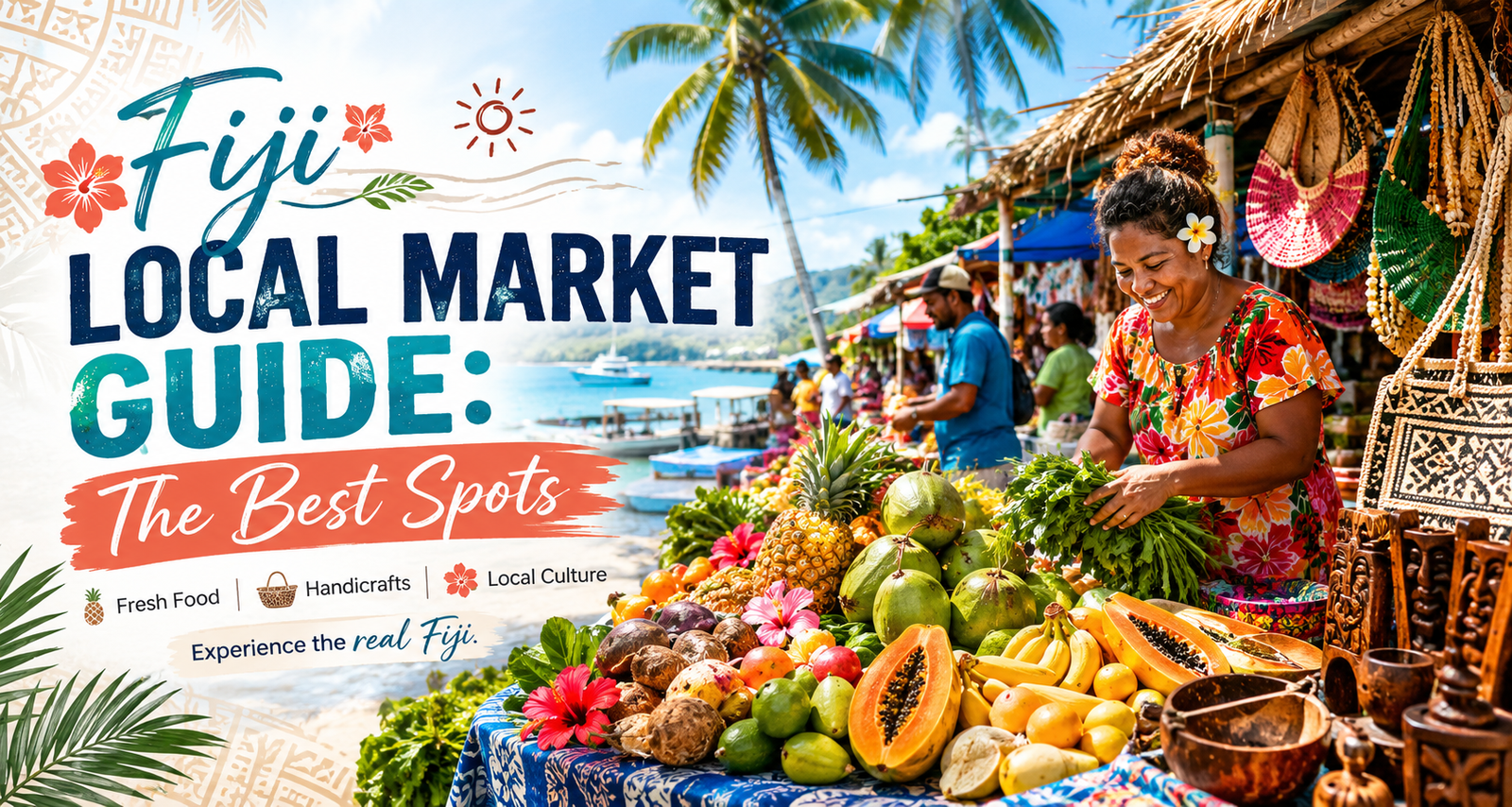
    For the authentic Fiji experience, as opposed to the resort variety, head to a local market. This is where you will discover vendors selling the same basic agricultural produce for thirty years, handmade crafts that never saw an assembly line and food at a fraction of the price you haggled over on the beachfront. Get the most out of visiting local markets in Fiji with this guide on where to go, what to buy and how.

    The best thing you can do in Fiji: Local Markets

    The majority of tourists stay within resort shops and airport duty-free. That’s a mistake. Fiji local markets provide access to fresh tropical produce, traditional handicrafts, kava, and street food, all at prices you can afford. They’re also one of those rare spots you spend time with Fijians in their space, rather than in a set-up hospitality format. Markets here are social hubs. Vendors know one another, families shop together, and it has all been at a slower speed. Go ahead and preferably with no agenda.

    Fiji’s Best Local Markets

    Nadi Marketa — The Gateway To Tourists

    The Nadi Municipal Market is located in the heart of Nadi town, approximately 10 minutes from the main tourist strip. It’s also the easiest (and only) local Sunday market for those new to Fiji (Saturday is the busiest). What to buy:
    1. Very well-picked tropical fruits (papaya, pineapple, soursop and passion fruit)
    2. Bunches of fresh dalo and cassava
    3. Masi (tapa cloth) & woven baskets
    4. Kava (yaqona) — sold by the halfa kilo or kilo.
    Practical tips:
    1. Arrive early (preferably before 9 AM) for the best produce selection
    2. Food Fix prices; Crafts with light bargaining
    3. A section of the market is covered for dry goods, but there is also an open-air area for produce — do both
    Beware: Touts near the entrance are trying to direct you to particular stalls. You are not required to follow anybody.

    Suva Municipal Market – The Biggest in the South Pacific

    The market in Suva is simply on another level. The Suva Municipal Market is without a doubt one of the largest covered marketplaces in the Pacific and an institution in its own way. The market is situated in central Suva close to the waterfront and it attracts vendors from across Viti Levu as well as the outer islands. What to buy: The most diverse selection of tropical produce in Fiji, including some products that you may not find in Nadi.
    1. Fijian spices and dried fish and coconut products
    2. Indo-Fijian spice blends & types of lentils (due to the Indian community in Fiji)
    3. Local outer island vendors offering woodcarvings, tanoa bowls, and woven mats
    Practical tips:
    1. 2 hour minimum — If this is a large market, worth the effort to explore by floor
    2. Upper level attracts more crafts vendors; the ground floor has a higher proportion of produce.
    3. Local lunch venues in the market — tasty and affordable Fijian food
    Caution: Petty theft in crowded areas — bags should be kept at the front.

    Lautoka — Sugar City’s Hidden Jewel/ Market in Fiji

    Fiji’s second-largest city, Lautoka, has a market that most tourists completely miss. And that is why it is worth a visit. The Lautoka Municipal Market is less commercialized, purely local and offers a more authentic vibe than the Nadi salon. What to buy:
    1. One of the cheapest places in Western Fiji to buy tracking fruits
    2. Fresh sugar cane juice—Lautoka is the centre of Fiji’s sugar industry
    3. Coconut oil and herbal products are made locally
    Practical tips:
    1. Best enjoyed on a Saturday morning when vendors from nearby villages come in
    2. Try some Chinese, go for a stroll to Lautoka itself, which has pretty decent Indian restaurants within walking distance of the bush

    Sigatoka Market — The Entrance to the Coral Coast

    A useful stop-off while traveling along the Coral Coast is Sigatoka Market. It’s not as big as Nadi or Suva; its mainstay is indeed produce, much of it grown in the Sigatoka River Valley — one of Fiji’s richest agricultural zones. What to buy:
    1. Sigatoka Valley vegetables and greens.
    2. Watermelons (in season) and fresh corn
    3. Tiny crafts from the vendors of the villages
    Practical tips:
    • This is not a tourist market, where you will see English signboards or sales pitches by vendors; that’s the point
    • Your busiest time is Saturday mornings

    Where to Shop the Fiji Markets

    Here are some better things you can buy at every Fiji local market:

    Category What to Look For

    Category What to Look For
    Produce Dalo, cassava, breadfruit, tropical fruits
    Handicrafts Masi cloth, woven fans, tanoa bowls
    Kava Dried yaqona root — buy medium-grind for drinking
    Spices & Food Coconut oil, tamarind, curry blends (in Suva)
    Souvenirs Hand-carved items directly from village vendors
    Be wary of machine-produced “handicrafts” — they will all look the same at several stalls, and they’re not made here.

    FAQs: Fiji Local Market Guide

    When do Fiji local markets open?

    Most of the markets are open Monday to Saturday from 6 AM to 5 PM. Fiji is a strongly Christian nation and you have observed closed or limited Sunday trading in many areas Peak hour, as every market knows, is Saturday morning.

    Bargaining at local markets in Fiji?

    With food, prices are fixed and quite low so there should be no need to barter. You are expected to bargain very politely for handicrafts and woodcarvings — aggressive haggling is not appropriate. A good question: Is there a better deal if you buy more?

    Is it safe to visit local markets in Fiji?

    Yes, generally. Lautoka and Nadi Markets: The low-risk markets. Suva is not a dangerous place; it just requires the normal urban vigilance — be aware in public areas and try not to carry valuables openly.

    Local market for Kava?

    Sure enough, and this is one of the best places to do it. Dried yaqona root is available for sale by weight. If you are new to kava, inquire with vendors about the proper grind. Market Prices: Much cheaper than the resorts.

    Get ready for an amazing journey with us to the best market you could find raw stuff handcrafted?

    Suva Municipal Market has the largest range of handmade artisanal handicrafts from around the islands of Fiji. Nadi Market has a good craft section for convenience, but Suva has more variety and is more direct from the village vendors.

    Are credit cards accepted at the local markets?

    Markets work only on cash, so no. Take Fijian dollars (FJD) — There are ATMs in the main town centers of Nadi and Suva.

    Final Word

    This is a guide to the local market of Fiji, built by showing up as early as you can (just especially before they close up/end), looking around without a plan and getting something small from a vendor who actually grows it. These markets are a launching pad — not a checklist. Local markets in Fiji cannot be tamed by offers of (fair trade) money for efficiency: they are at all times to remain curious. If you only go to one, Suva is it. The market in Nadi (if you’re based there) is worth a brief visit before heading to the beach anyway.
  • Fiji in July Travel Guide: Everything You Need to Plan Your Trip

    Fiji in July Travel Guide: Everything You Need to Plan Your Trip

    Are you going to Fiji and asking yourself whether July is a good time of year to visit? Direct answer: It is among the best of the lot. Our Fiji in July travel guide is your go-to resource for planning everything from weather and packing to which islands and what activities, so you can plan your trip with confidence.

    July is One of the Best Times to Travel to Fiji

    July is the height of Fiji’s travel season for good reason because it falls in the dry season (May to October). Summer means warm but not super hot weather, reduced humidity compared to the wet season, and the islands are at their most gorgeous. Expect daytime temperatures in the region of 26°C (79°F) and cooler evenings around 20°C — great for days at the beach as well as exploring. The Data is Current until October (2023). Sea temperature is approximately 26°C, making it an ideal one for diving and snorkeling. Rainfall is limited to about 4-8 days in the month, while most showers are brief. The catch: July is the busiest month of all, especially for travelers from Australia and New Zealand (it’s when their school holidays are). This means you can expect more expensive hotel rooms and busier resorts! Book well in advance.

    What to Do in Fiji in July

    Here are the outdoor activities for which July tends to host dry, clear conditions:
    1. Snorkelling and Diving — The dry season has the most visibility underwater. Scattered east and 20-30 km out from the main islands, the Mamanuca and Yasawa island chains are home to some of the best accessible coral reefs you will find in all of the South Pacific.
    2. Island Hopping — Certainly, with the sea in good temper and a dependable ferry and seaplane network, July offers the perfect option to visit a few islands at least. Have a think about pairing the (easily reached from Nadi) Mamanuca Islands with neighbouring more remote Yasawa Islands to get a mix of bustling resorts and more serene escapes.
    3. Wildlife spotting — July is the peak of humpback whale migration through Fijian waters. Another sighting that is also common around this time is the manta ray.
    4. Trekking and Cultural Adventure — Cooler climate provides for extra pleasant hiking than the wet season. Viti Levu houses lush trails in the highlands, and visiting a local village — and participating in Sunday church service — is sure to be one of your fondest experiences when visiting Fiji.
    5. Water Sports — The icing on the cake for water aficionados is that surfing, kayaking and paddleboarding conditions are absolutely wonderful throughout the islands in July.

    Best Islands to Visit in July

    1. MAMANUCA ISLANDS — The closest group to Nadi and ideal for first-time visitors Cloud 9 floating bar is one of the most famous attractions.
    2. Yasawa Islands – A volcanic island chain in the north, renowned for low traffic shores, snorkeling, and real social encounters.
    3. Viti Levu — most arrivals arrive via Fiji’s main island. Aside from the airport hub of Nadi, there are interior rainforests, waterfalls and the capital Suva for those wanting a bigger city hit.
    4. Taveuni — The Garden Island, Taveuni is a hiking and diving haven alongside the Rainbow Reef

    What to Pack for Fiji in July

    July qualifies as dry, but the rays are still strong. It is high UV level so sun protection should always be a must.
    • Lightweight clothing (shorts, t-shirts, sundresses)
    • High-SPF sunscreen and UV-protection sunglasses
    • A layer under cooler evenings or so for air-conditioned spaces
    • An ultra-compact rain jacket for when you get misted by a brief shower.
    • Reef-safe sunscreen (vital to protect Fiji coral)
    • Swimwear, water shoes, and snorkel masks (or plan to rent on-island)

    What You Need To Know For Your July Trip to Fiji

    Book early. Fiji’s busiest travel month is July. Flights — especially from Australia and New Zealand- are booked quickly, and the best-priced premium resort accommodation completely disappears early. Budget for peak prices. The highest accommodation prices are in July. However, if you are flexible, late June or early August may deliver the same weather with fewer crowds. Respect local customs. Respect and community are big aspects of Fijian culture. Dress appropriately when visiting villages, politely accept a kava ceremony invitation and ask permission before shooting locals. Currency. The currency used in Fiji is the Fijian Dollar (FJD). Typically, resorts accept credit cards — but remember to take cash with you on the smaller islands and at local markets. Getting around. The airport you would most likely use to get into Fiji is Nadi International Airport. Connecting flights to the outer islands mainly occur via ferry, domestic flights or seaplanes. During peak season, pre-book transfers

    Frequently Asked Questions

    July – What’s the weather like in Fiji?

    Yes — July is regarded as one of the best months. Positioned during the dry season, so you can expect warm conditions with low humidity and little rain along with great clear water perfect for snorkeling and diving.

    How hot is Fiji in July?

    The daytime averages are around 26C (79F), while night-time temperatures will cool down to roughly 20C. It’s warmer and cozier without the searing, humid weather of the wet season.

    Is July peak season in Fiji?

    Yes. July also aligns with school holidays in Australia and New Zealand, making it the most travel-heavy period. Resorts and attractions are busier, and prices are higher than in previous years. Early booking is essential.

    What do I need to pack for Fiji in July?

    I would pack very light clothes, high SPF factor sunscreen, something covering light for nights and air-conditioning, compact rain jacket because it rains every now and then but not the whole day. Reef-safe sunscreen is strongly recommended.

    Do I need a visa to visit Fiji?

    You are also an area in the world that is popular as a vacation destination, for example, Fiji. Visa-Free Entry Citizens of many countries, including Japan, Australia, the US and the UK, can enter Fiji visa-free for four months. Always review entry requirements prior to travelling

    Which Islands To Visit In July?

    The Mamanuca and Yasawa Islands are the most popular and July is said to be the best month to visit, as the conditions are also very good. If you prefer it quieter, Taveuni is amazing for diving and hiking.   This Fiji travel guide for the month of July is just a general overview, as every trip to Fiji is unique. If you are planning a luxury resort honeymoon or an island-hopping rice foil application in beautiful July, it has the perfect infrastructure and climate for your unforgettable summer. Plan your dream vacation at FijiDream.
  • Mamanuca vs Yasawa Islands: Which One Should You Visit in Fiji?

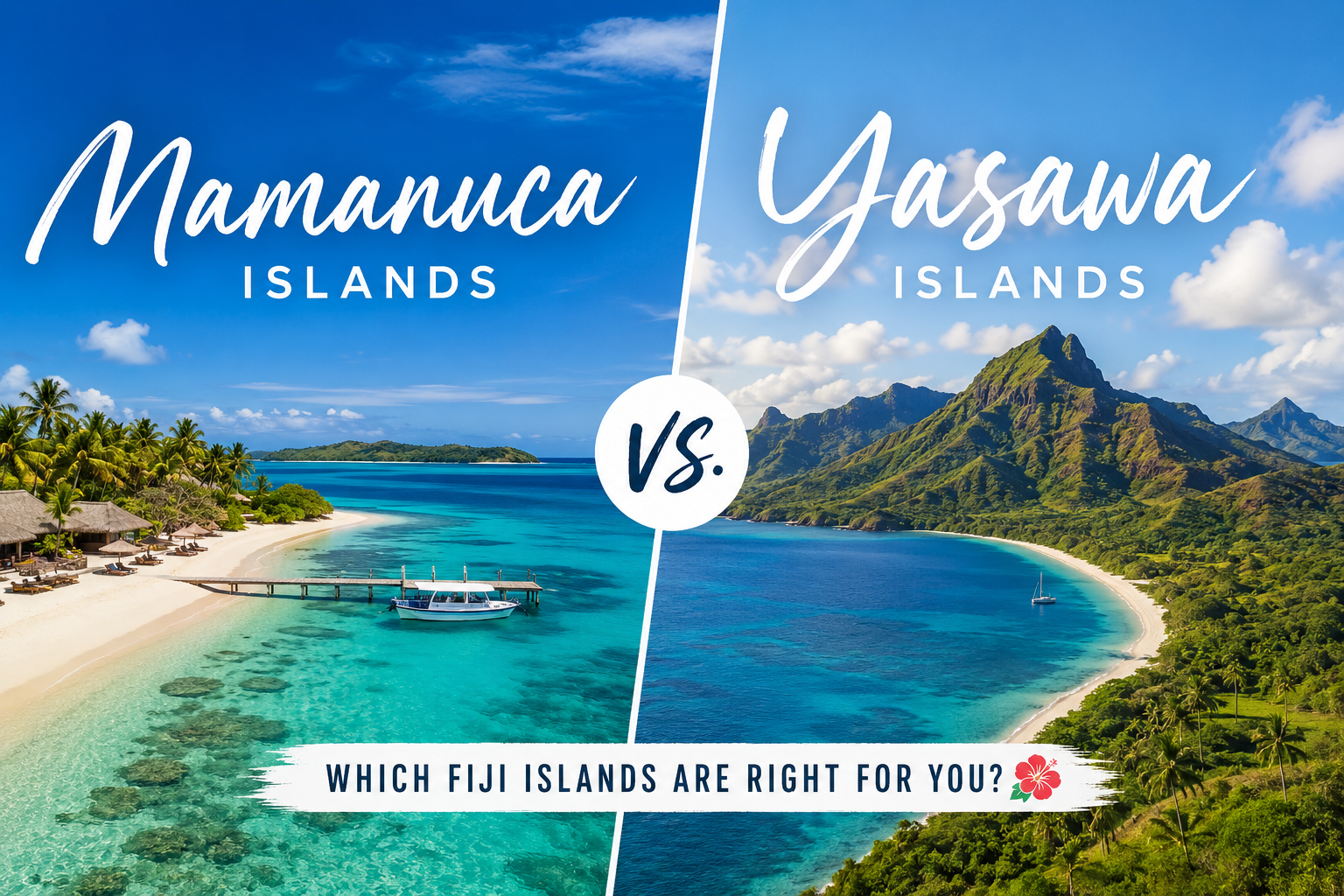
    Mamanuca vs Yasawa Islands: Which One Should You Visit in Fiji?

    There are hundreds of islands in Fiji, but the same two sets always come up when it comes to planning your trip — the Mamanuca Islands and the Yasawa Islands. Both promise light blue water, white sand beaches, and warm Fijian hospitality — but they each host very different travelers. Mamanuca vs Yasawa islands is one of the first choices you need to make when it comes to planning your holiday, and our guide lays out exactly what each has to offer.

    A Quick Overview

    The Mamanuca Islands Fiji are the most reachable island chain from any port (Nadi Airport) at just 20–40 km away. They are made up of approximately 20 islands, many partially or completely underwater at high tide. They are well developed for tourism, with numerous resorts, day-trip operators, and water sports facilities. On the other hand, the Yasawa Islands Fiji are made up of a chain of 20 volcanic islands that run about 80 km north of the Mamanucas! You couldn’t even get there as a tourist until 1987. It remains much less commercial, attracting tourists seeking an escape from crowds rather than resort comforts.

    How to get there: Accessibility and travel time

    Here, the winner is undoubtedly these Mamanucas. Time: Fast ferry from Port Denarau — 15–45 minutes depending on your destination. The seaplane transfer is similarly under 10 minutes. It is fully possible to take day trips from Nadi. The Yasawas require more commitment. The Yasawa Flyer catamaran leaves daily from Port Denarau and takes 2-5 hours (up to 8 hours for the northernmost end of this chain). Airplanes cut the quiet holiday, but come at a price. This amount of distance naturally weeds out the superficial, which is exactly why those who do visit treasure these Islands so deeply.

    Accommodation — Luxury Resorts vs Authentic Stays

    The best luxury and family resorts in Fiji are in the Mamanuca Islands. Here is where you will find the Castaway Island, Malolo Island Resort and Likuliku Lagoon (the only overwater bungalows in Fiji). If you are into luxury accommodation and global standard facilities, then the Mamanucas tick all the boxes. Yasawa Islands Fiji offers a contrasting option. From those lazy bird resorts to mid-range boutique resorts and low-cost bures (traditional Fijian huts) operated by families or local communities. Don’t go expecting room service and infinity pools — this is a place to come for eating with villagers, sleeping on the sand with little light pollution, and exploring Fiji beyond the tourist bubble.

    Things to Do Work on: What Can You Actually Go?

    Mamanuca Islands: Best suited for:
    1. Surfing — This is home to Cloudbreak, one of the best surf breaks on the planet
    2. Scuba diving & snorkeling on coral reefs
    3. Parasailing, jet skiing, and glass-bottom BOAT tours
    4. Day trips and island hopping
    5. Water parks suitable and designed for children (Plantation Island Resort)
    Yasawa Islands: Best suited for:
    1. Snorkeling with manta rays at the Yasawa Island Manta Ray Bay
    2. Swimming in caves — Blue Lagoon and the Sawa-i-Lau Caves are famous
    3. Village visits and kava ceremonies
    4. Hiking and exploring volcanic landscapes
    5. Kayaking in calm, uncrowded bays

    Who Should Visit the Mamanuca and Yasawa Islands?

    Pick the Mamanuca Islands Fiji if you: Have limited time, have young kids, want resort budget-comfort or plan to surf. A smart option too if you are new to Fiji and want easy access to everything. Pick Yasawa Islands Fiji. If you: want to unplug, are with your partner, like a bit of culture, and have no less than a week. The Yasawas earn higher marks for the more memorable experience, consistent with our conversations with backpackers and slow traveler types who frequent both.

    Cost Comparison

    The price of Mamanucas follows suit, however cover a wider range from budget day trip packages under FJD 150 to other luxury resorts priced in hundreds of USD per night. Generally, the Yasawas are more mid-range, but village homestays and budget bures keep them within easy reach for backpackers. Don’t forget to factor in ferry prices; the recent Yasawa Flyer (5-day and 14-day passes have ranged from FJD 279 to FJD 499).

    Frequently Asked Questions

    Which is Better: the Mamanuca Islands or the Yasawa Islands?

    Both are interchangeable in terms of choice as they offer different styles of travel. Mamanucas = best for convenience/luxury/families If you want to immerse yourself in a location, to explore, or if you’re travelers who’d like to avoid the crowds, you should go for those Yasawas. What you choose is entirely dependent on what you want from your Fiji experience.

    At each time, can you go to the Yasawa Islands as well as the Mamanuca Island religious?

    Yes, and that is kind of common. Typical Mamanuca & Yasawa itinerary Spend 2–3 nights in the Mamanucas (easily reachable from Nadi airport) and then take the Yasawa Flyer north for a further 3–4 nights in the Yasawas. You need a minimum of 7–10 days in total to really do both justice without being hurried.

    What islands are better for snorkelling?

    Both are superb for snorkeling, but the Yasawas win out on marine diversity – and uncrowded reefs. And if you have a desire to go snorkeling with manta rays, the Yasawa Islands — specifically around sunny Nanuya Lailai — is where your adventure lies.

    How Safe Are the Yasawa Islands?

    Yes. Tourists should be safe in the Yasawa Islands. Countries are constantly ranked as the most welcoming hosts in the world The standard travel-safety precautions apply — monitor local weather during cyclone season (November–April), and purchase good global travel insurance policies.

    Honeymoon: Which island group is better?

    For unadulterated romance and luxury, the Mamanucas have Likuliku Lagoon Resort with overwater bungalows — you really can’t beat it. By contrast, although the Yasawas have a more remote and rugged feel to them, they are also a far more affordable and intimate experience. The Yasawas tend to take the experience vote for couples on a budget.

    Final Verdict

    There is no right answer to the debate of Mamanucas vs Yasawas. The Mamanucas provide you access, diversity, and international-level resort infrastructure. The Yasawas offer distance, reality, and experiences that are not so easy to create. If you have the time, kill two birds with one stone. If you have to choose, let your way of travel be the judge and not those pamphlets. So, are you already ready to plan your Fiji island escape? Check out the full Fiji resorts and island experience guide at FijiDream.
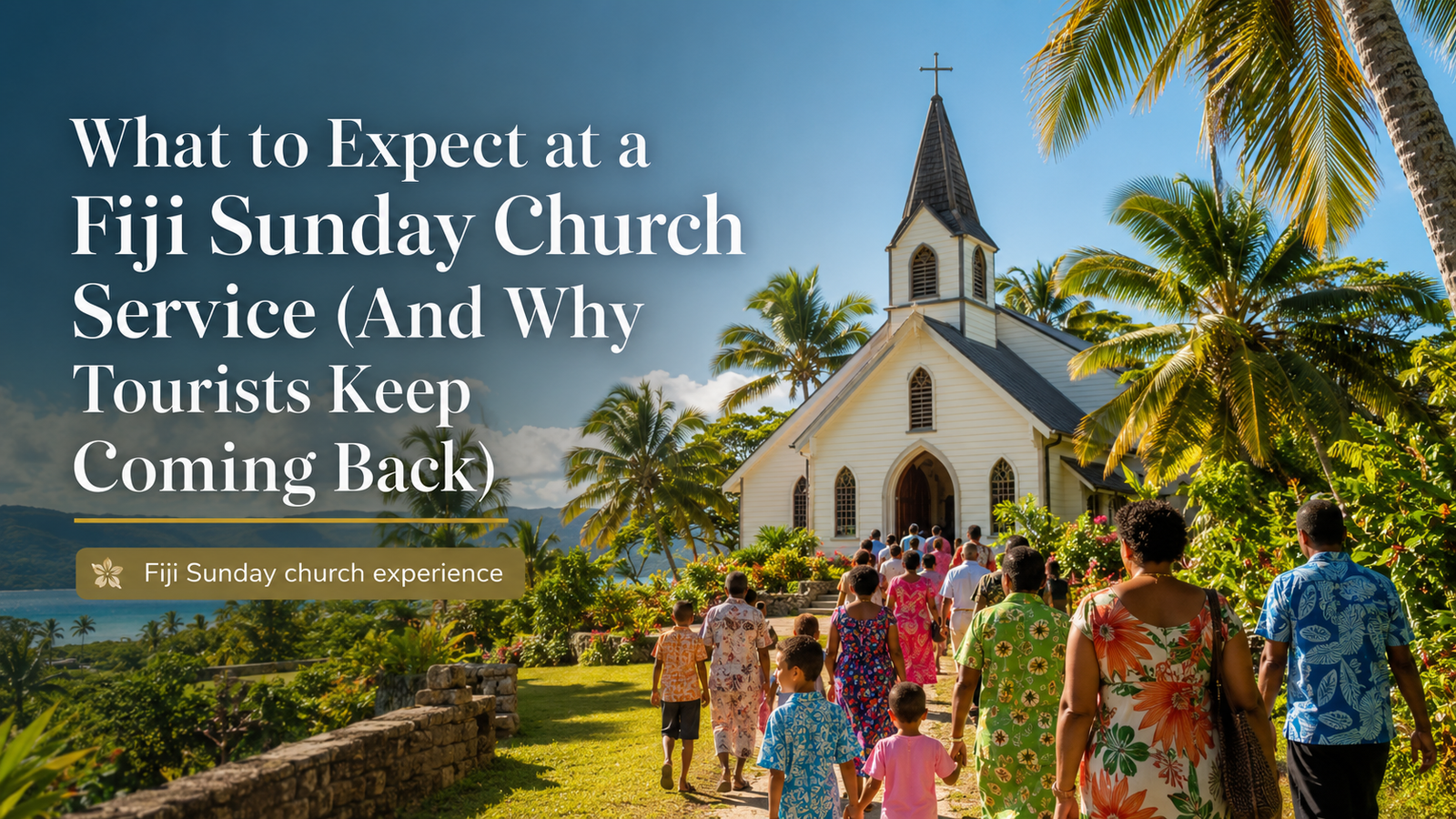
  • What to Expect at a Fiji Sunday Church Service (And Why Tourists Keep Coming Back)

    What to Expect at a Fiji Sunday Church Service (And Why Tourists Keep Coming Back)

    If you’d heard about the Fiji Sunday church experience and were wondering whether it is worth devoting part of your day to, well, in brief, yes; but that could be the best bit of your trip. Not because of the religion. Because of what goes on in there: a community coming together with a warmth and musical force that catches most newcomers off guard. But here’s the thing: these are the essentials you need to know before you go.

    The service starts sooner than you think

    In the villages in Fiji, most of the Sunday services start between 8 and 10 AM. If you’re at a resort, ask your host or concierge to set you up with a local village in advance. While it’s usually perfectly acceptable to show up without an invite in Fiji — locals are notoriously friendly — coordinating through your resort ensures a guide, proper dress code, and someone there to introduce you. Dress modestly. Shoulders and knees covered. No exceptions.

    Make you stop dead in your tracks

    The closest thing to being spellbound in the Fiji Sunday church experience is the harmonising. A natural four-part singing people, in a village church without instruments, the result is something extraordinary. It fills the room completely. There are tourists who even say that they stood for over a minute in the doorway before they were able to move. You don’t need to participate. You don’t need to do anything — stay silent and honour the person. However, you aren’t turned away if you know a hymn and feel comfortable joining in.

    Fiji Food Comes In After the Service

    At this time, this is where the experience completely transforms. Most villages will invite people to join them for a communal meal after the service. When you know this, then you can consider yourself actually introduced to Fijian food. Think dishes prepared in a lovo — an underground oven. Hearty fare consists of slow-cooked bananas, cassava, fish, and chicken steamed in banana leaves. Easy, wholesome, and definitely not bite-sized dessert buffet resort fare. If food is offered to you, take it. This is an impolite way to refuse without any reason.

    The Cuisine Of Fiji: What You Get In Terms of Eating And Drinking

    The Fijian food and drink culture shines with the food. You are served new coconut water, a fruit juice created in the home, or palusami — an opulent dish of coconut cream wrapped in taro leaves. Also, some traditional officials (chiefs) might serve Kava, which is the ceremonial drink made from ground pepper root, but this is usual at formal village ceremonies, not after church. It has an earthy and somewhat numbing taste. It’s perfectly safe. Saying yes, though, is respectful.

    What This Experience Actually Is

    It’s not a tourist activity. It’s not a performance. This is simply a community doing what it does every Sunday — and electing to welcome you as part of that. That distinction matters. Treat it like a guest and not as a tourist, and you may leave with something that no beach day can offer you. Which is why tourists continue to return to speak about it. It’s the Saturday morning in Fiji that nobody schedules, but everyone ultimately remembers.

    Frequently Asked Questions

    Is the Fiji Sunday church service for tourists only?

    Yes, in most cases. Fijians are extremely friendly and welcoming of visitors. The ideal way to ensure you’re going at the right time and rearward communal will be directed by orchestrating packs by your resort or a native manual.

    What to wear when going to a Fiji Sunday church service? Conservative clothing is essential.

    Women are required to cover their shoulders and knees (a sulu/wrapping skirt can often be found at the entrances to villages). Men should avoid shorts. Remove your hat before entering.

    If non-Christians are attending, is it respectful?

    Yes. You’re only there as an observer of a culture/guest Weeding through the noise, it is perfectly okay to sit quietly and respectfully — no matter your beliefs.

    Is there going to be Fiji food after the service?

    Not required, but strongly encouraged. Fijian hospitality is all about sharing a meal. The food you are given to eat in Fiji — taro, cassava, lovo-cooked meats — is fine, and the experience is true.

    Where can I find a village church to attend?

    Ask your resort directly. Most islands have good links with villages nearby, and it is often possible to organise a visit on a Sunday at short notice.

    Is there a cost involved?

    Usually, a nice gesture is to bring something small — kava root is the traditional gift.
  • Fiji 5-Star Resorts Compared: The Best Pick for Honeymooners in 2026

    Fiji 5-Star Resorts Compared: The Best Pick for Honeymooners in 2026

    In the past, Fiji has always had plenty of options for couples wanting to disappear into paradise. But when it comes to planning a honeymoon, “options” turns into kind of overwhelming — specifically when every resort touts itself as the most romantic spot on Earth. This Fiji 5-star resorts comparison cuts through the noise and shows you where to invest your break-the-bank budget and save a little romance.

    Why Fiji is Still the Honeymoon Winner

    However, despite the myriad of island destinations the South Pacific has to offer, it is Fiji that consistently provides something few other places can: sincere hospitality. Over to the other side of the world, here in Fiji, it’s more than just a phrase; it’s an underlying way of life: The Fijian term bula — a greeting that translates as “life; health; happiness”. You get it in every interaction, from the staff at a resort to locals in nearby villages — just a cultural baseline. For honeymooners, this matters. It’s just a room if the ambience around an overwater villa comes off as transactional. Amazing variety apart from the culture. You can get really close and easy access to Waisalai in the Mamanuca Islands or luxurious scenery very popular with tourists alone, you could travel further north into the Yasawas to find some solitude, or you can base yourself on the main island of Viti Levu for an easier climb between convenience and a fancy experience. May through October is the peak honeymoon season — less humidity, clearer water, and great snorkeling and dive conditions.

    Honeymooners: The Top 5-Star Options

    Best Hotel for Couples Who Want To Focus on Wellness (Six Senses Fiji)

    An easy speedboat ride from Nadi, but in entirely another stratosphere for design and wellness programming, Six Senses is on Malolo Island. Consisting of 85 pavilions, each villa here offers the rarely found amenities of its own plunge pool and outdoor soaking tub, plus a dedicated Guest Experience Maker to attend to your every whim during your stay. Throughout the brand’s sustainability ethos permeates — food is primarily garden-to-table, and the spa incorporates local healing practices. This is the pick to make if you’re in a couple that wants luxe but doesn’t need the flamboyant parties and high-octane activity programs. It is also all quiet, carefully calculated, and costly — dig deep into your pocket. But for a reconnection-focused honeymoon, it earns each aching dollar. Good for: Couples seeking a wellness retreat; in Tranquillo, all the glamour is self-contained.

    Tokoriki Island Resort — The Best Purely Romantic Escape

    Located in the Mamanuca Islands and adults-only, Tokoriki has based its entire identity around being a honeymoon resort. This team focuses on not only vow renewals and proposals but also honeymoon packages — dinners with champagne on the jetty, floating pool breakfasts, couples massages, and sunset cruises. A 15-minute helicopter journey from Nadi, it is tastefully away from the world’s eyes. It is intentionally boutique in scale, so the staff/guest ratio remains high and nothing feels rushed or overly populous. Tokoriki was certainly not just your average honeymoon spot (and we felt so serious)! Ideal for: Couples who prefer a fully curated experience with intimacy in mind, distraction-free.

    InterContinental Fiji Golf Resort & Spa — Most Suitable For Active Couple

    The InterContinental Trend on Natadola Beach — venerated as the premier seashore in all of Fiji with sets giving surf, golf strategy along the beach, tramp riding, and serious spa offices. Not as isolated as island options, but compensating action variety, and consistent quality across 266 rooms & suites. This is the move for honeymooners likely to go stir-crazy on a private island. The beach is great, and there’s even gently breaking, beginner-friendly waves directly in front of the resort: one of the rarity that can learn to surf without leaving the country of Fiji. Ideal for: Couples who are looking for activities with a little more structure, along with access to a top-notch beach – without being completely secluded.

    Best budget choice for adults-only: Tropica Island Resort

    Not all 5-star Fiji resort comparisons need to be of the highest cost level. Tropica enjoys a fittingly tropical setting, with thatched bures and plunge pools, but an adults-only policy (that’s literally enforced) and rates which are far more affordable than both Six Senses or Tokoriki. Good snorkeling from the jetty, diving at nearby reefs, and that warm, barefoot Fijian vibe you may not expect to find. This is where affordable Fiji resorts and real high-end experiences begin to converge. If the couple’s experience and how nice your bure is trumps brand prestige for you, then Tropica avoids that eye-watering nightly rate. Best For: Couples looking for genuine luxury on a more affordable scale.

    The Best Cheap Fiji Resorts to Consider (for a Honeymoon)

    The candid answer: it all depends on what you optimize for. It’s about $3,000–$8,000 per couple for a 7-night honeymoon in mid-range luxury. Luxury private island resorts are anywhere from beyond ₹8,000. However, if you’re ready to forgo some of the luxury for authenticity, inexpensive Fiji resorts — especially in the Yasawa and Mamanuca islands — can offer the vistas, the sunshine, and spirit at $50–$200 Night. In the Yasawas, places such as smaller boutique lodges are specifically aimed at couples who want to get away without paying a luxury price. The compromise is accessibility: longer ferry transfers and fewer resort services. For some couples, it is a tradeoff worth making. For some, the comfort and service level of a genuine 5-star hotel make it worth the price. Many properties save major bucks on peak rates during shoulder season — April to May, and October to November — sometimes with discounting of up to 30-40% without a significant sacrifice on weather.

    The Bottom Line

    We have all you require to decide which Fiji 5-star resort is best for your honeymoon. Tokoriki took home gold for the best-selling resort overall. Romance-first travelers are defaulting to Tokoriki, as well. Wellness and design: Six Senses wins. The edge on activity for InterContinental and the beach sand quality. Against all those luxury competitors, Tropica wins on value. What they can’t get wrong at all: Fiji. Most of this work, the warmth and water, and the island pace. Your only job is to choose a resort that leaves you unencumbered by that.