Author: FijiDream Admin
-

Have You Seen These Fiji Man-Made Attractions?
Think of Fiji for a second. You probably see the postcards — the leaning palms, the glassy water, the kind of green that almost doesn’t look real. And that’s true enough. But there’s also a side of Fiji most travelers miss — a quieter one, built not by waves or wind, but by people and their stories. These are the Fiji man-made attractions that show how the spirit of the islands runs deeper than the coastline. Wandering through them feels like flipping through Fiji’s memory — the old and the new sitting side by side. You’ll find sacred temples, sleepy villages, movie-famous islands, and even resorts that somehow balance luxury with tradition. And after a while, you start to see it: Fiji isn’t just beautiful, it’s expressive. It’s alive with art, belief, and craft. Among the most fascinating Fiji man-made attractions are the ones rooted in faith and tradition. -

What Makes Castaway Island Fiji So Special for Families? A Parent’s Guide to Paradise
Family vacation planning is a detailed task. It involves comparing airfare, reviewing hotels, and assessing childcare options. The objective is a successful trip where children are active and parents are relaxed. Castaway Island Fiji is widely recognized for meeting these needs. This island has earned a strong reputation among families. Its appeal comes from a combination of factors that work in harmony. Visitors often describe a feeling of immediate relief upon arrival. The resort spans 174 acres and functions as a self-contained zone for exploration and fun.The Arrival: Where “Bula!” Becomes a Feeling
The journey to Castaway is part of the magic. With every meter the boat puts between you and the mainland, your everyday stress melts into the ocean. And there it is: the perfect island cove, a line of swaying palms, and your welcoming party—not with paperwork, but with open arms and a joyful song. Your first “Bula!” is a genuine Fijian welcome. The staff’s warmth is immediate and personal, especially with children. They often kneel to place a flower in a child’s hair and learn their name. The check-in process is done casually on the beach with a welcome drink. This immediate, personal treatment makes it clear that you are valued as an individual, not just a reservation.The Lairo Kids’ Club: Where the Magic Really Happens
Many resorts have a kids’ club. Castaway Island has the “Lairo Club,” and the difference is profound. This isn’t a service; it’s an experience that your children will genuinely beg to attend. Under the direction of a group of “Bula Buddies” who appear to have a limitless amount of patience and enthusiasm, the event is a well planned exploration of Fijian culture and pure, unadulterated fun. Forget video games and television. You’ll see the kids completely absorbed in different activities throughout the day. For one hour, they’re focused on weaving palm fronds into simple shapes. Later, you might hear the excitement of a hermit crab race starting. They naturally pick up Fijian words from the staff. And rather than regular face paint, they use natural dyes with patterns that actually mean something here. The genius of the Lairo Club is its flexibility. Scheduled sessions make planning easy. Parents get guaranteed alone time. Since you know the kids are safe and happy, you can truly relax. Read a book. Enjoy a long lunch—all worry-free.Designed for Family Connection (and Disconnection)
Your ideal abode is a traditional Fijian bure. They are perfect for a pleasant, adventurous stay. For a youngster to nap or an adolescent to enjoy the sky at night, a comfortable daybed on the porch is ideal. And the best feature? You’re only steps from the beach. It’s so easy to go back and forth that your family can spend the whole day living in your swimsuits. For larger groups, the “Quarters Resort” is a great choice. This setup gives several families their own private bures while sharing a pool and common area. It’s ideal for those big, memorable evening barbecues where the laughter never seems to stop. Then there’s the pool. This isn’t just any pool. It’s free-form shape winds through the resort, acting as the social center of the island. Children like splashing in the shallow, protected areas. Parents appreciate the opportunity to cool off with a swim-up bar drink. It’s the type of location where parents unwind close by while children make new friends from all over the world.Adventures for the Whole Tribe: Beyond the Pool
Of course, you could easily spend your whole stay right on the island. But for families wanting to explore, Castaway is the perfect launchpad for adventures in the Mamanuca Islands. The trips you take from here will become the stories your family tells for years.Snorkeling Right Off the Beach
The water right off the beach is a protected marine park. The resort has free snorkel gear, so you can just decide to go. There’s nothing like holding your child’s hand while you both float over the coral for the first time.Day Trips to Remember
Two popular boat trips are Cloud 9 and Modriki Island. Cloud 9 is a pizza bar on the water. Modriki is the island from the movie Cast Away. Both are fun, easy excursions that families enjoy.The Culinary Ease: No More “Picky Eater” Battles
Dining with children on vacation can be stressful. Castaway Island eliminates this with a brilliant and flexible meal plan. The food has a wide variety of choices. There’s always simple food for kids, plus more interesting options for adults. They also use a “no wallet” system. You just sign for whatever you order. This makes it easy to get snacks and drinks anytime you want.The Unseen Ingredient: The Fijian Heart
In the end, what makes Castaway Island, Fiji so special isn’t just the scenery. It’s the Fijian people. The staff quickly become more than just employees; they feel like friends. They learn your children’s names and their little preferences. You’ll see them sharing a high-five with your son or teaching your daughter a Fijian word. This creates a special feeling of safety. Parents feel secure letting their children have more independence. This authentic hospitality is the most memorable part of the trip. The farewell song is emotional precisely because the connection with the staff is so genuine.The Legacy You Take Home
You don’t just leave Castaway Island Fiji, with photos. You leave with shared memories: your child’s snorkeling breakthrough, the fun of a hermit crab race, the taste of perfect mango. You leave remembering what it feels like to be completely present with your family. This is what makes the Castaway Island Fiji so special. It redefines luxury. Here, luxury means having uninterrupted time with your family. It means a genuine connection without distractions. -

Creating Unforgettable Memories on Denarau Island Fiji
Fiji sunset is never subtle. It exists in a spectacular show of color, covering the sky with gold, rose, and orange tones. This scene is best viewed in its ideal frame through the shores of Denarau Island, Fiji. It is not just a pin on the map, but a well-tended doorway into the Fijian soul — a gateway where easy luxury and the true essence of the Fijian Bula spirit come together to create memories that can be cherished for a lifetime. Numerous tourists come with ideas of distant, isolated places. Denarau Island has a distinct charm. The area was designed to offer a comfortable and convenient base for experiencing Fiji. It is the magic of not going through but allowing the individual rhythm of this special place to happen.The Arrival: Where the “Bula Spirit” Lives
Here, the world shifts. There are flawless roads and gardens full of color, with palm trees that stand as graceful guards. The welcome is not a process, but a chorus of Bula! — a Fijian term that grants a wish of life and good health, said with such smiling faces that they beam with true warmth. Such instant access to mythical hospitality creates the context of a whole stay where human connection is established from the very outset.A Tapestry of Resorts: Home in Paradise
In this case, accommodation is more than just accommodation; it is part of the experience. The island is home to a series of integrated resorts, each with a unique personality but a single thread of excellent character. Whether attracted by the colorful and family-centered bustle of one venue, the adults-only respite of sophisticated tranquillity, or the expansive luxury of a seaside retreat, guests discover a home where they get comfortable. Large rooms with personal balconies and breathtaking swimming pools are expected. Days can be happily spent when most resorts have swim-up bars, separate water parks, and numerous places to dine, so a person does not have to leave the premises. It is one of the strengths of Denarau Island Fiji, that everything is well connected. Forget about having to eat at just one hotel restaurant. Every night, you may discover a new gastronomic scene here. Imagine a fun, family-style Italian dinner the next evening after a private, stargazing beach BBQ. The secret to an exciting trip is this eating flexibility, which takes away the burden of choosing where and how to pay for your next delicious meal.The Heart of the Action: Port Denarau
Any visit is not complete without visiting Denarau Island. Everything centers on the marina. There is a steady stream of boats, ranging from the big island ferries to tiny individual charters. You may reserve a tour, buy a memento, or eat while taking in the scenery of the ocean along the waterfront. A waterfront grill lunch featuring freshly caught mahi-mahi and a view of the world going by is an easily achieved, though deeply experienced delight. The enjoyment of a luxurious scoop of homemade ice cream as one loiters around the local crafts market is an experience that will hardly be forgotten by the taste buds. As evening falls, the life of the port changes. There is live music drifting out of open-air bars, the setting sun turns honeyed and golden, and the moored boats are cast in a warm light. It’s also your gateway to epic day trips: claim your place at the legendary Cloud 9 or race upriver on a jet boat. Think of the port as the island’s lively center stage, perfectly blending the resort’s tranquility with the wild diversity of the Fijian islands.Beyond the Beach: Building a Unique Story
The beaches are beautiful, but your best stories won’t start on the sand. They start when you go exploring. For some, that’s a round of golf on a course where the views of the ocean are almost distracting. For families, it’s the pure delight of watching a child get totally engrossed in learning to weave a basket or hearing their laughter when they play in a specially designed pool. In the morning, you could work on a tropical farm, discover unusual tropical fruits, and get to know native Fijian iguanas. You may have a traditional Fijian Bobo massage in the afternoon at a resort spa that uses indigenous methods and natural materials. However, some of the greatest recollections are usually created during quiet moments of human interaction. It is the collective laughter with new friends over a bowl of kava in a welcoming ceremony. It is a genuine conversation with an employee eager to share their culture and life. It is the singing of a Fijian choir in unison in church on a Sunday, which every visitor is welcome to attend. These are the souvenirs — the souvenirs carried home in the heart.A Parting Such as Time Begins
The need to pack a suitcase as the stay in this island refuge comes to an end is an exercise in collecting scraps of sensibilities: the smell of tropical flowers, the feel of hot sand on the feet, the sound of laughter, and the deep feeling of inner calm. Leaving Denarau Island, Fiji, is not a goodbye but a Moce (pronounced “mo-thay”), a Fijian farewell that carries within it the promise of coming back. The memories made here go beyond a camera roll. Denarau Island, Fiji, is your starting point—a beautiful introduction designed to make you fall in love with Fiji, and to ensure that love affair never ends. -
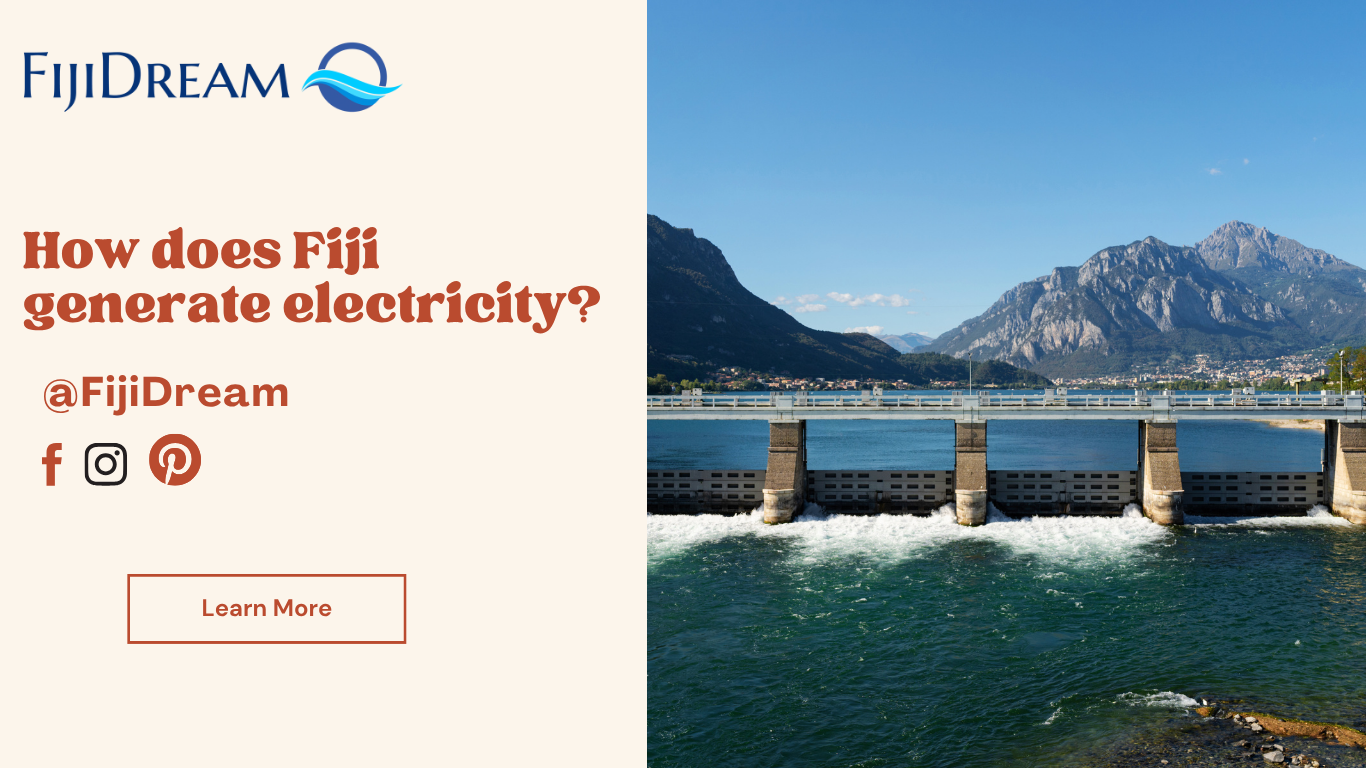
How does Fiji generate electricity?
You know, when you dream of Fiji, what do you see? I’ll bet it’s white sand beaches and blue water. You’re probably not picturing power lines and generators. But here’s the thing—someone has to keep the lights on in paradise. That electricity is what makes modern Fiji possible. It powers the neighborhood health clinic, keeps your hotel room cool, and enables children to complete their homework after dark. The story of energy resources in Fiji is fundamentally shaped by this challenge: it is extremely difficult to provide power to everyone in a country with so many islands, and this difficulty impacts everything from tourism to healthcare.Hydropower: Fiji’s Energy Workhorse
The biggest slice of Fiji’s electricity pie comes from water. It’s funny how geography decides your fate sometimes. Take Fiji’s hilly landscape and all that heavy rainfall—it was almost inevitable that Fiji would turn to hydropower. And that’s precisely what happened—it’s now their primary renewable energy source. The Monasavu Dam is in the middle of it all, hidden away in the mountains. It was built in the 1980s, and it’s been absolutely central to powering the country since. The beauty of the idea is that it is simple. Power is produced by releasing water from the reservoir, which turns a few turbines. Moreover, more than half of Fiji’s power is produced by this one dam when the rains fall as they should. That’s not a little victory; for an island nation like Fiji, it’s a major benefit for the environment. It’s no wonder that hydropower has become the cornerstone of energy resources in Fiji. Of course, water is a blessing and a curse. When drought hits, reservoir levels drop and output falls. That’s when Fiji leans on its backup options — and those backups often involve imported fuel.The Diesel Dilemma: A Necessary Evil
Let’s be honest, diesel gets a bad rap for good reason. It’s expensive to import, it’s dirty, and on paper, it seems like the last thing you’d want. But in the islands, the story is different. For many smaller, remote communities, a diesel generator isn’t just an option; it’s like a lifeline. Stringing a power line from the main island is a financial fantasy. So, that loud, smelly generator? It’s what powers the clinic, the school, and the homes. Even on the main grid, when the rains don’t come and the hydro dams run low, diesel is what keeps the lights on. The downside hits right in the wallet. Fiji spends a fortune every year just to import the fuel, not to mention the headache of getting barrels across stormy seas. Everyone wants to phase it out, and you can see why. But the reality is, until we have something better that can reach every island, diesel is a frustrating part of life we can’t just wish away. So, the story of energy resources in Fiji has long been a tale of two giants: water and diesel.New Energy on the Block
Alongside the big hydro dams and the dependable diesel, newer players are slowly making their mark.- Solar: This one’s a no-brainer. Fiji has sunshine in abundance. You’re starting to see panels on village rooftops, powering schools, and even some resorts use them as a badge of honor to attract tourists who care about the environment.
- Biomass: Fiji’s got a long history with sugarcane. The remaining stalks are now burnt to generate electricity rather than being wasted. It’s a clever strategy to increase the value of the farms we now own.
- Wind: There’s a small wind farm down near Sigatoka, which is a great experiment. The wind can be a bit fickle here, so it’s not the most reliable source yet, but it’s proof we’re looking at every possibility.
The Challenges of Powering an Island Nation
Keeping the lights on across Fiji’s many islands is a challenge shaped by the sea itself. The country isn’t one piece of land but a collection of separate communities, each needing its own power source. Stringing cables underwater to connect everyone is a financial non-starter. This scattered geography is the first and biggest hurdle. Then comes the delicate dance of supply. Fiji mostly uses hydropower. But when rain is scarce, the country turns to diesel. This creates a tricky dependency. Fiji’s electricity costs become tied to global fuel prices, meaning events in far-off markets can send bills soaring locally. Nature itself is another constant test. The threat of cyclones hangs over everything. These are not only storms; they are dreadfully frequent occurrences of catastrophe. The electricity grid might be destroyed by a direct strike, which would flatten transmission lines, break solar arrays, and choke hydro intakes with debris. As repairs are made over difficult terrain, the lengthy and difficult restoration process can leave remote towns without energy for weeks at a time. The future of energy resources in Fiji is incredibly ambitious: 100% renewable by 2030. With all these issues, that goal takes some serious nerve. You can’t just pick one fix. The only way it works is by trying a bit of everything all at once: shipping solar panels to the islands stuck on diesel, patching up the old Monasavu dam, figuring out how to burn cane trash for power, and getting companies to chip in their own cash. Let’s be clear, though: money isn’t the main issue here. It is a survival tactic. And the crazy thing is, while everyone else is just talking, a tiny place like Fiji is actually doing it. And critically, this isn’t a path being walked alone. Fortunately, the World Bank and Asian Development Bank contribute vital financial and technical support, and close allies like Australia and New Zealand also chip in with consistent, direct help. And with this, a tiny country like Fiji can actually lead the pack on switching to renewables, with the label of using renewable energy in Fiji. So, where is Fiji right now? The honest answer is… in the middle of it. Hydropower still provides the majority of our electricity. The diesel generators take over when that is insufficient. Also, you see that wind and solar energy are always increasing. Fiji is dedicated to proving that size does not matter when it comes to a sustainable energy future. It is challenging, really. A single cyclone may ruin everything. But the goal is crystal clear: get off diesel, for good. For Fijians, this isn’t just some government project. It’s about breathing easier with cleaner air. It’s about the lights staying on after a storm. So next time Fiji comes to mind, sure, picture the beaches. But also picture a solar panel on a school roof. Picture a community working together. Electricity means more to Fiji than simply turning on lights. It’s about creating a solid and safe future for their children. The evolution of energy resources in Fiji is about more than megawatts. Simply said, it’s about hope. -
Quality of Education System in Fiji
So, we all know the picture-postcard version of Fiji. It’s all beautiful coasts and warm smiles. But if you peel back that layer, you’ll discover something as vital, but considerably less discussed: the classrooms. The sites where Fiji’s future is being shaped, one student at a time. Discussing the “quality” of the education system in Fiji can feel somewhat clinical. It’s not just about test scores or the number of computers in a lab. Here’s the thing about education in Fiji – it’s personal. It’s about a child in a rural village discovering the magic of reading. It’s a high school student in Suva studying late into the night, dreaming of university. It’s communities wrestling with how to honor generations of tradition while preparing their children for a global future. This isn’t some neat, textbook story. It’s complicated. It’s messy. But if you look closely, it’s also incredibly powerful. It makes one curious how schools actually work across hundreds of islands. Is it the same experience for everyone? As you would expect, the answer is a resounding nay. Fiji’s educational quality is a story of two realities: remarkable progress and obstinate obstacles. Let’s make an effort to understand what’s actually going on in those classes.So, How is School Set Up Over There?
First things first, let’s map it out. The Fiji School system will look familiar on the surface. Kids start with primary school for eight years, then move on to secondary school for another four. After that, there are universities and technical colleges. But the devil is in the details. The real story isn’t in the structure; it’s in the delivery. In big towns like Suva or Lautoka, schools often have decent facilities. You’ll find libraries, science labs, and maybe a computer room. It feels… well, like a school. Now, take a boat to a smaller, outer island. The picture changes. The school might be a cluster of simple buildings. Resources are thinner on the ground. The instructor can be overseeing many grades in a single classroom. That’s just the reality of being a nation of islands—it’s not anyone’s fault. The government has done a lot to make education free and accessible, but “accessible” doesn’t always mean “equal.” This is one of the fundamental challenges facing the Education system in Fiji.What Fiji Absolutely Gets Right
Let’s talk about the wins, because there are plenty. One of the most obvious strengths is the multilingual magic. Take a moment to consider that. That is a superpower of the mind and culture that many children in other places just do not acquire. It’s more than simply a course; it’s a life skill that captures the rich diversity of Fijian culture. Another huge plus is the profound cultural respect for education. Teachers are held in high esteem. Families, even those with very little, make big sacrifices for their children’s schooling. This isn’t a given everywhere in the world. That bedrock of support gives the system a fighting chance. It means that even when resources are low, the will to learn and teach is often very high. And let’s not forget the people Fiji’s system has produced. Fijians are leaders in fields across the Pacific and beyond—in medicine, in business, in hospitality. They didn’t come from nowhere; they came from these schools, proving that a solid foundation is indeed being laid.The Other Side of the Coin: Where Things Get Tough
Now, for some honest talk about the hurdles. But let’s be honest about the tough parts. The difference between city schools and village schools can feel like night and day. In a city, the worry might be about getting the latest tech. But out in the villages, the challenges are much more fundamental. It’s about whether there are enough textbooks for every student, or if the generator will keep the lights on through an afternoon thunderstorm. Convincing a talented new teacher to move to an isolated island, where modern comforts are scarce, remains one of the system’s toughest hurdles. It’s a hard ask, and it leaves many rural schools constantly searching for staff. These gaps present a real test for the overall Education system in Fiji, which has to find ways to deliver consistent quality across such varied landscapes. Then you have the whole exam dilemma. A common worry expressed by parents and educators is that education might feel too much like exam practice. There is concern that the pressure to perform well on a significant final test may be displacing the genuine enjoyment of learning and the growth of useful abilities. It raises the question of whether we are preparing children for the test of life or helping them ace an exam.So, What’s Changing?
The good news is that things aren’t standing still. You can see flickers of change. The pandemic, for all its misery, forced a leap into digital learning. Radio lessons reached remote islands, and teachers learned to use online tools. It was a crash course in innovation. There’s a cool trend in some Fijian schools toward practical learning. Students might develop a little garden or a small company in place of merely reading books. There’s a real push to value problem-solving over straight memorization. It’s a gradual but important change.Why All of This Really Matters
You might wonder why an article about the Fiji School System and the education system is worth your time. Here’s why: education in Fiji isn’t just a local issue. It serves as a gauge for something more significant. Is it possible for a small, resource-constrained island nation in development to produce a generation that is both culturally and globally competitive? It appears that the response is a cautious “yes, but it’s hard.” The difficulties are genuine and are influenced by the economy and geography. But the determination is just as real. The progress made in the decades since independence is nothing short of remarkable. The quality of the education system in Fiji will ultimately determine everything—from the strength of its economy and the health of its democracy to its ability to face a changing climate. It’s the single most important investment the country can make. And from the progress visible so far, despite the obstacles, there’s a huge amount of will to get it right. The classrooms of Fiji aren’t just places of learning; they are the engines of the nation’s future. -

Top Car Rental Services in Fiji
The first thing you notice in Fiji is the warm, humid, and fragrant air that is infused with flowers and sea salt. Everything appears to slow down at that instant. Schedules become less rigid and the present moment takes precedence during “Fiji time,” a rhythm that is felt rather than described. It’s simple to stick to what you know, such as planned excursions, hotel shuttles, and schedules. These choices are unquestionably practical, cozy, and safe. They show you the Fiji everyone sees—the famous beaches, the well-known sights, the resorts featured in brochures. But another Fiji is waiting beyond the familiar path. One found down unmarked roads, at quiet local markets, or along hidden stretches of sand where the only footprints might be your own. It’s your ticket to pure freedom. And figuring out your wheels? Well, that’s where this guide to the top Car Rental Services in Fiji comes in. We’re going to walk through the best options for snagging a set of keys and hitting the road.Why Your Own Wheels is a Total Game-Changer
Let’s cut to the chase. Fiji is far larger than you may imagine. There is a lot of terrain to cover on Viti Levu, the biggest island. Dependent on cabs or public transportation for everything? That’ll quickly eat into your time and budget. This is where exploring your options for Fiji Car Rentals becomes your first smart travel move. Having your own car changes everything. Imagine this: you’re driving the Coral Coast and see a sign for a waterfall. On a tour, you’d have to wave goodbye. In your own car? You turn the wheel. That spontaneity is priceless. It’s also way cheaper for families or groups. Splitting the cost of a rental and some petrol is more cost-effective than paying per person for every transfer. You get to call the shots, and that’s what a real holiday is all about.The Lowdown on Car Rental Services in Fiji
Now, not all Car Rental Services in Fiji are created equal. Before we get to the top picks, here are some things that you may always look for:- The Right Car: A little hatchback is fine for Nadi, but if you’re dreaming of dirt road adventures, you’ll want something with a bit more muscle.
- Convenience: Is there a desk right at the airport? If not, do they offer a free shuttle? After a long flight, you don’t want to be messing around.
- One important factor is the human touch. A helpful, amiable staff may make all the difference, particularly if there are any difficulties.
- No Nasty Surprises: Always look for transparent pricing. What’s the real total cost after all their fees and insurance?
- Local Intel: Local companies often have the best tips—like which road is currently washed out or where to find the best lovo feast.
Top Picks for Your Fiji Ride
Okay, here’s the main event. After comparing the market, these are the providers of Fiji Car Rentals that consistently deliver the best overall experience.1. Avis Fiji: The Go-To for a Smooth Start
If you’re the type who likes knowing exactly what you’re going to get, Avis is your safe bet. Their counter is right there in Nadi Airport, which is just so easy when you’re bleary-eyed from a long flight. Why you would like them: It’s all about reliability. Their cars are modern, clean, and well-maintained. You can get anything from a tiny eco-car to a massive SUV that can fit the whole family and all your beach gear. The procedure is efficient and expert.2. Budget Rent a Car: Your Wallet’s Best Friend
The name says it all. Budget is a fantastic choice if you’re watching your spending but still want a dependable car from a brand you know. Why you would like them: They just offer solid value. Some of their weekly rates are really hard to beat. You still get a good car and the peace of mind that comes with a big company, without the premium price tag. Go for them if: You’re looking for a great deal, especially for a longer trip.3. Central Rent-a-Car: The Local Favourite
Now, if you want to feel like you’re renting from a friend rather than a corporation, you’ve got to check out Central. This isn’t some faceless chain; it’s a locally owned business that genuinely cares about its customers.4. Thrifty Car Rental: The Solid All-Rounder
Thrifty is another great option that sits nicely in the middle. They’ve got the airport convenience but often feel a bit more personal than the very biggest brands. Why you would like them: They’re just consistently good. So many people have had flawless experiences with them. Their cars are reliable, and their staff are known for being really helpful. Go for them if: You want a straightforward, reliable rental from a company that knows what they’re doing.5. Rosie Holidays: The One-Stop Shop
You might know Rosie’s for their tours, but they also rent cars! Their big advantage is that they know Fiji’s tourism scene inside and out. Why you would like them: If you’re already booking other parts of your trip through them, adding a car is super easy. They get what travellers need and can give great advice on where to go. Go for them if: You like the idea of bundling your car with other activities and dealing with one company for everything.Don’t Get Caught Out: Essential Rental Tips
Booking the car is one thing, but here’s the real advice to make sure your trip is smooth sailing.- Book Early: We can’t stress this enough. During peak season, the good cars go fast. Locking it in early also means better prices.
- Insurance – Read It!: Please, please don’t just skip the fine print. Understand what the “excess” or deductible is. If you have a fender bender, you could be liable for thousands of dollars. For a few dollars more a day, you can usually reduce that excess to zero. It’s worth it for peace of mind.
- Inspect Your Car: Before you drive off, do a quick video on your phone. Walk around the car and film any existing scratches, dings, or interior stains.
The Key to Your Perfect Trip
At the end of the day, choosing the right Car Rental Services in Fiji is about more than just getting from A to B. It all comes down to finding the right companion for your quest. The proper firm provides you with a dependable vehicle and the confidence to explore everything that this stunning country has to offer. Fiji’s waiting for you! -

Role of Fijian Security Forces in Maintaining Discipline
You know that feeling of safety? The one that allows you to laugh with pals in a town square or keep your window open on a beautiful night without thinking twice? Although we frequently take it for granted, tranquility is not a coincidence. It’s a carefully maintained reality, and its foundation is discipline. It’s the glue for any society. In Fiji, that crucial, often invisible work falls to a group of dedicated men and women. We’re talking, of course, about the Fijian Security Forces. Look, it’s simple to think of it as a collection of rules. However, in reality, it goes well beyond that. This innate sense of service and doing the task well is a fundamental aspect of who they are. The discipline they live by every single day doesn’t stop when they finish their shift. You can feel its effect everywhere, from keeping the peace in a small community to the work they do on massive international missions. This piece aims to pull back the curtain a bit on how they create that culture, and how that focus internally is what keeps us all safe externally.Alright, so who makes up the Fijian Security Forces?
Simply said, it is a collaboration between two major groups. They have distinct day-to-day tasks, but they are basically on the same team and have the same goal: to watch out for Fiji. First up is the Republic of Fiji Military Forces (the RFMF). Most of us picture them handling big, external threats, and that’s definitely part of it. But their role has gotten a lot broader. Honestly, they’re just as likely to be the first ones we see helping us dig out after a hurricane or heading overseas as peacekeepers, where they’ve built an amazing reputation. Then you have the Fiji Police Force. You’ll see these police out and about most days. They’re the people you really engage with—the recognizable faces patrolling the area, investigating events, or resolving a traffic jam. They’re our first line of defense, really. It’s all about nipping things in the bud before they escalate. The military stands ready for the major catastrophes, but the police are the ones embedded in our communities, tackling the immediate issues we face on our streets. Different chains of command, sure, but they operate as a single, cohesive shield for the nation. They are the Fijian Security Forces.Building from the Inside Out: Discipline Within the Ranks
Here’s the thing you have to understand: you can’t enforce a standard you don’t live by. The ability of our security forces to maintain order in our communities is 100% dependent on the discipline they cultivate within themselves. And that doesn’t happen by chance. It starts the moment a recruit signs up. Basic training is legendary for a reason. The training’s real point is to shatter that solo mindset. It’s not about you anymore. They put you through the wringer—it’s exhausting, it messes with your head, and it’s meant to. Out of that, they build something new: a shared sense of duty, the instinct to follow a good order, and the kind of trust in your team where you stop thinking about yourself and start acting as one unit. That famous Fijian discipline you hear about from international commanders? It’s forged in those tough, early days. But it doesn’t end after boot camp. That disciplined mindset is passed down through a shared understanding of what’s right—from the crispness of a uniform to keeping a cool head under pressure. And if someone stumbles? The unit itself has its own way of setting things right. It’s this internal compass, this commitment to holding each other accountable, that truly keeps the institution’s backbone strong and its reputation solid. This internal grit is what lets a Fijian unit hold the line in a tense place like the Golan Heights or allows a police officer to de-escalate a heated argument on a street corner with calm authority.The Ripple Effect: Keeping Order in Our Communities
So how does that internal discipline actually help you and me? It translates into action in a few key ways. The most obvious is the daily work of the Fiji Police. Their patrols, their investigations, their very presence, it’s all about upholding the law. But it’s their disciplined approach that makes it work. When they act with fairness and respect, it builds public trust. It’s about leading by example. Then there’s the RFMF’s role at home. We’ve all seen it after a bad cyclone. When the winds die down and the rains stop, who’s there clearing roads with chainsaws, distributing supplies, and helping evacuate those in danger? Our soldiers. Their logistical skill and organized, disciplined response in a crisis is a literal lifesaver. Their calm, capable presence brings order when everything else feels chaotic, reinforcing the foundation of Security in Fiji.From Our Shores to the World: The Peacekeeping Legacy
If you want the ultimate proof of this discipline, look at Fiji’s incredible reputation on the global stage. For a small nation, our contribution to UN peacekeeping is huge. Fijian soldiers are in demand because of one thing: their profound professional discipline. In hellish places like South Sudan, Lebanon, and Iraq, it’s not just about having a gun. In fact, that’s the last resort. Their real tool isn’t force—it’s patience, understanding, and good sense. It’s about talking things down, not escalating. A calm presence can often do more than a show of strength. International commanders consistently sing the praises of Fijian troops for exactly this reason. Their discipline makes them effective peacemakers, bringing incredible pride to our nation and proving that the standards of Security in Fiji have a powerful place in the world.The Tough Parts: Navigating Modern Challenges
It wouldn’t be fair to paint a perfect picture. This path isn’t an easy one. It’s a tough job. The Fijian Security Forces are battling modern problems—cybercrime, international gangs—while trying to stay true to who they are. And honestly, the country’s past political struggles have made things between the public and the military… complicated. Moving forward as a disciplined, apolitical force under a democratic government is an ongoing journey of building and keeping the public’s trust. On peacekeeping missions, the dangers are more complex than ever, as they face insurgents and ambiguous threats that test their discipline every single day.Why It All Matters: The Foundation of Our Future
So, why does all this talk about discipline really matter? Because the discipline of the Fijian Security Forces is the bedrock of our normal lives. It’s what lets our kids play outside safely. It’s the confidence that when disaster strikes, someone capable will show up. It’s the pride we feel when we see our soldiers representing Fiji with honor in the world news. Their unwavering commitment to discipline within their own ranks is what makes them effective protectors of our nation. It’s their greatest strength and our greatest asset. For us here at home, it provides the quiet, steady assurance of order. For the world, it offers a model of service and a reliable partner for peace. That discipline is, and will always be, Fiji’s unseen backbone. -
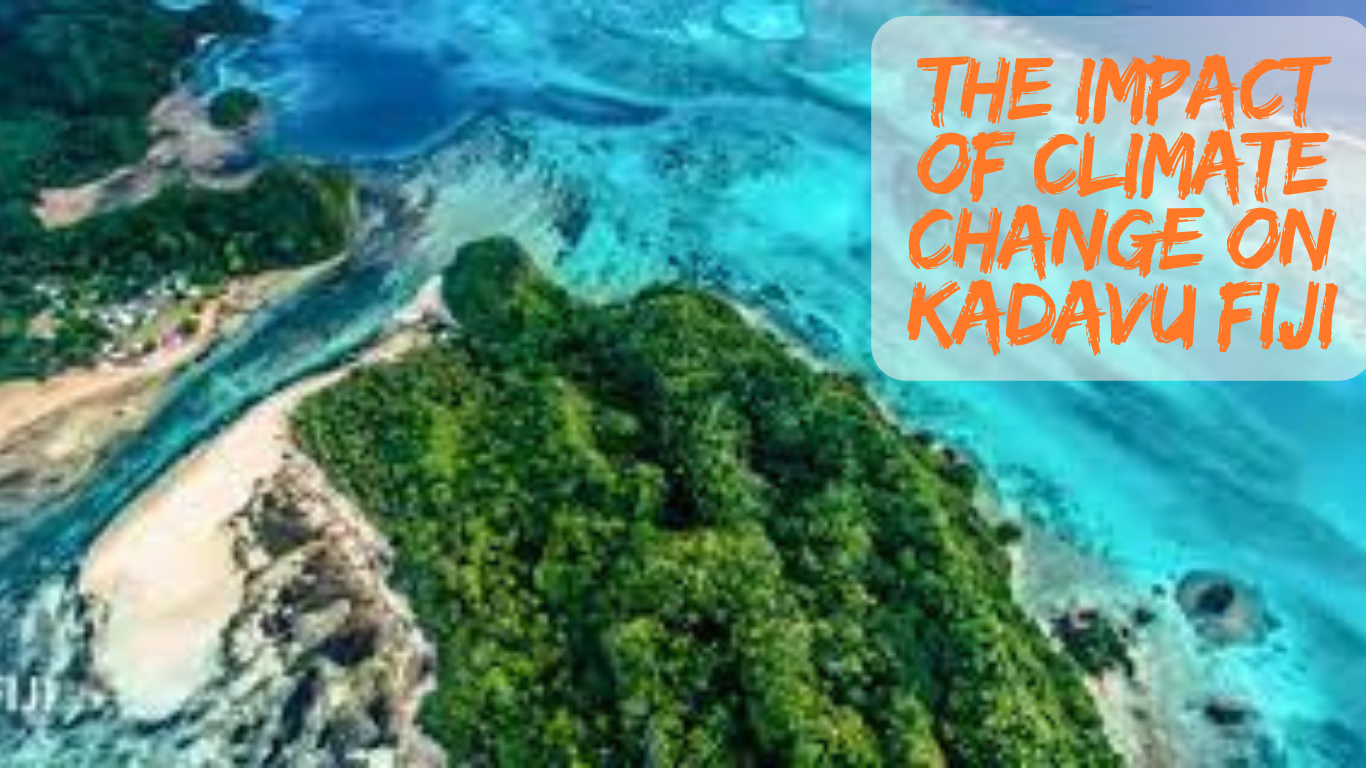
The Impact of Climate Change on Kadavu Fiji
You know how travel articles love to call places “untouched”? They toss around words like pristine and unspoiled whenever they talk about Kadavu Fiji. And honestly? For ages, they weren’t wrong. Those sharp green peaks, the jungle so dense it feels solid, the reef circling the shore like it’s standing guard—Kadavu didn’t just feel far away. It felt like it existed outside of time completely. But something’s changing. A different kind of tide is turning here, the kind you won’t read about in any glossy magazine. It’s not loud. It’s slow, persistent, working its way into the foundation of the place. Climate change isn’t some far-off idea here—it’s rewriting the rhythm of the ocean and the life in the village’s day by day. This isn’t about what might come later. This is the story of what’s already happening.The Reef That Feeds the Island
The Great Astrolabe Reef isn’t just a dive site. For the people of Kadavu Island, it’s a supermarket, a boundary marker, a sacred space, and the foundation of their livelihood. The reef provides most of the protein for local communities through fishing. It draws tourists, whose visits support family-run resorts and guides. It’s a living wall that buffers the island from the full force of ocean storms. Now, that wall is under stress. The ocean isn’t just warm—it’s staying warm. And the corals are feeling it. They’re turning white, not just for a season, but over and over. When the heat doesn’t let up, the coral gets so stressed it rejects the very algae that gives it life and color. What’s left is a frail, spectral shell of what was once coral, not just dead coral. The coral dies without those algae. But it’s worse than just losing coral. The whole world that depends on it starts to fall apart. Fish that need the reef to hide or eat begin to disappear. Everything connected to it suffers. The consequences are immediate. The fishermen return with half-full boats after longer days at sea. Divers now see more white, broken coral than bright fish. Life is quietly disappearing. The very thing that defines Kadavu is growing quieter.The Encroaching Sea and Shifting Seasons
On land, the changes are just as hard to ignore. Coastal erosion has become something people measure with their own eyes—not just an idea in a book. In certain villages, locals can show you exactly where the beach used to be. Even burial grounds, places wrapped in deep cultural respect, aren’t safe from the rising water. Families are now facing painful conversations about moving their ancestors’ resting places, something once unthinkable. The old rhythms are off. The signals that guided planting and fishing for generations no longer hold. The rain arrives late or heavy—too little, then too much. Dry wells. Washed-out roads. For families living close to the land, this isn’t climate change as a debate. It’s a shaky foundation under daily life.How Kadavu Fiji is Fighting Back
You won’t find people on Kadavu Island sitting around waiting for the world to save them. They’re too busy working with what they have—and what they’ve always known. Along the coast, villagers are bringing back the mangroves. This is wisdom that has always existed, not flashy enterprises or large sums of money. The advice given by their grandparents still holds true: mangroves protect the land, harbor fish, and maintain a clean sea. One mangrove at a time, they are transforming ancient wisdom into innovative action. So they’re planting them. One stubborn, muddy root at a time. Out on the reef, it’s the same hands-on spirit. Fishermen who’ve known these waters since they were kids are now gently tying pieces of healthy coral onto struggling parts of the reef. It’s patient, humble work. Nobody knows if it will truly be enough—but they aren’t doing it for certainty. They’re doing it for hope. And they’re taking it into their own hands. There’s a growing movement to combine traditional wisdom with climate data. Village elders are sitting down with weather scientists and marine biologists, blending old knowledge with new data. They’re not throwing out tradition—they’re weaving it into today’s world, creating forecasts that respect both the moon phase and the satellite image. It’s not one replacing the other. It’s both, working together.The Double Bind of Tourism in Kadavu Fiji
Tourism here cuts both ways. The money visitors spend helps put food on the table and pays for projects that protect the land and sea. It gives people options beyond fishing the reefs thin or cutting down trees. But that same opportunity comes with a cost—one that the island feels deeply. Many resorts here walk the talk: running in the sun and rain, teaching guests about the fragile world around them. But there’s no ignoring the cost. Every flight and boat delivering tourists also brings carbon, erosion, and waste – the very pressures Kadavu is struggling under. The real challenge? Finding a balance. How do you welcome people without wearing out the welcome? The answer may lie in attracting fewer, but more deeply engaged visitors—travelers who come not just for photos, but to feel the place, respect it, and leave something good behind.A Global Problem with Local Consequences
Kadavu’s story reflects one of climate change’s cruelest truths: those who did the least to cause it are feeling it the most. This island’s carbon footprint is tiny—almost nothing in global terms. Yet its people are living with some of the heaviest consequences. Climate injustice is the term used to describe such a type of unfairness. It implies that groups like Kadavu, who have led modest lives for many generations, are now bearing the consequences of a crisis that they did not start. Support from outside the island is thus not charity. It’s a responsibility. Helping fund stronger infrastructure, reef research, or sustainable economies isn’t just aid. It’s a moral response to an uneven crisis. Kadavu Fiji, isn’t giving up. It’s pushing back, blending old ways with new methods in a quiet, stubborn display of resilience. Change here isn’t always dramatic. It’s in the slowly warming water, the creeping acidification, the shorelines wearing away bit by bit. So the effort to survive must be just as steady—day by day, choice by choice. What happens next on Kadavu won’t just depend on its people. It will depend on all of us. -
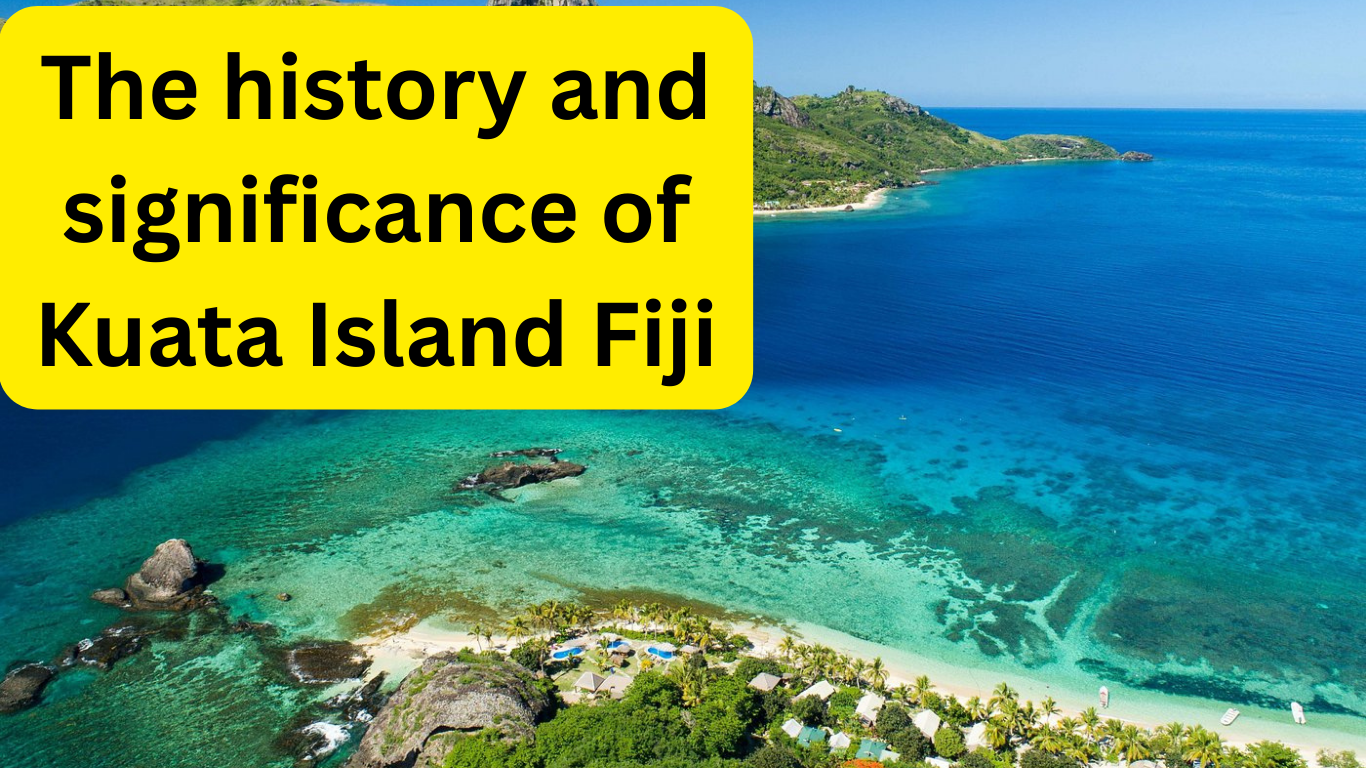
The history and significance of Kuata Island Fiji
Most people who’ve been to Kuata Island Fiji can’t stop talking about the sharks. And yeah, it’s true—the chance to get in the water with those incredible animals is a huge draw. The sunsets really are that good, too, the kind you feel you have to post about. But here’s the thing: many visitors only realize once they’re there that the adventure stuff is just the surface. The island’s true significance lies in something much older. There’s a history here that you can sense, a mix of local legend, stories from the colonial days, and a deep cultural roots system that was growing for centuries before tourism was ever a thought. This island doesn’t just have a history; it feels historical. Kuata’s story is closely tied to the Yasawa Islands surrounding it. In contrast to the larger Fijian islands, they are rougher, more untamed, and appear to have been roasted in the sun for a millennium. These islands were left alone for a very long period, with little population living by their own laws and doing as they pleased. It was no chance that Kuata Island, with its insane cliffs, was chosen as a resort. It was a natural fortress. It offered protection. Long before it was a destination for travellers, it was a stronghold for its people.The Legendary Foundations
Before written records, there was oral tradition. Vosa (words) and sere (songs) are used to transmit Fiji’s history, and Kuata is based on a potent origin myth. The name “Yasawa” says it all. According to legend, lost Tongan warriors believed they’d discovered the afterlife when they first saw these islands. They weren’t just visiting—they thought they’d reached heaven itself. They named it “Yasawa”—heaven. It’s not hard to understand why. That sense of stumbling upon paradise never really leaves you here. The stories become a bit more gritty for Kuata in particular, as they are anchored in the ground. Local tales are about great navigators and fighters who were able to read the weather and seas, not about distant gods. When you stand on Kuata’s cliffs, you immediately get it. That high summit isn’t just for a great photo op. You can almost feel the presence of those ancient lookouts who once scanned the horizon for rival canoes or storm clouds, not ferry schedules. This isn’t just old folklore. It’s the real, foundational identity of the island, a kind of inherited memory that values strength, resilience, and a profound connection to the sea. The old stories are the original guidelines for living in that reality; they are more than just stories.The Colonial Interlude and a Shift in Fortune of Kuata Island Fiji
The advent of European explorers permanently destroyed the peaceful seclusion of Kuata Island Fiji. Long-term contact with the Yasawas came later, although Captain Bligh of the HMS Bounty is renowned for being the first European to see them during his frantic open-boat expedition following the mutiny in 1789. The triple powers of missionaries, whalers, and sandalwood dealers arrived in the 19th century. The coveted sandalwood was largely found on Vanua Levu, but the Yasawa islands, including Kuata, became waypoints and sources of fresh water and food. This era introduced new materials, new religions, and, unfortunately, new conflicts and diseases to which the indigenous population had no immunity. Later, under British colonial rule, the Yasawas were largely left to their own devices. The colonial economy was focused on sugar plantations and infrastructure on the main islands. For Kuata, the outside world felt far away—and that distance protected them. Fiji maintained its traditional customs while modernizing. This was about preserving something authentic, not about falling behind. While everything else seemed to change, life here remained loyal to its own tale, unaltered.The Modern Era: From Obscurity to Adventure Capital
Kuata’s big break came when tourists started looking beyond Fiji’s main resorts. For a long time, the Yasawas were just too hard to get to—until regular boat services started running in the 80s and 90s. Being one of the first islands visitors would reach, Kuata was perfectly positioned. Someone had the bright idea to open a no-frills resort that actually felt like Fiji, not some international hotel chain. Thus, Barefoot Kuata was born—basic, affordable, and real. But the real magic was in the water. Locals had always known about the sharks patrolling the reefs. Some smart soul realized visitors would actually pay to see them. So, they set up safe shark dives and snorkels—and suddenly Kuata wasn’t just another pretty island anymore. The island’s economy changed very immediately. Where people used to just depend on farming and fishing, tourism now generates revenue and jobs. Those sharks turned out to be worth more alive than anyone could have imagined—and gave everyone a reason to keep the marine environment healthy.Cultural Significance and the Spirit of Vanua
Beyond economics and history, the deepest significance of Kuata Island Fiji lies in its cultural heart. This is the realm of vanua. Vanua is hard to put into words. It’s not something you study—it’s something you live. It’s the feeling that the land and the people are one. You don’t define it. You sense it. On Kuata, that feeling is unmistakable. When a stranger says “bula,” you get the impression that they have been anticipating your arrival. It may be heard in the melodies that recount tales older than memory and rise and fall like the waves. It’s in the flavor of lovo—slow-cooked cuisine that tastes of shared history and smoke. It has a flavor that you were unaware you had been lacking. Some places on the island hum with a kind of quiet. You don’t need a sign to know they matter. You just know. Quiet. Older. You get the sense you should tread lightly. And the sharks? People here don’t just protect them for the tourists. They respect them. The ocean isn’t something you take from—it’s something you belong to. That’s the thing about Kuata Island. You don’t just visit. You slip into its rhythm. And it changes you a little before you leave.Kuata’s Place in the Fiji of Tomorrow
These days, Kuata means different things to different people. For locals, it’s jobs. For marine life, it’s protection. For travellers, it’s raw Fijian culture minus the postcards. The island found a way to support tourism without sacrificing its essence. That does not imply that it is simple. Problems like garbage, water usage, and pressure to modernize. increase with the number of people. But Kuata’s been through bigger changes. The same toughness that kept this place alive through isolation now helps it balance growth and roots. Plenty of islands offer snorkeling or hammocks. Kuata Island Fiji offers something else: a sense of place that doesn’t fade when you board the ferry home. It’s not perfect—it’s real. And that’s what stays with you. -

Youth Development Through Popular Sports in Fiji
Popular sports in Fiji are about so much more than the score. They’re about connection. The field is where kids learn how to fail without giving up. That kind of thing sticks. Honestly, it’s the simplest things—like a community game—that often hold a place together.More Than Just Games: Sports as Life Education
You can talk about discipline in a classroom, but it doesn’t really click until you live it. For many young Fijians, participating in popular sports in Fiji provides that experience. The routine of training builds responsibility. Sports teach young Fijians discipline through action, not theory. Regular practice builds real-world habits—punctuality, commitment, collaboration. These patterns stick. Their attitude to every task is shaped by the focus they gain on the field, which carries over into the classroom and beyond.Building Bridges: Social Connection Through Sports
Building Bridges is more than just a phrase here—it’s what happens on the field every day. Fiji Popular Sports gives youth from all different backgrounds a common purpose. This shared mission is what forges understanding and tears down social barriers. The connections they make become the infrastructure of a more united community, long after the game ends.Positive Pathways: Sports as an Alternative to Negative Influences
Here is the reality: when young people have few opportunities and nothing to do, they can get into trouble. Sports programs in Fiji directly fight that. They provide a constructive outlet and a measurable objective. A team provides guidance and a feeling of community to a lost youngster.Leadership
Sports build leaders. Plain and simple. It’s where kids learn to make a tough call when everyone’s watching. Where they figure out how to lift a teammate who’s having a rough day. That ability to lead and communicate? It sticks. You see it in their schoolwork later. You’ll see it in their careers someday. That’s the real way to create the future.Beyond Physical Health: Mental and Emotional Benefits
We all see how sports get kids in shape. But the biggest benefits are the ones you can’t see: what it does for their mental health. Getting active is a proven way to crush stress and clear your head. For a teenager dealing with all that pressure, a game is a perfect escape—a healthy way to burn off all that emotional energy. And that feeling of finally nailing a new skill? That is what creates genuine, unwavering confidence. They are ready for everything life throws at them because of that sort of tenacity.Academic Connections: Sports and Educational Success
You can see it in the kids who play: they often get better grades. Why? Because they gain time management and attention skills by learning to balance practice and homework, and that discipline directly translates into their academic performance. Because they are aware of this, the top programs link academic achievement to athletic achievement and make sure to assist with tutoring as well. This is more than simply a game for a lot of young people, particularly those from areas with few possibilities. It may be their once-in-a-lifetime opportunity to receive a scholarship and pursue an education they had only ever imagined.Cultural Foundation: Honoring Heritage Through Sports
Through Fiji’s Popular sports, children are developing contemporary abilities like discipline and collaboration while also connecting with customs that have been passed down through the centuries. It’s evident in everything from the customary opening festivities to the team’s post-game chants. There’s more to this potent combination than just winning. It shapes young Fijians into grounded people who appreciate the past but aren’t scared to move forward by assisting them in standing firmly in their ancestry while confidently striding into the future.Community Investment: Collective Support for Youth Sports
By supporting its young athletes, a community is doing more than just constructing fields or managing teams; it is demonstrating to children that they are important. A powerful message is conveyed by every applause from the stands, every volunteer coach, and every small effort made to create areas for play: we have faith in you. Support like this does more than help kids play better. It really pulls people together. You’ve got parents, relatives, even neighbors—all getting invested and proud of what these kids are accomplishing. And that pride? That energy spreads. And man, that feeling changes everything.The Change that Spreads through Popular Sports in Fiji
Participating in sports causes a young person to undergo changes that extend beyond their immediate family and have an impact on the entire community. Children bring that wonderful energy home with them as they become more self-assured and disciplined. More responsibility and a better attitude are frequently seen by parents. Instructors see that students are more attentive in class. This is about beginning a good chain reaction of change, not simply about one child getting well. In addition to developing athletes, youth sports investments strengthen families and provide a sense of community.What’s standing in the way?
The truth is, the playing field isn’t level—literally. Some places have fantastic coaches and amenities. But, especially in more remote areas, others are compelled to make due with whatever they can patch together. The gap that has to be filled is that one. It will need a lot more help and some creative thinking to figure this out. A young Fijian in a hamlet should have the same opportunity as a child in the city; the goal is straightforward, even if the answer isn’t. That is the main focus of the work being done at the moment. People on the ground are hustling because they believe it’s a basic right. No child should miss out just because of their zip code.What’s Next for Sports in Fiji?
So, what are our next steps? To be honest, it appears that Fiji’s young athletes have a brighter future than before. Why? Because a growing number of individuals are now realizing that sports are a game-changer for children. Better programs are genuinely emerging as a result of communities, industry, and the government beginning to collaborate. This isn’t just rhetoric. The secret is collaboration. It implies that we may create programs that are sustainable and truly reach all children who wish to play. The finest aspect? In order to ensure that sports continue to benefit our children for many generations to come, we are always finding new methods to do so.What Winning Really Looks Like
How do we really know if this is working? Go beyond the trophy case. The real win isn’t a trophy. It’s seeing a shy kid stand a little taller, full of new belief in themselves. It’s watching them stick with it when things get hard, and then choosing to help out in their community because they want to give back. Long after the last whistle sounds, they are the things that really endure. By doing this, we develop better people—the sort that will contribute to the development of a stronger Fiji—in addition to better athletes. In Fiji, popular sports in Fiji are about so much more than just the game. They’re a fundamental part of building the country’s future, kid by kid. On the field, young Fijians pick up the kind of values and skills that stick with them for life—long after they’ve stopped playing.