Author: FijiDream Admin
-
Best Snorkeling Spots in Fiji
Mask on. Look down. There’s coral below. Fish swim past. A turtle goes by. You could touch it, but you don’t. People visit Fiji for many reasons. The beaches are nice. The people are friendly. But what lives in the water makes them want to come back. Before coming, most travelers end up typing “best snorkeling spots in Fiji” into a search bar and scrolling through photos. Fiji has over three hundred islands. That means lots of reefs. Some are close to shore. Others need a boat or a flight to reach. -
What Makes Local Villages to Visit in Fiji So Special?
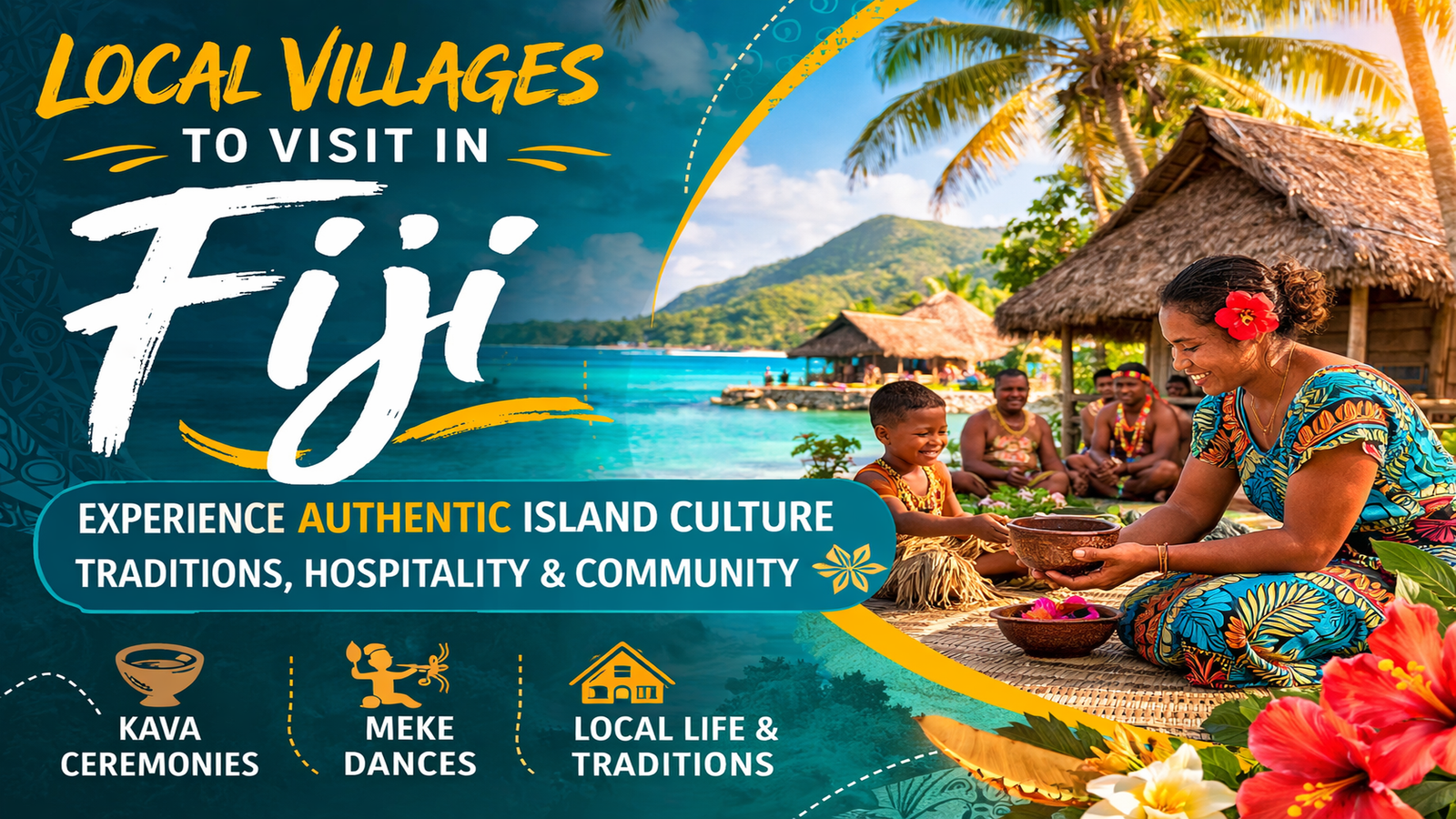
Let’s be honest. Most people fly to Fiji for the postcard stuff. The clear water. The fancy resorts. Nothing wrong with wanting a sunset cocktail by the water. That Fiji exists, and it’s gorgeous. But there’s another Fiji most tourists never see. It’s in the villages in Fiji along the coast. The ones tucked between the hills. Small places where life moves slowly, and tourists rarely show up. Here, nobody cares about Instagram photos. They care about family, church, and getting dinner on the table. Local villages to visit in Fiji give you something no resort can. You get to sit with regular people going about their regular days. And somewhere in there, you realize they’re not so different from you.Some place where Everyone Knows Your Name
Think about your own neighborhood for a minute. Now imagine something completely different. You walk outside, and before you’ve gone ten steps, someone shouts hello. They know your parents. They know your kids. They ask how everyone’s doing. You don’t lock your front door. Nobody does. Your stuff stays where you left it. Your children run around, and every adult in the village watches out for them. Not because anyone told them to. Just because that’s how things work here. That’s village life in Fiji. Here’s the thing about Fijian villages. Community isn’t just part of life. It is life. The word vuvale means family. But it doesn’t stop with blood relatives. It stretches to include neighbors. It includes visitors who show respect. If you come with an open heart, it even includes you. Every village has a chief. They call him turaga ni koro. His family has usually led the community for generations. When decisions need to be made, the elders gather and talk it through. Does someone need a new house? The whole village shows up to help build it. Wedding happening? Everyone cooks. Has someone passed away? Everybody mourns together. This isn’t something they put on for tourists. This is just Tuesday. Or Thursday. Whatever day it is. Villages hold onto traditional Fijian culture more tightly than anywhere else. Kids still learn Fijian before English. Grandmothers still teach granddaughters how to weave voivoi mats. Young men still learn which fishing spots belong to their family. They learn to read the ocean without looking at a phone. Some things you can’t learn from a screen. Village life is one of them. You can’t get that from a resort cultural night. You have to go where it lives.What Actually Happens During a Village Visit
The Ceremony That Changes Everything
The sevusevu ceremony catches people off guard. You sit on the floor, legs crossed. Your knees start hurting pretty quickly. Someone presents a bundle of dried kava root for you. Then the village spokesman talks for a long time in Fijian. You understand exactly nothing. So you smile and nod and hope that’s the right move. Then the kava comes. Muddy water in a half-coconut shell. You drink it all in one go. Your tongue goes slightly fuzzy. Everyone claps. You say macà (pronounced “matha”) and mean it. And something shifts. Because you’ve just participated in a ritual that Fijians have performed for three thousand years. You’ve shown respect. You’ve followed protocol. That’s why local villages to visit in Fiji matter. Not for the Instagram photos. For moments like this.The Homes and the Spaces Between
Villages arrange themselves like stories. The chief’s house often sits centrally, sometimes slightly elevated. Churches stand prominently—Fiji converted to Christianity in the 1800s, and Sunday morning fills every village with singing that gives you chills. Open greens host rugby games, weddings, and community meetings. Traditional bure houses with steep thatched roofs mix with concrete homes and corrugated iron. But inside either one, you’ll find masi cloth on walls, family photos everywhere, and pillows woven from pandanus leaves. Life happens mostly outside—cooking under shelters, washing at communal taps, children everywhere.Eating Together Changes Everything
Fijian hospitality runs deep. You will not leave a village hungry. Kokoda comes first most times. Raw fish mixed with coconut milk and lime juice. The acid cooks it without any fire. Taro shows up with every meal. Watch the women cook, and you’ll see how things work here. They gather around, talking and laughing, waving kids away from the pots. The men handle the heavy stuff. Digging the pit. Hauling hot stones. Acting like it’s hard work. Kids run everywhere. They steal pieces of cassava, fall down, get back up, steal some more. You eat sitting on a mat. With your hands. No fork. No plate. At first, you’ll struggle peeling the taro. Someone will notice and show you how. This is the Fijian village experience. Not performed. Just lived.Stories That Stick With You
An elder might look toward the mountains and tell you about the cyclone that flattened everything fifty years back. A fisherman might explain how his grandfather taught him to navigate by the stars. How his father showed him which way the currents run. He’s trying to teach his son the same things, even though the kid has weather apps on his phone. Women might show you their weaving. Patterns are passed down through generations. Each one a little different. Each one holds family stories in the loops and knots. Children will practice English with you. “What’s your name?” “Where are you from?” “You like Fiji?” Over and over, beaming when you answer. These moments define village tours in Fiji. No script. No schedule. Just people being people, generous with their time and stories.Why Village Visits Hit Different
I’ve sat through resort cultural shows. They’re fine. Dancers in costume, dramatic firewalking, and audience participation that feels slightly forced. Village tours in Fiji aren’t that. Groups stay small—maybe just your family plus a guide. You’re not watching from fifty feet away. You’re sitting right there, close enough to see expressions, hear breathing, catch the laughter between serious moments. Kids might approach shyly at first, then warm up. Women might invite you to try weaving (you’ll be terrible, they’ll be gracious). Men might ask about your home, your work, your family, and where you came from. None of this costs extra. It’s just what happens when humans connect across differences. The best village tours in Fiji position you as a temporary community member, not a spectator. You participate in protocols instead of observing them. You eat what villagers eat. You follow their rhythm instead of a printed schedule. This immersion creates understanding no guidebook can deliver.Where You Can Visit Villages Respectfully
Several regions welcome visitors to local villages to visit in Fiji: The Coral Coast along Viti Levu’s southern shore offers easy access. Many resorts here have long relationships with neighboring villages and can arrange appropriate visits. Interior Viti Levu, beyond the tourist zones, holds villages rarely visited. These require licensed guides who know local protocols and can arrange permission properly. One hard rule: Don’t just walk in. Always arrange visits through registered operators, resorts with established relationships, or licensed guides who communicate with village heads beforehand. This protects everyone—you from accidental offenses, communities from overwhelmed hospitality.Why People Come Back Different
Something happens days or weeks after you return home. Maybe you’re stuck in traffic and remember children walking to school barefoot but laughing. Maybe you’re scrolling through your phone and taste fresh fish cooked in coconut cream. Maybe you’re rushing through work and recall how the chief spent two hours answering questions despite having village business waiting. Travelers often describe visiting local villages to visit in Fiji or villages in Ba, Fiji as perspective-shifting. The endless pursuit of more feels smaller against communal sufficiency. The frantic pace seems absurd beside village patience. Material accumulation appears hollow next to relationships sustained across centuries. You’ve glimpsed traditional Fijian culture not as a museum exhibit but as a living choice—people continuing ancestral ways because those ways provide meaning, belonging, identity. This understanding transcends anything learned from screens or pages.Final Thoughts
Fiji’s resorts show you paradise. Fiji’s villages show you purpose. Both deserve appreciation. But for travelers willing to sit on woven mats, drink muddy kava, let children practice English on them—the reward runs deeper than any postcard. Approach village visits with openness rather than a checklist. Lead with respect rather than curiosity. Leave with gratitude rather than photographs. What returns to you—unexpected, unasked—is connection across difference. And that might be travel’s greatest gift. The local villages to visit in Fiji await not as attractions but as communities. Enter them as you’d want strangers entering your home: with humility, with kindness, with willingness to learn. You’ll leave changed. That’s the promise. That’s the magic. That’s Fiji. -

Hidden Beaches in Fiji You Won’t Find in Guidebooks
Everyone knows Fiji from postcards. Huts on stilts. Pools that stretch into the horizon. Drinks served at sunset. That Fiji is real. You can go there. But there is another Fiji too. It shows up less in photographs. Beaches where you might be the only person. The guidebooks tend to write about the same dozen or so. Here are some of the others.Cove in Yasawa Islands
The Yasawa Islands stretch north from Viti Levu. They are volcanic. The lagoons shift between blue and green depending on the light. Fast ferries move up and down the chain every day. They stop at the resorts. They stop at the well-known snorkeling spots. Between those stops, there are stretches of sand that most people never see. One of them is about twenty minutes from a village by boat. The water is clear enough that walking through it feels strange—like there should be more resistance. When you move, small fish dart away from your feet. Why it stays off maps: No resort built here, no tour company includes it on their list. The only way in is through the village. You ask. You arrange transport. Most travelers do not think to do this. Who it suits: Couples who want an afternoon to themselves. Snorkelers who do not enjoy kicking other people in the face. What to know: Bring water. Bring food. Bring sunscreen. There are no shops here. No staff. Nothing except what you arrived with.A Quiet Stretch Near the Coral Coast
The Coral Coast runs for about eighty kilometers along Viti Levu. Hotels and resorts sit along most of it. Tourists usually think beaches belong to the hotels. Or that if a beach isn’t attached to a resort, it’s probably not worth the trouble. Neither is correct. Drive past the main resort area. Maybe twenty minutes. Look for a dirt track with no sign. Fishing families from nearby villages use it to reach the water. Follow it. This beach is different from the ones near the resorts. At low tide, the reef creates small pools. The sun heats the water. Local children sometimes splash around in them. Their parents fish further out where it’s deeper. What makes it different: Most beaches along the Coral Coast face some other direction. This one faces the open ocean. The sun sets straight ahead, nothing in the way. Finding it: From Sigatoka town, drive toward Suva for approximately fifteen minutes. Watch for a modest wooden sign advertising fresh fish near a stand of palms. The access track requires reasonable clearance—a standard rental car manages carefully. Park near the palms and walk five minutes through the coastal forest. The beach opens suddenly, as if revealed. Best for: Sunset observers. Photographers. Anyone curious about why Fiji’s main island still holds surprises. Practical note: Like most hidden beaches in Fiji, this one has no facilities. Time visits to catch late afternoon light.A Beach Outside Savusavu with Volcanic Sand
Savusavu is small. Sailors and divers visit for the harbor and reefs. Most never see the other side of the peninsula. The beach there looks different. The sand is dark gray, mixed with crushed coral. It makes noise when you walk. Behind the beach, rainforest covers the hills. Wild orchids grow up there. The water changes color slowly as you walk out. You can go pretty far and still touch the bottom. Why guidebooks miss it: No sign. No parking lot. You need a 4WD or you walk at the end.An Eastern Taveuni Shoreline
Taveuni is called the Garden Island. Divers come for the reefs. The eastern side has beaches that almost nobody visits. One cove only appears at certain tides. A stream flows into the sea here. Wildlife: Orange doves in the trees near the beach. Monitor lizards on the rocks sometimes. Watch from a distance. How to get there: From Taveuni, get transport to the end of the road on the east side. Walk along the coast past a few smaller coves. Check tide times first. At high tide, the beach is very small. Best swimming is two hours either side of low tide. Who it’s for: People who like watching animals. Divers who want something to do between dives. Travelers who have already seen the main spots. Safety: Currents near where the stream meets the sea. Pay attention.A Remote Mamanuca Sandbank
Lots of tourists visit. But even here, some places stay empty. A few kilometers from the nearest island with people on it, there is a sandbank. It only exists at low tide. When the water goes down, a white crescent of sand appears. Big enough for maybe twelve people. When the tide comes back up, it disappears completely. What happens: Show up two hours before low tide. Watch the sand appear as the water pulls back. For the next four hours, you have your own island. No buildings. No people. Just water and sky. Then the tide comes back and takes it away until tomorrow. How to arrange it: Not every boat charter knows about this one. When you book a private boat in the Mamanucas, ask specifically about tide-dependent sandbanks. Local operators who know the area will understand. What to bring: No shade. No bathrooms. Sunscreen, hat, lots of water. Non-negotiable. Not optional.How to Find Hidden Beaches in Fiji
The beaches described above offer starting points, not exhaustive coverage. Fiji holds hundreds of islands and countless unnamed coves. Finding them requires an approach more than luck. Talk with villagers. This advice matters most. Local clans called mataqali own the coastline. Villagers know their shoreline meter by meter. Asking respectfully, offering sevusevu where appropriate, and accepting guidance opens access to places no website lists. Hire small local operators. Large tour companies follow established routes. Independent operators with smaller boats venture where schedules don’t require them to go. Their knowledge often proves invaluable. Walk beyond resort boundaries. Many travelers assume resort property lines extend indefinitely. They don’t. Walking past manicured edges, following the natural coastline, often reveals a wild beach within fifteen minutes. Check tide schedules. Some hidden beaches in Fiji only exist—or only become accessible—at certain tides. Tide apps downloaded before travel help with planning. Respect village protocols. Always ask permission before walking through village areas to reach the coast. A sincere vinaka (thank you) and respectful behavior accomplish more than any guidebook. Fiji’s well-known beaches will remain beautiful. They deserve their reputations. But beyond them—past ferry routes, beyond resort boundaries, through conversations with villagers who smile when asked about quiet places—another Fiji waits. The Fiji of sandbanks that rise and fall with tides. Of coves where sound extends no further than wind through palms. Of shorelines that ask only respectful visits and request nothing else be left behind. The hidden beaches in Fiji are not hiding. They simply wait for travelers who care enough to look. Ready to explore beyond the guidebooks? Fiji Dream specializes in itineraries that balance iconic experiences with genuine discoveries. -

Looking for houses to buy in Fiji? Here are 6 things to know first
The water is transparent. The weather is warm year-round. The people here are friendly. For anyone considering houses to buy in Fiji, it’s simple to understand why someone might like to call that place home. However, purchasing real estate abroad differs from purchasing domestically. There are differences in the rules. The costs are not the same. The process takes time and requires attention to detail. Some overseas buyers learn this after they’ve already started. Before looking at properties or making plans, it helps to understand what’s actually involved. This article covers the key things to know when looking to buy house in Fiji. No sales pitch. No fluff. Just the practical information needed to make an informed decision.1. Can Foreigners buy property in Fiji, and What Foreigners Can Actually Buy
Yes, they can. And Fiji isn’t like buying in Florida or Spain. The government has clear rules about what non-citizens can purchase, and they’re not trying to hide them. Generally speaking, you can purchase residential Fiji real estate, but only in certain neighborhoods that are reserved for foreign ownership. Consider the Coral Coast, Pacific Harbor, Denarau, and some of the projects around Suva and Nadi. The part that confuses people is that foreigners are usually required to construct on undeveloped land within two years of purchasing it. No sitting on it for a decade while values go up. The government wants development, not speculation. And “residential property” often refers to apartments, townhouses, or homes inside permitted developments. Standalone freehold homes outside these zones? Different story entirely. I remember talking to a couple from Sydney who’d fallen in love with a beachfront property near Rakiraki. Gorgeous spot. Turned out it wasn’t in a designated area, and they couldn’t buy it as foreigners. They were gutted, but better to learn that before signing anything, right? Understanding how foreign ownership in Fiji actually works saves you from falling for properties that simply aren’t available to you. This knowledge becomes essential when you start researching houses to buy in Fiji and narrow down your options.2. The Paperwork Is Real—Don’t Skip It
Here’s where some overseas buyers get into trouble. Fiji has a proper legal system for property transactions. It works well when you follow it. You need three things without exception:- A local solicitor who specializes in property. Not your cousin’s friend who practices family law. Someone who handles property transactions daily and knows the pitfalls.
- Exchange Control approval from the Reserve Bank of Fiji. This is mandatory for foreign buyers. Your solicitor applies for it, and it confirms your funds are legitimate and the purchase meets foreign investment rules. It takes time—factor that in.
- A proper title search. There was someone who transferred money directly to a seller based on a handshake and a nice conversation. The seller turned out not to have a clear title. The buyer lost everything. Devastating, and completely avoidable with basic legal checks.
3. The Price Tag Is Just the Start
When you buy property in Fiji, several additional costs appear along the way. Anyone looking at houses to buy in Fiji should budget for these expenses from the start. Budgeting for them upfront saves stress later. Stamp duty is the big one. It’s a government tax on property transfers, calculated as a percentage of the purchase price. Depending on the value, you’re looking at somewhere between three and five percent. On a $400,000 property, that’s $12,000–$20,000. Legal fees typically run one to two percent. Your solicitor should give you a clear quote early on. Registration fees for transferring the title are smaller, but still need to be paid. Then there’s the ongoing stuff:- Council rates (property taxes)
- Body corporate fees if you’re in a complex
- Insurance—absolutely necessary in cyclone territory
- Maintenance, which runs higher in tropical climates than you might expect
4. Location Isn’t Just About Views
Fiji looks small on a map, but the differences between locations are huge. Different parts of Fiji offer different living experiences. Nadi sits near the international airport and has most services travelers need, though it feels more developed than other areas. Suva serves as the capital with urban amenities, government offices, and international schools for families. Denarau runs as a planned resort town with security, golf courses, and groomed gardens, but the prices are greater here. The Coral Coast spans along the southern coastline, complete with beaches and developed tourism infrastructure. Properties range from luxury to simple, but you’re further from major services. Pacific Harbour attracts the adventure crowd with nearby diving and rivers. Developing rapidly but still quieter. Beyond these, think practically:- Flood zones exist. Fiji gets rain, and low areas flood.
- Cyclones happen. Building standards matter enormously.
- Road access varies. That dream property might be an hour from the nearest town on a road that turns to mud in wet season.
- Internet reliability differs wildly. If you work online, check this personally.
5. Money Moves Differently Here
Unless you’re paying cash from a suitcase (please don’t), financing your Fiji purchase requires planning. Local mortgages for foreigners exist, but look different from what you might expect. Banks typically want:- Bigger deposits—often 30–50 percent
- Solid income proof
- Credit history documentation
- Reserve Bank approval
6. Think About the End at the Beginning
This sounds morbid, but the smartest property buyers think about selling before they buy. Resale restrictions apply. As a foreigner, you generally can’t sell to another foreigner within the first few years without approvals. Your buyers are mostly Fijian citizens or foreigners who’ve done the approval process themselves—a smaller pool than open markets. Market liquidity is lower than in major cities. Fiji property doesn’t sell overnight. If you need quick cash, you might need to discount significantly. Rental yields vary. Tourism areas can generate good short-term rental income, but that requires management and carries seasonal ups and downs. Long-term rentals yield less but offer stability. Tropical maintenance never stops.So, Is It Worth It?
If you are looking for houses to buy in Fiji as a place to disappear on long weekends, or eventually retire, or just know exists waiting for them, Fiji makes perfect sense. Other people are strictly looking at numbers. They want to know what the return will be, how fast values go up, and when they can cash out. For them, Fiji probably isn’t the right fit. Prices here don’t typically explode overnight. They tend to move at a steadier pace. You’ll likely protect your money. You might even make some. But this is not the place to get rich quickly. Buyers who fall somewhere in the center are typically the most satisfied. They run the numbers carefully. They make sure the deal makes sense financially. But they also genuinely want to be here. That combination tends to work out well. -

Is Travel Medical Insurance for Fiji Mandatory?
Your flights are locked in. The resort confirmation is sitting in your inbox. You’ve spent way too much time staring at photos of that perfect beach. Then a friend asks: ‘So, did you get travel medical insurance Fiji?’ Now suddenly, you are uncertain. It’s a frequently asked, legitimate question. The tricky part? Immigration has one set of rules. Tour operators sometimes have another. And then there’s what experienced travelers quietly insist on, regardless of what any official says. No wonder it’s confusing. This article clears it up. We’ll separate fact from assumption, explain the real healthcare realities in paradise, and help you decide exactly what coverage makes sense for your Fiji holiday.Is Travel Medical Insurance Fiji Mandatory?
The short answer: No, travel medical insurance Fiji is not currently a mandatory entry requirement for most international visitors. Unlike countries such as Cuba or Schengen nations that explicitly require proof of insurance at immigration, Fiji’s standard entry conditions focus on passport validity (six months recommended), return tickets, and proof of accommodation. However, this is one of those situations where “not mandatory” and “not necessary” are very different things. During past global health events, Fiji has temporarily required COVID-19 coverage. While those specific mandates have lifted, Fiji travel insurance requirements can change based on global circumstances—something worth checking on Fiji Immigration’s official website before departure.Here’s the distinction travelers need to understand:
Mandatory = You will be denied entry without it. Highly recommended = You won’t be stopped at the airport, but you might face financial catastrophe if something goes wrong. Travel medical insurance for Fiji falls squarely into the second category. And according to recent data, roughly 80% of travelers purchase it anyway—because the risks are real, even if the requirement isn’t.What Happens If You Don’t Have Coverage?
Here’s what happens financially without insurance:- Private hospital consultation: several hundred Fijian dollars, paid upfront
- X-rays and casting: FJ$4,500+ (approx. AU$3,000)
- Overnight observation: additional charges
- Follow-up care: more out-of-pocket costs
Understanding Medical Care in Fiji: What Travelers Should Know
Fiji’s healthcare system is best understood as two parallel worlds running alongside each other. Public hospitals (Colonial War Memorial in Suva, Lautoka Hospital, Nadi District Hospital) provide essential care at low cost to Fijian citizens. For travelers, they’re accessible but variable. Equipment can be limited, wait times are long, and the system is genuinely stretched—especially for surgery. Private hospitals (Oceania Hospitals, MIOT Pacific in Suva, Pacific Specialist Healthcare in Nadi) offer significantly better experiences, shorter wait times, and more modern equipment. They also charge accordingly, and they expect payment upfront.What Should a Good Policy Include?
Activity coverage is non-negotiable for Fiji. Standard policies often exclude water sports and “hazardous activities.” Jet skiing, quad biking, and ziplining typically require an “Adventure Pack” extension. Pre-existing medical conditions deserve special attention. Fiji’s private hospitals can manage stable chronic conditions, but if your diabetes, heart condition, or respiratory issue flares up, you need coverage. Many insurers offer medical screening to include pre-existing conditions—complete this honestly during purchase.How Much Does Travel Medical Insurance for Fiji Cost?
Here are realistic, approximate costs for travel medical insurance Fiji based on current market data :
These are general ranges for comprehensive coverage with medical limits of AU$1M+ and evacuation coverage.Trip Duration Traveler Age Indicative Price (AUD) 1 week 25 years $30–$40 2 weeks 45 years $50–$65 1 month 35 years $65–$80 1 month 70 years $140–$160 When Might You Legally Need It?
While Fiji doesn’t mandate insurance for general tourists, there are specific situations where Fiji travel insurance requirements become mandatory: Visa conditions for certain nationalities. Some travelers—particularly those from countries without visa-waiver arrangements with Fiji—may be required to show proof of comprehensive travel insurance as part of their visa application. Cruise passengers. Many cruise lines explicitly require passengers to hold travel insurance with medical evacuation coverage before boarding. This isn’t a Fiji government rule, but you won’t board without it. Tour operators. Some tour operators require proof of insurance before they’ll take you out. Liveaboard dive boats. Remote surf charters. Adventure tours in isolated areas. It’s not a policy designed to annoy you. It’s because if something goes wrong and you need medical evacuation, someone has to pay for that helicopter. Operators have learned the hard way that not everyone can. So they check beforehand. No insurance, no boarding. The “better safe than sorry” scenario. Some travelers report being asked about insurance during Fiji immigration processing. While not a formal requirement, immigration officers have broad discretion, and demonstrating you’re a well-prepared, low-risk visitor never hurts.The Final Verdict: Mandatory or Just Smart?
Is travel medical insurance Fiji mandatory?
No, not at passport control. But is it one of the most important items you can pack? Absolutely yes. Here’s the framework I’d suggest: Don’t ask ‘Is it required?’ Ask instead: ‘If the worst happens, am I prepared?’ Because Fiji is indeed as friendly and safe as everyone claims, there is little violent crime. It’s warm in the water. They really do want you to enjoy yourself. Fiji has a saying: ‘Au na maroroya tiko na noqu vanua — I will take care of my land. Take care of yourself, too. That’s what travel insurance is for. -
Beyond the Resort: What’s Cooking in Nadi’s Fiji Street Food Stalls?
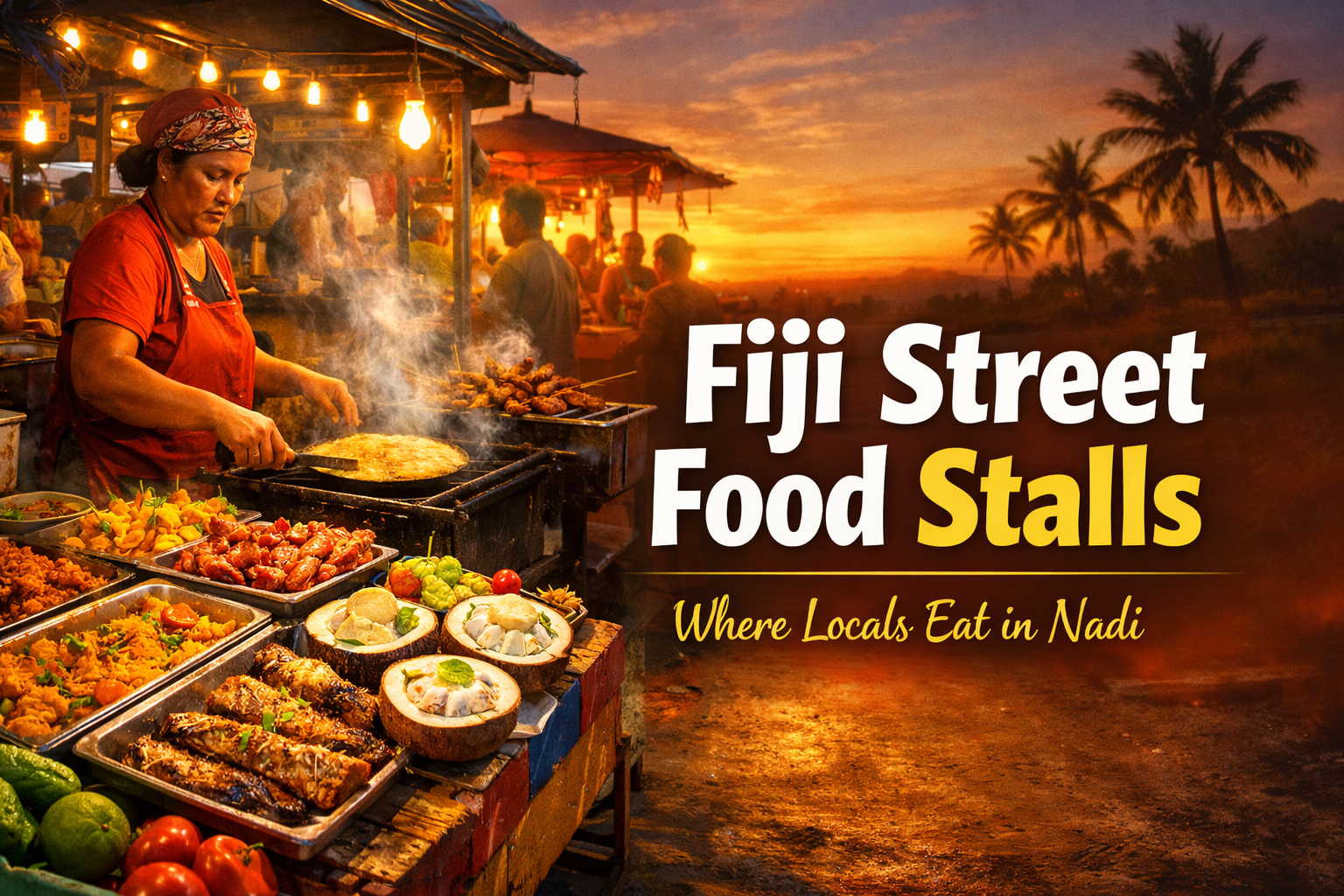
Most Fiji visitors stay inside their resorts. Buffet breakfast. Pool lunch. Hotel dinner. Easy. Predictable. Nadi’s food stalls are right outside. This is where you find the real Fiji street food. Main road. Market edge. Parking lots after dark. Tables fold out. Burners click on. Ice boxes hit the pavement. By 6 p.m., charcoal glows behind the bus station. Fish and curry smoke drift through waiting traffic.Where the Food Stalls Are
The Nadi Municipal Market is the main hub. The building itself is nothing special—concrete floors, open sides, rows of tables. But inside, the prepared food section runs along one wall. Women sit behind steel trays. Roti here. Fried fish there. Vegetable curry in the middle. Rice goes into banana leaves or foam boxes. Cloth towels keep everything warm. Midday heat slows things down. Some stalls close. Others serve less. Saturday mornings are packed. Sunday is slow. A second cluster of stalls operates along the stretch of road near Namaka, closer to the airport. These cater largely to local workers and families running errands. Tourists rarely come here. Not because they’re unwelcome. The stalls just aren’t near the hotels. At night, smaller setups appear near the Nadi traffic lights and outside a few supermarkets. Usually just one item per stall. One man works a grill. One woman tends a pot of curry. Someone else sells Kokoda by the cup from a cooler box.What’s Being Cooked
Fiji street food is not like Bangkok or Mexico City. Late-night snacking is not really a thing here. This is meal food. Breakfast. Lunch. Dinner. It is made fast and eaten fast.Seafood and Fish
The fish is scored with a knife. Salted. Turned once. That is it. No marinade. No sauce. Just a wedge of lemon or lime. Maybe a small container of chili paste on the side. Kokoda is also common, but not at every stall. You find it at places that specialise. Served cold. The coconut cream is usually freshly pressed. The texture and taste are different from canned.Roti and Curry
The roti is soft, thick, and oily. Not like paratha. More like a flour tortilla. Cooked on a flat griddle. A tawa. Sometimes held over fire to puff up. Curry changes by stall. Chicken is standard. Cooked until it falls apart. Goat or lamb at older Indo-Fijian vendors. Potato curry for vegetarians. Gravies are thin and spicy. You mop them up with roti. No spoon. Samosas are everywhere. Small. Stuffed tight. Fried in dark oil that’s been used all day. Vegetable filling has cumin seeds and green chili. Meat samosas are harder to find.Fruit and Drinks
The same fruit is sold inside the market. Young coconuts opened on the spot. Top chopped off with a machete. Straw in. Handed over. Water is faintly sweet, clean. Drink it down, bring the coconut back. They crack it open. You scoop out the soft meat. Sugarcane juice comes from mechanical rollers. Only certain stalls have them. Liquid runs out green, foamy, and very sweet. Served over ice in a plastic bag. Straw poked through the side.Fried Snacks
Babakau is the most common fried Fiji bread. Some stalls serve it alongside curry in place of roti. Cassava chips are cut thick. Much thicker than bagged potato chips. Fried until crisp. Salted. Sometimes, a dusting of chili powder. They go stale fast. The best batches are small and made throughout the day.How the System Works
Ordering Fiji street food follows a pattern that is consistent across most stalls. Customers approach and are greeted. If they don’t speak Fijian or Hindi, pointing works. Vendors are accustomed to non-verbal ordering. Prices are either displayed on handwritten signs or simply known by regulars. A roti wrap costs between FJ$4 and FJ$7. A container of Kokoda runs FJ$8 to FJ$12. Grilled fish is priced by size, usually FJ$10 to FJ$15. Payment is always in cash. Small bills are preferred. Few stalls can break a FJ$50 note. Food is served immediately. Most stalls don’t have seating, but the Nadi Market has a few shared tables near the food section. Customers eat quickly. There’s no lingering.What Travelers Should Know
First-time visitors to the food stalls in Nadi Island Fiji often have questions about safety. The simplest rule is to follow local customers. A stall with a line of Fijian and Indo-Fijian customers has good turnover. Food isn’t sitting out. Oil is fresh. Ingredients are moving. It’s also useful to watch the cooking. Vendors who handle money and food with the same hand are rare. Most keep clean hands for preparation and assign a separate person, or a separate hand, for cash. Stalls that have been around for years do things the same way. Regular customers expect it. Grilled fish. Fried samosas. Hot curry. Less risk than raw dishes. Kokoda, while acid-cured, is still raw fish.Who Eats Here
The customer base at Nadi’s street stalls is mixed. Families stop for fried snacks after school pickup. Older Indo-Fijian men sit and drink tea at stalls run by people they know. Tourists come through, but not many. A couple of stalls near the market entrance have English signs. Bigger print on price lists. That is the only change. Everything else runs the same as always. No tourist menu. No marked-up prices.What the Food Actually Tastes Like
Local food in Fiji is not defined by what is added. It is defined by what is left out. No cream sauces. No reductions. No emulsions. No plating. No garnish. A grilled fish comes out whole. Sitting on a scrap of foil. That is it. A roti wrap is handed over in butcher paper. Curry comes in a foam container with no separate compartment for rice.Why People Come Back
Regular customers at Nadi’s Fiji street food stalls don’t return because the food is cheap, though it is. They don’t return because it’s convenient, though it is that too. They return because a particular stall makes roti the way their grandmother made it. Or because the fish vendor remembers their name. Or because after ten years of eating lunch at the same plastic table, the routine itself has become familiar. For visitors, one meal won’t create that kind of attachment. It shows what everyday eating in Nadi really looks like. Not the tourist version. Not the resort buffet version. Just food that people here cook for each other, day after day, in the narrow space between the produce tables and the parking lot.One Meal
A person walks from a Denarau resort to the Nadi Market. Orders a roti wrap from a stall near the entrance. Eats it standing up near the fish section. This is not some life-changing meal. The roti is a bit greasy. The curry might be hotter than expected. The plastic table wobbles. But the woman who cooked that roti has been making them since she was twelve. She stood beside her mother at this same stall. The fish in the curry was caught yesterday. Sold this morning to a vendor she has known for twenty years. The chili in the paste came from a farm up in the Nausori highlands. That meal happens in a crowded market. Trucks idle outside. Vendors shout prices over the noise. None of this is a performance. It is not Fijian culture staged for visitors. It is just dinner. For the time it takes to eat, that person is not a resort guest. Not a tourist. Just someone in Nadi, having something to eat. -

The Famous Sabeto Mud Pools Fiji Tour: What to Expect & Why You’ll Love It
You know the scene. It hits every visitor the same way. First, a stunned double-take. Then, an incredulous chuckle. Finally, phones fished out of pockets to capture the sight. There, against a backdrop of Fiji’s most vibrant hills, stand figures transformed into giggling clay monuments, smeared in sleek, grey mud from scalp to toe. This is the Sabeto Mud Pools. No ambient melodies, no terrycloth luxuries. Simply the primal warmth of volcanic sludge, the mist rising from natural basins, and an afternoon that consistently shocks people with how much fun it is. Spot a Sabeto Mud Pools Fiji tour while planning your trip? A dozen questions probably follow. Does it feel like a tourist trap? Will you get filthy? (Let’s be honest—absolutely). Is it genuinely enjoyable? Chat with anyone who’s been, and you’ll hear a strong yes, though they’ll offer a few conditions. It demands a spirit of adventure and a total truce with cleanliness, for anyone willing to embrace that.What is this Mud, Anyway?
Forget anything you’ve seen at a beauty counter. This mud isn’t mixed up in a lab. The mud here is 100% natural. The mud forms naturally from Fiji’s volcanoes. The place itself feels refreshingly no-frills. You won’t find marble tiles or infinity edges. Instead, it’s a series of rustic, man-made pools that tap directly into these natural springs, set among palms and tropical shrubs. One set of pools holds the thick, warm mud. Another set, just steps away, is filled with crystal-clear hot spring water. It’s functional, a bit muddy underfoot, and completely perfect. This raw, real vibe is the whole point. The Sabeto Fiji Mud Pool tour doesn’t just offer luxury; it offers an experience.Your Day in the Mud
First Up: Getting Settled
The van pulls up to a simple reception area. You’ll get a quick hello and instructions. Changing rooms are basic but do the job—think concrete floors and a bench. A pro tip everyone learns fast: wear your swimsuit under your clothes. It makes the whole transition ten times easier. Slap a few dollars in a locker for your dry gear, and you’re ready.Phase 1: The Slather
The fun starts here. You approach the first pool, crouch down, and gather the mud in your palms. The texture surprises most—it’s smooth and warm, not gritty or cool. It’s like warm, silky pudding. Then you just… go for it. Arms, legs, back, face. There’s a hilarious, unspoken camaraderie as everyone transforms into earthy mud monsters. Someone will ask you to get their back. You’ll return the favor. Any lingering shyness evaporates in about 30 seconds flat.Phase 2: The Bake
Covered in mud, you move to a bench or a sunny spot. Then you wait. For about twenty minutes, you just sit there. Let the Fijian sun and breeze work on the mud. The mud dries slowly, pulling gently at your skin like a clay mask. This waiting time is perfect for watching others, taking funny photos, and noticing how surprisingly relaxed you feel.Phase 3: The Melt-Away
Once the mud is dry and crackly, you head for the hot spring pools. Sinking into that clear, warm water is an absolute “ahhhh” moment. You don’t scrub. You simply soak. The water helps the mud slide off. It leaves your skin feeling very soft. This is the best part.Phase 4: The Afterglow
With the mud gone, you can hop between the different temperature pools or just chill. After the mud, you rinse at the showers, get dressed, and head back to the bus. You leave feeling good, with smooth skin and a phone full of great photos.The Vibe: It’s All About the Laughs
Reading the steps makes it sound procedural. The reality is anything but. The magic of a Sabeto Mud Pools Fiji tour is in the atmosphere. Physically, it’s a rollercoaster for your senses. The initial slap of warm mud is surprising, then soothing. The drying phase is oddly meditative. The final soak is pure, unadulterated relief. But the real standout is the mood. It’s joyfully chaotic. Kids laugh. Couples draw in the mud on each other’s backs. People traveling alone end up in photos with new friends. Stress melts away when you’re sitting in the sun, covered in mud. The whole area feels relaxed and happy.Why People Can’t Stop Talking About It
You don’t see this on every island. That’s reason number one. It’s a uniquely Fijian quirk. But the love runs deeper. For many, it’s the most authentic thing they do. It’s not a show put on for tourists; it’s just a cool thing the land does, and you get to play in it. It’s also fantastically good value. For the price of a fancy cocktail back at the resort, you get hours of unique fun. Then there’s the skin thing. Everyone remarks on it. The result is skin as soft as a baby’s, thanks to the minerals or the gentle scrub. But the real reward is the memory. You’ll never forget it. Beaches blend together after a while. You will never, ever forget the afternoon you spent as a mud creature in Fiji.The Final Verdict on Sabeto Mud Pools Fiji tour
This tour offers something real in a world of perfect photos. It’s active, very messy, and full of genuine fun. It shows that real travel is about doing, not just seeing. It’s about tactile, memorable engagement—even when that means getting covered in something that requires a serious post-tour scrubdown. Don’t expect to return with just a souvenir magnet. You’ll return home with a true story: the day Fiji’s volcano gave you a full-body treatment. Any experienced traveler will say that’s the best souvenir. So find that old swimsuit and get ready. So, is the Sabeto Mud Pools Fiji tour worth your time? For most visitors, yes—absolutely. -
Is Cloud 9 Fiji Floating Bar All Hype or Is It Heaven on Water
So, You’ve Seen the Pictures. But is Cloud 9 Fiji a floating bar Heaven or Just Hype?
Let’s be real. Anyone planning a Fiji trip will see it. The image is everywhere. A perfect wooden platform sits on impossibly blue water, surrounded by people having the time of their lives. That image is Cloud 9. It’s the floating bar that defines a Fijian dream for many. It’s on every list. Every single one. “World’s Most Incredible Bars,” “Top 10 Fiji Experiences”—the image is inescapable. But after the tenth, twentieth, or hundredth flawless photo, a question naturally forms. Is it genuinely that good, or is this the ultimate travel echo chamber? The hype is potent. It promises epic parties, those iconic jumps into the abyss, and pizza that borders on mythical. Yet the counter-narrative persists, muttered in travel forum corners: crowded, pricey, just a pontoon. So, let’s settle it. Let’s move past the filtered dream and examine the reality. Is Cloud 9 Fiji floating bar a genuine slice of paradise, or a masterclass in selling a beautiful idea? This is the unfiltered take.What Is This Place?
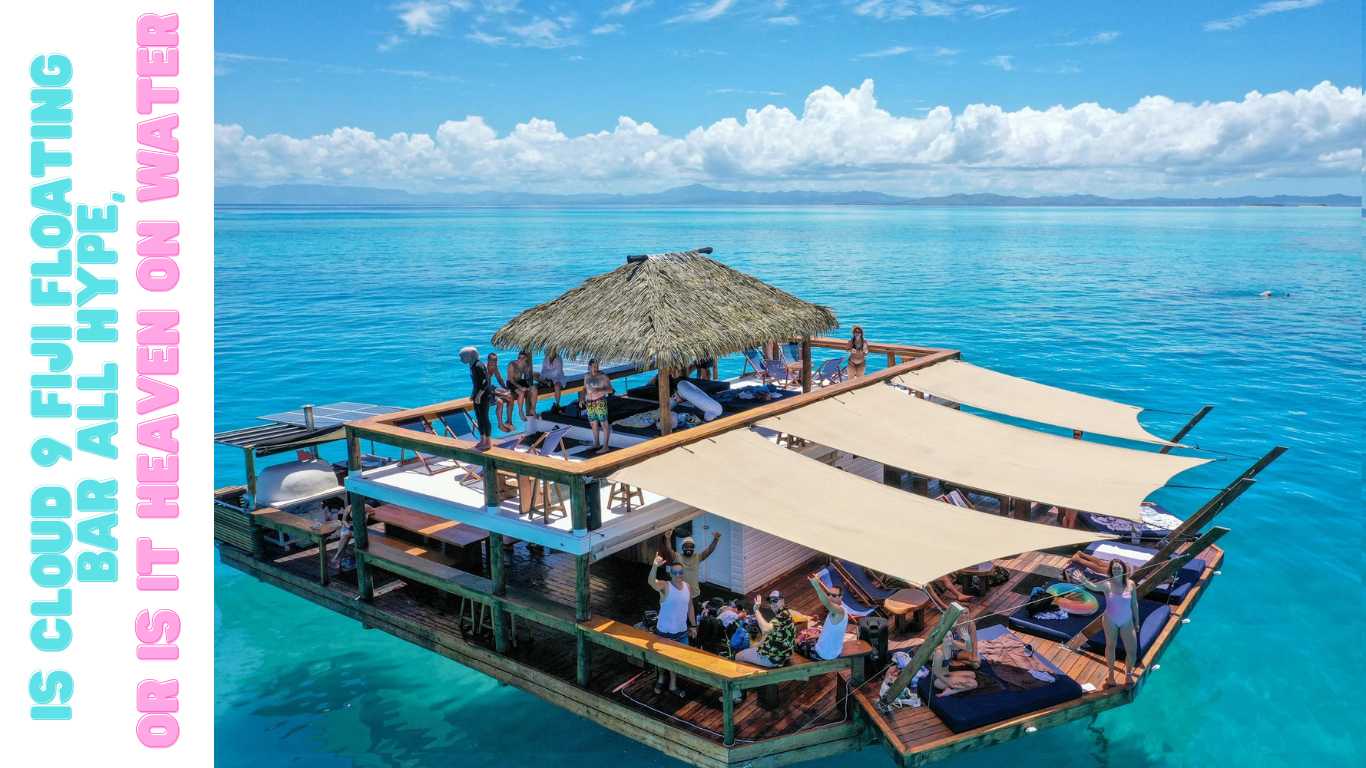
Cloud 9 Fiji isn’t a secret island. It’s a two-story, purpose-built floating platform moored smack in the middle of the Ro Ro Reef in the Mamanuca Islands. Think of it less as a “bar” and more as a “day-club for the sea.” There’s no sand, no palm trees (on it, anyway), just you, the wood under your feet, and a whole lot of ocean. Getting there is part of the experience. You reach it by a booked boat from Denarau or some resorts. The boat trip is an hour. That boat ride, with the sea air and passing islands, is where the experience truly begins.Why It’s So Popular
The popularity makes sense. It sells a perfect fantasy—the chance to actually be inside a perfect vacation photo. In an age of sharing our travels, it’s a full scene ready to be captured. The idea is simple and brilliant: order a drink, then step off the platform into a coral reef. It removes the stress of planning an entire day. The trip includes the journey, the swimming, the meals, and the soundtrack. Everything is handled. Its powerful image and widespread popularity also create a strong pull. People naturally want to experience a place that everyone is talking about. This instinct is what drives so many to check testimonials and reviews before booking.A Real Look at a Day There
Here’s how a typical day unfolds. The boat arrives. Music arrives first. It is a deep, steady beat. This sound sets the rhythm for everything. You step onto the platform and receive a wristband. Then begins a quiet, purposeful search. Everyone looks for the best spot to claim. A key piece of advice: arrive on the earliest boat to claim the best loungers upstairs. Securing a spot on the lower deck is ideal for quick dips. The feeling on board is noticeable—a shared mood. Some people are lying quietly in the sun. Others are talking and laughing with lively energy. You’ll hear the sound of glasses and see a line forming for the pizza, which is truly very good. The cocktails are bright and strong, with playful names on the menu. Then, you get in the water. This moment is the magic switch. Floating on your back, looking up at this hive of happy activity on the platform, with fish darting below you in the coral—it’s surreal. You’re in the aquarium. You bob there, drink in hand (they have floating drink holders!), and for a few minutes, every bit of hype makes sense. This is the “heaven on water” moment. But. Let’s talk about the “buts.” This is a popular place. By midday, it is completely full. This is not a quiet, private place. It is a busy social event. Anyone wanting peace and quiet should look elsewhere. The experience also depends completely on the weather. A sunny, calm day is paradise. A windy, overcast day would feel very different on an exposed platform. And your wallet will feel lighter—this is a premium experience, from the transfer to the food and drinks.Who’s It For? (And Who Should Maybe Ponder a Private Island Picnic)
Let’s do a quick personality test. You will absolutely love the Cloud 9 Fiji floating bar if:- You’re social and enjoy meeting people from all over.
- Your ideal day mixes lazy sunbathing with a vibrant, party-adjacent energy.
- You want that iconic, “I was there!” photo and experience.
- You’re with a group of friends or a partner who shares the above vibes.
- You’re on a strict, shoestring budget.
- You are seeking a deep, quiet, romantic connection (look at a private resort instead).
- Large crowds immediately spike your anxiety.
- You travel purely for cultural immersion and off-the-beaten-path discoveries.
The Final, Sunburned Verdict
So, after spending a day as a human sunbeam on that famous deck, what’s the final call? Is it hype or heaven? It’s a simple truth. The hype is deserved because the place is special. With perfect weather and the right mindset, you get a fun, unique day. Floating in that blue water, enjoying good food with no schedule, is a wonderful feeling. However, expecting the wrong thing will ruin it. This is not a quiet, private escape. It is a busy, social, lively spot. It’s a floating celebration. Go for that, and you’ll understand. The final takeaway? Don’t go to Cloud 9 Fiji floating bar looking for heaven. Go looking for an unforgettable, ridiculously beautiful, supremely fun day out. See it as the world’s coolest, most scenic floating day-club. Manage those expectations, pack your sense of adventure (and your credit card), and you just might find that, for a few hours, heaven is exactly what you make it. -
What Are the 11 Key Facts About Fiji Culture?
Okay, you made it. The flight’s over, the doors of Nadi airport hissed open, and that first hit of Fiji air—thick, warm, smelling of plumeria and just…green—wrapped around you. Someone slid a flower lei over your head. You’re here. Now what? We’re talking about understanding the why behind the warm smiles, which completely changes how you experience this incredible country. Forget dry lists. Here’s the honest take on the 11 things that really matter and are facts about Fiji culture.1. The “Village First” Mindset Will Reset Your Perspective
Individualism? Not so much here. Forget the picture-perfect hotel zones. To see the real Fiji Culture, look to the village — the koro. Here, community isn’t just a word. It’s your neighbor bringing food when someone is sick. It’s every adult keeping an eye on every child. It’s everyone showing up to mend a roof or prepare for a wedding, without being asked. That incredible sense of welcome you feel? It springs directly from this “we’re all in it together” mentality.2. Respect Isn’t Just Manners; It’s the Social Operating System
You can’t overstate the role of respect (vakarokoroko). It’s the invisible framework holding everything together, and it’s one of the first key facts about Fiji culture to understand. It flows upwards: to elders for their wisdom, to chiefs for their leadership, and to tradition itself. As a visitor, you step into this flow. That’s you speaking the local language of respect.3. Kava: The Muddy Drink That Opens Doors
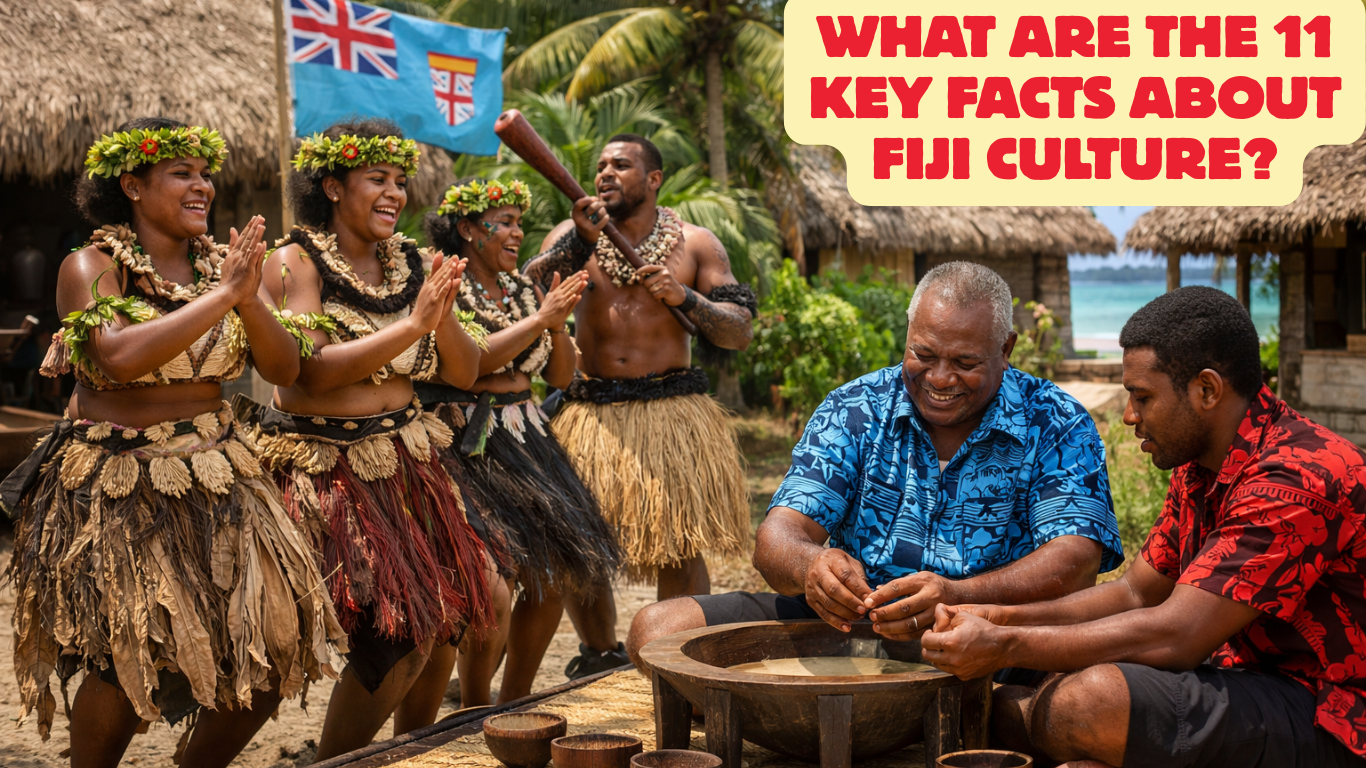
You’ll be offered kava. It looks like dishwater and tastes like earthy pepper. Charming, right? But the taste is the least important part. Sitting on the floor for the yaqona ceremony is your golden ticket. The rhythmic clapping, the shared bowl, the quiet conversation that blooms—this is where you stop being a tourist. Accepting that bilo (cup) is a sign of trust.4. Why That Wrap-Around Skirt is Your Secret Weapon
Pack a sulu. Seriously. This versatile piece of fabric is the national uniform for a reason. Tying one on before you head into town or a village does two brilliant things: first, it shows you bothered to learn (massive respect points), and second, it’s insanely practical and cool in the heat. Watching a Fijian policeman rock his perfectly pleated sulu with polished boots shows you this isn’t a costume; it’s a point of pride.5. Sunday is a Deep, Collective Exhale
Saturday is for errands. Come Sunday (Siga Tabu), the nation slows to a sacred crawl. In Fiji, Sunday is different. Stores close. Towns go quiet. What you hear instead is music—hymns drifting from village churches. It’s more than faith. It’s a shared pause. A day for family, stillness, and catching your breath. Go for a slow walk. Listen to the singing. Let yourself slow down with the rest of the country. You’ll leave feeling more refreshed than any beach nap could make you.6. Their History Books Have Rhythm and Dance
Forget museums. Fiji tells its history through the meke—a powerful mix of dance, song, and story. This isn’t just a performance. It’s how legends are passed down. The dancers’ steps recall voyages and battles, while their hands trace the motion of the sea and trees. Watching a meke doesn’t feel like watching a show. You’re being let in on the story of who the Fijian people are.7. Food is a Language of Generosity
One of the most delicious facts about Fiji culture is how food expresses generosity. You will be fed. And then fed again. A meal is shared among family and friends. There will be talking and laughing. If you are offered more food, that is their way of saying you belong here. They’re saying, “You are welcome here.”8. “Bula!” is an Attitude, Not Just a Word
You’ll hear it constantly. But “Bula” is more than “hello.” It’s a wish for life and health, delivered with a disarming sincerity. That famous Fijian friendliness isn’t a service industry tactic. It’s a deeply held cultural value. Try matching that openness.9. The Ocean Isn’t a Backdrop; It’s a Relative
For Fijians, the ocean and land are family. This connection is called vanua—meaning the people, their ancestors, and the land are one. You see it when a fisherman takes only what he needs, or when a place is kept tabu—sacred. It is not just conservation. It is respect for a living relative.10. Parties are Epic, Inclusive Affairs
Fiji comes alive during its celebrations. Take Diwali, where the night sky fills with light. Or a Fijian wedding—it’s not a short event, but one that goes on for days with shared meals and constant music. Everyone is included. Someone may invite you to join. You should go. You will eat with your hands, try to dance, and laugh a lot. This is how you feel in real life here.11. Rugby is the Modern-Day Warrior Spirit
You have to see a Fijian rugby match to understand it. When the national team plays, the country watches. Bars are full. Streets are empty. It feels like the whole nation is watching together. This rugby is more than a sport. It is about pride, community, and incredible skill. It’s pure, electrifying national joy.The Real Souvenir You’ll Take Home
So, after all these facts about Fiji culture, what’s the real takeaway? It’s what Fiji offers a masterclass in connection. Fiji shows us a different way to live. You see this in how people live: together, with respect, and by sharing. When you understand this way of life, you don’t just visit Fiji. You feel welcome in it. That feeling, and the people who shared it with you, becomes what you remember. -

Thinking of Skipping Holiday Insurance in Fiji? Read This Horror Story First
Planning a Fiji trip is exciting. You search for flights, pick your resort, and plan your island tours. The anticipation builds with every booking. But for countless travelers, the process hits an unexpected snag not during the planning, but at the final click. There, sitting quietly among the totals, is the prompt for holiday insurance in Fiji. It’s the one line item that feels optional, the provision for a shadow that hasn’t yet fallen across the sunny itinerary. In that decisive moment, the instinct to skip it can feel less like a risk and more like common sense. Why pay for a story you’re sure you won’t be telling? Conventional wisdom in that moment often leans toward skipping it. The logic feels sound—why pay for a catastrophe that won’t happen? Most click forward, saving a few dollars and burying a sliver of doubt. But what happens when the unlikely becomes reality? Take the experience of a tourist we’ll call Ben. There was nothing unusual about his situation—and that’s the point. His trip didn’t fail because of some rare catastrophe. It failed because of a small, everyday accident. But in Fiji, without a safety net, a small accident can become a very big problem. The traveler’s experience transforms from a travel anecdote into a clear-eyed case study on why that checkbox is the most critical part of any booking to the islands. Stories like Ben’s are exactly why experienced travelers never skip insurance. The tourist in this scenario was three days into his Yasawa Islands adventure, living the postcard life. On a snorkeling trip, a surprise current pushed him into a vibrant coral head. The coral left a deep gash. Infection appeared quickly—red, swollen, and hot. The island nurse cleansed the wound before telling him the harsh truth: he required a proper hospital, which was not on the island. “For this, you need the hospital in Nadi.” The quote made the tourist’s stomach drop. Then came the hospital bills for antibiotics, treatment, and a night under observation. His non-refundable diving course? Gone. His prepaid beachfront bure for the next week? Forfeited. The financial hole he dug himself out of took years to fill. All to save what felt like a hundred bucks at checkout. Was skipping his holiday insurance in Fiji worth it? The answer, seared into his memory (and his bank statements), was a devastating no.Why Fiji Isn’t the Place to Wing It
Here’s the uncomfortable truth about paradise: it’s often remote. And remote means vulnerable. This is simply how Fiji is built. The most beautiful places are far from cities and far from major hospitals. Small island clinics are helpful, but limited. They can’t treat serious injuries or complex illnesses. A real medical emergency requires evacuation by air. That flight can cost more than your entire vacation. You are personally on the hook for that. Let that number sink in. Then there’s “Fiji Time,” a charming phrase until a tropical storm grounds all inter-island ferries for two days, causing you to miss your expensive connecting flight home. Or your luggage, with your critical prescription meds, decides to take an extended vacation in Los Angeles. The very things that make Fiji magical—its scattered islands, its adventurous spirit, its laid-back pace—are what make a holiday insurance in Fiji policy your single most important piece of luggage. It’s the bedrock of traveling to Fiji safely.The Illusion of Invincibility: Common Misfortunes in Paradise
Forget cinematic disasters. The real threats to a Fijian holiday are frustratingly ordinary. They’re the small, expensive stumbles that insurance exists to catch. Coral is a bigger risk than sharks. A small cut from the reef can get infected fast. It requires a doctor. It’s the leading reason travelers in Fiji seek professional care. Scooter accidents are common in Fiji. A simple fall can cause a bad injury. You may be far from a proper hospital. The weather can also stop all boats and planes. You could be stuck for days. Even a simple meal can have consequences. A severe bout of gastrointestinal distress might require IV rehydration at a private medical clinic, presenting a bill that arrives in Fijian dollars, not vacation memories. These aren’t hypotheticals; they are the routine, unglamorous entries in claim adjusters’ files. This is the core purpose of travel insurance in Fiji: it’s not a policy for the apocalypse, but for the predictable, pricey annoyances that can dismantle a carefully planned trip.Cutting Through the Insurance Jargon: What You’re Actually Buying
Let’s demystify what a good policy does. Think of it as buying a guardian angel with a credit card and a satellite phone. Specifically, it should cover:- The Big One: Medical Evacuation. This is non-negotiable for Fiji. It means if you’re seriously hurt on a remote island, they will coordinate and pay to get you to proper care.
- Medical Expenses.For the hospital stay, the doctor, the drugs. This should have a high limit (aim for over $200,000).
- Trip Cancellation/Interruption. If you get the flu the day before departure or have a family emergency back home, this covers your non-refundable deposits.
- Lost Gear. If the airline misplaces your bag with your snorkel and hiking shoes, this helps replace the essentials.
- Your Adventures. A good policy will explicitly list covered activities. Read this part! Snorkeling? Almost always yes. Technical scuba diving? Maybe not. Be honest when you buy.
Who Needs It Most? (Spoiler: You Do.)
While everyone on that plane to Nadi needs coverage, some should consider it an absolute anchor of their plan:- The Family Crew: Kids get sick, they trip, they fall. A family policy is a layer of protection for your entire tribe’s peace of mind.
- Anyone with a Pre-Existing Condition: Be transparent. Getting the right cover for your health history is the core of traveling to Fiji safely.
How to Pick Your Policy Without Losing Your Mind
Don’t just click the cheapest option. Be a smart shopper:- Evacuation is King. Prioritize a policy with a huge evacuation limit (think $500,000+) over one with a fancy baggage cover.
- Match Your Itinerary . Buying a policy and then going heli-skiing? That’s a waste of money if it’s excluded. Declare your plans.
- Know Your Excess. This is your deductible—the part you pay first.
- Check the Small Print on ‘Cancellation.’What reasons are valid?
- Buy it Early. The moment you book your first non-refundable expense (like your flights), buy the insurance. It often covers you if you need to cancel before you even leave.
The Bottom Line
Ben’s horror story isn’t unique. This is a well-documented pattern, not an isolated misfortune. The reality is that Fiji’s breathtaking isolation—the very source of its appeal—is what makes financial protection non-negotiable. A pristine beach cannot cover a hospital bill. Choosing holiday insurance in Fiji is the definitive mark of a prepared traveler. It is not a bet against your holiday, but the crucial safeguard that ensures your adventure remains intact. It is the barrier between a minor setback and a catastrophic financial blow. Leaving that insurance box unchecked isn’t a saving. It is the single largest financial risk you will take on your trip. But in a place where small mishaps can have outsized consequences, it’s the biggest gamble you can take with your dream holiday. Get covered. Then go enjoy Fiji with real peace of mind.