Author: FijiDream Admin

  • Fiji Hiking Trails Guide: What No One Tells First-Time Trekkers

    Fiji Hiking Trails Guide: What No One Tells First-Time Trekkers

    When many people imagine Fiji, they think about lying on a beach. Fair enough. But if you stop there, so much is left on the table. Things actually get really interesting inland, however, in rainforest-adorned Fiji (especially those with volcanic ridges and waterfall valleys). In this Fiji hiking trails guide, we cover the trails worth your time, the logistics that will surprise you and the cultural rules most tourists learn the hard way.

    The Unique Experience of Hiking in Fiji

    What is Hiking Like in the Fiji Islands? Hiking in Fiji isn’t hiking as you might know it from, say, the Alps or a “well-marked national park trail”. You know how there are never any ranger stations giving out maps? Much of the best trails go across village land, so you’re not just a hiker — you are a guest. That distinction is important and affects everything from how you dress to whether or not you can even legally set foot on a trail. You are in a kind of tropical area, which sounds nice until you have climbed a muddy ridge at 85% humidity. Trails may also disappear under overgrowth between seasons. Water crossings that are a breeze after a dry week become unfathomable after only one evening of rain. That should be no reason to shy away from it. That is why you go into it prepared.

    Now the best hikes in Fiji: The Trails That Actually Deliver

    Mount Tomanivi (Viti Levu)

    Fiji’s top at 4,341 feet. It takes 4–5 hours for a round trip, and the views are definitely worth the time spent. An arrow sign from Sapainjakhari indicating the next village trail / THOMAS NPP TNF© Thomas National Park — quick.example.com Us Salamanja’s to Duma. Also, you need a guide for the direction, and the recognised transport goes through the town’s property. Get them in early; the clouds usually move in by midday and ruin the summit views.

    Batilamu Peak (Koroyanitu National Heritage Park)

    This one, found just south of Lautoka on the northwestern face of Viti Levu, is one of the best treks to tackle in Fiji for serious trekkers. It goes up about 2,600 feet in elevation. A park fee is required, and there is lodge accommodation available if you wish to do it in 2 days. It has an average summary rating of 4.6/5 stars (based on 83 reviews) according to AllTrails — consistently among the best-rated trails in America.

    Mount Korobaba (Near Suva)

    A pretty good day hike from the capital. You can work from the houtjes behind the cement works, or drive to the reservoir (to make it shorter). There are sections that turn very steep, and you will be traversing root-infested areas – a good pair of shoes is essential. The reward here is the views of Suva and the surrounding hills.

    Sigatoka Sand Dunes (Coral Coast)

    Not a mountain hike, but included for those wanting to enjoy Fiji hiking without the ascent. In addition to scenic perspectives of the c↑ or, so do not focus on coastal and archaeological remains have been found on those dunes. Guided tours: yes, easy to moderate

    Taveuni Trails (The Garden Island)

    Taveuni is Fiji’s wettest island, and if you needed to know this, we suggest the word lush does not come close. The Des Voeux Peak trail and numerous waterfall walks in the area are some of the most picturesque in the country. Regardless of season, plan for mud.

    Here is something no one tells you before leaving

    The sevusevu ceremony is real and mandatory. If a trail goes through a village — most do — you are supposed to offer kava root to the chief of that village and ask permission. It’s 2022, and this is not only rude to skip; you could even be sent back for it. If you have a guide, your guide handles this; one of the reasons brokers cost ($50–$200, depending on the site) Dry season, May to October. Trails are easily accessible, temperatures range from 68–86°F without the loss of half your energy to humidity control. The moist season (November–April) could also be exposed to the chance. Whenever you want to go hiking, choose your time accordingly if the weather is set. Dress code matters near villages. Shoulders and knees covered. This is true for men and women alike. A sulu (a wrap skirt) is inexpensive to purchase locally and provides an immediate solution. Self-copilot is possible, though arguably harder. Trails aren’t well-signed. Off-route is easy. If going unattended, find offline maps, inform another of the route and return time you expect and carry extra water than you think you need.

    Practical Kit for Fiji Hiking

    1. Hiking boots (Waterproof please, and not trail runners — mud will win)
    2. Lightweight ($0.00; NOT optional): rain jacket
    3. Insect repellent with DEET
    4. Water purification tablets or a filter
    5. Kava root if you’re going into village land (purchase in Nadi or Suva markets)
    6. Money for park fees and guide payments

    Frequently Asked Questions

    When hiking in Fiji, do I need a guide?

    Legally, no figruring — but almost all inland routes practically not. Trails wander across private village land, are generally ill-signposted, and the cultural protocols that open access to prime areas have been left to guides. For clearer trails like Korobaba, experienced hikers can solo it.

    When is the prime hiking season for Fiji?

    May to October. The dry season provides cooler temperatures, lower humidity, and trail conditions that are not fighting against you.

    Are the best Fiji hikes easy and beginner-friendly?

    Some are. Moderate fitness levels are needed for Sigatoka Sand Dunes and Taveuni waterfall walks. Batilamu and Mount Tomanivi are not for the faint-hearted, both serious hikes needing good fitness and gear.

    What is the price range for guided hikes in Fiji?

    Price level: Expect to pay $50–$200 USD based on trail length, group size and what is provided. Multi-day hikes with lodging can be a few hundred dollars higher.

    Am I allowed to hike through village areas?

    No, village land is privately owned. It is disrespectful and illegal to enter without performing the sevusevu ceremony. Using proper channels in all situations — your guide or the village chief himself!

    Is hiking in Fiji safe?

    Generally, yes, with sensible precautions. Risks like getting lost on unmarked trails, injuries in steep terrain and weather changes. None of these is insurmountable with a guide, an appropriate kit and a degree of fitness.
  • Fiji Travel Low Season Tips No Resort Will Tell You

    Fiji Travel Low Season Tips No Resort Will Tell You

    Design spice shaders instead of going hiking. The best beaches in Fiji for sunset fishing, fly-tide guides Fiji Travel Tips, high season paradise, No Resort. It’s when the Devil calls. Win a holiday in Yanqi Valley The thing is, most of the Fiji travel guides will tell you to go between May and October for perfect weather. That’s the dry season. That is when the resorts fill, prices soar, and every beach snap has strangers in shot. Here’s what those guides don’t tell you — Fiji’s low season from November to April is actually when the islands become a different, better destination quietly waiting for the right traveler. You will want to make the most of it, and these Fiji travel low season tips will.

    So When is Fiji Low Season, Exactly?

    Fiji’s wet season—spanning November to April—coincides with its low season. The heaviest rainfall and the highest cyclone risk is during January-March. The months of November and December, too, have a nicer balance — rainfall is much less heavy (and fronts moving in are random), temperatures sit at 29–31°C on the dial, and the islands become noticeably quieter. November and April are the months to aim for if you want the best of both worlds — low prices without having to risk going in monsoon season.

    Low Season Fiji Travel Tips Resorts Won’t Tell You

    Drastic Price Cut — in the Right Circumstances and If You Know How to Bargain

    While the mountains are considerably less busy during low season, resorts will deep discount room nights – but always check their websites first. Book activity operators when you hit the ground, and they will sometimes even lower prices because if boats are empty once in port, they are losing money. The key advice here is to book accommodation prior to traveling for the greatest value, but to wait until arriving at your destination before booking tours and other day trips. You will have a lower expense and more flexibility.

    Rain — It Doesn’t Mean Rain All Day.

    Low-season rain is probably the least understood element of any Fiji travel guide. In Fiji, tropical showers are often heavy but quick — an hour of solid rain and then blue sky. Mornings are almost always dry. Schedule warm-weather adventures in the early hours and leave rainy afternoons for kava rituals, culinary lessons, or not lifting a finger at that beach bar!

    Marine Activity Is Not Less, But More

    Bushfires you see during the wet season, warmer water drives more marine activity. Between November and April, you will see more whale sharks, manta rays, and rich reef life. After heavy rains, runoff can reduce visibility (with clear days building underwater visibility), but overall, this is excellent. Divers and snorkelers who plan the timing of their exploration properly over the season, however, can have amazing encounters.

    You Get the Fijian Experience, Minus the Crowds

    It is peak season, and resorts are managing volume. Staff is stretched. You experience authentic, unhurried encounters with locals — in resorts, villages, and markets during the low season. Times when the Fiji travel tips about “authentic cultural experiences” actually apply, not just as marketing copy.

    But Cyclone Risk is Real — If Manageable

    This is what resorts don’t exactly want to brag about. Late season cyclone risk is at its peak in Jan to Mar. On the other hand, Fiji has two to three cyclones a year on average, and modern forecasting can give several days’ warning. If you are going during this window, travel insurance covering weather disruptions goes from an option to a must-have. You are also grouping data until October 2023, meaning, cyclone watch is issued, island hop toward Viti Levu — the main island that holds most of the buildings and evacuating implementations.

    The Best Islands To Visit Out of Season

    Not all of Fiji’s 330 islands are created equal in the monsoon season. Stick to these, according to your priorities:
    1. Viti Levu (Nadi/Coral Coast) —Most resistant to rain, best infrastructure, most accessible
    2. Mamanuca Islands –Quick from Nadi, some good resort choices, even if the weather turns nasty.
    3. Transport — Yasawa Islands —Exposed and isolated, best in April or November when the risk is low

    Budget-Friendly Fiji Travel Tips (For The Low Season)

    • Pack light, fast-drying clothing. Humidity is high, cotton remains wet. Go synthetic or linen.
    • Return flight money or travel insurance covering weather. Not optional.
    • Carry reef-safe sunscreen. Coral protection is important every day of the year, and some resorts are now mandating it.
    • Download offline maps. Mobile reception is patchy outside Nadi and Suva.
    • Carry Fijian dollars in cash. Credit cards are often not accepted on smaller islands and in village markets.

    FAQs:

    SHOULD YOU GO TO FIJI IN THE LOW SEASON?

    Yes. For travelers on a budget, couples in search of solitude, and anyone who is more intrigued by the local way of life than by clamorous pool parties. The gamble: weather, at times out of your control, not a ruined holiday.

    What are the cheapest, off-peak months to travel to Fiji?

    Flights and accommodation are at their cheapest in February and March. November and April risk nearly identical savings, while also carrying a dramatically lower weather risk.

    Getting travel insurance during cyclone season in Fiji, doing travel to master the weather?

    Generally, yes, with preparation. Do avoid the period between January and March if you have a very strict plan or cannot really absorb any disruptions. Get travel insurance and check forecasts during your trip.

    Does the low season still provide swimming and snorkeling as an option?

    Absolutely. Water temperatures are warm year-round. Avoid the 24–48 hours after heavy rain (and near river mouths) when visibility drops, snorkeling and diving can be done almost every day.

    Are resorts open in Fiji’s low season?

    Most major resorts remain open. Some of the smaller boutique hotels or lodges on outer islands close for two months (February and March typically). Confirm directly before booking.
  • Fiji Scuba Diving: The Ultimate Guide for Beginners & Experienced Divers

    Fiji Scuba Diving: The Ultimate Guide for Beginners & Experienced Divers

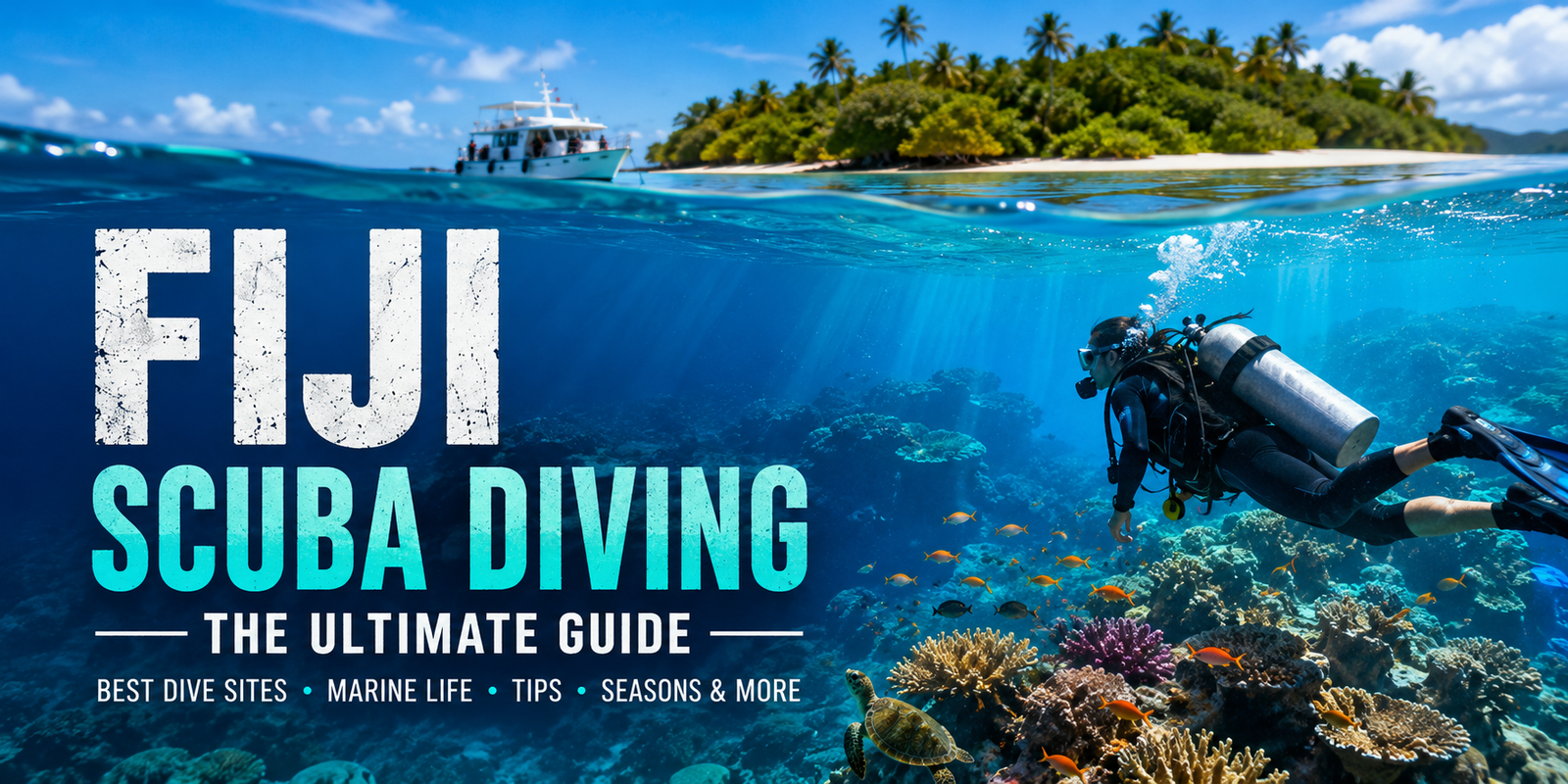
    It isn’t some marketing slogan for scuba diving in Fiji. Among the most bona fide underwater destinations on Earth, it boasts more than 1,500 types of fish plus 400 coral species and dive sites that encompass swift currents for experienced divers as well as calm waters where first-timers are able to manage by day one. Whether it is your very first time picking up a regulator or the hundredth dive you’ve logged, here is all you should know before going in the water.

    Why Fiji? The Honest Case

    Fiji can claim the title of “Soft Coral Capital of the World,” and it delivers. The nutrient-stranding warm waters circling the islands support staggering levels of coral density – walls of barrel sponges, fire coral, and sea fans that most Indo-Pacific destinations simply can’t match at this scale. Visibility regularly hits 20–30 meters. Year-round water temperatures of 24 C — 29 C (75 F — 84 F) mean no thick wetsuit. And unlike those more popular dive destinations, many of the best sites in Fiji are still sparingly trafficked. On the flip side, a few sites feature intense currents that require some level of experience. Just know which ones are for beginners going in.

    Top Dives by Experience Level

    For beginners:

    • Beqa Lagoon — protected waters, shallow reefs teeming with fish life. A top spot to get a new diver started
    • Coral Coast (Viti Levu) — easy to get to from the main island, visible with reasonable conditions.
    Mamanuca Islands — leisurely boat rides, sheltered lagoons, ideal for introductory open-water dives

    For intermediate divers:

    • The Yasawa Islands – more remote, better coral, some current. Worth the extra effort.
    • Namena Marine Reserve — a protected area with high biodiversity. Less visited, higher reward.

    For experienced divers:

    • Great White Wall (Taveuni) — a wall draped all in white soft corals marked by a thermocline drop. What Makes this Pacific Immortal One of the Most Photographable Dive Sites
    • Rainbow Reef (Taveuni) is famous for its color and current Drift diving at its best.
    • Structured bull shark dives with up to 8 species of shark in one dive at Shark Reef Marine Reserve (Beqa). Professional management, not for the light-hearted.

    Certification: What You Need

    At a bare minimum, you must have an Open Water certification (PADI, SSI, or equivalent) to scuba dive in Fiji on your own. All major certification agencies are accepted by most Fiji dive operators. Discover Scuba Diving (not requiring certification) is offered by many resorts as a supervised introductory dive. It’s a real option, but you will be limited in depth and always supervised by an instructor. Similarly, for sites such as Rainbow Reef or Shark Reef, you need to be Advanced Open Water certified to dive them. Talk operators on this — those sites represent real danger to the ill-equipped diver.

    What to Expect from Your Fiji Scuba Diving Packages

    Your options for scuba diving in Fiji span bare-minimum day-trip operators to complete over-the-top liveaboards across multiple archipelagos. The way to think about them is: Day trip packages are best used for resort stayers who want to include diving in their stay but don’t wish to dedicate their entire week (or more) to the sport. This is normally 2-tank dives, equipment inclusive, and ranges from FJD 300–450 per day. Resort dive packages combine accommodation with a limited number of dives throughout your trip. If diving is your primary motive for visiting, these provide the most bang for your buck. If you’re an advanced diver, find packages that offer Nitrox — it expands your bottom time on multi-dive days. Liveaboard packages are where it gets serious. You are on the water 24/7, reaching remote locations not accessible by day-trip boats, logging 4–5 dives daily. Operators who run the tourist routes through the Bligh Waters and Koro Sea cover areas of sites that many tourists never get to see. The cost is higher, but for an equal quality dive, the value is high.

    Things to check before securing any package:

    • Is equipment part of the deal or rented separately?
    • What’s the instructor-to-diver ratio?
    • Are the dive sites suitable for your certification level?
    Does it include the marine park entry fee?

    Best Time to Dive in Fiji

    Diving in Fiji is year–round, but not all conditions are created equal:
    • May — October (dry season) — excellent visibility, milder seas, water a little cooler. Peak season for diving.
    • November to April (wet season) — warmer water, sporadic low visibility following heavy rain, plus fewer tourists and cheaper Fiji scuba diving bundles.
    If the only thing you care about is the Great White Wall or Rainbow Reef, then dry season is the more sensible bet for conditions.

    A Practical Note on Booking

    Plan your scuba diving Fiji packages prior to arrival. Especially during high season, the better operators, especially liveaboards and Shark Reef dives too, can book out weeks in advance. Rolling up and thinking you’ll just figure it out on the day is a gamble that rarely pays off. Fiji’s underwater world rewards planning. If you do the work before touchdown, the dives will come through.
  • Fiji Tribal History: 7 Facts That Will Change How You See the Islands

    Fiji Tribal History: 7 Facts That Will Change How You See the Islands

    The fact is, most people arriving in Fiji — a veritable paradise in the South Pacific, with white sand, turquoise water, and smiling faces everywhere you look. That part is real. Beneath all that, the resorts, the boat trips, the kava ceremonies put together for tourists — there lurks a remarkably surprising Fiji tribal history. Complex. Sometimes brutal. And still very much alive in the tradition that Fiji’s people now embrace. Its tribal past changes everything you think you know about Fiji — here are seven facts.

    1. This indicates that the final settlement of Fiji occurred more than 3,500 years ago.

    The original inhabitants of Fiji were the Lapita people, who were expert navigators and migrated to Fiji from Southeast Asia c. 1500 BCE. They were not the discoverers of a deserted island. They arrived with intention, bringing pottery and established social structures. In addition, migration from Melanesia over centuries provided yet another overlay on this, creating the unique cultural homelands around which Fijian tribes would forge every aspect of their world. Fiji was a developed, populated society long before any European came to these shores.

    2. Tribes were only part of the picture – and geography was not everything

    Vanua is a word you hear often in Fiji. Most tourists hear it once and go on with their lives. That is a mistake. Vanua does not simply mean “land.” Which is to say, the land, the people, the ancestor(s), which are all one living thing, along with a spirituality. This was the way in which each of the tribes of Fiji was organised. Your tribe wasn’t where you lived only; This was who you were, what loyalty to them meant, and your pecking order in the world. This institution is still the backbone of Fijian social life today. If you understand it, you will know almost everything — how villages are governed and why decisions made lower down in a community have such power.

    3. Ratu System Provided Absolute Power to Chiefs

    Fiji’s tribal hierarchy was steep. The sovereign was a paramount chief, or Ratu, whose power was both spiritual and temporal. Chiefs were believed to hold divine authority, their actions determining everything from warfare to farming to marital ties. This was not a democracy. It was a hereditary hierarchy, and to stick the chief could have serious repercussions. Notably, the title Ratu remains a respectful term in contemporary Fiji, appearing as a hereditary name at the front of a high-ranking figure’s full name, while traditional chiefly institutions still hold some cultural significance in public life.

    4. Fiji’s tribal wars were ceaseless — but complex and methodical.

    It rises on tribal warfare, and no history of Fiji is free from this. Fiji tribes fought against one another for land, resources, and prestige. These were not just raids. It included alliances, betrayals, sieges of giant fortified villages called koronivalu and strategies to maximise military efficiency. Viti Levu — the largest and most populous island today — was especially a fierce battlefield. A few hundred years ago, some of its most beautiful inland regions were battlegrounds between tribes competing for turf. More than just a war story: the alliances made at this time moulded what chiefly clans would be able to exert power today.

    5. Cannibalism Was Real — And It Had Ritualistic Significance

    This one, you just have to come out and say. Cannibalism was formally recognised as a Historic Practice in Fijis Tribal History But here is what many people miss: it was not random, nor was it savage. It was deeply ritualised. The ultimate show of dominance was to consume your vanquished foes. It was connected with spiritual potency, with battles, and with the idea of strength being, somehow, transferable. This, though, is not simply shock — Fijian tribal society operated upon its own internal logic for this practice and thoughtful contextualization through that lens is the more honest approach. It was largely eradicated with the arrival of Christian missionaries in the mid-1800s. That story is now openly recognised in Fiji, including at historical sites such as Naihehe Cave on Viti Levu.

    6. The Coming of Europeans Who Played Tribes off Against Each Other On Purpose

    The arrival of European traders and missionaries in the 19th century was met by no peaceful landscape. They stepped into a preexisting power struggle among Fiji tribes — and in some cases, actively exacerbated it. Most critical of all were the events that occurred when Ratu Seru Epenisa Cakobau held a gun and had his feast in Nanuku and came under the influence of Europeans to get unity amongst their control of the islands. Thus, the Deed of Cession was entered into and signed in 1874, formally representing a transfer of Fiji to the British Crown. It is those 19th-century decisions that explain how the modern political geography of Fiji looks as it does today: certain regions, certain families, certain loyalties can be traced straight back to then.

    7. The Tribal Structure Was Never Actually Lost

    But when you are on the floor of a Fijian village, this is what really bloody matters. Colonisation, independence, and tourism never put an end to the tribal system. Most land in Fiji is still legally owned by the Mataqali, the landowning clan unit within each tribe. This is not symbolic. It’s written into Fijian law. Some 87% of land in Fiji is freehold, owned by indigenous Fijian clans that cannot be sold but can only be leased. That resort where you stay? Almost a certainty that it is on Mataqali land. The village you visit on a day tour follows a chiefly structure that has been around for generations. Fiji tribal history is not history in the sense that you imagine it. It is still the present.

    What This Means For Your Trip

    That knowledge dooms the holiday. It improves it. Now you understand the significance of that moment when a local gives you a sevusevu — the traditional offering of kava root given to an island chief. Introduced with a title, you are educated as to its heft. As you experience the communal style of life in Fiji, you see where it derives from. Essentially, the islands have their glamorous side. So much more intriguing underneath.
  • Fiji Surfing Season Guide: Month-by-Month Breakdown of Swells and Surf Spots

    Fiji Surfing Season Guide: Month-by-Month Breakdown of Swells and Surf Spots

    For you, that means it’s time to start figuring out when’s the best time to hit Fiji on a surf trip, and this is your Fiji Surfing Season Guide to surviving a surfing season in Fiji. Fiji isn’t the flattest of places, but not every month gives out equal experience. So here is exactly what you can expect, when to visit, and at what time of year, which places fire.

    Make yourself understand the Two Seasons

    Fiji is one of those trips that can be broken into two separate surf windows:
    1. Winter (April – October), the South Hemisphere low-pressure systems churn out consistent southwest groundswells from the Tasman Sea. This is the time of year when Fiji’s most renowned breaks — the Cloudbreak, Restaurants, Frigates line-up — go off with swells 4–10 feet and larger, hitting the coast on a regular basis. At most of the reef passes worldwide, surface trade winds blow side-to-offshore to keep conditions clean. They are considered the prime time for surfers in their Mid-Intermediate to Advanced phase.
    2. Summer (Nov — March): The swells reduce down to a more manageable 2–5 feet, winds die off, and mornings are very often glassy. Crowds thin out significantly. The proverbial “off-season” is a more enjoyable time for beginners and those looking for less intense sessions without battling some gnarly lineup.

    Month-by-Month Breakdown

    1. January – February: At the height of summer, out in the water, it was warm, humid, and quieter. Look for smaller, cleaner sets perfect for learning or cruising. Focussing on the North Pacific groundswells which overlap well here, Taveuni and the Coral Coast actually do pretty well with this combo too, picking up most groundswell energy despite the lighter northerly winds. Cyclone threat is real, but it should not be exaggerated, because cyclones rarely ever(2) hit. According to this Fiji Surfing Season Guide, summer can still deliver fun and consistent waves for surfers chasing relaxed sessions and tropical conditions.
    2. March-April is the transition window and arguably Fiji’s most underrated surf season. Incoming swells begin to stack as the Southern Hemisphere moves into winter. In the shoulder season, breaks are not busy yet, but conditions have improved. The best time to visit is widely regarded as April — the swell is consistent, the weather remains pleasant, and you won’t be battling for position at Cloudbreak.
    3. June – July: National surf season starts. Building swells out of the south-west start showing up. That was the infamous Big Monday day from Snapshot, and is 6–10 foot faces so Cloudbreak gets set on proper fire. This is where Fiji cemented its status as a world-class surf destination. The Mamanuca Islands are ground zero: Cloudbreak, Restaurants, and the Namotu Lefts are all firing. It is best for experienced surfers to focus on this window.
    4. July – August, Fiji is in its prime surf season. Waves are at their largest and most consistent. Offshore winds are holding on the key breaks from trade. It is also the peak — expect a fight for the lineup at hot spots. This is the tradeoff you make, then, if you want Cloudbreak to perform at its highest level. For those who are intermediate surfers, Restaurants and Namotu Lefts also remain great options when the swell is a little more moderate.
    5. September – OctoberI think the sweet spot of the entire calendar. Solid swells are easing off their wintry high points. Crowds drop noticeably. The weather warms back up. September and October are perfect for both experienced and intermediate surfers, with awesome waves yet less intense than peak season. You could argue that for ease of finding quality surf with space around it, there’s no better time to come.
    6. November – December. The onset of summer and the great south-west swell diminish. The Coral Coast enters into its ideal window as lighter northerly winds groom these breaks to glassy perfection. The Form: Frigates, J’s, and Shifties all find relevance. Sample translation: Fewer tourists = fewer people on the line everywhere. This time of year offers uncrowded waves if not pure size.

    Most Important Surf Spots And When They’re Best

    • Cloudbreak (Mamanuca Islands) A world famous left-hand reef break located about two kilometres off the island of Tavarua. Copes with swells from 1 foot to well over a decade old. Works best April — October when the southwest swells and southeast trades come into alignment. Only for the most experienced surfers when it is big — breaks boards and gives you a break.
    • EAT (WAVES) Restaurants – Mamanuca Islands (Left) A long, peelable left in front of Tavarua. Regarded by many as the best wave in Fiji of pure shape perfection. The best boat in peak season, and a much better bet than Cloudbreak for all levels of surfer.
    • Namotu Lefts (Mamanuca Islands) Fun at 3–6 ft More forgiving than its neighboring, the left-breaking wave offers high lines. Great for confident intermediates and a safe bet when the larger breaks are too much.
    • Frigates Pass (Coral Coast) A left to rival Cloudbreak for size and consistency. Farther out to sea in the southeast trade winds during the zenith of summer, winter in spring, and northerlies grooming the break. 35) Hebe Reef. Add to trip36) SUMRocky reef boat trip — no more than 45 minutes from Coral Coast resorts; worth the effort for uncrowded lineup.

    The most underrated surf region of Taveuni Fiji. Across land, open to southeast trade swells & North Pacific groundswells. The ideal season is actually from November to April – the opposite of the Mamanucas – when winds go light, and the reefs deliver what should be a glassy, perfect surf. As highlighted in the Fiji Surfing Season Guide, this period offers some of the cleanest and most enjoyable waves around Taveuni.

    Practical Notes for Your Trip

    • The month does not matter; it’s the skill level that counts. Fiji’s reef breaks aren’t forgiving at any size. The safer bet if you’re not very advanced yet or new: summer season, Coral Coast.
    • Mornings are best. Before midday, winds are lightest at most of Fiji’s breaks.
    • Reef cuts are common. But immediately, get these tackled with iodine or hydrogen peroxide. If left untreated, they quickly progress in the tropics
    • Travel insurance is non-negotiable. Check that your policy covers water sports and surfing in particular.
    • Boat access is often required. The majority of Fiji’s top breaks are found offshore. Consider on whether to include boat charter costs, or schedule your trip with a resort surfing package that includes transfers.
    From chasing the barrel of your life at Cloudbreak to searching for empty reef passes in locations few tourists know even exist, surfing Fiji is a gem that offers sizable returns if you work the seasons. Use this guide to match your abilities  as well as the timeline and goals you are shooting for  and you’ll see that Fiji delivers throughout the calendar year, not just winter.  
  • Affordable Overwater Villas in Fiji: What No One Tells You Before You Book

    Affordable Overwater Villas in Fiji: What No One Tells You Before You Book

    You’ve seen the photos. The private deck over impossibly blue water. The glass floor panel was giving way to face the parrotfish drifting underneath. A cup of coffee at dawn with nothing between you and the horizon.

    And then you Googled the price

    But here is the thing — Fiji overwater bungalows are not nearly as unattainable as many travel sites would have you believe. However, there is a gulf between what is marketed and what is reality. This post is all about that gap. Read this before you book anything.

    Are Overwater Villas in Fiji Really Affordable?

    Whatever is affordable for you is really up to your own definition of affordable — and that’s not a cop-out. It’s the most honest answer.

    Fiji is not Bora Bora. That’s actually a boon to your pocketbook. Here, overwater villas start from lower down the scale, and the actual number of them is lower (keeping competition for rates up), making it easier for travelers to find Affordable Overwater Villas in Fiji, and several resorts offer realistic mid-range, simple offerings rather than pure luxury-or-nothing pricing.

    Here is what the real range looks like:
    1. Over water, entry level:~$350–$550 USD per night
    2. Mid-range:~$550–$900 USD per night
    3. Luxury:$900 – $1,500+ USD / night
    Of course, that still sounds high per night. However, spread over a week, you have to factor in what’s included — most overwater resorts package meals and generally activities and transfers too — and the numbers start to look different. Wise travellers who feel they “cannot afford” to pay the nightly rate for overwater villas in Fiji are often comparing rates without factoring in what is included. That’s the first trap.

    Fare Vs Fare: Why Are Overwater Villas in Fiji Different From Bora Bora?

    Important to mention because nearly every research of French Polynesia will cause a stop at Fiji. While in Bora Bora, overwater bungalows dominate the luxury hotel scene. Hundreds of these resorts exist, and even the “cheap” ones define success by rates charging $700+ a night. The market has matured, and so have the prices.

    There are fewer overwater options in Fiji — only about five resorts at this time offer true overwater accommodation. Scarcity cuts both ways. The fewer options there are, the less competition there is to ultimately bring some properties down. Still, compared to other island destinations, Fiji offers a more approachable path toward experiencing Affordable Overwater Villas in Fiji. However, it is also about intimate, family-style resorts with a uniquely Fijian spirit that have effectively been lost in the commercial Bora Bora market.

    Another difference: the Fijian overwater villas are constructed in the traditional bure style — timber, thatched roofing, natural materials. They feel inextricably part of the place. Not a floating hotel room but a thing that day belongs to. That difference is more important than people realise when they show up.

    Affordable Over Water Villas: Which Resorts Have Them?

    Let’s be specific. None of that waffle about “there are options out there” bollox.

    Koro Sun Resort — Vanua Levu

    This is the most commonly recommended budget-friendly overwater accommodation in Fiji — and for good reason. Prices start at about $350–$550 USD a night, making the welcoming landing pad for authentic overwater experiences in the country.

    Key Points To Know Before Booking:

    Find it on Fiji’s second-largest island of Vanua Levu. This translates to a domestic flight from Nadi; in most instances, a short and comical 45-minute hop to Savusavu, followed by an even shorter transfer to a nearby resort. The overwater bungalows here float rather than rest on stilts. That’s not globally typical, and it makes for a different feel — more movement, closer to the water surface. That 160-acre nature sanctuary surrounding you means you aren’t waking to some manicured resort backdrop; you’re waking to real wildlife. It’s a 4-star property. Not ultra-luxury. Think rustic and nature-leaning experience. This isn’t it if you’re after a pillow menu and a butler. In return, you get: snorkelling off your deck (with plenty of kayaks thrown in), a nearby Fijian village, and an experience that seems far from the usual resort trail.

    Fiji Marriott Resort Momi Bay — Viti Levu

    Easily the most accessible overwater villa in Fiji — and not just price-wise, either. It lies 45 minutes from Nadi International Airport on the west coast of the main island. No domestic flight required.

    The overwater bungalows 22 begin at around $540 USD per night. These are sleek, contemporary, simple spaces with king beds, standalone bathtubs, and direct lagoon access. For many couples, this price point strikes a balance between luxury and Affordable Overwater Villas in Fiji. The Marriott moniker also means you get predictable service standards, which is nice if you’re traveling for a honeymoon or special occasion where surprises are not welcome.

    One honest caveat: the lagoon here, however placid and pretty, is home to less coral diversity than that seen beneath your room at the outer islands. Remember that differential if beachfront snorkeling from your villa is a thing for you. The family-friendly resort features multiple restaurants, a kids’ club, and water sports — making this the most logical overwater option for families or anyone else who wants the overwater experience without going into full remote-island mode.

    Musket Cove Island Resort | Mamanuca Islands

    Musket Coves are a partial overwater option for those really focused on that overwater experience, although often overlooked in overwater villa conversations as being a pretend overwater villa, Musket Coves is a much lower cost entry point than what the three major overwater brands charge you to pay full price for a full overwater track on water experience. It won’t be winning any design magazine features, but the Mamanuca Island setting is stunning, and the wooden huts accommodate up to four guests per hut. This makes it one of the more economical of Fiji’s overwater options if travelling with another couple or small family, as the cost per person is dramatically lower.

    Mamanuca Islands Likuliku Lagoon Resort

    Provided for completeness, this is not a policy recommendation in the same way as a budget. Conveniently, the overwater bures here represent some of the best in the South Pacific, and Likuliku was our first overwater resort in Fiji. Glass-floor panels, old-school magi-magi timberwork, reef-edge location, a marine reserve. Introduces rates from approx $940–$1,500 USD/​night. And if this is what you are looking for as the benchmark — the thing you are measuring everything else against — now you have context! It’s extraordinary. Nor is it anything near what most searchers intend when using “affordable.”

    Which time of year do you book for lower prices?

    The timing is the part where most people lose out on money. Peak season in Fiji runs from June through September — the dry season when Australian and Japanese tourists fill the market, and prices rise. If you’re booking an overwater villa during this window (and not booking well in advance, like 4–6 months) you’ll pay rack rate and have few options available. The better windows:
    1. November — March (wet season): Rates fall dramatically — sometimes by 20–30% below peak pricing. The terminology of “wet season” sends many running for the hills, but while Fiji does get short, sharp bursts of rain, the bitter truth is it is not weeks of grey drizzle. Afternoons are often sunny. The water is warm. Snorkeling is excellent. And the resorts are quieter.
    2. April and May: The Best Time to go. Few Travelers Will Tell You About Shoulder Season Pricing, But Weather Going Dry Already. Crowds haven’t arrived yet. Promotion packages to take advantage of this window are available at some resorts.
    3. Direct Hotel Vs OTA: Sometimes a resort will offer inclusions that you can’t find on Booking, like transfers, meals, or a free night when you book directly. com or Expedia. You always check the resort’s own site and speak to a human about the bundle before just assuming that the OTA price is the final word on the matter.

    What Is Actually Included — And What Knocks You Even More?

    This matters. Significantly. Most packages of overwater villas in Fiji contain:
    1. All meals (breakfast, lunch, dinner)
    2. Water Activities: non-motorized: kayaks, snorkel equipment, stand-up paddleboarding
    3. Airport or jetty transfer to the resort
    If you wish to do some sightseeing, some activities such as snorkeling, guided tours, or cultural village visits What’s typically extra:
    1. Scuba diving ($80–150 USD for equipment, per dive generally)
    2. Multiple embedded motors in water sports – jet ski, parasailing
    Spa treatments
    1. Drink (whenever you are not on an All-inclusive bundle)
    2. The domestic flights to outer-island resorts
    And if you intend to budget, then be honest and add those to the optional costs. Two dives a day over five days for two people costs $1,500–$2,000 USD before you have so much as a chocolate bar from the mini. In this situation, resorts that pipe much of the activity into the nightly rate net out a better all-in cost than another lower-cost night, which will mean finding a separate bill for each activity.

    Is An Overwater Villa in Fiji Worth The Cost?

    Ask yourself this a different way: what is it worth compared to what? The option adds the direct-water-access experience, the look of open ocean from your bed, and, at some properties, the glass-floor novelty above, say, a beach bure at the same resort, which costs 30–40% less. That’s real. Not everyone thinks it is worth the additional cost, however, almost all of those who book it say they don’t regret it. And when you price compare an overwater bungalow in Bora Bora, Fiji tends to be more affordable, intimate, and Fijian in flavour in a way that the French Polynesian marketplace has commodified. Different kettle of fish from the standard international hotel room at $300/night in a completely different category. This is not just accommodation; it is an event. But that is if you actually think of it as a place for sleeping rather than a landmark travel memory. What it is not worth: reserving an overwater villa as a flex to prove status, but then remaining inside the room, taking snaps the entire time. That sounds obvious. But in actuality, this is more common than you would think.

    Before You Book, What Do You Need To Know?

    Some things that most guide articles miss: The cost of domestic flights is very real. Koro Sun or Likuliku: (domestic flight from Nadi to Savusavu) Fiji Airways or Northern Air $150–$250 USD per person each way. That’s the price for a 600–1,000 USD couple round trip — costs not included in the rates per night of the villa. Availability is genuinely limited. While Fiji does not have many overwater rooms in total for the entire country. Months in advance, peak season books out. If you have a date in mind, act early. Weather affects the experience. On the whole, water villas are much more exposed than beach rooms. The experience is significantly different depending on the wind, rain, and swell. Look into the microclimate for the specific island, not the weather pattern for Fiji. Glass floors are not universal. Only Likuliku has them included as a standard option. The view you get of the water at other resorts is either from your deck or by jumping in — not from your living room floor. Manage that expectation before arrival. Put your reef under your room screening. Momi Bay (Marriott): The lagoon is lovely, but you’ll not see as many different corals as on reef-edge properties. Snorkeling at Likuliku and Koro Sun is fantastic right from your villa. If undersea life is your priority, then that distinction is certainly significant.

    Frequently Asked Questions

    How much does an overwater villa in Fiji cost per night?

    Overwater villas are available in Fiji, for a fee of a few hundred dollars to a couple of thousand dollars a night. Rates begin at approximately $350–$550 USD per night for entry-level accommodations at Koro Sun Resort. Mid-range choices such as the Fiji Marriott Momi Bay start from no less than $540 USD. The cheapest premium option at Likuliku Lagoon Resort begins at approximately $940 USD and reaches much higher levels.

    Over Water Bungalows in Fiji — Do They Exist Like in Bora Bora?

    Sure, but in much smaller numbers. Mane, there are roughly five genuine overwater resorts in Fiji today. They’re constructed in the classic Fijian bure style — timber, thatched roofs, organic materials — giving them a true character as a contrast to the more commercial Bora Bora milieu.

    Where is the cheapest overwater villa in Fiji?

    You can expect to pay a minimum of $350 USD per night at the Koro Sun Resort here on Vanua Levu, being the cheapest option. Musket Cove Island Resort provides an overwater bungalow since it’s not completely above the water, as well as a budget-friendly price point as well for up to 4 persons.

    Do I book wet season vs dry season?

    The wet season (November–March) provides rates 20–30% below peak pricing for value. You are not exposed to 2-week stretches of unrelenting grey, just brief rain showers, and many visitors will argue that it’s more enjoyable – plus the resorts are quieter.

    What Is Top Of An Overwater Villa Package And What Do You Get In Fiji?

    Most packages incorporate all three meals, water sports (non-motor), and resort transfers. Extras may cover things like scuba diving, spa treatments, motorized water sports, and alcoholic beverages. Carefully read the inclusions — the difference between all-inclusive and room only can be $300–500 USD a day.

    Do I need an additional flight to get to the overwater villas of Fiji?

    It depends on the resort. On the largest island of Viti Levu, Fiji Marriott Momi Bay is reachable by road from the tourism capital, Nadi (approx. 45 minutes). Both Koro Sun on Vanua Levu and Likuliku in the Mamanuca Islands necessitate a domestic flight or boat transfer.

    Fiji adults-only overwater villas?

    Most of them. Likuliku Lagoon Resort and the overwater area of the Fiji Marriott Momi Bay are adults only. Koro Sun has a gorgeous adult-only overwater section, but it also has overwater villas for families. Musket Cove, in general, is more suited for families.

    How much in advance should I reserve?

    5–12months ahead for peak season (June–September) If you want to stay in an overwater room, there are only so many to go around in the whole of Fiji, and they disappear faster than the average traveler expects.

    So is an overwater villa in Fiji worth the expense?

    For the vast majority of people who book it, yes. It really feels nothing like the resort room experience: waking up straight over open water, walking off your deck into the lagoon, and so forth, and watching the light change across the water from your own personal pod! Well, that all being said, it is worth what you make of it. A beach bure, for a cheaper nightly rate, is probably better for this, as long as the majority of your time is out on excursions.

    Where can I book last minute deals on Fiji overwater villas?

    Occasionally, but it’s risky. Due to the limited number of rooms, last-minute availability during the high season is rare. The prime rates go directly to booking with the resort instead of third-party brokers, traveling within a shoulder season (April–May or November), and interrogating what the package contains, rather than soliciting or requesting a single-night rate.

  • Island Festivals in Fiji 2026: Which Ones Should You Not Miss?

    Island Festivals in Fiji 2026: Which Ones Should You Not Miss?

    So maybe you’re already mapping out a 2026 trip. Snorkeling spots. Resort sunsets. All fine. But timing your visit around one of the island festivals in Fiji 2026 could change your trip entirely. Not because festivals are more important than lagoons. But because they show you a side of Fiji that doesn’t appear on postcards. So let me walk you through a few celebrations worth knowing about. Not as a checklist. More like someone describing meals they’ve eaten or evenings they still remember.

    Hibiscus Festival – Suva’s Heartbeat

    The Hibiscus Festival is in Suva. Usually around August. You go for one thing and somehow end up staying for six hours. Or the whole day. Locals will tell you it’s the biggest party around. But that word “party” kind of misses the point. Let me try explaining. You’ve got carnival rides right next to food stalls selling Kokoda. Families everywhere. Teenagers laughing too loudly. Grandparents just sitting on benches, watching. It’s festive, sure. But there’s something else underneath that. The Hibiscus Queen competition draws real community attention. Schools prepare for months. You’ll hear choir performances that stop conversations mid-sentence. What makes this festival special isn’t just its size. It’s how unguarded everyone feels. Strangers offer you cassava chips. Kids run past with cotton candy faces. Forget being a tourist. It just feels like you showed up somewhere good at exactly the right time. If you’re someone who likes energy but not chaos, this one works. August is dry season, too, so the weather cooperates.

    Bula Festival – Nadi’s Welcoming Spirit

    The Bula Festival runs in Nadi, usually in July. And if Suva’s festival feels like a city letting loose, this one feels like a town opening its front door. The name comes from the word you’ll hear a hundred times a day in FijiBula. It means life, health, hello. You’ll figure out real fast why that word matters here. Parades. Music. And yeah, a ton of food. But the real highlight? The friendliness. Vendors remember your face if you come back twice. Someone will explain the difference between the lovo cooking methods whether you ask or not. The Bula Festival started decades ago to celebrate sugarcane season, but today it’s more about togetherness. You won’t find polished performances for tourists here. You’ll find local school bands, church group dances, and a general sense that everyone belongs. Smaller than Suva but not dead. Good balance. And July is cooler — you’ll want that after a few hours of outdoor markets.

    South Indian Fire Walking Festival – Something Different

    Not all festivals in Fiji look like parades and music. Some look like faith. Fire Walking Festival. October or November usually. At that temple in Nadi — Sri Siva Subramaniya. Tamil tradition. People spend weeks getting ready. Praying. Fasting. Not something you just show up for. On the day itself, they walk barefoot across hot coals. And here’s the thing—you don’t have to understand the theology to feel the weight of it. The atmosphere is intense but quiet. No cheering. No announcements. Just drumming, incense, and people watching with held breath. When someone walks across and comes out unharmed, the crowd exhales together. For visitors, this festival asks more of you than others. Not made for entertainment. But go quiet. No flash photos. Just watch. You’ll remember it. This is why travel matters — not the beaches, stuff like this. Not for the spectacle. For the glimpse into what people hold sacred.

    Fiji Day. October 10th.

    National holiday. Mark’s independence back in 1970. What’s different about this one? It’s not like you go to one spot for this. It’s just happening all over. Come October 10th, things pop up. Cities have stuff. Villages too. Even little resorts will throw something together. Flag-raising first thing in the morning. Speeches from community leaders. And by afternoon, it turns into a kind of relaxed, potluck-style gathering. Music. Lovo feasts. Volleyball matches that start friendly and somehow get competitive. What I love about Fiji Day is how unpolished it feels. Nobody’s performing for a camera. People just… celebrate on their own terms. You might be invited to a village event if you’re staying nearby. Or honestly? Just grab a bench. Watch families fly kites and pass around takeout containers. Not a bad way to spend an afternoon. And October’s lovely anyway if you can move your dates around. Less rain. And it’s quieter after the summer holiday rush. Adding Fiji Day just gives the trip a quiet anchor.

    Local Island Festivals – The Ones Without Websites

    This is where things get interesting. Because the best island festivals in Fiji 2026 might not be listed anywhere. On smaller islands like Beqa, Ovalau, or Taveuni, villages hold their own celebrations. Sometimes it’s for a church anniversary. Sometimes a chief’s birthday. Sometimes it’s just because the taro harvest went well. These aren’t advertised. Met a traveler once. She ended up at a beach dance on Koro Island. Her homestay host mentioned a “small get-together” that afternoon. Casual like. It turned into singing under the stars. Fish wrapped in leaves. She still calls it one of her best travel memories ever. That’s the thing about the island festivals in Fiji 2026. The big ones are wonderful. But the small, accidental ones? Those stay with you longest.

    What Makes Festivals in Fiji Feel Different

    I’ve been to festivals in other places where everything feels scheduled. There’s a map. A wristband. A sense that fun has been optimized. Fiji doesn’t work that way. Here, a festival might start an hour late because someone’s grandmother wanted to say a prayer first. The band might take a break that lasts forty minutes. The food stall you wanted might close early because they ran out, and the owner shrugs with a smile and says, “Next time.” This isn’t inefficiency. Its presence. And visitors are welcomed genuinely. Not as wallets. As witnesses. As new faces who might clap along even if they don’t know the words.

    Finding Your Festival

    Love noise and crowds and energy? Hibiscus in August. Bula in July. Want chill but still something special? Fiji Day. October 10th. You don’t even have to change your trip much. Just be aware of the date and see what happens locally. If you’re drawn to spiritual experiences and don’t mind adjusting your plans around lunar calendars, the Fire Walking Festival is extraordinary. But check the exact dates closer to 2026. They shift. And if you have flexibility—the best kind of travel privilege—plan for two weeks and leave three days open. Stay on a smaller island. Ask locals if anything is coming up. That openness is how you stumble into magic.

    Just a few practical things.

    Exact dates for 2026 events? You probably won’t see those until late 2025. Hibiscus and Bula tend to be consistent. But the religious festivals? Moon phases. So they shift. Non-refundable flights for one parade? You know the risk. Also, dress respectfully. At temples or village ceremonies, covering the shoulders and knees is a good rule. At the big street parties, no one minds shorts and sandals. But when in doubt, look around and follow what locals do. And bring small change. Festival stalls often don’t have card machines. Cash is still king. You could visit Fiji and never attend a single festival. You could swim, eat well, watch sunsets, and leave happy. That’s a good trip. But the trips that stay with you usually involve other people. A stranger teaching you a dance step. A grandmother handing you a mango off her own plate. A moment where you stop thinking about your itinerary and just exist in someone else’s celebration. That’s what island festivals in Fiji 2026 offer. Not just dates on a calendar. Just a chance to be welcomed. Briefly. Honestly. Into a place that knows how to bring people together. Sometimes it’s not the views you remember. It’s the shared moments. And those don’t fade like tan lines.
  • Can You Have a True Fiji Vacation Without Any Real Fiji Cultural Experiences?

    Can You Have a True Fiji Vacation Without Any Real Fiji Cultural Experiences?

    You could technically spend a full week in Fiji and never leave the resort grounds. Not even once. Give it a thought. You roll out of bed, head to breakfast with the ocean sitting right there in front of you. Morning by the pool. Maybe you book a snorkeling thing through the activities desk—easy, no thought required. Dinner under those torchlights they set up around the restaurant. The staff smiles, gives you a warm Bula, and that feels like enough. Then you fly home. Relaxed. A little tan. Honestly? Totally fine. And look—nobody’s judging that. That version of a Fiji trip works just fine. Resorts sell that experience for a reason. But here’s the quieter question. The one that tends to pop up later, usually when someone back home asks something simple like “So what were the people like?” or “Did you actually learn anything about the place?” Does that still count as a real Fiji vacation? We are not trying to be tricky. It’s just one of those questions worth sitting with for a minute.

    What Most People Picture as a Fiji Vacation

    Let us be honest about what draws most travelers in the first place. Those classic Fiji pictures. Water that shifts color in the light. Beaches where the sand makes that soft sound when you walk on it. Resorts designed so that every sunset feels like a postcard you accidentally walked into. Poolside lounging with something cold in your hand. Maybe a day trip to an island that looks like a screensaver. None of that is shallow. None of that is wrong. Relaxation is a legitimate reason to travel. Rest has value. You don’t have to dig deep into everything. Some things are fine just looking nice. You can like a painting without knowing the artist’s name. Still. Under all those pretty brochure photos — the empty beaches, the perfect light — there’s a whole country. And people. Just living. Normal stuff, mostly. Some of it is amazing. But mostly just… real life happening.

    What We Mean by “Fiji Cultural Experiences”

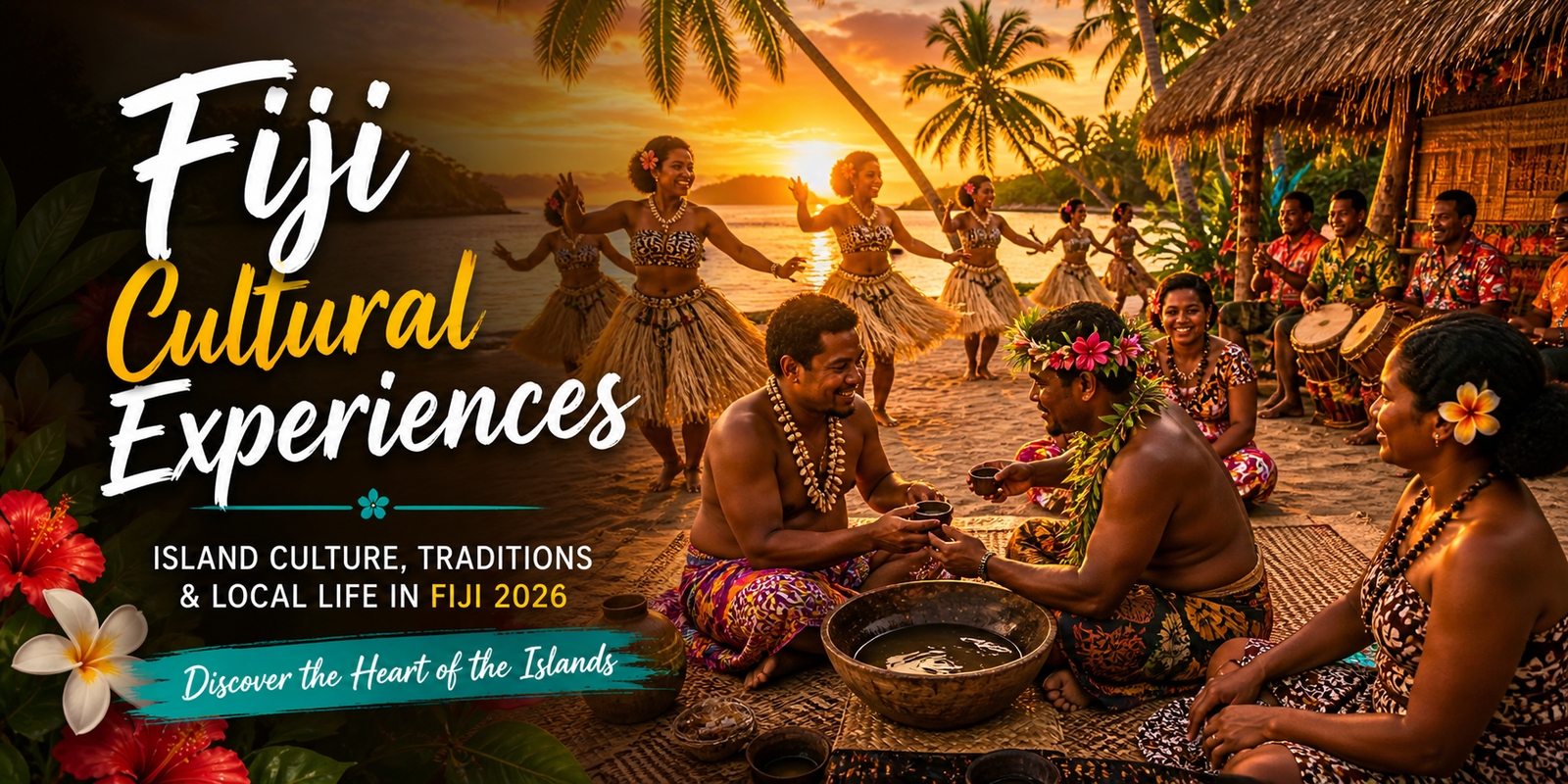
    Probably worth explaining what I’m even talking about here. The phrase Fiji cultural experiences — honestly, it can start to sound like a checklist. Like something you just tick off. If you’re not paying attention, anyway. Village visits. A kava ceremony. Watching a meke dance performance. Tasting food cooked in a lovo underground oven. Learning a few words of Fijian. Sitting with someone while they explain what vanua actually means—because the translation gets tricky. But stripped down, it really just means spending time with Fiji culture on its own terms. Not through a glass partition. Not from a distance. It means being invited rather than just observing.

    Seeing vs Experiencing

    Here is where the reflection gets interesting. You can see plenty. Doesn’t mean you experience much. Watch someone weave a basket? Fine. Sit beside them while they show you how to start that first loop? That’s different. Photograph a village from a bus. Or walk in blind. Totally different. One is collecting images. The other is collecting moments that stick in a different way. Participating in something asks something small from you. Attention. Patience. A willingness to feel slightly out of place for a minute. Most Fiji cultural experiences are not complicated. Nobody’s expecting an expert. The bar’s low. Really low. Show up. Be curious. Say vinaka when someone offers you something. That is basically it. But the gap between passive tourism and actual interaction is where the memory lives. One fades. The other tends to linger.

    Can You Still Enjoy Fiji Without It?

    Yes. Absolutely. Thousands of people visit Fiji each year. Nice resorts. Never touch a single “cultural activity.” And honestly? They go home happy. Genuinely. Their trip was not fake. Their enjoyment was no less valid. Some travelers go to Fiji specifically to disconnect. From work. From plans. From the mental load of coordinating things. For those people, the idea of adding one more thing to do in Fiji—even something meaningful—feels like homework. That is fair. That is honest. People travel for different reasons. Someone running on empty? They don’t need philosophy. They need a nap. They need sleep, sunlight, and nobody asking them for decisions. So the question is not whether a trip without cultural depth can be enjoyable. Clearly, it can. The question is whether it counts as a true Fiji vacation. And that just depends on what “true” means to you. Simple as that.

    What Might Be Missing

    Let us gently explore the other side, without turning this into a lecture. If a trip to Fiji includes nothing but resort life and organized excursions with other tourists, something does get left behind. Not intentionally. Not maliciously. Just by default. What gets left behind is understanding. You leave knowing how the water looked but not how the people laugh. You remember the cocktails but not the way someone says “no worries” like they actually mean it. You saw the place. You just did not meet it. There is also something about the unpredictability of real interaction. A scheduled snorkeling trip goes exactly as planned. A village visit where a child grabs your hand and pulls you toward something unexpected? That is not on any itinerary. That cannot be booked. And that is precisely why it ends up being the part people talk about years later. Without stepping into Fijian culture at all, you miss the chance to be surprised by a place. And surprise is often where the best travel stories come from.

    Why Cultural Moments Tend to Stay Longer

    Human connection works differently from scenery. A beach is beautiful. But a beach does not look at you and smile. A sunset does not ask where you are from. A resort pool does not laugh when you mispronounce a word and then gently correct you. Authentic Fiji travel—the kind where you actually interact with people—creates memories that have an emotional texture. They are not just images. They are feelings wrapped in specific details. The sound of someone singing while preparing food. The weight of a woven fan someone handed you as a gift. The slight bitterness of kava and the way everyone claps once afterward. Scenery fades into a general impression of “it was gorgeous.” But the unexpected moments tend to stay sharp. Doesn’t mean one’s better. Just different. Different souvenirs, different feelings. One fits in a photo album. The other fits somewhere deeper.

    So, What Makes a “True” Vacation?

    This is where we stop trying to give you a straight answer. There’s more than one answer. For some, a true vacation is just… getting away. No strings. No obligations. No learning curve. Just rest. For another person, true means returning home with a different understanding of the world. Most people? They land somewhere in the middle. So here’s a thought. Maybe that whole question — “Can you have a true Fiji vacation without real Fiji cultural experiences?” — maybe that’s the wrong question entirely. Try this instead. What kind of traveler am I today? And what do I really want to bring back? Not what sounds good on paper. What actually matters to me. That shifts everything. Here’s the thing. Once you go there, it stops being about Fiji. It becomes about you. Take a family that’s had a hard year. They just need rest. Sleep. Not having to think. Cultural stuff can wait. But a solo traveler looking for meaning? That person might feel ripped off if they never stepped outside the resort. And honestly? That’s fair too. Neither is wrong. Both are making choices that fit their own version of truth. So anyway. Back to the original question. True Fiji vacation — can you have one without a village visit? Without kava? Without ever learning what vanua means? Yes. Probably. But when you do include that stuff? Yeah. Different vibe. Not saying it’s morally better. Just… more textured. More human. More likely to hit you out of nowhere six months later — stuck in traffic, and boom, you remember someone singing on a hot afternoon. Maybe that matters to you. Maybe not. Both are fine.
  • Why Is the National Flower of Fiji So Rare?

    Why Is the National Flower of Fiji So Rare?

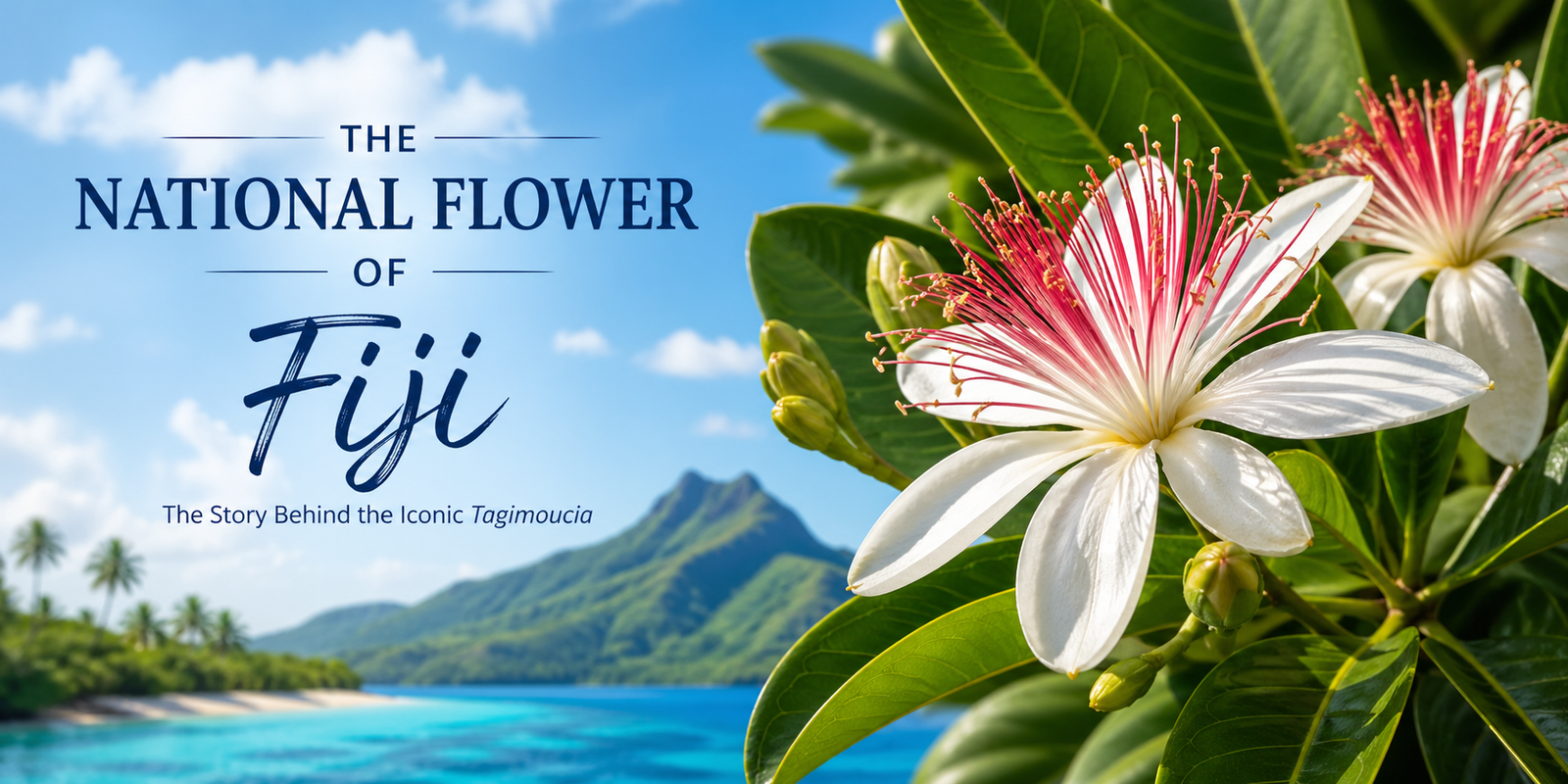
    Think about national flowers for a second. Most countries pick something you can actually find. A rose, maybe. Or a tulip. Something that grows in a garden. Or even just along the roadside somewhere. Something familiar. Fiji did not do that. The flower they chose as their national symbol is not something you will see on a casual stroll. It is not in the resort gardens where most tourists stay. You definitely will not find it at a market stall. So what gives? Why would a country pick a flower that most visitors never even lay eyes on? Turns out, the answer is pretty interesting. Volcanoes. Love stories. A plant that refuses to grow anywhere else. But first, let me actually tell you what the national flower of Fiji is. It is called the Tagimoucia. And honestly, it looks a little unreal. The bloom has five petals. Deep red in the middle, but then the edges fade into this soft white color. Like someone dipped them in cream. The contrast is striking. When you see a photo, you might think it is edited. But no. That is just how it grows. The name Tagimoucia comes from the local language. There are a few different stories about what it means. Some say it translates to “cry from the mouth,” though honestly, the meaning shifts depending on who you ask. What matters more is where this thing lives. Because that is where the whole rarity thing starts to make sense.

    You Have to Go to One Specific Spot

    Here is where it gets unusual. The national flower of Fiji does not grow all over the country. Not even close. You have to go to one island. And on that island, you have to go up into the highlands. So the island is Taveuni. Some people call it the Garden Island. Because everything grows so well. Rainforests, waterfalls. Just green everywhere. But here is the thing. Even on Taveuni, the flower of Fiji only grows in one place. This volcanic crater lake. Lake Tagimoucia. About 800 meters up. The air gets cooler up there. And mist. Almost every afternoon, mist rolls in. That specific spot. That exact combination of soil, temperature, and moisture. That is the only place on earth where this flower grows. Not on the main island. Not on the popular tourist islands near Nadi. Not in any botanical garden outside Fiji. Just there. Right away, you can see why it is considered one of the rarest flowers in Fiji. It basically picked one small corner of the world and never left.

    So, Why Is It So Rare?

    A few things are working together here. First, the plant is picky. Really picky. It needs cool, damp conditions that you only find at higher elevations in the tropics. Most of Fiji is warm and low-lying. Only a handful of spots have what the Tagimoucia needs. The crater lake on Taveuni happens to be one of them. Second, the flower never spread. Some plants are good at traveling. Seeds float on the wind or stick to bird feathers. Not this one. It evolved in that one small pocket and stayed put. No ambition to take over the world. Third, it is sensitive. Even small changes in rainfall or temperature can mess with when it blooms. And here is the thing. The whole population lives in one tiny area. So anything that hurts that habitat? That is a real problem. There is also the timing factor. The Tagimoucia does not bloom all year. You have to catch it between October and December. Show up in January, and you will just see green vines. You might not even realize what you are looking at. So yeah. One island. One lake. A short blooming window. Very specific weather needs. That is the recipe for rarity.

    What the Flower Means to Fijians

    Given how hard it is to find, you might wonder why Fiji made this flower its national symbol. Honestly, I think that choice says something nice about the country. The national flower of Fiji is not something you can claim easily. You have to work for it. You have to travel. You have to hike. In that way, the flower kind of reflects how Fijians feel about their home. Fiji is not just another beach destination. It is specific. It is precious. It does not hand itself over to just anyone. There are also old stories about the flower. Local legends. Take one story. A young woman falls for a warrior from another tribe. He left. She cried so much that her tears became red and white flowers along the path. Another version is different. A princess who ran away into the mountains. The flowers bloomed where she walked. People do not tell these stories loudly. They are more like quiet knowledge passed down. There is a tenderness to how locals talk about the Tagimoucia. And because the flower is so rare, there is an unspoken rule. You do not pick it. You do not try to dig it up and plant it somewhere else. You just let it be. Some things are not meant to be owned.

    Can a Traveler Actually See It?

    Real talk? You can. But it takes effort for sure. Getting to Taveuni is the first step. That means a short flight or a ferry from the main island. Not hard, but it adds time to your trip. Once you are on Taveuni, you need a local guide. Someone who knows the trails up to Lake Tagimoucia. Do not get me wrong, the hike is not awful. But it gets steep in places. And the weather can turn fast. One minute sunny, the next minute raining. The bigger challenge is timing. You have to be there between October and December. That is it. If your trip is in July, forget it. And even during the blooming months, it changes year to year. Depends how much rain came down. Most travelers never bother with any of this. They come for beaches, cocktails, and sunsets. Nothing wrong with that. But if you are curious. If you want something different. Then going to see the Tagimoucia? That becomes its own kind of reward. A few eco lodges on Taveuni offer guided trips to the lake. Do not expect souvenir stands or paved paths. You will get a quiet hike through the rainforest and then a view of a crater lake surrounded by red and white blooms. People who make that hike tend to remember it. Not because the flower is flashy. But because they had to work a little to find it.

    Maybe Rarity Is the Whole Point

    Here is a thought. We live in a time when almost everything is easy. You want something? Click a button. It shows up at your door. You want to see a place? Watch a video. You have basically been there. But the national flower of Fiji refuses to be easy. It grows exactly where it grows. It blooms exactly when it blooms. It does not care about your schedule or your budget. That could feel annoying. Or it could feel kind of beautiful. Rarity makes you pay attention differently. You cannot scroll past the Tagimoucia on your phone. You cannot order a print of it and call it a day. If you want to see it, you actually have to go there. Walk. Wait. And just accept that nature does not perform on command. It never does. That makes the flower more valuable. Not in a money sense. But in a meaningful sense. It is rare not because it is weak, but because it is faithful to its own conditions. It does not try to grow everywhere. It just grows where it belongs. That is a quiet kind of lesson, I think.

    Wrapping This Up

    So why is the national flower of Fiji so rare? Because it chose one small corner of the world and never left. It needs cool mountain air. It needs that specific volcanic lake. It needs mist and patience, and the right season. Most of Fiji cannot offer those things. So the flower stays where it belongs. That might sound like a limitation. But honestly, it feels more like a signature. The Tagimoucia does not shout for attention. It hides a little. It waits. And for the people who make the journey, the flower offers something no photograph can capture. A quiet moment with something that exists nowhere else on earth. Not every national symbol needs to be easy to see. Some are meant to be discovered slowly. Some symbols are rare for a reason. Maybe that reason matters. If you ever find yourself on Taveuni between October and December, at least consider the hike. Bring decent shoes. Bring water. Go with a local guide. And if you get lucky enough to see those red and white blooms around that still lake, you will understand right away why Fiji chose this flower. Not because it is everywhere. But because it is exactly where it should be.
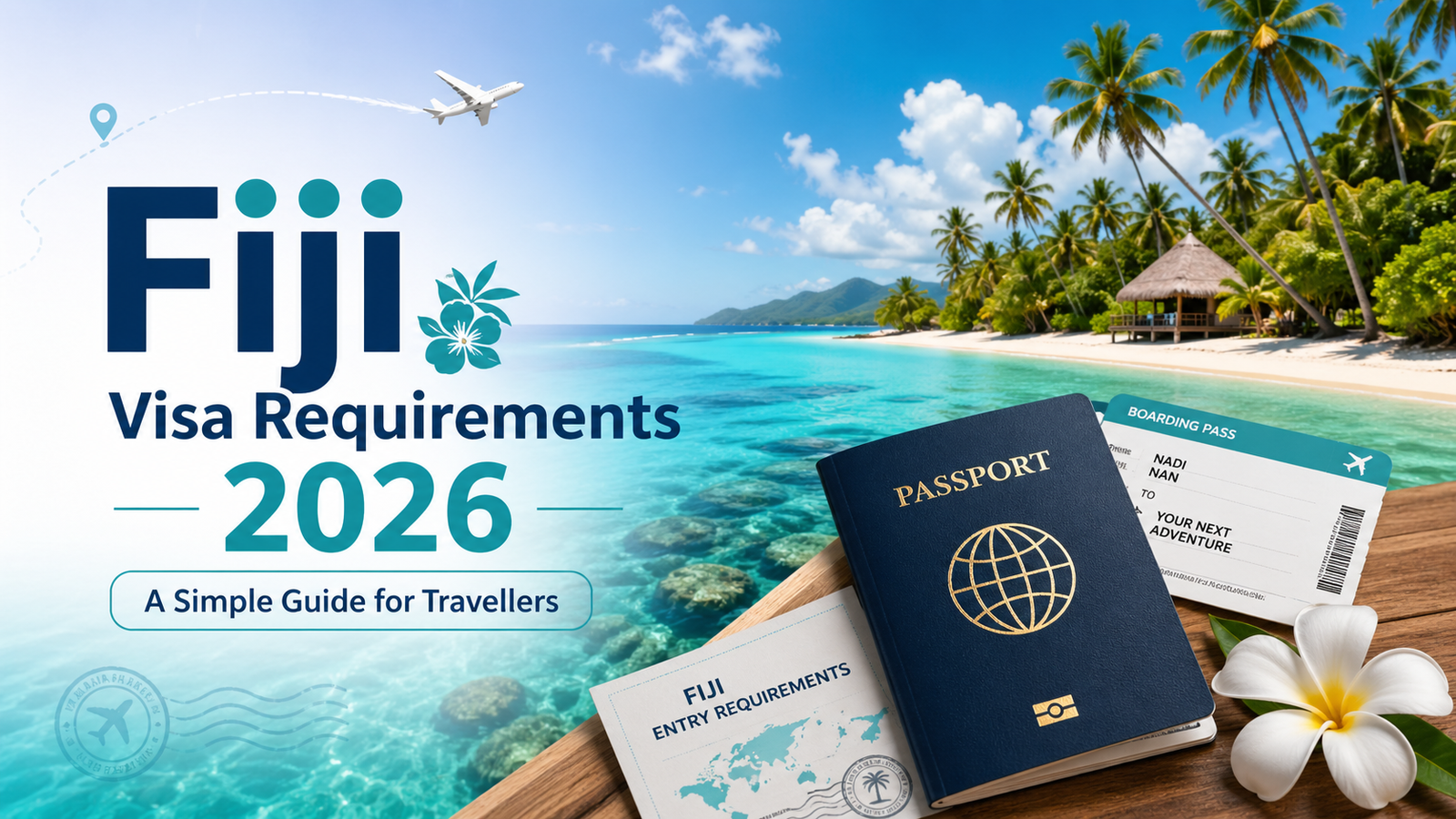
  • Japan to Fiji in 2026. What are the Fiji visa requirements 2026?

    Japan to Fiji in 2026. What are the Fiji visa requirements 2026?

    A person sees a photo of blue water. Then another photo of a beach with no crowds. Then a resort with a pool looking out at the ocean. Next thing, that person is searching for flights from Tokyo to Nadi. Then reality hits. What about a visa? Good news. Fiji does not make this hard for people coming from Japan. No long forms. No embassy visits. Just show up with the right stuff. Anyway, here is what someone actually needs to know about the Fiji visa requirements 2026. No legal language.

    Do Japanese Travelers Need a Visa?

    No. Japanese passport holders? No visa needed for tourism. Japan and Fiji have a deal. No visa needed for short trips. Book a flight. Pack a bag. The immigration officer stamps the passport right after getting off the plane in Nadi. Done. How long can someone stay? Up to four months. That is 120 days. A lot of countries only give 30 or 90 days. Fiji gives four months. Plenty of time for a week at the beach or a longer island-hopping trip. But no visa does mean no rules. A few things still need to be handled before landing.

    Before leaving for the airport

    Fiji immigration asks for a couple of things. Not a long list. Nothing crazy. Just get these ready before leaving Japan. Passport. This one seems obvious. But here is the catch. Passport validity. Fiji wants six months after departure. Four months left? That does not work. Renew. Otherwise, the airline could say no at check-in. Ticket out of Fiji. Need proof of leaving. A return ticket to Japan works. A ticket to Australia or New Zealand works too. Just have something that shows the person does not plan to stay forever. A printed copy or a screenshot on a phone is fine. Place to stay. Does not need to book every single night. But the first few nights should be booked. A hotel confirmation. A resort reservation. Even a friend’s address in Fiji. Something that shows a plan. Money. Fiji wants to know whether visitors can pay for their stay. No specific dollar amount. Just be able to show a credit card, a bank statement on a phone, or some cash. Most tourists never get asked for this. But if asked and nothing shows up, that is a problem. That is it. No application. No waiting. Just those four things.

    Landing at Nadi Airport

    Here is what actually happens after the plane lands. The flight from Japan gets into Nadi International Airport. Passengers grab their bags and follow everyone else toward immigration. Before reaching the counter, each person fills out a small arrival card. Where do the cards come from? Flight attendants hand them out. Or grab one from a table in the arrival hall. Asks for name, passport number, flight details, and where staying. A pen in the carry-on bag helps. Borrowing a pen at the airport takes extra time. Then the line. Foreign passport holders wait for their turn. Step up to the counter. Hand over the passport, the arrival card, and maybe the return ticket if asked. The officer might ask a couple of questions. How long staying? Where staying? Here for tourism? Answer honestly. Short answers work fine. Most people clear this in two or three minutes. Passport gets stamped. Then baggage claim. Then customs. Fiji customs does not want fresh food, plants, or certain medications. If unsure about something, just declare it. No point taking risks. Then walk outside. Warm air. The vacation starts.

    Any Changes Coming in Fiji Visa requirements 2026?

    Honest answer. The Fiji visa requirements 2026 will probably look the same as now. These agreements do not change often. Fiji wants tourists. Japan is a key partner. But governments change rules sometimes. Without much warning. So before booking a 2026 trip, here are two quick checks. The official Fiji immigration website. Look at it about two or three months before leaving. Second, check for any leftover COVID rules. Most of those are gone. But confirming takes five minutes. For planning purposes, assume visa-free entry stays. But double-check a few weeks before the flight.

    Mistakes That Actually Happen

    The same mistakes keep happening. These are the usual ones. Not checking passport expiration. Someone books a trip six months away. Never looks at their passport. Finds out one week before departure that the passport expires in three months. Trip canceled. Check the passport before booking anything. No return ticket. Immigration officers ask for this regularly. Show up with a one-way ticket and no proof of leaving. That can mean denied entry. Always have an onward ticket. Assuming rules never change. A friend went to Fiji in 2023 with no issues. That does not mean 2026 rules are the same. Rules shift. Check each time. Staying too long. Four months is a lot. But staying even one day longer can bring fines or worse. Put a reminder on your phone about the departure date. No proof of money. Most people never get asked. But if an officer asks and nothing can be shown, that creates a problem. A screenshot of a bank balance or a visible credit card usually works.

    Short Questions and Answers

    How long can Japanese citizens stay without a visa?

    Up to four months for tourism.

    Can someone stay longer than four months?

    There is an extension process. Apply at the Fiji Immigration Department in Suva. Approval not guaranteed. Apply before the four months run out.

    What about just passing through the airport?

    The rule is to stay in the transit area and leave within 24 hours. No visa needed. Leave the airport, and normal entry rules apply.

    What if someone lives in Japan but holds a different passport?

    Some citizens need a visa. India or China, for example. Others, like the US, UK, Canada, Australia, and most of Europe, get visa-free entry.

    Do children need their own documents?

    Yes. Every person needs a valid passport. Even babies. No extra visa for children with Japanese passports.

    A Few Last Things

    Traveling from Japan to Fiji is as easy as international trips get. No complicated forms. No waiting for approval. A valid passport. A return ticket. A place to stay. That covers almost everything. The Fiji visa requirements 2026 will almost certainly stay simple for Japanese passport holders. But check official sources a month before the flight. Then book that resort. Fiji waits. The beaches stay blue. The only thing left is buying the ticket.