Here is a warm welcome to the sandy beach side of learning English in Fiji, where the enjoyment of learning a new language meets the joy. In Fiji, you have everything to benefit from, if you want to improve your English level as well as get entertained in a true tropical charm.
Now to put yourself on the beach of Fiji, and enjoy the ocean view with endless palms standing in the graceful breeze, you can hear the sound of the sea hitting the beach. Here, surround yourself with numerous numbers of community groups, allowing you the opportunity to improve your English language skills. Whether you are considering a full university course with rigorous learning or looking for a special setting of private colleges in Fiji, you can find your ideal course here.
Therefore, whether you are a student who wants to have fun under the warm sun or someone planning a long-term journey down the road, Fiji is glad to host you with smiles. The next step will be to acquaint you with our conception of English studies against the backdrop of Fiji’s exotic ocean gem.
Variety of Programs to Help People Learning English in Fiji
The diversity of English programs in Fiji would avail learners with different levels of competence equal options. This paradise with its wide range of English programs is worthy of a closer examination, so let’s take a look at some of them.
University Courses
Typically, English learners find easy availability of training courses offered by established institutions like the University of Fiji where the courses are specially designed for the improvement of the English language.
These classes will cover more than just a language; they want you to come out with everything necessary for effective use of the international language – the English one – to communicate with others and to succeed in your global job market.
High-Quality Education
The English programs of the University of the South Pacific, which take place at the Suva campus, are widely recognized for high-quality delivery. Whether one is heading to the business industry or college abroad, the present course provides one with long-lasting international English skills.
Fijian university graduates at any one time are a store of human capital that can be utilized in either the local or international field.
Career Advancement
Lots of students decide to come to Fiji to continue their vocational studies. Being close to destinations, such as Australia or New Zealand, is one of the conveniences of Fiji’s program. Moreover, whether a student decides to apply for a job placement in the USA, Canada, the UK, Asia, or other parts of the world, the program at Fiji will prepare them.
English courses are offered for participants of different views. The first one seeks to broaden your horizon and solve problems abroad and the second – to contribute to the national industries of Fiji.
Local Industry Engagement
Fortunately, for those, who continue to stay in Fiji to live their lives after completion of their studies in English, there are enough options to contribute to their continued learning. be applied in the local industries.
Students’ involvement in the community and the workforce through applying during practice what is learnt in the lessons, allows them to become stronger people and develop professionally.
In short, Fiji offers an extensive range of English programs designed not only to satisfy the learning requirements but also to ensure a bright career for learners.
Whether headmasters are interested in high-quality education, job promotions, or closer linkages to business people, learning English in Fiji provides all the doors that you need to achieve such opportunities.
Ideal for Different Types of Learners
Learning English in Fiji goes beyond taking classes as the experience displays to the person not only the learning process but also a multicultural society exploration in terms of the opportunities of their kind.
Cultural diversity and multi-lingual exposure create numerous opportunities for cognitive growth and development in children.
Students can spend three months in Fiji as they venture into a mixed society. Hindi, Chinese, Urdu and Korean are a few of many spoken across the country and being multilingual we acquire those multicultural and linguistic experiences. Besides the development of language competencies, it is a great environment in which to develop a sense of respect and insight into other cultures.
Rich Cultural Activities
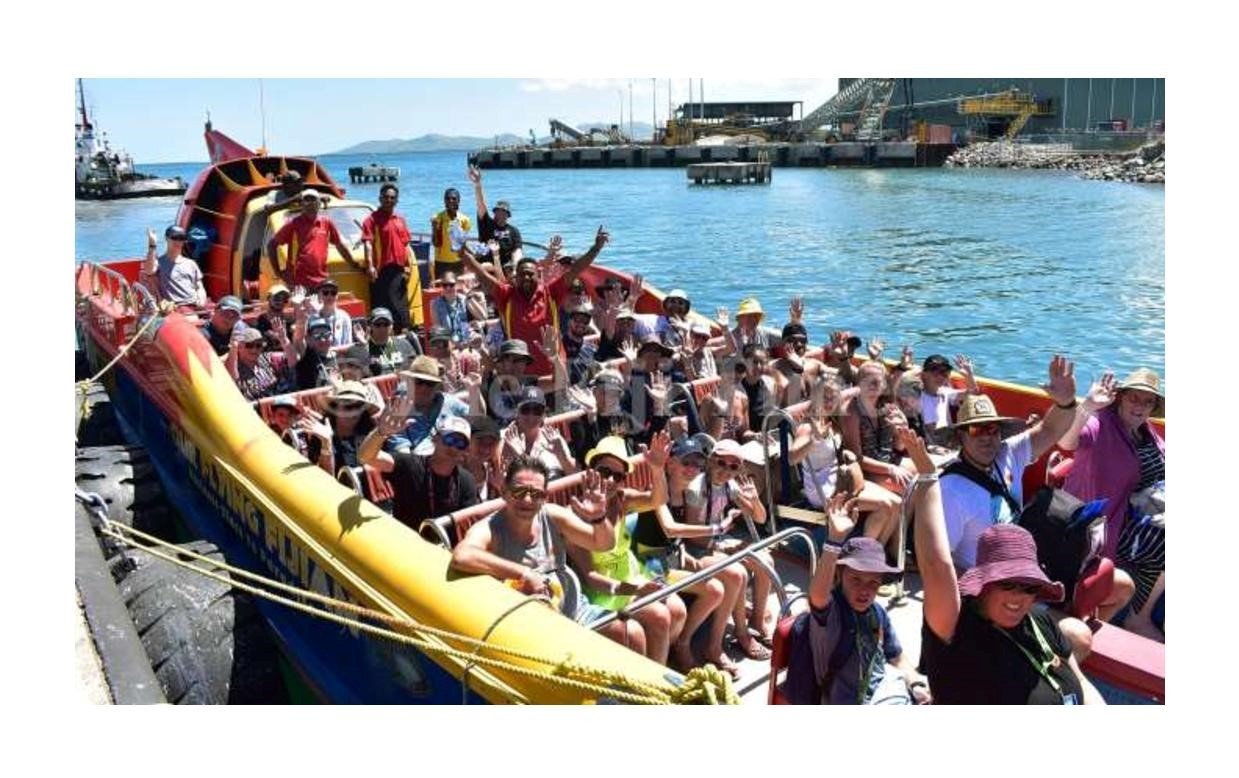
Unlike the typical classroom, learning centres in Fiji engage the learners in a hands-on experience that will help them get a real taste of Fijian culture. Organized boat cruises, surfing and canoeing lessons, hiking trips, and village homestays among other activities allow the students to be fully immersed in the local culture and learn more a bit much about the local activities. The performance of these two pastimes not only increases fluency in the local language but also helps people gain a deeper understanding of life in Fiji.
All in all, Learning English in Fiji with its diversified culture, language exposure, culinary enjoyment, and dynamic cultural activities will offer an undeniably exciting experience for all types of learners.
Professional Center for Learning English in Fiji
In Fijian, the new formal English learning centers have influenced the way students are studying hence making them realize that they have to improve their language skills to have gainful and successful communication with other groups.
Qualified Native Teachers
The English learning schools in Fiji with native teachers carrying out their professional duties effectively play a pivotal role due to the unique skills and cultural aspects they bring into their classrooms. Through such support, students will be able to pronounce words more accurately, catch up with their language proficiency, and learn to speak the English language appropriately.
Comprehensive Curriculums
These spaces propose an individualized, co-personalized education approach, which takes into consideration the content priorities of different explorers. Be it group learning or one-on-one sessions; students have full flexibility to acquire knowledge that best fits their studying needs and objectives through a convenient mode of study.
Flexible Study Options
Pupils will be featured with interactivity and the ability to personalize the learning process. They can choose either short-term classes held over a short time frame or programs that have a long-term duration such as several months or even a whole year. This flexibility seizing to send learners at liberty to pace their lecture according to their needs, timing, and objectives.
Diverse Learning Focus
The program is designed to cover a wide range of areas that are interesting to students so that everyone can find something that matches their preferences and learning styles. Some classmates could stay away from formal talks because they are learning to beautify their conversational skills at surfing or scuba diving. Some might participate in language study just because of their job goals, to be fluent in their field or to go to higher education.
Cultural Immersion
In Fiji, English is inclusive of language classes and cultural immersion since Fiji offers not only English but also experience cultural. Transcending stereotypes, students can establish friendships with people from all walks of life, which thereby promotes multicultural comprehension and empathy.
In summary, the English centers that cater for professionals in Fiji are great places to equip students with excellent communication skills in English. With the professionally trained tutors, flexible program options, clear focus on different themes, and cultural immersion provided, learning English in Fiji will be a greatly justified decision that goes beyond mastering the language.
Fijians love the great outdoors and sport in Fiji is a big deal. It’s all part of the Fijian lifestyle. While most of the world knows about their brilliant rugby players, there are plenty of other sports enjoyed in Fiji.
Sevens rugby is probably the most famous sport in Fiji. Similar to standard rugby, but with seven players per team. The fewer numbers of players means more space. This creates more ball movement and some spectacular tries.
The healthy diet of vegetables, meat and fish makes many Fijians highly suited to rugby. Men and women play both forms of the game and not just in parks. On the beaches, on the streets – you just a need a ball.
In 2016 Fiji’s women’s rugby team became the first country from the Pacific region to qualify the Olympics. Almost 10% of Fiji’s population play rugby and many players are signed up to the big pro teams in Australia, New Zealand and Europe.
As much as rugby is worshipped, there are plenty of other options for sport in Fiji.
Many women and girls play netball, which is a fast-moving game very similar to basketball. Soccer (or football) is also hugely popular and played throughout the country. Fiji has a national soccer league and is regarded as one of the stronger countries in the Oceania region.
Golfer Vijay Singh put Fiji on the map with his powerhouse performances in the 90s and 2000s. His titles included three majors and helped ignite a golfing boom in Fiji.
Today many visitors to Fiji are keen to take in a round of golf at some of the spectacular oceanside courses. Golf nuts from all over the world head straight for the Legends Golf Classic, which was inspired by Singh.
And speaking of the ocean – of course Fijians love their water sports. Surfing, fishing, yachting, paddle boarding, windsurfing or good old-fashioned body surfing are all incredibly popular.
Traditional water sports such as canoe racing and drua tours are also great fun. Druas are uniquely Fijian double canoes that date back centuries. They remain an outstanding example of craftsmanship and design.
In short, there is plenty of sport in Fiji to get into. Their sports reflect the diversity in their culture as well as their history.
The Fijian Lifestyle is a vibrant and creative amalgamation of people, their culture, and their relationship with the environment in Fiji. Living in Fiji is not for the sole purpose of existence; it is living to the fullest. Fijian culture revolves around good fellowship and regard for nature in all its forms.
A Unique Way of Living
Fijians pride themselves in their family; everything in Fiji is centered on the family unit. Children are born and raised in love and care, and therefore, in solidarity, they come to understand their role in society. This close association with family influences the Fijian perception of life and its elements of happiness.
Nature’s Role in Daily Life
Fijians have also a great reverence for the natural world. All the islands are gifted with beautiful natural sceneries, clear water, and exotic animals. This natural beauty is very relevant to the routine lives and customs of these people. Fijians spend most of their time under direct sunlight by the beaches managing their natural resources.
The Fijian Lifestyle entails maintaining family and togetherness with others as well as appreciation of the natural environment. This style of life not only produces happiness in the people of Fiji but also makes Fijian culture more special.
Cultural Values and Appreciation of Life
Many aspects of life particularly in the area of relations are substantially influenced by the culture of the Fijian people.
Family – The Heart of Fijian Life
Family is everything in Fiji. In most homes, at least three generations, often grandparents, parents, children, and in some cases, cousins share the same house. Such closeness brings about good partnership or comradeship hence close campaigner support. Protection, unity, laughter, and love are the repository for the Fijian people. These moments are valued, as the stress on the relationship and strengthening connection are made during its duration.
Community Connection
Apart from family support another important aspect identified in Fijian culture is societal support. Often people are so close to neighbors that they treat each other like relatives; join everyone in rejoicing or mourning, and contribute to each others’ lives in many ways. Fijians are very friendly and welcoming; hence people can easily be accommodated. They are also very proud of their community and go around helping those around them.
Respect for Nature
Fijians have a rich culture they show respect for nature and they realize that society and nature are interrelated. The beauty incurred by them they perceive as a blessing and feel it is their responsibility to preserve it. Such appreciation is reflected through the ways most populations fish sustainably, as well as the ways they cultivate their food crops in the fields not damaging the soil and nature.
Living in the Moment
The Fijian culture also engulfs living in the present and enjoying the little things about life. This approach to life helps them to be joyful and grateful for everything.
Connection with Nature
Fijians are closely linked with nature. Nature is an integral part of the lives of Fijians. That is why they take care of the environment and consider it as the crucial factor in their healthy and happy life.
Respect for the Land and Sea
The Fijians also have a greater degree of reverence for land as well as sea. Fiji has a large proportion of the population, which depends on agriculture and fishing for food. This leads to the fact that they get used to value its resources. Though they cultivate crops like taro and cassava and also fish, they do not over-exploit the natural resources they possess.
Sustainable Practices
Sustainability is very important to the Fijian people. Fijians use approaches that can be described as conserver in nature. For example, they employ methods of farming that are free from using hazardous chemicals more often than other people do. In this way, they preserve their land to be healthy and productive.
Nature as a Teacher
Fijians are learners in nature as well. They are taught matters concerning the four seasons, weather, and animal behavior. This knowledge enables them to live with the environment in a balanced manner. For example, Fijians know when it is appropriate to cultivate crops relying on information on rainfall.
Celebrating Natural Beauty
Fijians pride themselves on their beautiful islands. Prominent attractions are beautiful beaches, tropical forests, and reefs that are depicted in their culture. Almost all the people’s celebrations such as festivals and traditional dances involve dancing either on the ground or around a tree, and generally involve the interaction of people with the ground, the sea, and the environment.
Community Dynamics and Support Systems
A Close-Knit Community
Fijian communities are usually small and compact and the group of people are known to be very close-knit. People are acquainted with each other, and most of them are on friendly terms with one another.
As for dependence on the members of this community, people are willing to rush and help when one of the members of the community is in a difficult situation, such as illness or penalties. This could entail sharing food doing the dishes or offering to listen whenever one feels lonely. Another is that it is the residents’ responsibility to help each other, especially in terms of financial stability.
This is so because during any event such as a wedding or festival, the people come together to organize events. Everyone participates such as in the preparation of food and drinks preparations, decoration, and preparation of music. This commoners’ engagement brings out the necessary social capital whereby people are proud to belong to a certain community.
Most of the communities in Fiji use resource and knowledge sharing as a common practice. For example, farmers may cooperate so that they can share ideas on how to grow crops or share equipment. This teamwork fosters skills and the development of good relationships among individuals. It also confirms that there is an equitable distribution of what everybody needs.
Celebrating Together
Any celebration forms an integral part of the Fijian standard community lifestyle. They create chances for people to gather, have a meal, listen to music and dance. Such functions enhance the bonds of the community and are memorable.
The Fijian culture is and can be described as being rich in its aspirations, norms, and relationship with land and neighbors. Fijians have great regard for their environment and their fellow men which makes the Fiji culture very rich.
Based on their culture, Fijians enable people to feel wanted and build a useful life. This extraordinary lifestyle exhibits family, nature, and togetherness as the main values when people can return to the basics of happiness.
Whether you want to be lying on the golden sand, your beloved companion by your side, refreshing glasses of water near you, or simply surrounded by the green forests, Fiji offers you an adventure that you will never forget. Lucky you! Now remember, there are quite a few things we need to delve into before we have fun. One of them is how to deal with financial affairs or Fiji money exchange when you travel.
Issuance of Fiji’s local currency could be the last thing to cross your mind in the process of planning your tropical getaway, yet it is central to a hassle-free and relaxed journey. To many travellers the fact that they must pack feels like a ‘downer’ and they focus more on the “high” of the upcoming trip. Meanwhile, not paying enough attention to your expenditure has negative consequences which you may not expect.
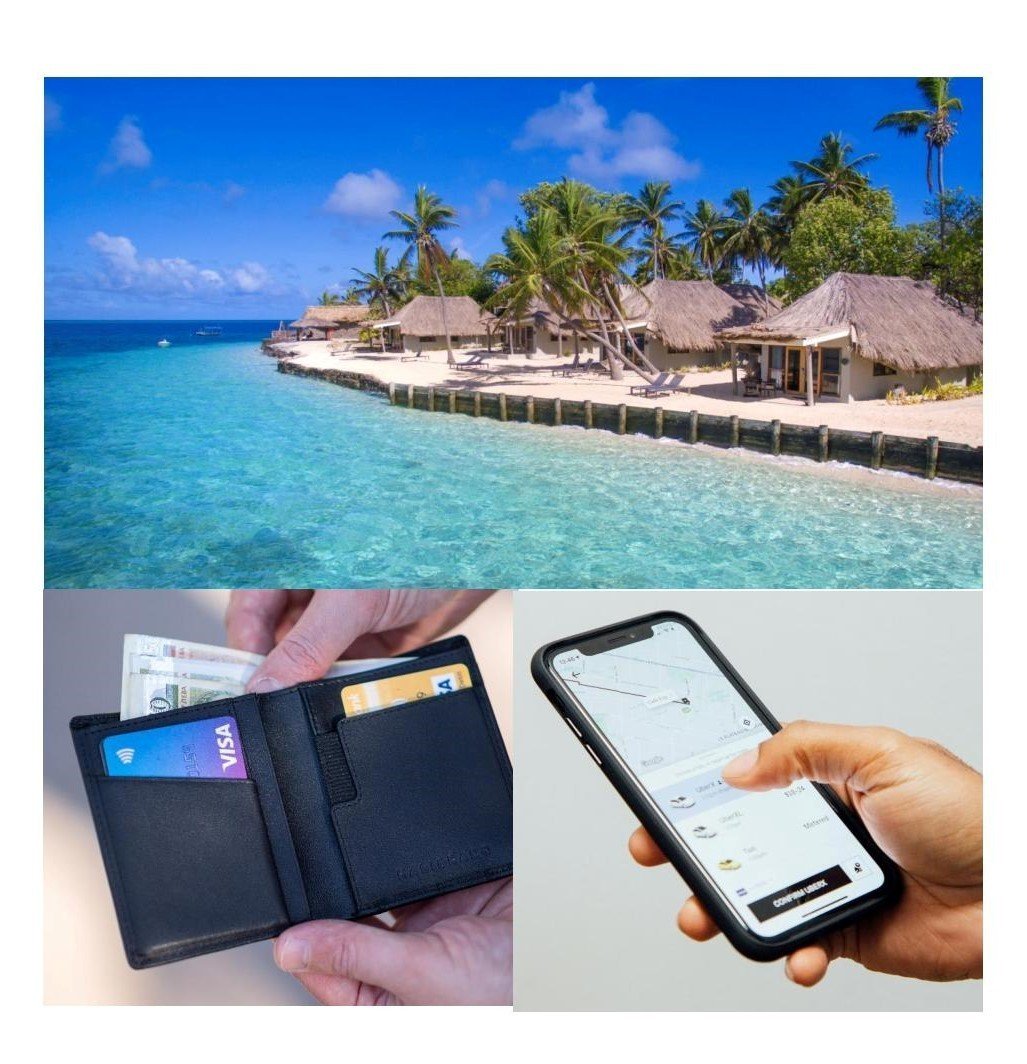
There are two major ways people finance their expenditures in Fiji; either by credit cards or with cash. The main advantage of credit cards over cash is their convenience as they rarely allow you to realize that the money is running out. However, they usually carry additional costs which amount to overusing them. On the other side, the process of holding quite a bit of money by hand moreover constitutes lots of risks and troubles, especially if you are stuck in an unfamiliar environment.
But fear not! There’s a solution that combines convenience, safety, and affordability: Vodafone is introducing its MPaisa cash transfer system. This new hassle-free platform helps people move their money into their account where it is then spent within Fiji. Via MPaisa service, digital payment becomes customary for little and without any excess associated fees that can be observed on credit cards.
Understanding Fiji Currency and Fiji money exchange
Before going to Fiji, you need to acquire yourself with the local currency to avoid turning your holiday into a quest for changing money in doing transactions. The Fijian dollar is the currency of Fiji. It is also often called FJD. It is the currency that is used for all kinds of everyday spending needs, including to the local markets to staying at restaurants and accommodation.
When you want to foreign exchange for the Fijian dollar there are a number of ways that you can do that. One of the most popular ways of practising is the exchange of currencies at banks and offices with the license to provide exchange services. Moreover, the majority of hotels and resorts could assist their guests with currency or money exchange services as well to make it easier for them.
But do remember that exchange rates apply in situations where currency exchange takes place because you are in a different country. To protect your money by getting the best value for the rates, it’s usually advisable to compare at different places before the final decision is made.
You can keep all your cards or use digital payment methods which Fiji nation highly encourages. Digital transactions are now the trend. Nowadays it is a business too which accepts credit card payments and travelers use credit card boxes absent of cash.
Besides engaging the services of a Bank for currency, visitors can also look into Vodafone’s MPAISA mobile phone-based completely alternative transfer system. It is a digital platform that can be used to deposit money to individual accounts using mobile devices and hence being the alternative to cash makes the life of the users more convenient.
Through a comprehensive knowledge of Fiji’s currency and Fiji money exchange, you may avoid the challenge of travel money exchange and thus have a more relaxed, enjoyable trip.
Vodafone’s MPaisa System and How MPaisa Works
Imagine having it all within your reach, literally like keeping your money right at your fingertips, without having to take cash or worrying about the currency exchange rates. That’s where Vodafone’s involvement makes sense given the revolutionary non-cash monetary system we have – namely, the MPaisa system, the way to go with your Fiji money exchange.
MPaisa is a digital wallet tailored by Vodafone for Fiji. It is like your e-wallet. It is a simple system that allows you only deposit money to MPaisa account using your Mpaisa application and spend the amount easily during your trip. And guess what? Also, the setting is not local only to the residents, as even tourists can also have a slice of it!
Here’s how it works: To start with, upon your arrival in Fiji go straight to the Vodafone outlet recommended there and purchase yourself some data and minutes for your phone’s local usage. These are the SIM cards that MPaisa have, making it extremely convenient to start. Second, the Vodafone MPaisa App is available to download from the app store, so you can get it as simply as getting your choice game for your handset.
Last but not least, transferring cash from your account to your MPaisa digital wallet is the most interesting. You can head over to the designated MPaisa Vodafone branded outlets, namely Valuefone, Chicken Express, Vodafone, Shop n Save, and New World. Find one near you and you will find a deposit machine. Take your money and put it there, and you will be ready to go in a wink!
But wait, there’s more! The use of MPaisa is extended further to enable the withdrawal of Fijian dollars from a bank’s local branch where the withdrawal can be done through the mobile device. If you are wondering where to get MPaisa, the answer is right there, as all the big banks in Fiji that are Westpac, ANZ and Bank of South Pacific offer the services securing the facility for you.
So, now let’s discuss the great advantage – saving money! MPaisa prompts you to forgo large sums of money that are laden with credit card transaction fees or ATM withdrawals. With MPaisa you can run shopping and tender the fees nonexistent same as you are increasing the value of money.
Hence, MPaisa service is the most preferred one in Fiji as it is widely accepted among the people even in rural and remote areas. Taking up MPaisa gradually in Fiji is a great way to minimize the travellers’ financial problems by enabling them to enjoy their stay without worries.
In summary, there is no doubt that we advocate Vodafone most for your Fiji money exchange business experience. It is so simple, just you have to download the app (if it is not already) and all you pay for is the internet, no extra charges. So why wait? Let your MPaisa be the change you make to experience the independence of digital money.
Fiji products are starting to make their mark around the world. Fiji is renowned for its breathtaking beauty, top notch resorts and unbeatable friendliness.
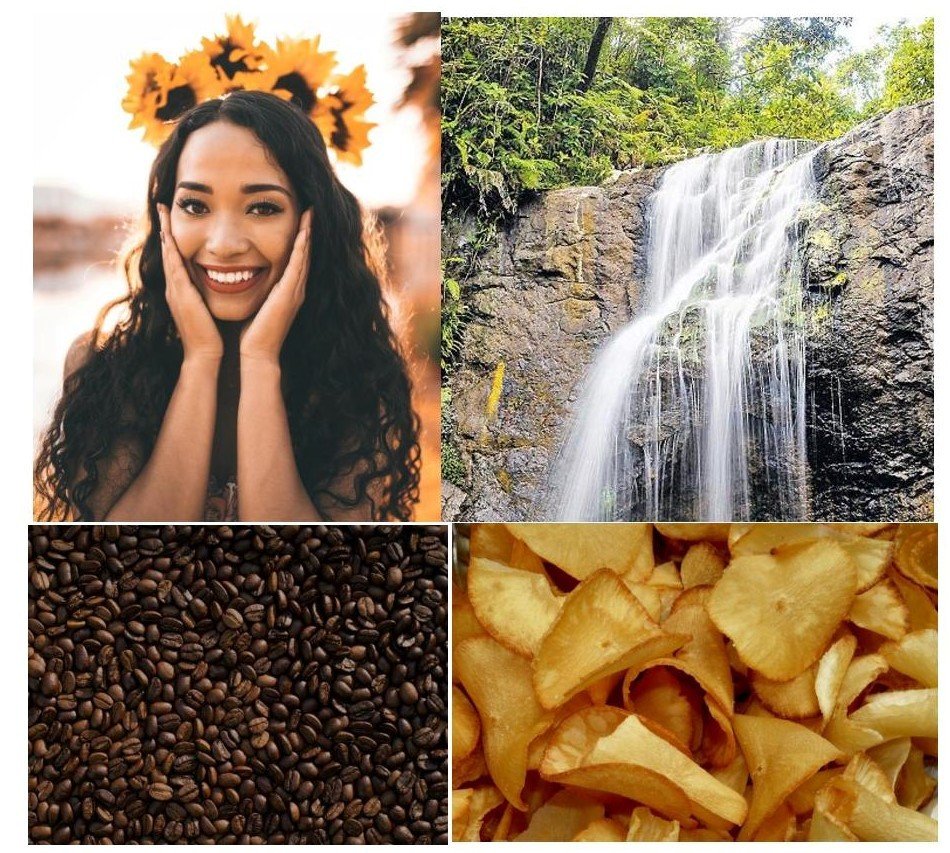
Its products are lesser known but that’s quickly changing. Fiji is blessed with great weather and an abundance of natural resources. This is ideal for producing a variety of must-have goods, ranging from coffee and beauty products to ginger, water, sugar and delicious snacks.
Big brands such as PureFiji, Fiji Water and Plantation Rum are just some of the Fiji products in high demand.
Fiji is ideal for growing and cultivating a wide array of products due to its fertile land. This is thanks to most of being Fiji being made up of volcanic soil. Volcanic soil is excellent for farming because of its high content of minerals which are crucial for healthy crops.
Coffee
Coffee makers such as Bula Coffee take full advantage of Fiji’s tropical weather and fertile soil. This is ideal for coffee trees. They flourish in the warm conditions and produce the perfect berries which are used to make beans for the coffee.
The entire process from planting the berry trees to packaging the coffee all takes place in Fiji. Not only home-grown but absolutely delicious.
Ginger
Ginger is another of the major Fiji products that benefits from the year-round tropical conditions and rich soil. Ginger is exported in a variety of forms. As a healthy snack in crystallized form, as a supplemental drink and even as a liquefied health booster.
300 Islands crafts a pink ginger mix which can be added to any kind of drink. Shakes, cocktails, smoothies – you name it. It’s mixed with Fijian honey and vanilla beans and is a classic example of a Fijian pure and natural product.
Sugar
Sugar has long been one of Fiji’s major exports and for good reason. The volcanic soil, regular rainfall and tropical climate all combine to make Fiji an excellent base for sugar production. Fiji’s brown sugar is especially sought after as it’s a healthy alternative for baking and cooking.
Sugar is one of the most important Fiji products so it’s grown on both of the major islands. Around 22,000 farmers work in the industry to produce 4 million tons of sugar cane each year.
Rum
If you’re going to produce masses of sugar you might as well produce rum. Fiji certainly does this and its rum is exceptional.
Plantation Rum is a brand that’s revered around the world. While the Caribbean is mostly known for its wide rum selections, Fiji has perfected the rum distilling process.
Rum such as Plantation is made from Fijian sugar cane juices. It’s distilled and then barreled before being shipped to France for further barreling in oak casks. Yes, really! Trust us, it’ worth the wait.
The result is a lip-smackingly good rum with fruity and raisin aftertastes. Fijian rum has won international awards and is a go-to for bartenders around the world.
Health snacks
Indian-Fijians form a large part of Fiji’s population and culture. Indian-inspired dishes are hugely popular in Fiji. They taste great and they’re healthy. Sold!
Delicious health snacks are also one of the fastest-growing Fiji products and brands such as BBC Bhuja offer a distinctively Indian-Fijian flavour.
They make spicy and tasty snacks from natural ingredients that are both gluten and cholesterol free. And packed with protein! Their snacks range include beans, peas and nuts that come with garlic and chili.
These savory treats are not only great for taste buds of all ages but are an excellent alternative to other snacks high in sugar and fats.
FMF Foods is another company churning out high-quality and healthy snacks. They include traditional Fijian tastes such as cassava and lovo which are high in protein and low in saturated fats. Yes and yes.
The FMF product line ranges from healthy snacks to rice, noodles, biscuits and flour.
Health & Beauty
Fiji’s beautifully preserved and unspoiled environment makes it an excellent source for health and beauty products. These range from body oils and lotions to hand soaps, scrubs and kava supplements.
Pure Fiji is one of the leading brands in this competitive market. Their products are in demand across the world because of their 100% natural ingredients. Much of Pure Fiji’s appeal is the uniquely Fijian flavor of their products. Oils, lotions, soaps and scrubs and made from coconut oil and flower extracts.
Like all other Fiji products, health and beauty producers strive for minimum carbon output and carefully select ingredients from their natural habitat.
Fiji Kava has a wide range of kava capsules that help alleviate stress, promote calmness and enable peaceful sleep. Their capsules are made from the roots of the kava plant – one of the most famous Fiji products.
Rice
Fiji Rice specializes in growing and producing brown rice. The health benefits of brown rice include high levels of fiber which helps prevent cancer and diseases as well as energy-giving magnesium.
Fiji rice is mainly exported to countries in the Asia-Pacific region, however this is expected to grow exponentially over the next decade.
Water
Fiji’s pristine environment ensures its water is of the highest quality. Brands such as FIJI Water prides itself on providing high quality bottled drinking water to the world.
Fiji’s water comes via rainfalls that are purified by trade winds. The water then flows across volcanic rocks which are rich in minerals and electrolytes.
This water is then stored and bottled for export to pretty much every major market worldwide. Australia, North America, New Zealand and Europe.
Fiji is one of the world’s most popular holiday paradise destinations. People love Fiji for its immediate access to natural beauty and its unique friendliness.
These qualities are distinctly represented in Fiji products.
Fiji has literally dozens of fantastic family-friendly resorts. These can range from laidback beach houses to spacious and modern family hotels.
Best of all is the huge number of activities to keep everyone occupied. Depending on the age of your children, there is plenty of fun stuff to get up to in Fijian paradise.
From babysitting services to water sports, adventure parks and teen-only cafes, a Fiji family holiday will let everyone recharge their batteries.
The most accessible resorts are on the Coral Coast. This is a magnificent 80km stretch of coastal paradise, running down the western side of Fiji’s main island, Viti Levu.
The Coral Coast is located between two of Fiji’s largest cities – Suva and Nadi, both of which have international airports.
From here it’s up to you how to get to your resort.
Driving is a great option – you can enjoy your Fiji Holiday completely at your own pace.
All major resorts have to pick up and drop off services to and from airports so it’s completely up to you.
Here are some of the excellent family-friendly options on the Coral Coast.
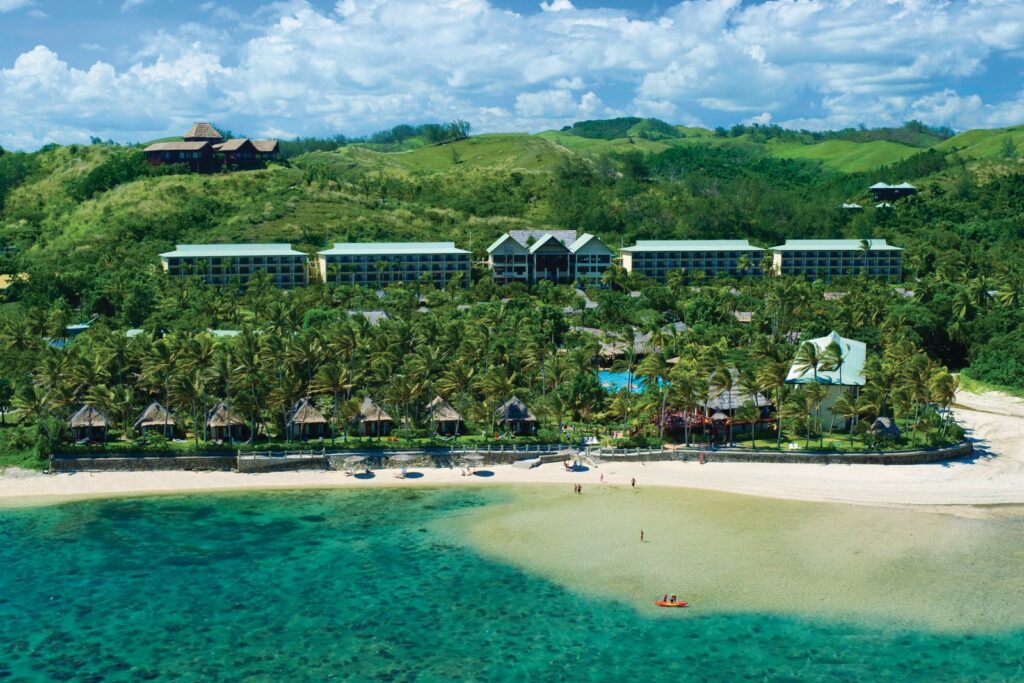
The Warwick Fiji is about as good as it gets. Perfectly located on white sands with spectacular five star ocean views.
As much as adults might want to lounge around on a beach chair, younger travellers will be wanting some activities. Even too-cool-for-school teens can get restless.
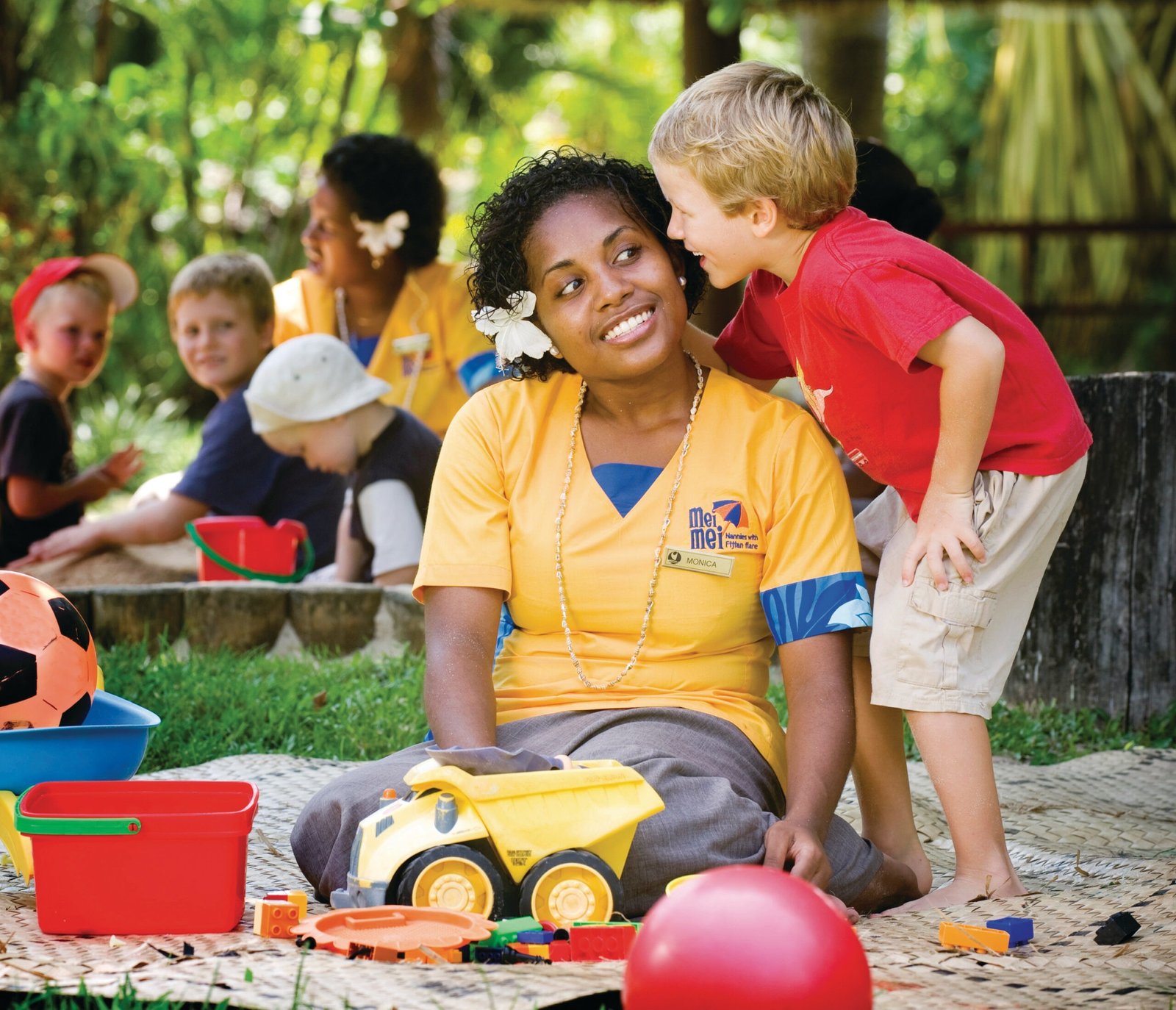
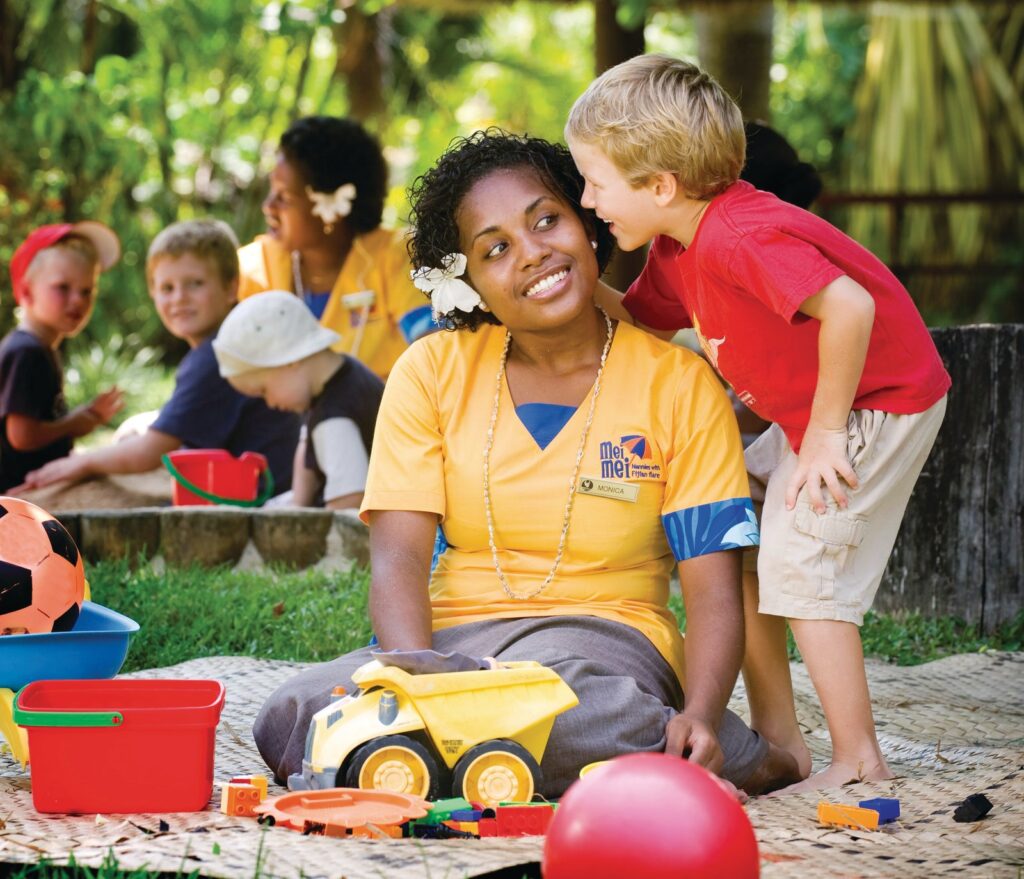
For families with kids 12 and under the Warwick has a kids club which allows you to sip cocktails, drowse in the sun – whatever floats your boat!
Children can go fish feeding, enjoy treasure hunts, face-painting or just good old-fashioned beach antics.
Older kids will love the water sports on offers such as water skiing, and kayaking. paddleboarding and snorkelling.
If you’re looking for something a little more down to earth and affordable, the Naviti Resort is an excellent option.
Just up the road from Fiji Warwick, this four star resort has an abundance of attractions that will keep you younger and entertained and you perfectly relaxed.
Pretty much anywhere on the Coral Coast is a safe bet. Other renowned resorts such as Outrigger offer five star service and always are always right on the beautiful Pacific Ocean.
If you’re feeling a little more adventurous and your family is keen to really enjoy an adventure, then hit some of the smaller islands.
What better place to start than the Yasawa Island group? A truly majestic part of the world with idyllic resorts for all ages. Families are very much included!
Turtle Island is especially good for families with kids over 10. The range of fun stuff to get up to is seriously impressive.
Horseback riding, snorkelling, windsurfing and mountain biking are all there to keep up healthy heart rates. Naturally, there are kids clubs which come with nannies and “Bula buddies”.
https://www.youtube.com/watch?v=nbKbdSumMvw
Also in the Yasawa region is the Blue Lagoon Resort. This is an especially good option for those looking to soak up some Fijian culture. This includes visits to traditional villages and experiencing an authentic church service. You can take in Fijian dancing, singing and pick up some handicrafts.
Families can go out on boats with the always smiling locals to try their luck at handline fishing. Older kids and adults might also be tempted to hit the water for paddleboarding. Naturally, this resort has a fully staffed kids club with all the amenities you would need.
Activities
Of course, Fiji resorts offer a wealth of fun stuff for families to do. There are also lots of places worth checking out beyond the resorts. The Coral Coast has some excellent attractions that will keep parents in the good books for years to come.
The Kula Wild Adventure Park is definitely worth a look. Water slides, turtle feeding and splash pools. Best of all is its animal interaction area. Never held an iguana before? Now’s your chance!
Also high on many lists is the Big Bula Waterpark. Located right on the Pacific Ocean just a stone’s throw from Nadi, Big Bula is some serious fun. With huge slides, wave pools, kiddie-friendly splash pools and the world’s largest inflatable slide, this waterpark is a fantastic value.
These are some of our highly recommended resorts and activities that cater to all families and price ranges. When booking it’s definitely worth asking the resort if they have family specials – many resorts offer discounted packages for children under 12.It can also be a great idea to consult with your children before planning your holiday. Ask them to check out different activities and places of interest – it’s their holiday too!
Now is the perfect time to head for a Fiji beach resort. You’ve been waiting and waiting to escape for some seriously deserved downtime. And where better than relaxing and playing in paradise?
Fiji is not only an officially safe destination, but it has literally dozens of islands to choose from. Hundreds, in fact. You can escape the crowds with those close to you and let the unwinding begin!
Whether you’re after something affordable and fun or some serious luxury, a Fiji beach resort has your name on it.
Coral Coast
Let’s start with the most accessible spots on the mainland. Fiji’s beautiful Coral Coast has a plethora of places to stay, ranging from backpacker hostels to five star resorts.
These are some of your best bets.
The Outrigger Fiji Beach Resort is located on a stunning beachfront with top notch sea views on the main island of Viti Levu. The Outrigger is especially suited to families or multi-generational groups.
There are plenty of activities and services on offer that will keep everyone pampered, occupied and satisfied. These include a kids club, several fun pools, cultural activities such as fire walking and of course access to any water sport you’ve heard of and some you haven’t. The Outrigger is also a stone’s throw from lush golf courses and adventure parks.
Also on the Coral Coast is the Waidroka Bay Resort which is the go-to for active travelers of all ages. Waidroka Bay is perfectly located for a wide range of water sports. The legendary Frigates surf break is offshore and nearby Beqa Lagoon offers scuba diving and even shark diving.
Your Fiji holiday fun isn’t restricted to the ocean though. Waidroka Resort is renowned for its wellness and yoga programs plus adventure tours such as river rafting.
Coral Coast resorts are within close range to Fiji’s major airports in Nadi and Suva and offer pick-up and drop-off services.
Mamanuca Islands
If you really want to get away from it all why not aim high and head for the stunning Mamanuca Islands? The Mamanucas are located off the western coast of Fiji’s main island Viti Levu. From Nadi airport you simply jump on a boat or seaplane and then step into your Fiji paradise.
Castaway Island is a private island of white sands surrounded by the beautiful sparkling Pacific Ocean. This fantastic Fiji beach resort ticks all the boxes. Massages, cocktails and beach bungalows for those who want to take it easy. Spacious rooms for bigger groups and families with surfing, snorkeling, boat rides and water skiing all waiting for you.
Or simply plant yourself in a chair on the beach and stare out at the gently breaking waves. You won’t know what time it is and you won’t care!
Namotu Island
If you’re seriously into surfing, diving and fishing then rejoice – Namotu Island can deliver. This spot of paradise is home to world famous surf breaks such as Cloudbreak, Swimming Pohttps://www.youtube.com/watch?v=gjzaVpSSYIkols and Tavarua Rights. Veteran surfers will head straight for Cloudbreak while Swimming Pools offers great rides for all levels.
Fishing fans also have reason to cheer. Namotu provides chartered fishing boats which are ideal for groups keen to try their hand at landing some of Fiji’s sensational fish. Professional staff are there to guide you to the incredible yellowfin tuna, mahi mahi and snapper.
Naturally, if you’re a “less is more” traveler, then you might want to head straight for Namotu’s floating bar – Cloud 9. In fact, everyone should be headed for Cloud 9 at some stage of their trip.
These are just a sample of some of the truly magical experiences that await you at a Fiji beach resort. Heading into April is the last of Fiji’s summer which guarantees tropical weather and plenty of sunshine.
As with any destination, you’ll need proof of your double vaccinations as well as a recent negative Covid test on arrival. For more information on travel protocols you can visit the official Fiji tourism site.
2022 is time to finally get back into traveling and simply enjoying life. What better way to start than being pampered at a Fiji beach resort?
The good news is that slowly and carefully, international travel is coming back.
At last!
Late February and March are typically hot in Fiji, so if you want to escape the Northern Hemisphere winter blues, now is the time for your dream escape.
So let’s get updated with travelling to Fiji.
If you’re coming from a Travel Partner country, you don’t need to quarantine. Arrive and start your Fiji holiday.
You can check out the Travel Partner countries and any other travel-related questions on Fiji Tourism’s official site.
Like visiting any country now, you must be fully vaccinated and have proof of your vaccinations. A certificate or phone proof is acceptable.
Fiji accepts these vaccinations:
AstraZeneca, Pfizer, Moderna, Johnson and Johnson, Nuvaxovid (Novavax), Coronavac (Sinovac), Covishield, BBIBP-CorV (Sinopharm), Covaxin and Sputnik V.
Please also be aware that your country may require you to meet specific testing requirements to return home.
Fiji vacation packages should include full assistance from hotels and resorts in organizing any necessary flight changes or testing. In Fiji, you can discuss your return flight date with your hotel, which will help you get things organised.
Major airlines are now flying to Fiji, so it’s time to book a seat. Fiji Airways, Qantas, Air New Zealand and Jetstar are among some of the world’s top airlines currently flying into Fiji at Nadi international airport.
It’ll be “first in, best dressed” when booking the best Fiji vacation packages. Tourist numbers will be down initially (as with everywhere), so you should have no problems finding the accommodation you need. Maybe a relaxing Fiji beach house or spoil yourself at a resort on a Fiji island.
March is in the wet season, which means it rains more frequently and is nice and warm – very warm! Don’t worry too much; rainfalls are typically fast, and before you know it, the sun is beaming again.
Fiji vacation packages range from cosy beach houses to family-friendly resorts and five star luxury resorts on private islands.
You can stay on the main island of Viti Levu and soak up the majestic Coral Coast. If an island escape is more your go, then there are plenty of resort options with plenty of activities and pampering.
That’s all you need to know for your much-deserved Fiji vacation.
Happy New Year from FijiDream. We trust you enjoyed a happy and healthy break and are looking forward to a prosperous 2022.
In January we often look at our calendars and start thinking about the year ahead. Hopefully thinking about visiting or revisiting Fiji!
When we think “Fiji”, we think “relax”. Unwinding and enjoying life on a beach resort in paradise.
But when is the Best Time to Visit Fiji? What can we do in certain months? What time of year is best for family holidays or fishing? How’s the weather in general? (Perfect). When’s the best time to drink kava or rum? (Anytime).
Let’s check out the Fijian calendar year.
Public holidays
For such an easygoing country, you might expect Fiji to have more than 10 official public holidays. Brazil also has 10. Maybe life in general is so laidback in these societies that they only need 10.
Fiji’s public holidays reflect its religious diversity and its foundation as a country. Traditional Western holidays such as Christmas and Easter are observed. However it’s not just Christian events that are celebrated.
In late October and early November, Fijians celebrate two other major events. Diwali is Hindi holiday. House and workplaces are illuminated, fireworks are let off and people feast on a whole range of food. Also significant in The Prophet’s Birthday which celebrates the birth of Muhammad.
Every year on October 10, Fijians celebrate Fiji Day. This commemorates the birth of independence as a nation, which took place in 1970.
There is a whole Fiji Week. People of all cultures and ethnicities come together for performances and ceremonies.
As with most countries, schools and many businesses close for public holidays. This is regardless of the religious significance.
Fiji seasons
The best thing about going to Fiji is you don’t have to worry about the weather.
It’s going to be warm. Temperatures rarely drop below 25° and it’s usually considerably warmer.
Unlike Northern Hemisphere countries, Fiji doesn’t exactly have four distinct seasons. However the basic differences can be broken down.
Winter is generally from around May through to September. It’s also the driest season with the least rainfall.
Winter draws a lot of visitors. Surfers come because the swells are bigger. Scuba divers love it because visibility is at its best.
Many families and guests from New Zealand and Australia also come then as it’s school holidays for them.
Spring kicks off from October to December. This is a great time to come and experience some of Fiji’s fantastic festivals.
These include Diwali, The Prophet’s Birthday and Fiji Day.
If you like the hot stuff then summer is for you. Ranging from about late December to March the temperature really picks up. January and February can see the Celsius climb into the 30s.
Summer is the wettest time of year in Fiji due to the cyclone season. This is also an excellent time to come for fishing.
Let’s be clear – anytime’s a good time for fishing in Fiji but summer has some outstanding deep sea offerings. You can expect to catch the big boys – blue and black marlin plus yellowfin tuna.
Autumn in Fiji spans roughly from February to April. The temperatures drop slightly and there’s still some consistent rainfall. There are usually less tourists at this time which makes it quieter than other seasons.
Fiji’s holidays reflects the country’s cultural diversity and colorful history.
As for when’s the best time to go – it all depends on what you’re into. Surfing nuts, fishing fans and families all have their preferences.
However if you still can’t decide, we’ll make it easy.
In Fiji it’s always time to celebrate and especially in December. New Year and Christmas in Fiji are huge events that last for days. Yes – days. And you thought you knew how to party.
Like most of the Southern Hemisphere, Christmas in Fiji means sunny skies. Beaches, seafood and bare feet.
Fiji’s iTaukei people celebrate Christmas and New Year for two weeks. This is how you do it!
In the villages you’ll see traditional singing and dancing. Friends and family gather around a tanoa bowl and enjoy kava with plenty of laughs, reminiscing and anecdotes.
https://www.youtube.com/watch?v=kgnD2BeKHpg
Around the world December means indulging and Christmas in Fiji is no exception.
Many households prepare a lovo – the feast to end all feasts. Lots of other traditional foods are enjoyed such as kokoda and vakalolo.
Kokoda is a delicious marinated seafood dish and vakalolo is a coconut dessert made with the cassava vegetable.
People party in their houses, in halls, parks and on the beach. Vaya Vaya Christmas trees are beautiful everywhere and nights are lit up with stunning modern LED technology.
Of course, many Fijians aren’t Christians, so they don’t have such a close connection with Christmas as others. However Fijian Muslims, Hindus and Buddhists all celebrate the festive season in their own way.
Families and communities come together to catch up, reflect and laugh. The food covers all cultures – Pacific, Indian and South-East Asian. All are mouth-wateringly good.
And for every Fijian, New Year’s Eve is a massive occasion.
You can join street parties in Nadi and Suva or hit the bars and pubs. Maybe jump on a boat to one of the endless resorts that all have something spectacular lined up.
https://www.youtube.com/watch?v=hZ4m43lasFA
Others are just happy to head straight for the beach and see in the new year from the shore.
In the cities you can truly get an appreciation of the rich diversity of cultures in Fiji. Bands, singing, dancing and fireworks all represent the vibrant multiculturalism of Fiji.
In traditional villages New Year celebrations last for at least a week. Clans come together to cook, eat, drink and be very, very merry.
Christmas in Fiji and New Year is also the chance to dress for the occasion.
An iTaukei custom is for men and women to wear a sulu. The sulu is a traditional garment worn on the lower body – not unlike a sarong.
December is a great time to get wet in Fiji. Many people show their excitement during the end of year celebrations by splashing each other with water.
It doesn’t stop there! The fun lovers also throw water at houses, cars and even buses to share the festive spirit.
Late December is a time for most of the world to sit back and reflect on the year passed. It’s a time to enjoy quality time with loved ones and laugh.
In Fiji it goes to the next level.
On behalf of everyone from the FijiDream team we wish you a very Merry Christmas and Happy Holiday season.