Category: Fijian Attractions
-

Best Fiji Waterfalls to Visit: A Complete Travel Guide
While Fiji’s beaches are the stars of the show, the island also has a lot to offer in its interior. Whether you’re seeking adventure, a cultural experience, or family fun, Fiji waterfalls are among the best experiences the South Pacific has to offer, hidden behind jungle trails and rainforest canopy. Where to go, what to do, and how to enjoy your waterfall experience. -
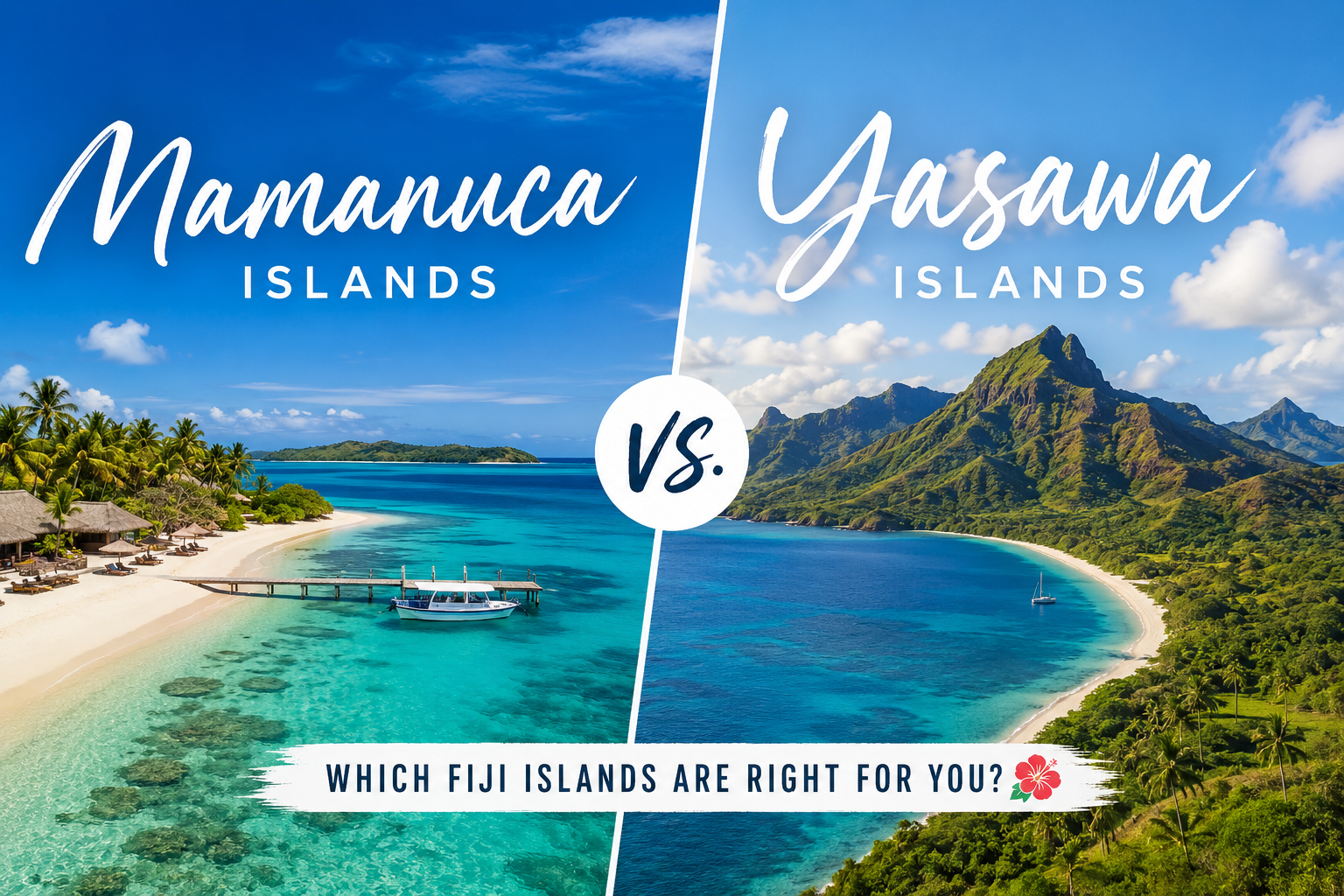
Mamanuca vs Yasawa Islands: Which One Should You Visit in Fiji?
There are hundreds of islands in Fiji, but the same two sets always come up when it comes to planning your trip — the Mamanuca Islands and the Yasawa Islands. Both promise light blue water, white sand beaches, and warm Fijian hospitality — but they each host very different travelers. Mamanuca vs Yasawa islands is one of the first choices you need to make when it comes to planning your holiday, and our guide lays out exactly what each has to offer.A Quick Overview
The Mamanuca Islands Fiji are the most reachable island chain from any port (Nadi Airport) at just 20–40 km away. They are made up of approximately 20 islands, many partially or completely underwater at high tide. They are well developed for tourism, with numerous resorts, day-trip operators, and water sports facilities. On the other hand, the Yasawa Islands Fiji are made up of a chain of 20 volcanic islands that run about 80 km north of the Mamanucas! You couldn’t even get there as a tourist until 1987. It remains much less commercial, attracting tourists seeking an escape from crowds rather than resort comforts.How to get there: Accessibility and travel time
Here, the winner is undoubtedly these Mamanucas. Time: Fast ferry from Port Denarau — 15–45 minutes depending on your destination. The seaplane transfer is similarly under 10 minutes. It is fully possible to take day trips from Nadi. The Yasawas require more commitment. The Yasawa Flyer catamaran leaves daily from Port Denarau and takes 2-5 hours (up to 8 hours for the northernmost end of this chain). Airplanes cut the quiet holiday, but come at a price. This amount of distance naturally weeds out the superficial, which is exactly why those who do visit treasure these Islands so deeply.Accommodation — Luxury Resorts vs Authentic Stays
The best luxury and family resorts in Fiji are in the Mamanuca Islands. Here is where you will find the Castaway Island, Malolo Island Resort and Likuliku Lagoon (the only overwater bungalows in Fiji). If you are into luxury accommodation and global standard facilities, then the Mamanucas tick all the boxes. Yasawa Islands Fiji offers a contrasting option. From those lazy bird resorts to mid-range boutique resorts and low-cost bures (traditional Fijian huts) operated by families or local communities. Don’t go expecting room service and infinity pools — this is a place to come for eating with villagers, sleeping on the sand with little light pollution, and exploring Fiji beyond the tourist bubble.Things to Do Work on: What Can You Actually Go?
Mamanuca Islands: Best suited for:- Surfing — This is home to Cloudbreak, one of the best surf breaks on the planet
- Scuba diving & snorkeling on coral reefs
- Parasailing, jet skiing, and glass-bottom BOAT tours
- Day trips and island hopping
- Water parks suitable and designed for children (Plantation Island Resort)
- Snorkeling with manta rays at the Yasawa Island Manta Ray Bay
- Swimming in caves — Blue Lagoon and the Sawa-i-Lau Caves are famous
- Village visits and kava ceremonies
- Hiking and exploring volcanic landscapes
- Kayaking in calm, uncrowded bays
Who Should Visit the Mamanuca and Yasawa Islands?
Pick the Mamanuca Islands Fiji if you: Have limited time, have young kids, want resort budget-comfort or plan to surf. A smart option too if you are new to Fiji and want easy access to everything. Pick Yasawa Islands Fiji. If you: want to unplug, are with your partner, like a bit of culture, and have no less than a week. The Yasawas earn higher marks for the more memorable experience, consistent with our conversations with backpackers and slow traveler types who frequent both.Cost Comparison
The price of Mamanucas follows suit, however cover a wider range from budget day trip packages under FJD 150 to other luxury resorts priced in hundreds of USD per night. Generally, the Yasawas are more mid-range, but village homestays and budget bures keep them within easy reach for backpackers. Don’t forget to factor in ferry prices; the recent Yasawa Flyer (5-day and 14-day passes have ranged from FJD 279 to FJD 499).Frequently Asked Questions
Which is Better: the Mamanuca Islands or the Yasawa Islands?
Both are interchangeable in terms of choice as they offer different styles of travel. Mamanucas = best for convenience/luxury/families If you want to immerse yourself in a location, to explore, or if you’re travelers who’d like to avoid the crowds, you should go for those Yasawas. What you choose is entirely dependent on what you want from your Fiji experience.At each time, can you go to the Yasawa Islands as well as the Mamanuca Island religious?
Yes, and that is kind of common. Typical Mamanuca & Yasawa itinerary Spend 2–3 nights in the Mamanucas (easily reachable from Nadi airport) and then take the Yasawa Flyer north for a further 3–4 nights in the Yasawas. You need a minimum of 7–10 days in total to really do both justice without being hurried.What islands are better for snorkelling?
Both are superb for snorkeling, but the Yasawas win out on marine diversity – and uncrowded reefs. And if you have a desire to go snorkeling with manta rays, the Yasawa Islands — specifically around sunny Nanuya Lailai — is where your adventure lies.How Safe Are the Yasawa Islands?
Yes. Tourists should be safe in the Yasawa Islands. Countries are constantly ranked as the most welcoming hosts in the world The standard travel-safety precautions apply — monitor local weather during cyclone season (November–April), and purchase good global travel insurance policies.Honeymoon: Which island group is better?
For unadulterated romance and luxury, the Mamanucas have Likuliku Lagoon Resort with overwater bungalows — you really can’t beat it. By contrast, although the Yasawas have a more remote and rugged feel to them, they are also a far more affordable and intimate experience. The Yasawas tend to take the experience vote for couples on a budget.Final Verdict
There is no right answer to the debate of Mamanucas vs Yasawas. The Mamanucas provide you access, diversity, and international-level resort infrastructure. The Yasawas offer distance, reality, and experiences that are not so easy to create. If you have the time, kill two birds with one stone. If you have to choose, let your way of travel be the judge and not those pamphlets. So, are you already ready to plan your Fiji island escape? Check out the full Fiji resorts and island experience guide at FijiDream. -
Why Is the National Flower of Fiji So Rare?
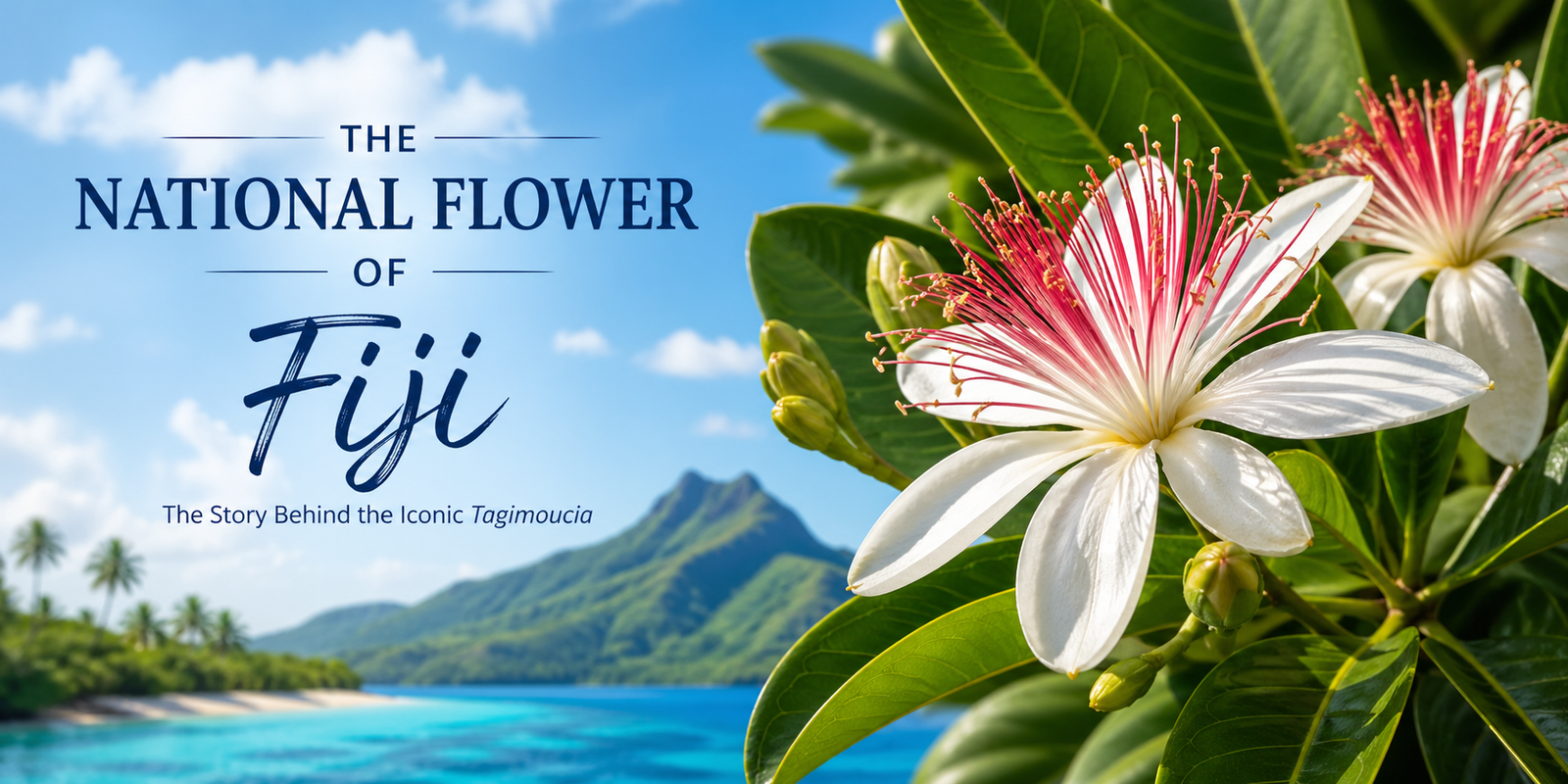
Think about national flowers for a second. Most countries pick something you can actually find. A rose, maybe. Or a tulip. Something that grows in a garden. Or even just along the roadside somewhere. Something familiar. Fiji did not do that. The flower they chose as their national symbol is not something you will see on a casual stroll. It is not in the resort gardens where most tourists stay. You definitely will not find it at a market stall. So what gives? Why would a country pick a flower that most visitors never even lay eyes on? Turns out, the answer is pretty interesting. Volcanoes. Love stories. A plant that refuses to grow anywhere else. But first, let me actually tell you what the national flower of Fiji is. It is called the Tagimoucia. And honestly, it looks a little unreal. The bloom has five petals. Deep red in the middle, but then the edges fade into this soft white color. Like someone dipped them in cream. The contrast is striking. When you see a photo, you might think it is edited. But no. That is just how it grows. The name Tagimoucia comes from the local language. There are a few different stories about what it means. Some say it translates to “cry from the mouth,” though honestly, the meaning shifts depending on who you ask. What matters more is where this thing lives. Because that is where the whole rarity thing starts to make sense.You Have to Go to One Specific Spot
Here is where it gets unusual. The national flower of Fiji does not grow all over the country. Not even close. You have to go to one island. And on that island, you have to go up into the highlands. So the island is Taveuni. Some people call it the Garden Island. Because everything grows so well. Rainforests, waterfalls. Just green everywhere. But here is the thing. Even on Taveuni, the flower of Fiji only grows in one place. This volcanic crater lake. Lake Tagimoucia. About 800 meters up. The air gets cooler up there. And mist. Almost every afternoon, mist rolls in. That specific spot. That exact combination of soil, temperature, and moisture. That is the only place on earth where this flower grows. Not on the main island. Not on the popular tourist islands near Nadi. Not in any botanical garden outside Fiji. Just there. Right away, you can see why it is considered one of the rarest flowers in Fiji. It basically picked one small corner of the world and never left.So, Why Is It So Rare?
A few things are working together here. First, the plant is picky. Really picky. It needs cool, damp conditions that you only find at higher elevations in the tropics. Most of Fiji is warm and low-lying. Only a handful of spots have what the Tagimoucia needs. The crater lake on Taveuni happens to be one of them. Second, the flower never spread. Some plants are good at traveling. Seeds float on the wind or stick to bird feathers. Not this one. It evolved in that one small pocket and stayed put. No ambition to take over the world. Third, it is sensitive. Even small changes in rainfall or temperature can mess with when it blooms. And here is the thing. The whole population lives in one tiny area. So anything that hurts that habitat? That is a real problem. There is also the timing factor. The Tagimoucia does not bloom all year. You have to catch it between October and December. Show up in January, and you will just see green vines. You might not even realize what you are looking at. So yeah. One island. One lake. A short blooming window. Very specific weather needs. That is the recipe for rarity.What the Flower Means to Fijians
Given how hard it is to find, you might wonder why Fiji made this flower its national symbol. Honestly, I think that choice says something nice about the country. The national flower of Fiji is not something you can claim easily. You have to work for it. You have to travel. You have to hike. In that way, the flower kind of reflects how Fijians feel about their home. Fiji is not just another beach destination. It is specific. It is precious. It does not hand itself over to just anyone. There are also old stories about the flower. Local legends. Take one story. A young woman falls for a warrior from another tribe. He left. She cried so much that her tears became red and white flowers along the path. Another version is different. A princess who ran away into the mountains. The flowers bloomed where she walked. People do not tell these stories loudly. They are more like quiet knowledge passed down. There is a tenderness to how locals talk about the Tagimoucia. And because the flower is so rare, there is an unspoken rule. You do not pick it. You do not try to dig it up and plant it somewhere else. You just let it be. Some things are not meant to be owned.Can a Traveler Actually See It?
Real talk? You can. But it takes effort for sure. Getting to Taveuni is the first step. That means a short flight or a ferry from the main island. Not hard, but it adds time to your trip. Once you are on Taveuni, you need a local guide. Someone who knows the trails up to Lake Tagimoucia. Do not get me wrong, the hike is not awful. But it gets steep in places. And the weather can turn fast. One minute sunny, the next minute raining. The bigger challenge is timing. You have to be there between October and December. That is it. If your trip is in July, forget it. And even during the blooming months, it changes year to year. Depends how much rain came down. Most travelers never bother with any of this. They come for beaches, cocktails, and sunsets. Nothing wrong with that. But if you are curious. If you want something different. Then going to see the Tagimoucia? That becomes its own kind of reward. A few eco lodges on Taveuni offer guided trips to the lake. Do not expect souvenir stands or paved paths. You will get a quiet hike through the rainforest and then a view of a crater lake surrounded by red and white blooms. People who make that hike tend to remember it. Not because the flower is flashy. But because they had to work a little to find it.Maybe Rarity Is the Whole Point
Here is a thought. We live in a time when almost everything is easy. You want something? Click a button. It shows up at your door. You want to see a place? Watch a video. You have basically been there. But the national flower of Fiji refuses to be easy. It grows exactly where it grows. It blooms exactly when it blooms. It does not care about your schedule or your budget. That could feel annoying. Or it could feel kind of beautiful. Rarity makes you pay attention differently. You cannot scroll past the Tagimoucia on your phone. You cannot order a print of it and call it a day. If you want to see it, you actually have to go there. Walk. Wait. And just accept that nature does not perform on command. It never does. That makes the flower more valuable. Not in a money sense. But in a meaningful sense. It is rare not because it is weak, but because it is faithful to its own conditions. It does not try to grow everywhere. It just grows where it belongs. That is a quiet kind of lesson, I think.Wrapping This Up
So why is the national flower of Fiji so rare? Because it chose one small corner of the world and never left. It needs cool mountain air. It needs that specific volcanic lake. It needs mist and patience, and the right season. Most of Fiji cannot offer those things. So the flower stays where it belongs. That might sound like a limitation. But honestly, it feels more like a signature. The Tagimoucia does not shout for attention. It hides a little. It waits. And for the people who make the journey, the flower offers something no photograph can capture. A quiet moment with something that exists nowhere else on earth. Not every national symbol needs to be easy to see. Some are meant to be discovered slowly. Some symbols are rare for a reason. Maybe that reason matters. If you ever find yourself on Taveuni between October and December, at least consider the hike. Bring decent shoes. Bring water. Go with a local guide. And if you get lucky enough to see those red and white blooms around that still lake, you will understand right away why Fiji chose this flower. Not because it is everywhere. But because it is exactly where it should be. -

Why Do Travelers Say South Sea Sailing Fiji Feels Like a Dream Come True?
Some travel memories get described in ways that sound almost too polished. You see it in reviews all the time. “It felt unreal.” Makes you wonder—is the place actually that special? Or do people just get excited after a nice break from work? Maybe it’s just marketing. Hard to tell. Or maybe travelers get home, struggle to explain what happened, and grab whatever words are closest. South Sea sailing Fiji gets that kind of language a lot. Read a few reviews or just talk to someone who’s been. The word “dream” shows up constantly. But not in a loud way. More quiet. Like it caught them off guard, how much it stayed with them. So what’s really happening out on the water? Is it really dreamlike? Or is that description pointing to something else—something harder to put into words?What Changes Before the Boat Even Leaves
The shift happens earlier than most people expect. Not out on open water. Not at the first island stop. You notice it back at the marina. First twenty minutes, maybe. Hard to say exactly when it hits you. There’s no rush, that’s the thing. No lines. Nobody’s announcing anything over a speaker. Just boats tied up at the dock, sitting there quietly. Water moves around the hulls, up between the wooden planks. Little sloshing sounds. None of that frantic energy you get at airports. That atmosphere catches people off guard. You’ve just come from days of taxis, check-in counters, and rushing. Then suddenly, none of that exists here. It feels strange at first. Then it just feels nice. Hard to say why. The engine kicks on. The boat eases out. You’ve already relaxed a bit by then. Shoulders down. Breathing slower. Phones get ignored because nothing on them seems urgent anymore. That’s how a Fiji island south sea sailing experience really starts. Not when you see the first island. Earlier than that. When you stop feeling like you have to be somewhere else.The Sensation of Being on Open Water
Once the coastline fades behind the boat, the world becomes unusually simple. There is the sky. There is the water. There is the wind. Nothing else demands attention. The boat doesn’t rush. Just rises and falls slowly with the swells. Hull meets a wave, makes this low thump. Steady. After maybe an hour, your body stops fighting the motion. Starts going with it. That’s when your mind shuts up, too. People on these trips lose track of time. Not because it’s dull. Because nothing’s telling them what time it is. No meeting. No appointment. No reason to look at a watch. The sun moves. Wind shifts. That’s it. Some read. Some sleep. Some just sit at the bow watching water change color under passing clouds. Nobody feels forced to talk. That kind of quiet — the sort that isn’t awkward — you don’t get much of that in regular life. Most people don’t notice until they’re on the water.So what makes the islands feel different?
Showing up on a sailboat isn’t like pulling into a resort. For starters, there’s no dock. No staff waiting around. No welcome drinks. The boat anchors offshore a bit. Then you hop into the water. It’s warm. So clear you can see the sand below before you even step down. That small act changes the relationship to the place. You arrive the same way anyone would have arrived a hundred years ago. Not as a guest of a hotel. Just as someone who came by sea. Something is humbling about that. The islands themselves are not manicured. Beaches might have driftwood or a few scattered rocks. The trail from the shore to the shade is not paved. But that’s exactly why people remember them. Island hopping in Fiji doesn’t feel like some polished tourist attraction. More like someone let you into their backyard. A really nice backyard, sure. But not one that was built for tourists. What stays with people is not the perfection. It is the small, unplanned details. Like a hermit crab moving sideways across the sand. Or how the shallow water gets warm in the afternoon — walk through it, and it feels like bathwater. Maybe a reef fish swimming right up close, close enough to see the patterns on it. None of these things is on any itinerary. But they become the memories that come back years later, completely unbidden.
The Unexpected Moments That Linger
Most travelers expect beauty when they book sailing tours in Fiji. They expect blue water, green hills, and white sand. What they do not expect is how their sense of time changes. Days start because the light gets brighter, not because an alarm goes off. Meals happen when hunger appears. A swim happens because the afternoon heat becomes too much to ignore. Naps happen because the boat is rocking and the body finally feels safe enough to rest completely. The night sky catches people off guard. No town lights. No resort glow. Just stars everywhere. Not just bright — present. People end up lying on the deck for a long time. Not saying much. There is nothing to say. The sky says enough. Another unexpected part is the quality of conversations on board. Without the distraction of phones, televisions, or outside noise, people talk differently. Less about work. Less about plans. More about small observations. A couple might sit there for an hour, not saying a word. Then one of them laughs softly. Neither can really say why. Strangers end up having actual conversations. Not small talk. About why they came to Fiji. What they were hoping to find. That kind of connection does not happen often in regular life.Does the whole “dream” thing hold up?
Let’s be real. Not every moment is magic. Some days are gray. Some swells are rougher than others. And for travelers who need constant activity, a slow day on the water can feel too slow. But “dreamlike” does not mean perfect. It means disconnected from the normal rules of time and pressure. Consider what an actual dream feels like. Not the exciting ones. The quiet ones where nothing happens, but you wake up feeling unusually rested. That is closer to the South Sea sailing Fiji experience. There are no dramatic peaks every hour. Just a long, steady calm that lets the nervous system reset. People call it a dream come true, not because every second was thrilling. They call it that because, weeks or months later, they find themselves missing a very specific feeling. The feeling of watching the water while the boat moved beneath them. The feeling of not needing to be anywhere else. That absence is hard to describe without reaching for strong words.Who This Experience Works Best For
Couples eat this up. Honeymooners too. Small space on the water. Nowhere to hide. That’ll bring you closer. No separate activities. No distractions. Just the two of them, moving through beautiful places at a slow pace. That intimacy is rare in modern travel. It also works well for travelers who enjoy flexible plans. If someone needs every hour scheduled in advance, a resort might be a better fit. But for those who like waking up and deciding the day based on weather and mood, South Sea Sailing in Fiji offers something special. But let’s be honest. It’s not for everybody. Seasick? Come prepared. Or don’t go. Need nice things? Towels laid out for you? Then book a higher-end boat. Simple as that. And if the idea of eating breakfast with the same three couples for four days makes you twitchy? This might not be your thing. But for anyone comfortable with open water and curious about a slower way to see the islands, the experience tends to leave a mark. Not a loud one. A quiet one. The kind that shows up later, in small flashes, when life back home gets too fast.A Few Final Observations
South sea sailing Fiji probably will not feel like a dream while it is happening. Dreams are blurry and strange. This is real. The sun is hot. The salt leaves a film on sunglasses. By evening, everyone is tired in a good way. But here is what happens afterward. People go home. They unpack. They return to the usual rhythm of work, notifications, and obligations. And every so often, a small image surfaces. The strange, deep rest that came from three days without a single deadline. For a moment, that does feel like remembering a dream. Not because the experience was unreal. But because normal life rarely grants that much peace. That is what travelers are trying to say when they reach for words like “dream.” They are not exaggerating. They are just not sure how else to describe something that felt more restful than anything they had known in years. Anyone who goes will probably understand. -
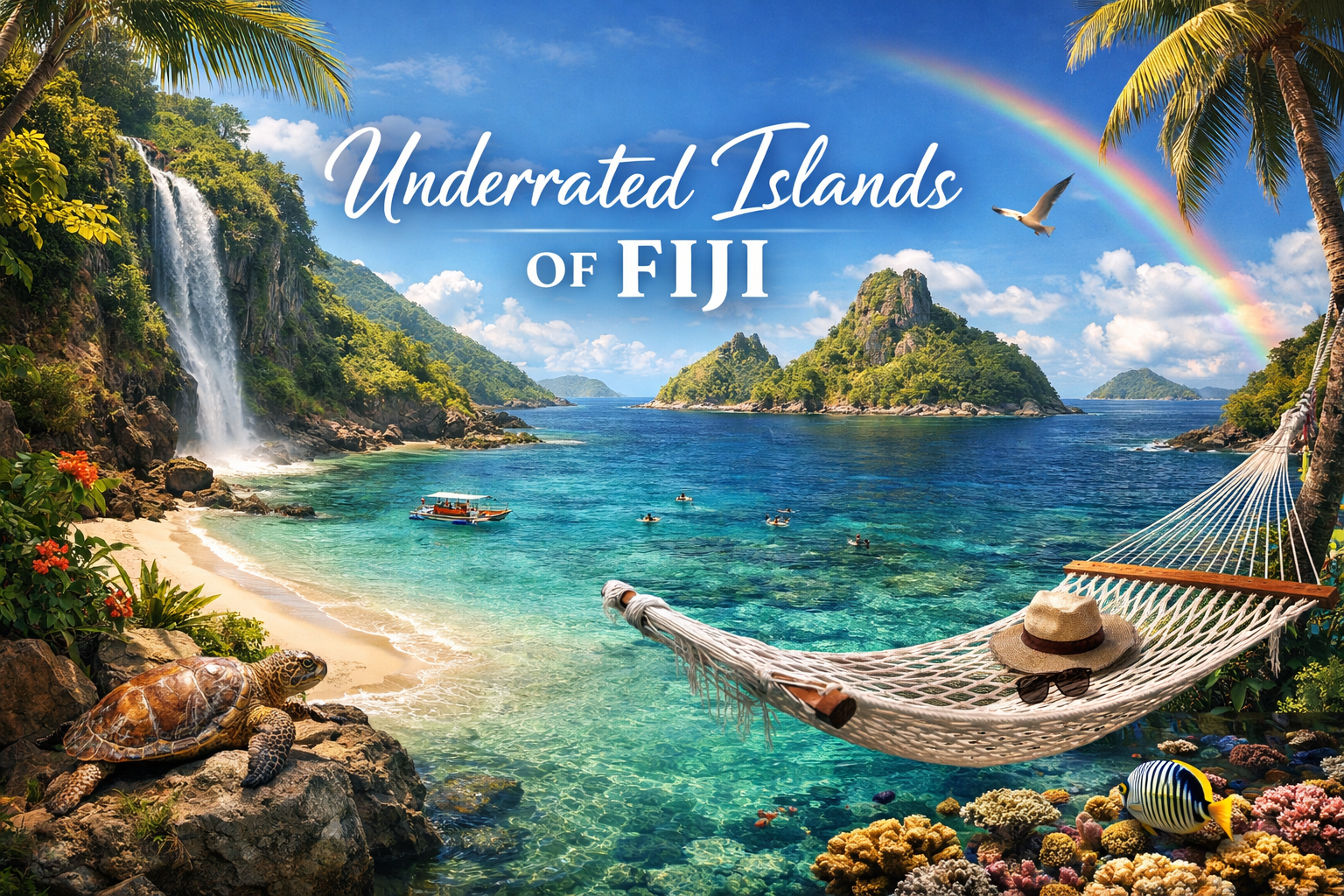
Have You Visited These 5 Underrated Islands in Fiji Yet?
Here’s what happens. Someone says Fiji. Your brain goes straight to the usual spots. Mamanucas. Yasawas. And look, those islands are gorgeous. Accessible. Built for visitors. No mystery there. But after a while, one coral coast starts to look a bit like another. And the crowds? They tend to follow the same flight paths. I started wondering what lies beyond those familiar names. Not because the popular islands aren’t worth it, but because Fiji has over three hundred islands. A lot of them barely get mentioned. Some don’t even show up on standard travel itineraries unless you go looking. So I went looking. What follows isn’t a list of secret spots that no human has ever seen. That doesn’t really exist anymore. But these five places feel different. Slower. Quieter. Less polished in a way that ends up being exactly the appeal. If you’ve already done the main loop, or if you just prefer travel that doesn’t come with a soundtrack of jet skis, these underrated islands in Fiji are worth your time.What Actually Makes an Island “Underrated”?
Underrated, doesn’t mean unknown. Plenty of people know these islands exist. That’s not why they’re underrated. Locals know about them. Some have small resorts or villages. But they don’t get marketed heavily to international tourists. That lack of attention comes with trade-offs, but it’s also what makes an underrated island in Fiji worth seeking out. Fewer crowds, obviously. But also less infrastructure. Sometimes the boat ride alone takes half a day. And look, you’re not going to find nightlife here. Or those all-you-can-eat buffet places you see everywhere else. That’s just not what these islands do. Instead, what shows up is space. Actually quiet. A rhythm that hasn’t been squeezed into a seven-day holiday schedule.Kadavu – The Great Astrolabe Reef Without the Crowds
Kadavu is down south. Not far from the main island, Viti Levu, but honestly? Feels different there. Most people never see it because getting to Kadavu means either a quick flight or a boat ride that’ll leave you queasy if you’re not used to it. That hassle? It keeps the place quiet. And then there’s the reef. The Great Astrolabe. Runs the whole length of the coastline. One of the biggest barrier reefs anywhere. But unlike famous dive spots where boats are constantly fighting for position, here you might be out there with just a few people. Or none at all. The island itself feels rugged. Dense rainforest. A few small villages. No sealed roads to speak of. You walk, take a boat, or stay put. That simplicity is the point. A traveler who enjoys Kadavu is someone who wants diving or snorkeling without a production number. Someone who doesn’t mind that dinner is whatever came off the boat that morning. It’s not fancy. But it might be one of the most genuinely rewarding, underrated islands in Fiji for anyone who loves the ocean.Ovalau – Colonial History and Everyday Fijian Life
Ovalau is different. The other islands on this list? You visit the beaches. Not this one. Here it’s Levuka. The old capital. UNESCO heritage now. Just rows of wooden colonial buildings sitting along the water. Streets feel stuck in another century. And yet, very few tourists make the trip from Viti Levu. What makes Ovalau special isn’t luxury. It’s the feeling of walking through a town that hasn’t been rebuilt for visitors. Kids playing cricket after school. Fishermen fixing nets in the afternoon heat. You could sit on the seawall for an hour and watch basically nothing happen. And somehow that feels perfectly okay. This is one of the hidden islands in Fiji in the truest sense—not because it’s hard to find, but because most guidebooks don’t bother including it.Vanua Balavu – Remote Beauty in the Lau Group
The Lau Group is about as far off the beaten path as Fiji gets. Vanua Balavu is one of its larger islands, but “larger” here is relative. We’re talking small villages, infrequent boat services, and a complete absence of chain hotels. Getting there takes planning. Realistically? You can’t just arrive at a ferry dock and jump on. It doesn’t run that way. Private charter is the usual route. Or finding a small group tour heading that way. That alone filters out casual travelers. What remains are people who truly want to see a part of Fiji that feels disconnected from the modern tourist trail. The landscape is stunning in a quiet way. Limestone caves. Protected bays. Water clear enough to see the bottom at twenty meters. But that’s not what you really remember about Vanua Balavu. It’s never just one view. It’s the slowness. Nowhere to be. Nothing to buy. Time just stretches.Things to Know Before You Go
A few honest realities. There may be inconsistent transportation to these islands. Ferries depart when they are full or when the weather permits, since they operate on “Fiji time.” There are weight restrictions for small aircraft. You might need to be flexible by a day or two. Accommodation is usually basic. Think solar power, shared bathrooms, and fans instead of air conditioning. Food is simple and repetitive. If you need variety or luxury, stick to the main resorts. Connectivity is weak. Wi-Fi, where it exists, is slow. Mobile signals drop in and out. For some people, that’s a blessing. For others, it’s a dealbreaker. Know yourself before you go. Bring cash. Cards won’t work. Enough Fijian dollars for everything—room, food, boat rides. No ATMs. Not saying don’t go. Just don’t expect a resort. These islands reward the patient. They punish the polished.Final Thoughts
So are these underrated islands in Fiji worth it? Yeah. But not for everyone. If you need convenience. Predictability. Western comforts you can count on. Stick to the main spots. But if you’ve traveled enough? You already know. The best moments don’t come from the main attractions. They happen in between. These islands aren’t paradise. Not the exaggerated kind. Just quieter days. Clearer water. A Fiji that moves at its own speed. The popular spots aren’t going anywhere. They’ll wait. But the underrated islands in Fiji? They’re not waiting. They’re just sitting there, quiet, hoping the right traveler shows up. -
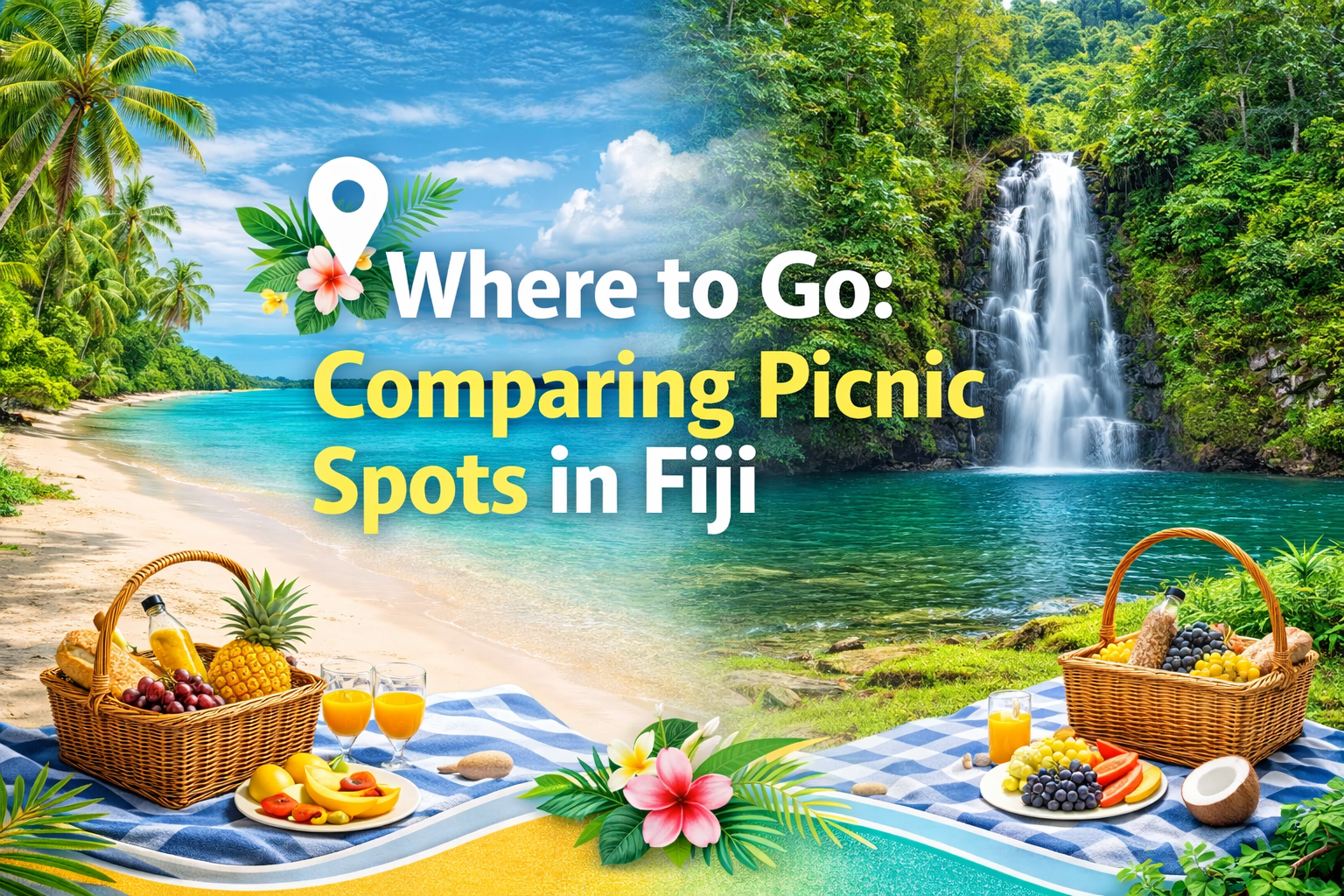
Where to Go: Comparing Picnic Spots in Fiji
Fiji has no shortage of beautiful places to sit outside and eat. But when looking at picnic spots in Fiji, not every beach works well for a picnic. Some have no shade. Some are hard to reach. Others get crowded at certain times of day. This guide compares a few popular options.What Actually Works
Before we get into specific places, here’s what matters when you’re hauling a bag of food around: Getting there – Can you reach it without a tour? Without a 4WD? Without a boat? Sitting comfortably – Sounds basic, but I’ve watched people abandon beautiful beaches because there was zero shade at noon. Swimming – Calm water makes the day. Strong currents or rocky entries? Less fun. Crowds – Some people want energy. Others want to hear nothing but waves. Facilities – Bathrooms matter more than anyone admits until they’re needed. Keep these in mind as we look at four very different picnic spots in Fiji.Natadola Beach
Wide white sand. Clear water. Hills in the distance. It’s the classic. The vibe: Spacious. Lots of space to walk. Water is usually calm. Stays roomy even when tours come. It’s 45 minutes from Nadi by road. Drive or take the Natadola Picnic Tour. The tour includes a village stop with a kava ceremony and a chance to meet locals. The reality check: Facilities exist, but aren’t fancy. There are resorts within walking distance if you decide you’d rather have someone else cook lunch. On weekends, local families come out in force (which is lovely, just worth knowing). Who likes it here: Families with kids who need running room. Couples want that postcard background. Anyone curious about Fijian village life.Coral Coast Beaches
The main island’s southern border is known as the Coral Coast. Drive Queens Road, and beaches line the way. The vibe: Flexible. Some stretches have rocky coves. You can stop anywhere that looks good. Getting there: This is road-trip territory. Rental car or hired driver. No single “entrance” because it’s not one beach—it’s dozens. The reality check: Facilities are hit or miss. One beach might have a little shop across the road. The next might have absolutely nothing for miles. Bring everything you need. Also worth knowing: some stretches have stronger currents than others, so look for where locals swim. Who likes it here: Spontaneous travelers. Budget travelers. People who’d rather explore than commit to one spot.Denarau Island Beaches
Denarau is a single island. Its connection to the mainland is via a bridge. There are resorts and golf courses around. The vibe: Polished. The beaches here are man-made but well-maintained. The water is calm. Everything feels safe and controlled. The reality check: This is the least “natural” option. You won’t get that wild Fiji coastline feeling. You’ll be near other resort guests. But—you’ll also be near bathrooms, cafes, and shade. Sometimes convenience wins. Who likes it here: Resort guests who want it easy. Parents with toddlers who might need to dash back to the room. Anyone who values amenities over adventure.Mamanuca Islands (Day Trip)
The Mamanucas are the chain of small islands you see from the plane. Some have resorts. Some have nothing. The vibe: Island escape. The water clarity is ridiculous—snorkeling here is genuinely good. Some day trips drop you on a beach with nothing but sand and trees. Getting there: Boat. From Denarau or Port Denarau. This means booking something in advance—you can’t just wander down and hop on. The reality check: This costs more and takes more time. You’re committing to a full day. But the trade-off is experiencing that “deserted island” feeling that mainland beaches can’t quite match. Who likes it here: Couples. Snorkelers. Anyone willing to trade convenience for magic.So… Which One Fits You?
Let’s be direct about which picnic spots in Fiji suit different travelers. Families – Natadola gives you space and usually calm water. Denarau gives you safety and backup plans. Couples – Mamanucas for romance. Natadola if you want beautiful scenery without the boat ride. Budget travelers – Coral Coast, hands down. Pack your own food, drive yourself, and spend nearly nothing. Adventure seekers – Mix it up. Coral Coast one day. Island trip another. Fiji rewards people who move around. Tips for a Good Picnic Day Bring water. A lot of it. Heat and salt water dry you out fast. Sunscreen helps. A hat helps. Something to sit on helps. Some Coral Coast beaches have no shops nearby. Bring what you need. Village visits: cover up away from the beach. Check the forecast before heading out. Even sunny days can get a quick shower. Sometimes it passes in minutes. Sometimes people just wait it out under a tree. Parking depends on where you go. Natadola has parking areas. Coral Coast spots often mean pulling off the road. Denarau visitors can usually walk from their resort. Getting there early makes things easier.One Last Thought
A picnic in Fiji doesn’t need to be perfect to be good. Pick a spot. Bring some food. Sit down. That’s most of what matters. The water is warm, the views are nice, and the day moves slowly.Making the Most of It
Get there before the heat sets in. Bring enough water. Check the tide. Some beaches shrink when the water comes in. When the day ends, rinse off if there are showers. Natadola has them. Some Coral Coast spots do not. Keep a towel in the car.Final Thoughts
Each beach is different. Some feel like resorts. Some feel like a find. That is what makes picnic spots in Fiji worth exploring. Pick one. If it is not right, try another tomorrow. There is always another beach. -
Everything You Need to Ask About a Historical Coral Coast Tour Fiji
Here is the thing about Fiji. You would be surprised how many people come all the way to Fiji and barely see any of it. They land at Nadi airport. Transfer to the hotel. Unpack. And then that is basically it for the next seven days. Pool in the morning. Beach in the afternoon. Sunsets get photographed. Everything is lovely and comfortable and exactly what the brochure promised. Nothing wrong with any of that. But here is the thing. The Fiji in those brochures? It is real. Sunsets over the water. It is nice. Really nice. We get it. But drive an hour out of Nadi. Just one hour. Follow the road east along the Coral Coast. The hotels start disappearing. The crowds thin out. And suddenly you are in a different Fiji. Not the one from the brochures. The hills look wilder out there. Villages pop up between the coconut trees. Old guys sit on porches drinking tea. Kids kick soccer balls in bare feet. The ocean is still blue. The sand is still soft. But something feels different. This part of the coast has stories. Not the kind you hear from a tour guide reading off a script. The kind that live in the ground and the trees, and the way old people talk when they remember their grandparents. People lived here long before any hotel showed up. Grew food here. Fought wars here. So if that sounds interesting. If you want to see the Fiji that existed before tourism found it. A historical Coral Coast tour might be your thing. Just ask a few questions first. Make sure you are getting the real thing.What Actually Happens on a Historical Coral Coast Tour Fiji?
So what actually happens on one of these tours? Good question. First thing to know. The pace is different. Slower. Like the island itself sets the schedule instead of a clock. Morning comes. Someone picks you up from your hotel. You drive. That part is simple enough. The road runs right along the water for miles. The ocean on one side. Green hills, on the other hand. Pretty much the whole drive looks like a screensaver. You will catch yourself just staring out the window. But here is where it shifts. The driver does not pull over at the first public beach access. Does not stop at the lookouts where all the tour vans park. Keeps going instead. Past the gates of big resorts. Past the signs pointing toward water sports rentals. Further down the coast, where things quiet down. Eventually, you arrive at places that do not have ticket booths or gift shops. Places where Fijian history just sits there in the open air, waiting for someone to notice. You might stop at a national park known for archaeological discoveries. Or visit a hilltop fortress where families once took shelter during tribal wars. What makes these tours different from standard excursions is the mix. You get the scenery everyone comes to Fiji for, plus a look at the cultural layers underneath. That combination is why so many travelers now search out Fiji cultural tours rather than just beach transfers.Which Historical Sites in Fiji Will I Actually See?
Not all tours cover the same ground. This is worth checking ahead of time. The best historical sites in Fiji along this coastline include a few standouts. Most tours stop at the Sigatoka Sand Dunes. You will probably see it on the itinerary. The first time you lay eyes on it, the place just looks like a postcard. Big hills of sand rolling down to meet the ocean. Pretty. Peaceful. The kind of view you take a photo of and forget about five minutes later. But here is what the postcard does not tell you. Archaeologists have been digging around out there. They turned up bones. Human bones. Also, old pottery, the kind people made thousands of years ago, before anyone in Europe even knew these islands existed. Scientists say some of it dates back something like two and a half thousand years. So yeah. When you walk those dunes, you are not just hiking a pretty sand hill. You are walking on ground that people walked on a very long time ago. Before resorts. Before roads. Before anyone wrote anything down. Just people living their lives right there where you are standing. Kind of changes how you look at the place. Further inland, Tavuni Hill Fort sits above the Sigatoka River. This was a fortified village built for protection during wartime. The views alone justify the stop, but the stories about how people lived and defended themselves up there make it stick with you. Many historical Coral Coast tour Fiji packages also include village visits. These are not scripted performances. You get invited into a community, shown around, and introduced to daily life. Some tours stop at Veisabasaba Village near Natadola Beach, where visitors can join a kava ceremony and meet local families. Cultural centers sometimes make the list, too. Places where women demonstrate weaving or pottery techniques passed down through generations. These stops tend to be quieter but leave a strong impression.Does This Tour Work for Families?
Short answer. Yes. Kids usually have a better time than the adults do. Parents book these tours thinking, well, it is educational. Good for them. Broaden those young minds. Then they get there and the kids take off running across the sand dunes like someone just unleashed them from school. All that open space. Hills to climb. Soft sand to jump into. Turns out a national park just looks like the best playground ever to a seven-year-old. Walking trails at most historical sites in Fiji stay manageable for young legs. Nothing too steep or dangerous. Guides understand that families move at different speeds and adjust accordingly. Teenagers sometimes surprise themselves by getting interested in war stories or archaeological discoveries. There is something about standing where actual historical events happened that reaches even reluctant travelers.A Few Final Thoughts
The Coral Coast of Fiji delivers exactly what postcards promise. Clear water. Palm trees. Soft sand. But the real depth of this coastline hides just inland, in places where Fijian history settled into the landscape over centuries. Taking a historical Coral Coast tour in Fiji means choosing curiosity over convenience. Look at it this way. You can spend another day by the pool. That is always an option. Float around. Order a drink. Let the hours slide past. Nothing wrong with that. The pool will be there tomorrow too. Or you can trade that day for something that does not wash off at the end of the week. The villages you walk through. The families who invite you to sit with them. All of that stuff adds up differently than a day in the sun. Not saying the beach is bad. It is great. But the beach is the same everywhere. Driftwood and waves and sand between your toes. This other stuff? You do not find it anywhere else. -
Best Snorkeling Spots in Fiji
Mask on. Look down. There’s coral below. Fish swim past. A turtle goes by. You could touch it, but you don’t. People visit Fiji for many reasons. The beaches are nice. The people are friendly. But what lives in the water makes them want to come back. Before coming, most travelers end up typing “best snorkeling spots in Fiji” into a search bar and scrolling through photos. Fiji has over three hundred islands. That means lots of reefs. Some are close to shore. Others need a boat or a flight to reach.Yasawa Islands
They have volcanic rock and white sand. The water is clear. On a good day, you can see far down. Manta rays come here from May to October. They come to eat. Some are very big. They don’t bother people. Small fish clean their skin. Drawaqa Bay has a cleaning station. You can see the rays there. Good for beginners. Sawa-i-Lau has caves you can swim through. Light comes in from holes in the rock. Most people take a tour from Nadi to get here. Some companies run trips that last a few days. You can stay in basic places or fancy resorts. Beginners do fine in the lagoons. People with more experience can find outer reefs with stronger conditions. This area ranks among the best snorkeling spots in Fiji and is also one of the best vacation spots in Fiji for good reason.Mamanuca Islands
The reefs here are healthy. Hard corals grow thick. Soft corals move in the water. Many resorts have reefs right off the beach. Guests can swim out from shore. South Sea Island has shallow reefs all around it. Good for half-day trips. Mana Island has sheltered lagoons. Parrotfish and butterflyfish live there. Turtles show up sometimes. The reefs near Cloudbreak are calmer on the sheltered side. Ferries run every day from Port Denarau. Also, the water around this area is one of the best fishing spots in Fiji. Beginners and families like it here. More boats than remote spots, but the reefs are still in good shape.Taveuni and the Rainbow Reef
Serious snorkelers eventually hear about Taveuni. People call it the Garden Island because of all the greenery. But the real draw sits underwater, and the reason for it is called one of the best snorkeling spots in Fiji. Purple ones. Pink ones. Yellow and orange, too. They grow thick. People see them and can’t quite believe it. These are some of the healthiest soft coral reefs around. The Great White Wall got its name decades ago. The coral isn’t white anymore—healthy growth now blankets the wall in color. Annie’s Bommies has shallow coral pinnacles rising from sand. Fish swarm around each one. Vuna Reef sits near the airport and works for days when you don’t want a boat. Domestic flights from Nadi land at Matei Airport. Resorts send transfers from there. This isn’t a place for quick visits. Plan to stay a few days. Confident swimmers comfortable with some current will get the most out of Taveuni. Water moves through the channel. Guides check daily conditions and pick spots accordingly.The Great Astrolabe Reef
Tourism infrastructure here stays limited. That means the reef remains mostly untouched. No crowds. No day-trippers. Coral formations that have grown for centuries without disturbance. Fish that don’t associate people with food. The North Astrolabe has drop-offs where the reef wall plunges into deep water. Snorkelers drift along the edge, watching bigger species pass below. Namalata Passage channels water between the reef and the island. Currents pull through, bringing nutrients that attract dense marine life.Coral Coast
Not everyone wants to take boats everywhere. The Coral Coast proves you don’t have to. This stretch runs along Viti Levu’s southern shore. Resorts line the coast for miles. Many sit right in front of fringing reefs. Guests walk from their rooms into the water and start snorkeling right away. No schedules. No coordination. Just gear up and go. Natadola Beach draws crowds for good reason. Reef areas at both ends hold consistent fish populations. Crusoe’s Reef sits offshore from several mid-range resorts. Sandy entries make getting in and out easy. The Shark Reef Marine Reserve is a short boat trip from Pacific Harbour. Guided snorkeling takes you over protected reefs. Tides matter here more than anywhere else. Snorkeling works best within two hours of high tide. Low tide leaves shallow reefs exposed and the water less clear. Resort staff can tell you tide times.Beqa Lagoon
Soft corals grow thick in this protected environment. They sway with each surge, adding movement across the reef. Fish populations reflect a healthy habitat. Groupers hide under coral ledges. Smaller species dart through branching formations. Boats leave from Pacific Harbour on Viti Levu. That’s about ninety minutes from Nadi by road. Day trips run regularly. You can also stay overnight on Beqa. The lagoon’s protection suits all skill levels. Beginners like the calm conditions. Experienced snorkelers appreciate the reef health.Some Practical Tips
Tides affect conditions. Snorkeling works best within two hours of high tide. Ask locally before heading out. Resort staff know their reefs. Guided tours add value. Going alone works at many spots. But local guides know current conditions. They provide safety oversight. They share information about marine life you’d miss otherwise. Several Fiji snorkeling tours operate across the islands. Coral is fragile. Look without touching. Keep your distance. Never stand on reef structures.Some Final Thoughts
The Yasawas have manta rays if you go between May and October. The water is clear there. Taveuni has soft corals in colors you don’t see in other places. Kadavu is remote and quiet with no crowds. The Mamanucas and Coral Coast are close to Nadi and easy to reach. All these places have warm water. All of them have healthy reefs. Fish swim past in bright colors. Sunlight shines down through the water. Below the surface, things keep moving like they always have. That feeling of floating there stays with you. Weightless. Quiet. The reefs were there long before you came. They’ll be there after you leave. Waiting for the next person to look down and see what’s below. -
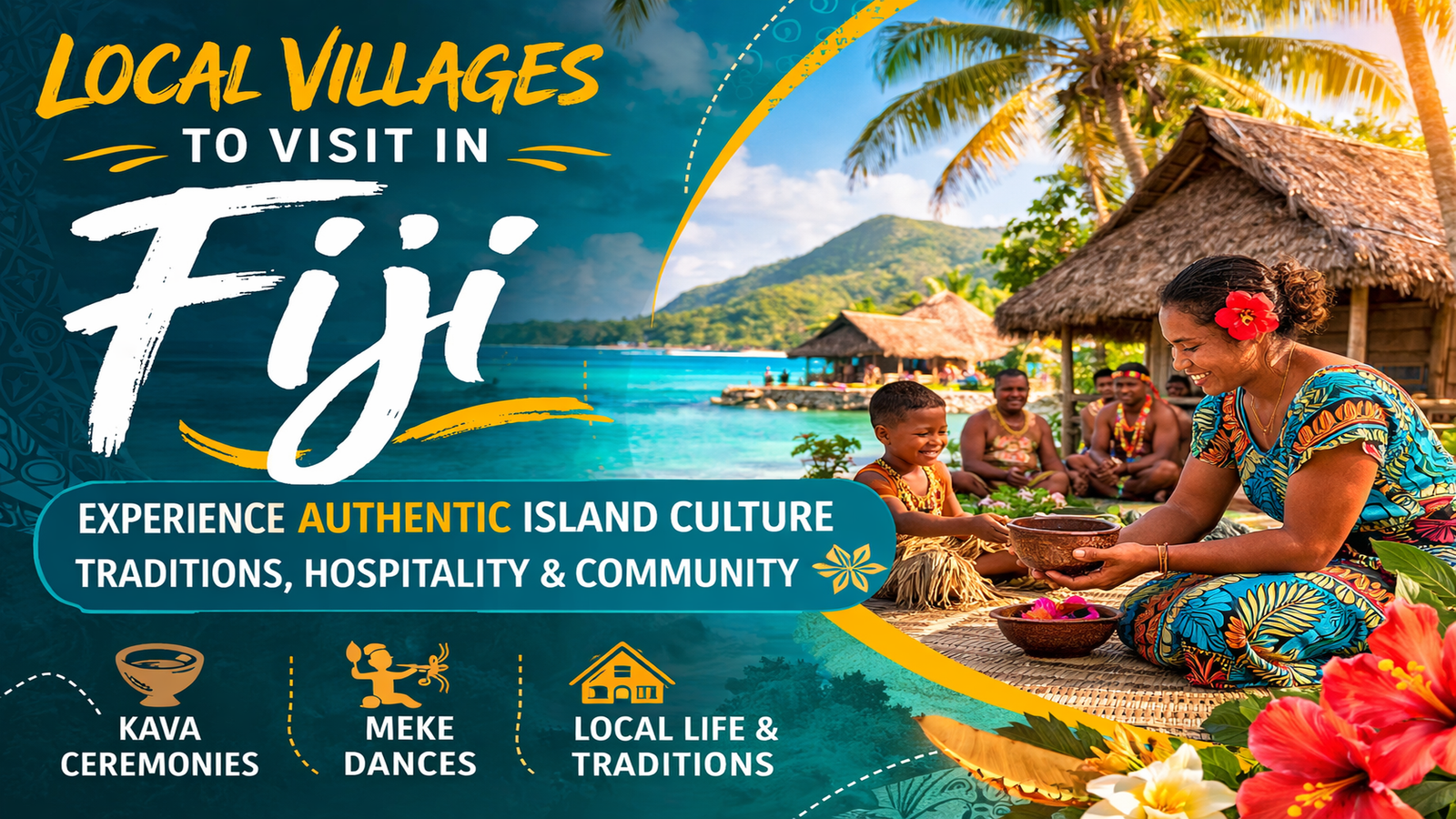
What Makes Local Villages to Visit in Fiji So Special?
Let’s be honest. Most people fly to Fiji for the postcard stuff. The clear water. The fancy resorts. Nothing wrong with wanting a sunset cocktail by the water. That Fiji exists, and it’s gorgeous. But there’s another Fiji most tourists never see. It’s in the villages in Fiji along the coast. The ones tucked between the hills. Small places where life moves slowly, and tourists rarely show up. Here, nobody cares about Instagram photos. They care about family, church, and getting dinner on the table. Local villages to visit in Fiji give you something no resort can. You get to sit with regular people going about their regular days. And somewhere in there, you realize they’re not so different from you.Some place where Everyone Knows Your Name
Think about your own neighborhood for a minute. Now imagine something completely different. You walk outside, and before you’ve gone ten steps, someone shouts hello. They know your parents. They know your kids. They ask how everyone’s doing. You don’t lock your front door. Nobody does. Your stuff stays where you left it. Your children run around, and every adult in the village watches out for them. Not because anyone told them to. Just because that’s how things work here. That’s village life in Fiji. Here’s the thing about Fijian villages. Community isn’t just part of life. It is life. The word vuvale means family. But it doesn’t stop with blood relatives. It stretches to include neighbors. It includes visitors who show respect. If you come with an open heart, it even includes you. Every village has a chief. They call him turaga ni koro. His family has usually led the community for generations. When decisions need to be made, the elders gather and talk it through. Does someone need a new house? The whole village shows up to help build it. Wedding happening? Everyone cooks. Has someone passed away? Everybody mourns together. This isn’t something they put on for tourists. This is just Tuesday. Or Thursday. Whatever day it is. Villages hold onto traditional Fijian culture more tightly than anywhere else. Kids still learn Fijian before English. Grandmothers still teach granddaughters how to weave voivoi mats. Young men still learn which fishing spots belong to their family. They learn to read the ocean without looking at a phone. Some things you can’t learn from a screen. Village life is one of them. You can’t get that from a resort cultural night. You have to go where it lives.What Actually Happens During a Village Visit
The Ceremony That Changes Everything
The sevusevu ceremony catches people off guard. You sit on the floor, legs crossed. Your knees start hurting pretty quickly. Someone presents a bundle of dried kava root for you. Then the village spokesman talks for a long time in Fijian. You understand exactly nothing. So you smile and nod and hope that’s the right move. Then the kava comes. Muddy water in a half-coconut shell. You drink it all in one go. Your tongue goes slightly fuzzy. Everyone claps. You say macà (pronounced “matha”) and mean it. And something shifts. Because you’ve just participated in a ritual that Fijians have performed for three thousand years. You’ve shown respect. You’ve followed protocol. That’s why local villages to visit in Fiji matter. Not for the Instagram photos. For moments like this.The Homes and the Spaces Between
Villages arrange themselves like stories. The chief’s house often sits centrally, sometimes slightly elevated. Churches stand prominently—Fiji converted to Christianity in the 1800s, and Sunday morning fills every village with singing that gives you chills. Open greens host rugby games, weddings, and community meetings. Traditional bure houses with steep thatched roofs mix with concrete homes and corrugated iron. But inside either one, you’ll find masi cloth on walls, family photos everywhere, and pillows woven from pandanus leaves. Life happens mostly outside—cooking under shelters, washing at communal taps, children everywhere.Eating Together Changes Everything
Fijian hospitality runs deep. You will not leave a village hungry. Kokoda comes first most times. Raw fish mixed with coconut milk and lime juice. The acid cooks it without any fire. Taro shows up with every meal. Watch the women cook, and you’ll see how things work here. They gather around, talking and laughing, waving kids away from the pots. The men handle the heavy stuff. Digging the pit. Hauling hot stones. Acting like it’s hard work. Kids run everywhere. They steal pieces of cassava, fall down, get back up, steal some more. You eat sitting on a mat. With your hands. No fork. No plate. At first, you’ll struggle peeling the taro. Someone will notice and show you how. This is the Fijian village experience. Not performed. Just lived.Stories That Stick With You
An elder might look toward the mountains and tell you about the cyclone that flattened everything fifty years back. A fisherman might explain how his grandfather taught him to navigate by the stars. How his father showed him which way the currents run. He’s trying to teach his son the same things, even though the kid has weather apps on his phone. Women might show you their weaving. Patterns are passed down through generations. Each one a little different. Each one holds family stories in the loops and knots. Children will practice English with you. “What’s your name?” “Where are you from?” “You like Fiji?” Over and over, beaming when you answer. These moments define village tours in Fiji. No script. No schedule. Just people being people, generous with their time and stories.Why Village Visits Hit Different
I’ve sat through resort cultural shows. They’re fine. Dancers in costume, dramatic firewalking, and audience participation that feels slightly forced. Village tours in Fiji aren’t that. Groups stay small—maybe just your family plus a guide. You’re not watching from fifty feet away. You’re sitting right there, close enough to see expressions, hear breathing, catch the laughter between serious moments. Kids might approach shyly at first, then warm up. Women might invite you to try weaving (you’ll be terrible, they’ll be gracious). Men might ask about your home, your work, your family, and where you came from. None of this costs extra. It’s just what happens when humans connect across differences. The best village tours in Fiji position you as a temporary community member, not a spectator. You participate in protocols instead of observing them. You eat what villagers eat. You follow their rhythm instead of a printed schedule. This immersion creates understanding no guidebook can deliver.Where You Can Visit Villages Respectfully
Several regions welcome visitors to local villages to visit in Fiji: The Coral Coast along Viti Levu’s southern shore offers easy access. Many resorts here have long relationships with neighboring villages and can arrange appropriate visits. Interior Viti Levu, beyond the tourist zones, holds villages rarely visited. These require licensed guides who know local protocols and can arrange permission properly. One hard rule: Don’t just walk in. Always arrange visits through registered operators, resorts with established relationships, or licensed guides who communicate with village heads beforehand. This protects everyone—you from accidental offenses, communities from overwhelmed hospitality.Why People Come Back Different
Something happens days or weeks after you return home. Maybe you’re stuck in traffic and remember children walking to school barefoot but laughing. Maybe you’re scrolling through your phone and taste fresh fish cooked in coconut cream. Maybe you’re rushing through work and recall how the chief spent two hours answering questions despite having village business waiting. Travelers often describe visiting local villages to visit in Fiji or villages in Ba, Fiji as perspective-shifting. The endless pursuit of more feels smaller against communal sufficiency. The frantic pace seems absurd beside village patience. Material accumulation appears hollow next to relationships sustained across centuries. You’ve glimpsed traditional Fijian culture not as a museum exhibit but as a living choice—people continuing ancestral ways because those ways provide meaning, belonging, identity. This understanding transcends anything learned from screens or pages.Final Thoughts
Fiji’s resorts show you paradise. Fiji’s villages show you purpose. Both deserve appreciation. But for travelers willing to sit on woven mats, drink muddy kava, let children practice English on them—the reward runs deeper than any postcard. Approach village visits with openness rather than a checklist. Lead with respect rather than curiosity. Leave with gratitude rather than photographs. What returns to you—unexpected, unasked—is connection across difference. And that might be travel’s greatest gift. The local villages to visit in Fiji await not as attractions but as communities. Enter them as you’d want strangers entering your home: with humility, with kindness, with willingness to learn. You’ll leave changed. That’s the promise. That’s the magic. That’s Fiji. -
What Are the Top 10 Fiji Attractions? Start Exploring From Nadi.
Let’s set the scene: You’re finally standing outside the Nadi terminal. A string of frangipani rests on your shoulders. That classic airport chaos fades into a blur of “Bula!” smiles and taxi drivers. The relief is instant. And so is the next thought: “Right. What’s first?” But then… You check into your hotel. You drop your bags. And you have that moment. You know the one. You look at your travel partner (or just yourself in the mirror) and say: “So… what do we actually do?” If you’re a first-time visitor, you might think Nadi is just the place you sleep before catching a boat to the “real” Fiji tomorrow. I’m here to tell you—with the fervor of a convert—that you are so wrong. Nadi isn’t in the lobby. It’s the first damn chapter of the book, and it’s a good one, packed with what could easily be called the top 10 Fiji attractions. It’s the first damn chapter of the book, and it’s a good one. Forget those generic “Top 10” lists. The learning curve has been handled for you. What remains is this curated list: the essential attractions near Nadi that deserve a prime spot in your itinerary, ensuring every moment of your trip counts.Nadi: Your Surprisingly Brilliant Basecamp
Here’s the tactical advantage no one talks about loud enough: Nadi is central. I mean, obviously, it’s near the airport. For anyone short on time, that proximity is your greatest advantage. Every single recommendation here sits within a 30-to-60-minute journey. That means more exploring, less time trapped on a bus. You can have a cultural moment, a nature hit, and a beach beer all before sunset without feeling rushed. Every tour in the country seems to pick up from here. The main port to the islands? Twenty minutes away. It’s the ultimate hub. “It turns ‘I wish I could see that’ into ‘Let’s go after breakfast,’ putting the best tourist attractions in Fiji Nadi within effortless reach.The Real List: 10 Things That Don’t Suck
Let’s look at the 10 best things to do in Nadi and its immediate surroundings. No fluff.1. The Temple That’ll Stop Your Heart (Sri Siva Subramaniya)
You can’t miss it. It looks like a rainbow exploded into architecture. Go inside. Shoes come off at the steps. Those towering carved pillars? They hold stories in their grooves. You don’t need a translation to feel their weight. Budget twenty minutes and a few dollars. The memory, though, is free and lasts forever. And a note: covering your knees and shoulders isn’t a suggestion. It’s a firm, respectful request from the community welcoming you in.2. The Orchid Heist Garden (Garden of the Sleeping Giant)
So, story: This was actor Raymond Burr’s private obsession. This whole place exists because one man was utterly devoted to orchids. The result? You’re not just walking through a garden. You’re exploring a collection that feels alive with singular passion—wild at the edges, thick with magic. Dappled sun highlights blossoms so pristine they seem fictional. The ponds are flawless, liquid mirrors. Bring that water bottle; the warmth is deceptive, settling in around you. This spot was made for mornings with empty pockets of time and a full heart for wandering.3. The Grown-Up Mud Pie Kitchen (Sabeto Mud Pools)
This is the most fun you’ll have while looking completely absurd. You smear warm, silky mud all over yourself. You let it bake in the sun until you crack when you smile. Then you soak it off in natural, thermal pools that smell faintly of sulfur. You emerge weirdly relaxed and your skin has never been softer. Go with friends. The shared laughter is half the experience.4. Denarau: The Practical Pitstop
Look, Denarau Island itself is a gated community of nice resorts. It’s polished, not the place for raw, local authenticity. BUT. Port Denarau is the launchpad for every island adventure. And the marina has a killer gelato place, a decent bottle shop for wine, and a supermarket where you can buy Australian chocolate (a weird luxury abroad). It’s not a destination. It’s a useful, pretty transit point.5. The “Instant Fiji” Day Trip (South Sea Island)
Only got one day? Do this. You are blasted out to a little sandbar surrounded by palm trees by a swift catamaran. This is a call for the serious snorkelers wanting to see the key top 10 Fiji attractions sites.” Just off the shore, you go snorkeling. You have a meal of barbecue. You just got the whole Fiji-island thing done in a day. It’san efficient paradise.6. The Sunset Drinking Hole (Wailoaloa Beach)
This is Nadi’s local beach. The sand is decent. But forget all that—you showed up for the sunset. Stake out a seat at any of the beach shacks (Ed’s Place, with its fading blue chairs, is a solid pick). Get a Gold. Then just watch. The whole horizon will bleed into mango, then lavender, then deep violet. Costs almost nothing, feels like everything. Non-negotiable, really.7. The Yacht-Spotter’s Haven (Vuda Marina)
A quieter, more polished alternative to Denarau. Come here to watch serious sailors and dream about running away to sea. The restaurants are pricier, but the quality is top-notch. It’s a lovely spot for a “treat yourself” dinner where you can watch the mast lights twinkle on the water. Feels fancy without trying too hard.8. The Beautiful, Chaotic Market (Nadi Municipal Market)
This is NOT a sanitized tourist market. This is the real deal. Go with your senses open. Taste the sweet, tiny bananas. See the pyramids of ginger. Smile and say “Bula.” Don’t take photos of people without asking. Just be a respectful observer in the wonderful, daily chaos.9. The Big-Ticket Island Hopping (Mamanucas)
South Sea Island is the appetizer. The Mamanuca chain is the main course. This is a call for serious snorkelers and divers. Secure a spot on a dedicated marine tour. You’re investing in a front-row seat to another universe: psychedelic coral architectures, fish that are pure swimming color. The iconic Modriki Island is often on the itinerary. It’s a splurge, no doubt. But for those who live for the reef, there’s simply no substitute.10. The Heart-and-Soul Combo (Sabeto Valley Tour)
This is the top recommendation for anyone asking, “But what’s Fiji really like?” A good tour takes you to a village. First, you’re a guest in the village: sitting on the ground, accepting the groggy kava drink, hearing tales passed down. Then, you become an explorer, following a hidden path to a thunderous waterfall where a deep, cool pool waits. It’s the perfect dual offering—deep cultural insight followed by pure, natural exhilaration. You leave feeling like you’ve connected, not just observed. It’s arguably the most meaningful entry in the top 10 Fiji attractionsHow to Build Your Day (No Stress)
- The “Highlights Reel” Day: Temple (AM) -> Garden (Late AM) -> Mud Pools (PM). Classic.
- The “Total Chill” Day: Lounge -> Wailoaloa Sunset. Maybe a massage. Perfect.
- The “Go Big” Day: Full-day Mamanucas snorkel tour. You’ll be exhausted in the best way.
- The “Deep Cut” Day: Market (AM) -> Sabeto Village & Waterfall Tour (PM). For the curious.
Stuff You Actually Need to Know
- The local buses are cheap, slow, and an adventure. Taxis are plentiful. NEVER get in without agreeing on the price first.“How much to the Garden?” Say it. Every time.
- Fiji Time is Real: Your tour might start 10 minutes late. The bus might be slow. Your lunch might take an hour. This isn’t bad service. It’s a different rhythm. Lean into it. You’re not in a rush anymore.
- Pack This: A It’s a beach towel, a temple skirt, a sun shield, a scarf. Reef-safe sunscreen. The regular stuff kills coral. A sense of humor.
The Final Word
Nadi isn’t a placeholder. It’s a portal. You don’t have to trek to the remote highlands to connect with Fiji. The real heart of the place—the chaotic markets, the dense greenery, the social mud pools, the beachside beers—is sitting right in Nadi’s backyard. It’s all surprisingly within reach. This is the beauty of chasing the top 10 Fiji attractions from here Your job isn’t to check everything off a list. It’s to pick two things that make your heart say “yes,” and go do them. The rest is just letting the slow, sweet pace of the islands wash over you. Now get out of your hotel room. Your adventure is literally right outside the door. Vinaka and bula.