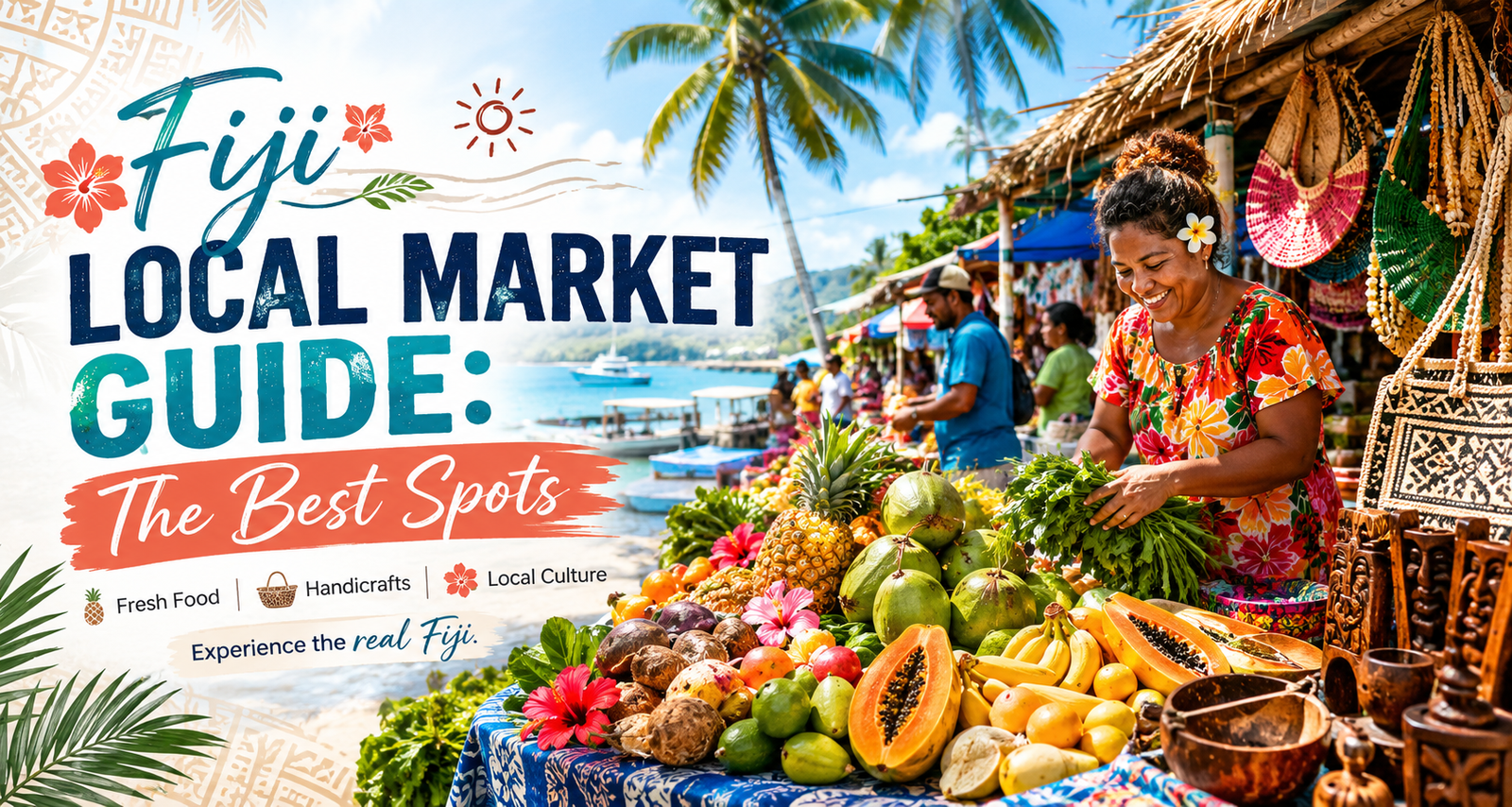
For the authentic Fiji experience, as opposed to the resort variety, head to a local market. This is where you will discover vendors selling the same basic agricultural produce for thirty years, handmade crafts that never saw an assembly line and food at a fraction of the price you haggled over on the beachfront. Get the most out of visiting local markets in Fiji with this guide on where to go, what to buy and how.
The best thing you can do in Fiji: Local Markets
The majority of tourists stay within resort shops and airport duty-free. That’s a mistake.
Fiji local markets provide access to fresh tropical produce, traditional handicrafts, kava, and
street food, all at prices you can afford. They’re also one of those rare spots you spend time with Fijians in their space, rather than in a set-up hospitality format.
Markets here are social hubs. Vendors know one another, families shop together, and it has all been at a slower speed. Go ahead and preferably with no agenda.
Fiji’s Best Local Markets
Nadi Marketa — The Gateway To Tourists
The Nadi Municipal Market is located in the heart of Nadi town, approximately 10 minutes from the main tourist strip. It’s also the easiest (and only) local Sunday market for those new to Fiji (Saturday is the busiest).
What to buy:
- Very well-picked tropical fruits (papaya, pineapple, soursop and passion fruit)
- Bunches of fresh dalo and cassava
- Masi (tapa cloth) & woven baskets
- Kava (yaqona) — sold by the halfa kilo or kilo.
Practical tips:
- Arrive early (preferably before 9 AM) for the best produce selection
- Food Fix prices; Crafts with light bargaining
- A section of the market is covered for dry goods, but there is also an open-air area for produce — do both
Beware: Touts near the entrance are trying to direct you to particular stalls. You are not required to follow anybody.
Suva Municipal Market – The Biggest in the South Pacific
The market in Suva is simply on another level. The Suva Municipal Market is without a doubt one of the largest covered marketplaces in the Pacific and an institution in its own way. The market is situated in central Suva close to the waterfront and it attracts vendors from across Viti Levu as well as the outer islands.
What to buy:
The most diverse selection of
tropical produce in Fiji, including some products that you may not find in Nadi.
- Fijian spices and dried fish and coconut products
- Indo-Fijian spice blends & types of lentils (due to the Indian community in Fiji)
- Local outer island vendors offering woodcarvings, tanoa bowls, and woven mats
Practical tips:
- 2 hour minimum — If this is a large market, worth the effort to explore by floor
- Upper level attracts more crafts vendors; the ground floor has a higher proportion of produce.
- Local lunch venues in the market — tasty and affordable Fijian food
Caution: Petty theft in crowded areas — bags should be kept at the front.
Lautoka — Sugar City’s Hidden Jewel/ Market in Fiji
Fiji’s second-largest city, Lautoka, has a market that most tourists completely miss. And that is why it is worth a visit. The Lautoka Municipal Market is less commercialized, purely local and offers a more authentic vibe than the Nadi salon.
What to buy:
- One of the cheapest places in Western Fiji to buy tracking fruits
- Fresh sugar cane juice—Lautoka is the centre of Fiji’s sugar industry
- Coconut oil and herbal products are made locally
Practical tips:
- Best enjoyed on a Saturday morning when vendors from nearby villages come in
- Try some Chinese, go for a stroll to Lautoka itself, which has pretty decent Indian restaurants within walking distance of the bush
Sigatoka Market — The Entrance to the Coral Coast
A useful stop-off while
traveling along the Coral Coast is Sigatoka Market. It’s not as big as Nadi or Suva; its mainstay is indeed produce, much of it grown in the Sigatoka River Valley — one of Fiji’s richest agricultural zones.
What to buy:
- Sigatoka Valley vegetables and greens.
- Watermelons (in season) and fresh corn
- Tiny crafts from the vendors of the villages
Practical tips:
- This is not a tourist market, where you will see English signboards or sales pitches by vendors; that’s the point
- Your busiest time is Saturday mornings
Where to Shop the Fiji Markets
Here are some better things you can buy at every Fiji local market:
Category What to Look For
| Category |
What to Look For |
| Produce |
Dalo, cassava, breadfruit, tropical fruits |
| Handicrafts |
Masi cloth, woven fans, tanoa bowls |
| Kava |
Dried yaqona root — buy medium-grind for drinking |
| Spices & Food |
Coconut oil, tamarind, curry blends (in Suva) |
| Souvenirs |
Hand-carved items directly from village vendors |
Be wary of machine-produced “handicrafts” — they will all look the same at several stalls, and they’re not made here.
FAQs: Fiji Local Market Guide
When do Fiji local markets open?
Most of the markets are open Monday to Saturday from 6 AM to 5 PM. Fiji is a strongly Christian nation and you have observed closed or limited Sunday trading in many areas Peak hour, as every market knows, is Saturday morning.
Bargaining at local markets in Fiji?
With food, prices are fixed and quite low so there should be no need to barter. You are expected to bargain very politely for handicrafts and woodcarvings — aggressive haggling is not appropriate. A good question: Is there a better deal if you buy more?
Is it safe to visit local markets in Fiji?
Yes, generally. Lautoka and Nadi Markets: The low-risk markets. Suva is not a dangerous place; it just requires the normal urban vigilance — be aware in public areas and try not to carry valuables openly.
Local market for Kava?
Sure enough, and this is one of the best places to do it. Dried yaqona root is available for sale by weight. If you are new to kava, inquire with vendors about the proper grind. Market Prices: Much cheaper than the resorts.
Get ready for an amazing journey with us to the best market you could find raw stuff handcrafted?
Suva Municipal Market has the largest range of handmade artisanal handicrafts from around the islands of Fiji. Nadi Market has a good craft section for convenience, but Suva has more variety and is more direct from the village vendors.
Are credit cards accepted at the local markets?
Markets work only on cash, so no. Take Fijian dollars (FJD) — There are ATMs in the main town centers of Nadi and Suva.
Final Word
This is a guide to the local market of Fiji, built by showing up as early as you can (just especially before they close up/end), looking around without a plan and getting something small from a vendor who actually grows it. These markets are a launching pad — not a checklist. Local markets in Fiji cannot be tamed by offers of (fair trade) money for efficiency: they are at all times to remain curious.
If you only go to one, Suva is it. The market in Nadi (if you’re based there) is worth a brief visit before heading to the beach anyway.
Leave a Reply