Category: Fijian Food

  • What Is Kokoda? Fiji’s Famous Raw Fish Dish Explained

    What Is Kokoda? Fiji’s Famous Raw Fish Dish Explained

    It has already drawn attention, whether on a menu or as discussed at a local feast on the beach, if you have ever heard about Kokoda Fiji. There can be no denying that this is the jewel in Fiji’s crown of cuisine and lifestyle; it’s a basic dish, with a strong taste, and an authentic piece of Pacific Island culture. Here’s all you should know.

    What Is Kokoda?

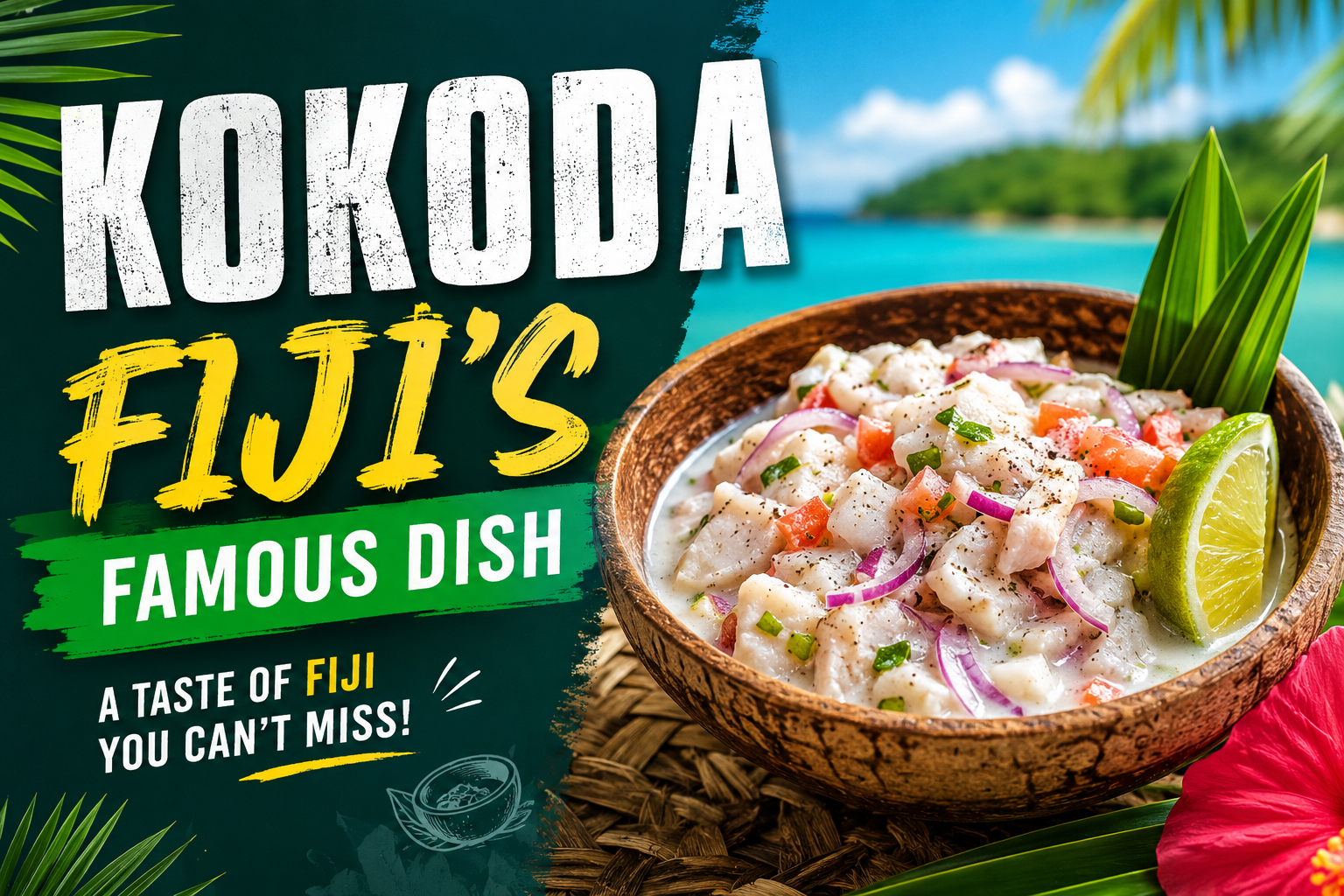
    Kokoda (ko-kon-da) is a traditional raw fish dish in Fiji, akin to ceviche in Latin America or the Hawaiian poke bowl. The fish is marinated (or “cooked”) in citrus juice, usually fresh lime juice. The proteins in the fish get cooked without heating, due to the acid denaturing them. After curing, it’s mixed with creamy coconut cream, which mellows out the tangy lime, and richness can be added. The outcome is a dish that’s vibrant and fresh and also indulgent — a taste that mirrors Fiji itself.

    The Key Ingredients

    Kokoda Fiji’s short list of fresh, quality ingredients is:
    1. White fish – wahoo (ono), snapper or mahi-mahi are most prevalent; fish should be very fresh
    2. Curing agent: lime juice, lemon juice can be used, but it is traditional to use lime juice.
    3. Coconut cream (fresh preferred to canned) for body and sweetness
    4. Chilli — for heat, usually added to taste
    5. Let it cool down a bit before adding the spring onion and coriander (add them for freshness and aroma)
    6. The fruit or vegetables are often served with tomato and cucumber, which are added for texture and colour.
    7. Rolls — to roll the nose and hands
    It’s the cook who makes the difference in the fish-to-lime ratio and curing time. Very short = fish too raw; very long = rubbery and dry.

    How Is It Made?

    It’s very simple, but it’s important that it happens at the right time:
    1. Cube the fish into even, small pieces (1-2cm).
    2. Cover completely with fresh lime juice and refrigerate for 20–40 minutes until the flesh turns opaque.
    3. Remove the excess lime juice — this is very important, or otherwise, it will become watery and sour.
    4. Add coconut cream, chilli, spring onion, tomato, cucumber and seasoning.
    5. Gently stir and serve right away, preferably in a coconut shell for the true Fijian experience.
    Some recipes do this, and add a little lime back in after mixing the coconut cream in, adding acidity when it is ready for consumption not at the start.

    Kokoda’s origins.

    Kokoda is native to Fiji and has been used as a staple food source for generations within the coastal communities of Fiji. Fish has always been an important staple in Pacific island people’s diet, and the curing method using citrus, which is found throughout the Pacific from Tahiti to Peru, has a distinctly Fijian flavour, particularly in the use of coconut cream. A dish more closely associated with the coastal villages on the main islands of Fiji, Viti Levu and Vanua Levu, where fresh fish and fresh coconuts are plentiful throughout the year.

    The best places to eat in Kokoda, Fiji.

    Kokoda Fiji can be found at almost all local markets, hotel restaurants and resorts throughout the islands. To find the most authentic versions, go for:
    1. The local village feasts (lovo nights) — communal feasts, in which Kokoda is usually eaten as a starter
    2. Suva Municipal Market is the main market in the capital, where locals sell fresh produce at low prices.
    3. Beachside warungs and small restaurants — less slick than the resort restaurants but usually very good.
    4. Resort versions are generally tidied up and uniform; village versions are more unpredictable, but usually more memorable.

    The interactive workshop took place in Kokoda and Fiji Food and Drink Culture.

    Kokoda is never alone. It is an integral part of Fiji’s food and drinking culture, together with the dishes lovo (meats cooked in the earth oven), palusami (taro leaves with coconut cream), and rourou (taro leaf soup). What they all have in common is coconut, used in almost every traditional Fijian dish. Kokoda is normally eaten as an appetiser or light lunch, with a cold Fiji Bitter beer or fresh coconut water. It is often used to dip into crackers or taro chips at the resort.

    Frequently Asked Questions

    If the fish is raw, is Kokoda safe to eat?

    In Kokoda, the fish are not “cooked” by heat but instead are acid-cured. The protein structure may be changed by the lime juice, but the lime is not as effective as heat in killing all pathogens. Only have sushi-grade or very fresh fish from a reliable source, and only eat fish that has been prepared that day. Precautions should be taken by pregnant women and immunocompromised persons.

    Which fish is ideal for Kokoda Fiji?

    A firm white-fleshed fish with low fat content is ideal; wahoo (ono) is considered a traditional fish used in Fiji. Good alternative fish to fish snapper, mahi-mahi and grouper. Stay away from oily fish such as salmon or mackerel—the fat doesn’t mix with the lime and coconut cream.

    How much time is required to cure the fish in lime juice?

    The average window is 20-40 minutes. Exterior is opaque, centre is still partially translucent at 20 minutes. The cure is more complete at 40 minutes. After 1 hour, the quality of the fish reduces; it becomes tough and chalky.

    May I pre-prepare Kokoda?

    The fish and vegetables can be prepped ahead, cured and chopped, but the coconut cream shouldn’t be mixed with the other ingredients until serving time. If left for too long, the coconut cream will turn watery.

    Is Kokoda the same as ceviche?

    They use the same core technique — acid-curing raw fish — but they’re not the same dish. Ceviche is Latin American in origin and uses different citrus profiles, herbs, and no coconut. Kokoda Fiji is distinctly Pacific, defined by its coconut cream base and specific spice profile.

    Where does the name “Kokoda” come from?

    The origin of the name is debated. Some trace it to a village or regional name within Fiji; others suggest it derives from older Fijian language terms related to fish preparation. It is not connected to the Kokoda Track in Papua New Guinea — that is an entirely different place name with separate origins. Kokoda Fiji is more than a dish — it’s a concise expression of where the islands sit: fresh ocean, tropical fruit, and the ever-present coconut. If you visit Fiji and skip it, you’ve missed the point.
  • Fiji Local Market Guide: The Best Spots in Nadi, Suva, and Beyond

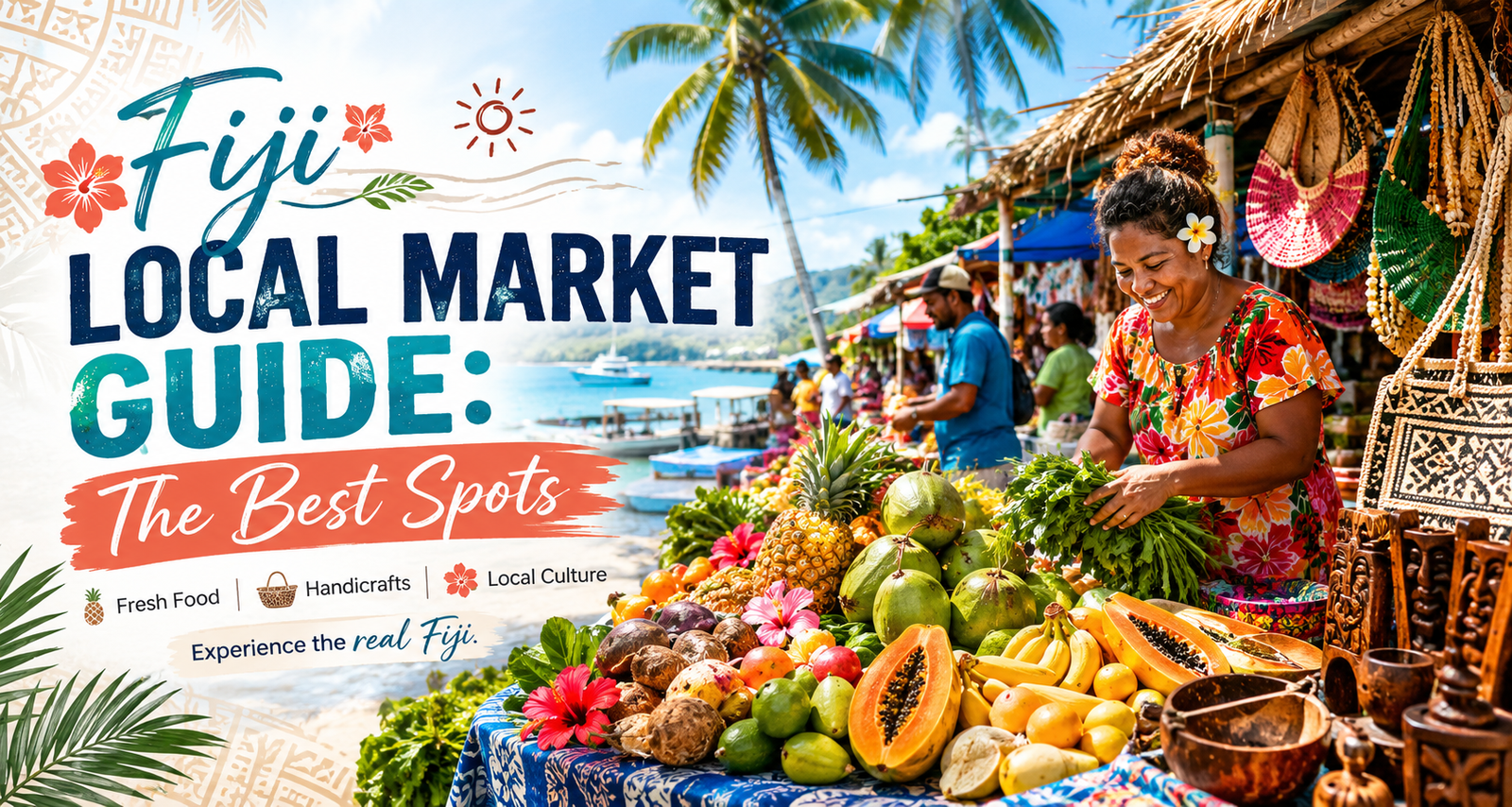
    Fiji Local Market Guide: The Best Spots in Nadi, Suva, and Beyond

    For the authentic Fiji experience, as opposed to the resort variety, head to a local market. This is where you will discover vendors selling the same basic agricultural produce for thirty years, handmade crafts that never saw an assembly line and food at a fraction of the price you haggled over on the beachfront. Get the most out of visiting local markets in Fiji with this guide on where to go, what to buy and how.

    The best thing you can do in Fiji: Local Markets

    The majority of tourists stay within resort shops and airport duty-free. That’s a mistake. Fiji local markets provide access to fresh tropical produce, traditional handicrafts, kava, and street food, all at prices you can afford. They’re also one of those rare spots you spend time with Fijians in their space, rather than in a set-up hospitality format. Markets here are social hubs. Vendors know one another, families shop together, and it has all been at a slower speed. Go ahead and preferably with no agenda.

    Fiji’s Best Local Markets

    Nadi Marketa — The Gateway To Tourists

    The Nadi Municipal Market is located in the heart of Nadi town, approximately 10 minutes from the main tourist strip. It’s also the easiest (and only) local Sunday market for those new to Fiji (Saturday is the busiest). What to buy:
    1. Very well-picked tropical fruits (papaya, pineapple, soursop and passion fruit)
    2. Bunches of fresh dalo and cassava
    3. Masi (tapa cloth) & woven baskets
    4. Kava (yaqona) — sold by the halfa kilo or kilo.
    Practical tips:
    1. Arrive early (preferably before 9 AM) for the best produce selection
    2. Food Fix prices; Crafts with light bargaining
    3. A section of the market is covered for dry goods, but there is also an open-air area for produce — do both
    Beware: Touts near the entrance are trying to direct you to particular stalls. You are not required to follow anybody.

    Suva Municipal Market – The Biggest in the South Pacific

    The market in Suva is simply on another level. The Suva Municipal Market is without a doubt one of the largest covered marketplaces in the Pacific and an institution in its own way. The market is situated in central Suva close to the waterfront and it attracts vendors from across Viti Levu as well as the outer islands. What to buy: The most diverse selection of tropical produce in Fiji, including some products that you may not find in Nadi.
    1. Fijian spices and dried fish and coconut products
    2. Indo-Fijian spice blends & types of lentils (due to the Indian community in Fiji)
    3. Local outer island vendors offering woodcarvings, tanoa bowls, and woven mats
    Practical tips:
    1. 2 hour minimum — If this is a large market, worth the effort to explore by floor
    2. Upper level attracts more crafts vendors; the ground floor has a higher proportion of produce.
    3. Local lunch venues in the market — tasty and affordable Fijian food
    Caution: Petty theft in crowded areas — bags should be kept at the front.

    Lautoka — Sugar City’s Hidden Jewel/ Market in Fiji

    Fiji’s second-largest city, Lautoka, has a market that most tourists completely miss. And that is why it is worth a visit. The Lautoka Municipal Market is less commercialized, purely local and offers a more authentic vibe than the Nadi salon. What to buy:
    1. One of the cheapest places in Western Fiji to buy tracking fruits
    2. Fresh sugar cane juice—Lautoka is the centre of Fiji’s sugar industry
    3. Coconut oil and herbal products are made locally
    Practical tips:
    1. Best enjoyed on a Saturday morning when vendors from nearby villages come in
    2. Try some Chinese, go for a stroll to Lautoka itself, which has pretty decent Indian restaurants within walking distance of the bush

    Sigatoka Market — The Entrance to the Coral Coast

    A useful stop-off while traveling along the Coral Coast is Sigatoka Market. It’s not as big as Nadi or Suva; its mainstay is indeed produce, much of it grown in the Sigatoka River Valley — one of Fiji’s richest agricultural zones. What to buy:
    1. Sigatoka Valley vegetables and greens.
    2. Watermelons (in season) and fresh corn
    3. Tiny crafts from the vendors of the villages
    Practical tips:
    • This is not a tourist market, where you will see English signboards or sales pitches by vendors; that’s the point
    • Your busiest time is Saturday mornings

    Where to Shop the Fiji Markets

    Here are some better things you can buy at every Fiji local market:

    Category What to Look For

    Category What to Look For
    Produce Dalo, cassava, breadfruit, tropical fruits
    Handicrafts Masi cloth, woven fans, tanoa bowls
    Kava Dried yaqona root — buy medium-grind for drinking
    Spices & Food Coconut oil, tamarind, curry blends (in Suva)
    Souvenirs Hand-carved items directly from village vendors
    Be wary of machine-produced “handicrafts” — they will all look the same at several stalls, and they’re not made here.

    FAQs: Fiji Local Market Guide

    When do Fiji local markets open?

    Most of the markets are open Monday to Saturday from 6 AM to 5 PM. Fiji is a strongly Christian nation and you have observed closed or limited Sunday trading in many areas Peak hour, as every market knows, is Saturday morning.

    Bargaining at local markets in Fiji?

    With food, prices are fixed and quite low so there should be no need to barter. You are expected to bargain very politely for handicrafts and woodcarvings — aggressive haggling is not appropriate. A good question: Is there a better deal if you buy more?

    Is it safe to visit local markets in Fiji?

    Yes, generally. Lautoka and Nadi Markets: The low-risk markets. Suva is not a dangerous place; it just requires the normal urban vigilance — be aware in public areas and try not to carry valuables openly.

    Local market for Kava?

    Sure enough, and this is one of the best places to do it. Dried yaqona root is available for sale by weight. If you are new to kava, inquire with vendors about the proper grind. Market Prices: Much cheaper than the resorts.

    Get ready for an amazing journey with us to the best market you could find raw stuff handcrafted?

    Suva Municipal Market has the largest range of handmade artisanal handicrafts from around the islands of Fiji. Nadi Market has a good craft section for convenience, but Suva has more variety and is more direct from the village vendors.

    Are credit cards accepted at the local markets?

    Markets work only on cash, so no. Take Fijian dollars (FJD) — There are ATMs in the main town centers of Nadi and Suva.

    Final Word

    This is a guide to the local market of Fiji, built by showing up as early as you can (just especially before they close up/end), looking around without a plan and getting something small from a vendor who actually grows it. These markets are a launching pad — not a checklist. Local markets in Fiji cannot be tamed by offers of (fair trade) money for efficiency: they are at all times to remain curious. If you only go to one, Suva is it. The market in Nadi (if you’re based there) is worth a brief visit before heading to the beach anyway.
  • Beyond the Resort: What’s Cooking in Nadi’s Fiji Street Food Stalls?

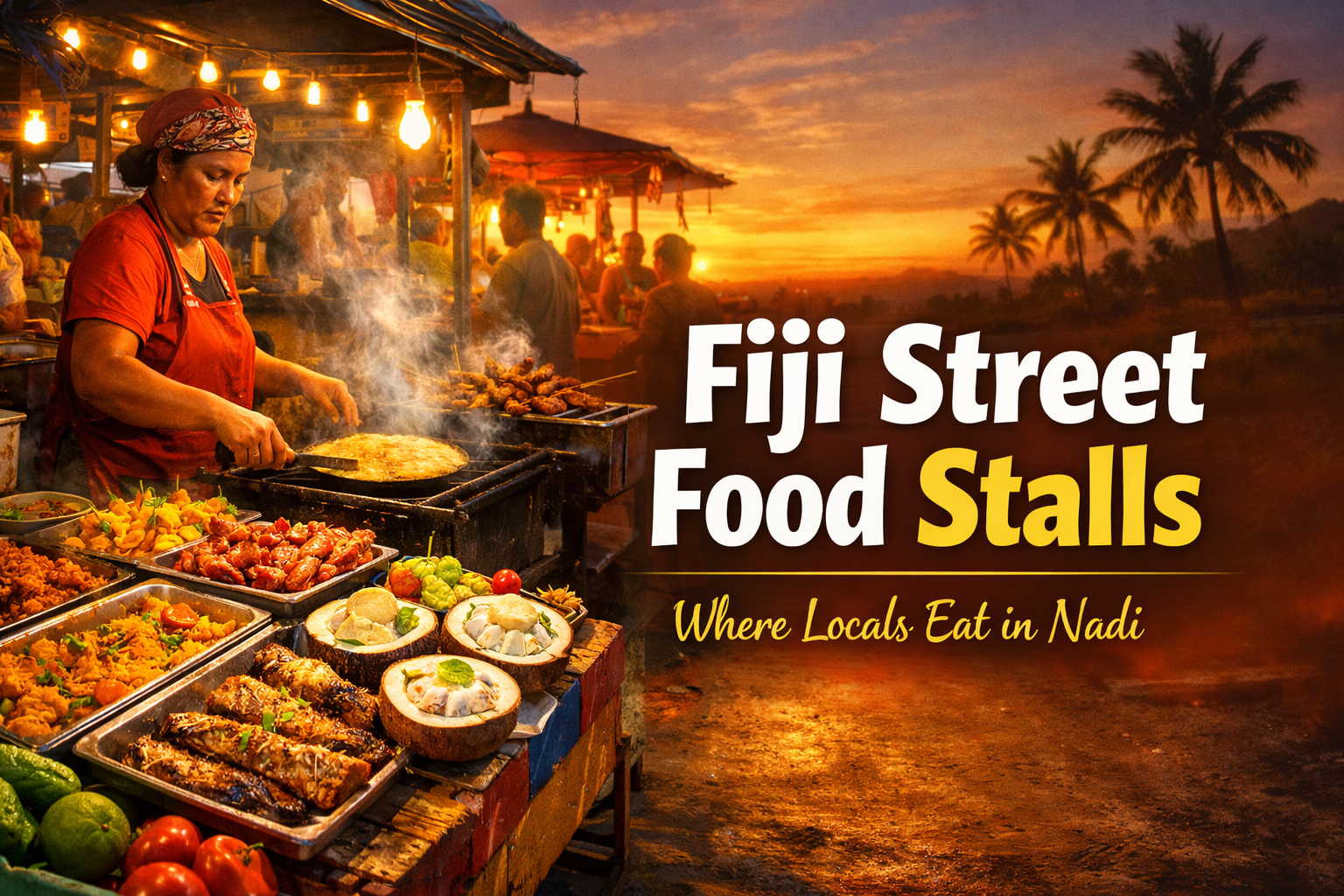
    Beyond the Resort: What’s Cooking in Nadi’s Fiji Street Food Stalls?

    Most Fiji visitors stay inside their resorts. Buffet breakfast. Pool lunch. Hotel dinner. Easy. Predictable. Nadi’s food stalls are right outside. This is where you find the real Fiji street food. Main road. Market edge. Parking lots after dark. Tables fold out. Burners click on. Ice boxes hit the pavement. By 6 p.m., charcoal glows behind the bus station. Fish and curry smoke drift through waiting traffic.

    Where the Food Stalls Are

    The Nadi Municipal Market is the main hub. The building itself is nothing special—concrete floors, open sides, rows of tables. But inside, the prepared food section runs along one wall. Women sit behind steel trays. Roti here. Fried fish there. Vegetable curry in the middle. Rice goes into banana leaves or foam boxes. Cloth towels keep everything warm. Midday heat slows things down. Some stalls close. Others serve less. Saturday mornings are packed. Sunday is slow. A second cluster of stalls operates along the stretch of road near Namaka, closer to the airport. These cater largely to local workers and families running errands. Tourists rarely come here. Not because they’re unwelcome. The stalls just aren’t near the hotels. At night, smaller setups appear near the Nadi traffic lights and outside a few supermarkets. Usually just one item per stall. One man works a grill. One woman tends a pot of curry. Someone else sells Kokoda by the cup from a cooler box.

    What’s Being Cooked

    Fiji street food is not like Bangkok or Mexico City. Late-night snacking is not really a thing here. This is meal food. Breakfast. Lunch. Dinner. It is made fast and eaten fast.

    Seafood and Fish

    The fish is scored with a knife. Salted. Turned once. That is it. No marinade. No sauce. Just a wedge of lemon or lime. Maybe a small container of chili paste on the side. Kokoda is also common, but not at every stall. You find it at places that specialise. Served cold. The coconut cream is usually freshly pressed. The texture and taste are different from canned.

    Roti and Curry

    The roti is soft, thick, and oily. Not like paratha. More like a flour tortilla. Cooked on a flat griddle. A tawa. Sometimes held over fire to puff up. Curry changes by stall. Chicken is standard. Cooked until it falls apart. Goat or lamb at older Indo-Fijian vendors. Potato curry for vegetarians. Gravies are thin and spicy. You mop them up with roti. No spoon. Samosas are everywhere. Small. Stuffed tight. Fried in dark oil that’s been used all day. Vegetable filling has cumin seeds and green chili. Meat samosas are harder to find.

    Fruit and Drinks

    The same fruit is sold inside the market. Young coconuts opened on the spot. Top chopped off with a machete. Straw in. Handed over. Water is faintly sweet, clean. Drink it down, bring the coconut back. They crack it open. You scoop out the soft meat. Sugarcane juice comes from mechanical rollers. Only certain stalls have them. Liquid runs out green, foamy, and very sweet. Served over ice in a plastic bag. Straw poked through the side.

    Fried Snacks

    Babakau is the most common fried Fiji bread. Some stalls serve it alongside curry in place of roti. Cassava chips are cut thick. Much thicker than bagged potato chips. Fried until crisp. Salted. Sometimes, a dusting of chili powder. They go stale fast. The best batches are small and made throughout the day.

    How the System Works

    Ordering Fiji street food follows a pattern that is consistent across most stalls. Customers approach and are greeted. If they don’t speak Fijian or Hindi, pointing works. Vendors are accustomed to non-verbal ordering. Prices are either displayed on handwritten signs or simply known by regulars. A roti wrap costs between FJ$4 and FJ$7. A container of Kokoda runs FJ$8 to FJ$12. Grilled fish is priced by size, usually FJ$10 to FJ$15. Payment is always in cash. Small bills are preferred. Few stalls can break a FJ$50 note. Food is served immediately. Most stalls don’t have seating, but the Nadi Market has a few shared tables near the food section. Customers eat quickly. There’s no lingering.

    What Travelers Should Know

    First-time visitors to the food stalls in Nadi Island Fiji often have questions about safety. The simplest rule is to follow local customers. A stall with a line of Fijian and Indo-Fijian customers has good turnover. Food isn’t sitting out. Oil is fresh. Ingredients are moving. It’s also useful to watch the cooking. Vendors who handle money and food with the same hand are rare. Most keep clean hands for preparation and assign a separate person, or a separate hand, for cash. Stalls that have been around for years do things the same way. Regular customers expect it. Grilled fish. Fried samosas. Hot curry. Less risk than raw dishes. Kokoda, while acid-cured, is still raw fish.

    Who Eats Here

    The customer base at Nadi’s street stalls is mixed. Families stop for fried snacks after school pickup. Older Indo-Fijian men sit and drink tea at stalls run by people they know. Tourists come through, but not many. A couple of stalls near the market entrance have English signs. Bigger print on price lists. That is the only change. Everything else runs the same as always. No tourist menu. No marked-up prices.

    What the Food Actually Tastes Like

    Local food in Fiji is not defined by what is added. It is defined by what is left out. No cream sauces. No reductions. No emulsions. No plating. No garnish. A grilled fish comes out whole. Sitting on a scrap of foil. That is it. A roti wrap is handed over in butcher paper. Curry comes in a foam container with no separate compartment for rice.

    Why People Come Back

    Regular customers at Nadi’s Fiji street food stalls don’t return because the food is cheap, though it is. They don’t return because it’s convenient, though it is that too. They return because a particular stall makes roti the way their grandmother made it. Or because the fish vendor remembers their name. Or because after ten years of eating lunch at the same plastic table, the routine itself has become familiar. For visitors, one meal won’t create that kind of attachment. It shows what everyday eating in Nadi really looks like. Not the tourist version. Not the resort buffet version. Just food that people here cook for each other, day after day, in the narrow space between the produce tables and the parking lot.

    One Meal

    A person walks from a Denarau resort to the Nadi Market. Orders a roti wrap from a stall near the entrance. Eats it standing up near the fish section. This is not some life-changing meal. The roti is a bit greasy. The curry might be hotter than expected. The plastic table wobbles. But the woman who cooked that roti has been making them since she was twelve. She stood beside her mother at this same stall. The fish in the curry was caught yesterday. Sold this morning to a vendor she has known for twenty years. The chili in the paste came from a farm up in the Nausori highlands. That meal happens in a crowded market. Trucks idle outside. Vendors shout prices over the noise. None of this is a performance. It is not Fijian culture staged for visitors. It is just dinner. For the time it takes to eat, that person is not a resort guest. Not a tourist. Just someone in Nadi, having something to eat.
  • Why is seafood so central to the Typical Fijian Food Diet?

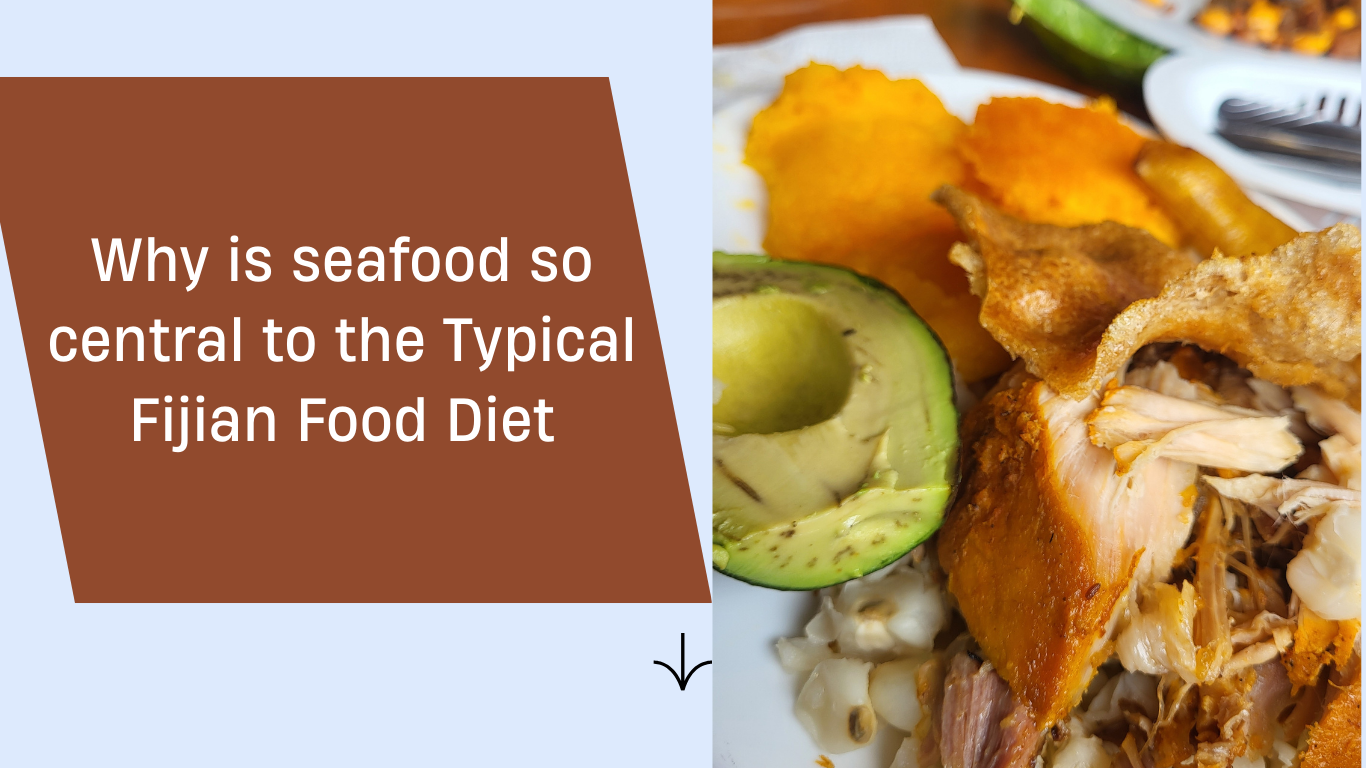
    Why is seafood so central to the Typical Fijian Food Diet?

    Fijian people don’t just eat seafood. They have a conversation with the ocean. Every meal is its reply. You won’t fully grasp that until you spend a morning there in the village of Navala. As the first pink streaks of dawn lit the sky, people pushed their wooden bote into the still water. They don’t check a weather app; they watch the birds skimming the surface. “The matamawai are busy,” they say, pointing. “The small fish are up, so the big ones will be feeding.” An hour later, you would haul in two gleaming walu. In the afternoon, those fish, simply grilled over coconut husks, can feed three generations of a family under the mango tree. These days, you can feel the ocean speak. It’s a dialogue that defines Fiji. So, why is seafood the absolute beating heart of the typical Fijian food? Let me tell you, it’s a story written in saltwater and shared with bare hands.

    The Old Ways: Fishing as a Language

    The way Fijian fish is intimate, almost quiet. You won’t see many giant trawlers in the village waters. You’ll see young boys learning to throw a cast net, their faces a mask of concentration until the perfect circular splash blossoms on the water. This knowledge is their inheritance. It’s knowing that the sici (clams) are fattest after a full moon, or that a certain ripple means trevally are hunting below. It is tied to a law of respect: the qoliqoli. These are their fishing grounds, passed down. But it’s not just a law. It is a deep promise. They take only what they need. They leave the rest for tomorrow. For their children. So when a man brings fish home, he brings more than a meal. He brings that promise, kept. He’s bringing a story of skill, patience, and a pact with the deep blue. This is the soul of Typical Fijian food culture—it begins with reverence.

    What’s Swimming onto Your Plate?

    Walk through any local market, and the chorus hits you first: “Fresh ikaKaikoso today!” The variety is a vibrant, wet, and wonderful mess.
    • The Go-To: Fish. For a quick, perfect lunch, nothing beats ika vakalolo—fish simmered in a gravy of lush coconut milk until it’s fall-apart tender, mopped up with a chunk of dalo. Or, my personal favourite, fish straight off the bbq, its skin crispy and salty, served with a fiery horohoro (chilli) relish.
    • The Treasure Hunt: Shellfish. You’d shuffle through the cool sand until you felt it: the hard, rounded secret of a kaikoso. That pot of clams, steamed until they sighed open in a simple coconut broth, tasted like the whole ocean had given you a gift. It tasted like being eight years old.
    And the octopus—the kuita. That’s a different game. It’s a labour of love, that dish. You taste every minute of the effort. So their menu? It’s never set. It depends entirely on what the ocean offered up that morning. One day, it’s sweet clams from the sand, the next it’s a clever octopus from the reef. Eating here means eating with the tides. Seafood in Fiji isn’t just a category of food. It’s the day’s news, served on a plate.

    The Magic in the Making

    Here’s the thing about Fijian cooking: they keep it simple. Why get in the way of something perfect? Their best dishes are just a spotlight on what’s fresh. Take Kokoda, for example. That’s their masterpiece. You cut up the freshest fish you have—right from the morning’s catch. You let the lime juice do its work, turning the flesh firm and white. Then you drown it in the good stuff: rich, heavy coconut cream straight from the nut. You chill it. On a blazing hot day, you eat it straight from the bowl in the fridge. That first bite? It’s cold, it’s tangy, it’s rich. But the real recipe? It’s not written down. It’s sharing. It’s one big bowl in the middle of the mat, and everyone is reaching in. It’s using your hands. It’s messy fingers, loud jokes and arguing over the last prawn. The food is just the reason they all sat down. The meal happens in the talking, the laughing, the passing of the story with the bowl. That’s how you cook a Fijian meal. You cook it together.

    Food as Their Welcome Mat

    This is where food becomes culture. In Fiji, you cannot truly welcome someone without offering them the best of the sea. When a guest arrives, a spread of the day’s finest catch is the purest form of “welcome home,” even if they’ve never been here before. At a wedding, the size of the lovo and the variety of fish and lobster speak volumes about the family’s joy and respect. In these moments, Fijian Food stops being just food. It becomes a language of love, respect, and profound connection.

    New Waves, Old Anchors

    Yes, things are changing. In the cities, you can buy frozen chicken or imported sausages. Global pressures exist. But here’s what you will see: the pull of tradition is a strong current. The qoliqoli system is defended with fierce pride. And in the villages? The old rhythms hold. Kids still learn to fish. Grandmothers still know when the clams are done. And you can’t have a real feast without food from the sea. Things change, but what they eat at their core doesn’t. The typical Fijian food is anchored in the ocean. That anchor isn’t moving.

    The Eternal Conversation

    So you don’t ask why. You just know. Fish isn’t just food here. It’s breakfast. It’s lunch. It fills their conversations and fills their days. It’s the sound of a knife scraping fish outside. They welcome people with this Fijian food. They give thanks with it. It’s simply their life. No one plans the typical Fijian food diet. You live surrounded by the ocean, and the ocean provides. So you eat what it gives. Every single day. The logic is straightforward. It’s the coming together that matters most. It’s sharing from the same bowl. In those moments, they are most themselves. Every single bite of fish is part of that feeling. That’s the truth of it.
  • The Top 7 Sweet and Savory Snacks in Fiji

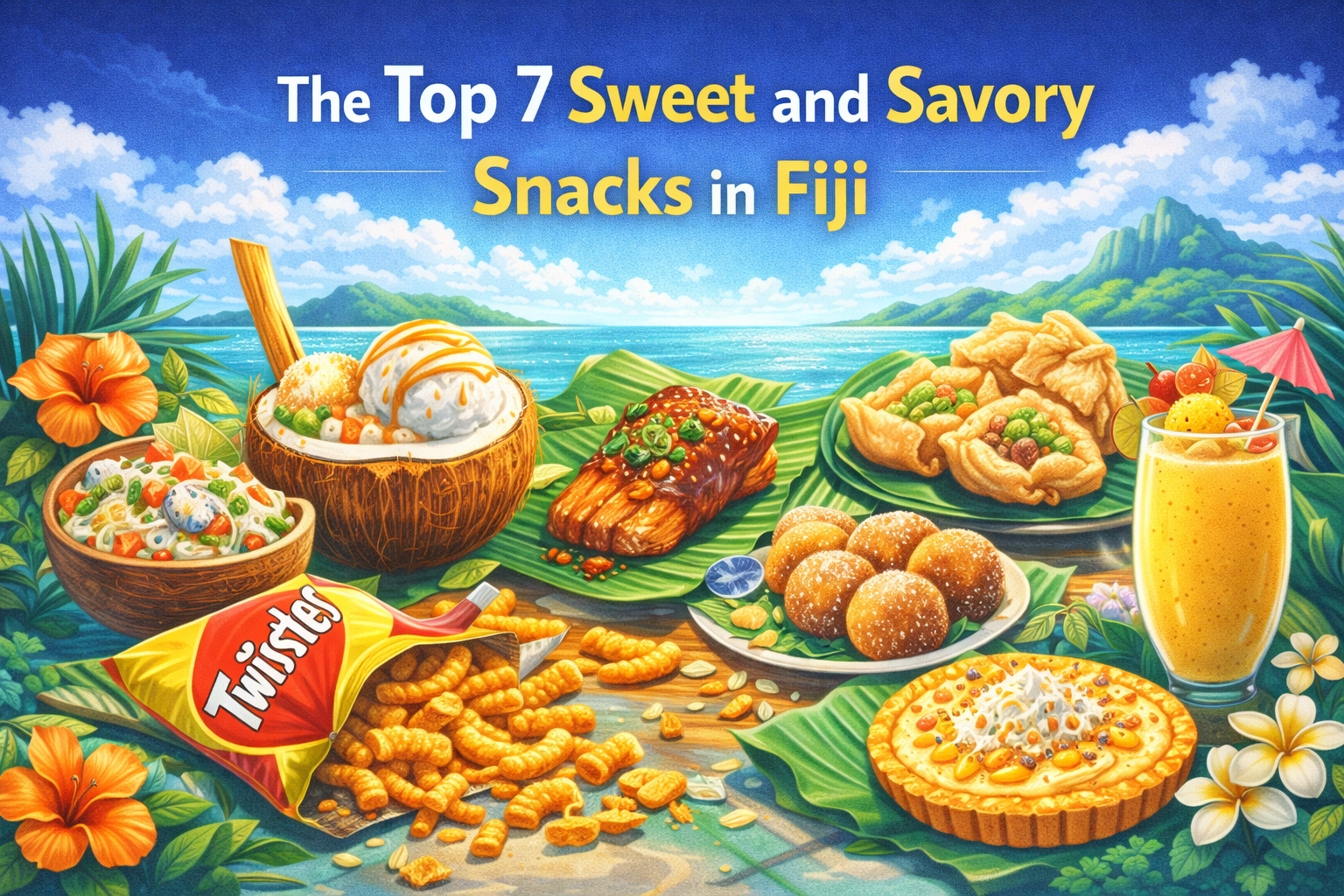
    The Top 7 Sweet and Savory Snacks in Fiji

    Look, everyone shows you the pictures of Fiji’s perfect beaches. And yeah, they’re amazing. But no one tells you about the finest part: the stuff you eat when you’re not seated. I’m referring to the items you grab from a market booth because they smell too wonderful to pass up. The real travel memories? For me, they’re standing on a street corner in Suva, trying not to drip curry on my shoes from a warm roti parcel. That’s the good stuff. Finding these snacks isn’t some complicated mission. It’s actually the easiest part of your day. Just keep your eyes open. The best food isn’t at the resort—it’s in the places where life is already happening. Follow the crowd to the local market. Pop inside a bakery that appears to have been unchanged since the 1980s. And, for goodness’ sake, pull over for that modest wooden stall by the side of the road with a few items heaped up. That is where you will find exactly what you’re looking for. Snacks in Fiji have strong roots. The foundation is simple: take what the land provides—taro, cassava, coconut. Now bring in the spices, curries, and breads from Indian traditions. These styles are combined. They created a new category of local food. This is why the snacks here are unique. They are a direct mix of island and spice. You will find this blend in every popular treat. Here are the essential ones to look for.

    1. Cassava Chips

    Forget the imported potato chips. The real snack is cassava chips. The chips are sliced thin and fried so they break with a sharp crackle. The flavor is uncomplicated—mostly just the root itself with a good hit of salt, which is what makes them so easy to eat. You buy them in a paper cone at the market. They don’t get soggy, even in the island heat. This is the crunch people actually eat here.

    2. The Legendary Roti Parcel: A Flavor Hug

    Oh, the roti parcel. The roti parcel is a common handheld meal. A warm, flat roti bread is wrapped around a serving of curry. Fillings commonly include dhal, spicy potato, or minced chicken. The vapor emitted when the parcel is opened smells like cumin and turmeric. The practical design contains the filling effectively for eating without utensils.

    3. Vakalolo: A Sweet, Sticky Tradition

    Vakalolo is often overlooked on the market since it appears to be nothing more than a basic bundle in a leaf. But it is the goal. It’s just boiling taro or cassava with coconut milk until the flavors combine to produce something entirely distinct. This dessert isn’t airy and light. It’s a hearty, sweet mouthful that lets the flavors of Fijian ingredients do the talking. A true star among the unique snacks in Fiji.

    4. Babakau: Fiji’s Answer to the Doughnut

    Calling all doughnut lovers! You have to meet Babakau. Babakau are simple fried dough rounds. The texture is their main feature—airy with a satisfying chew, and far less sweet than standard doughnuts. They’re typically enjoyed, torn apart by hand while still warm, and often dipped into a morning cup of tea. It’s a common, comforting start to the day here.

    5. The Humble Bakery Pasty: A Savory Savior

    A legacy from the British, the pasty has been totally adopted by Fiji and made its own. At any nearby bakery, look for the piles of golden-brown packages. When you bite into the flaky pastry, it breaks. There may be a basic but substantial stuffing of diced potatoes, seasoned chicken or fish, and a few peas. The combination’s capacity to offer a substantial, portable, and filling snack is responsible for its popularity as a fast lunch alternative.

    6. Coconut Balls: Pure, Simple Joy

    Sometimes you just need a little sweet bite. That’s where these come in. Just two things are needed to make mitii, or coconut balls: sugar and freshly shredded coconut. Small, sticky mounds are formed by hand rolling the material. Baking is unnecessary since the sugar and coconut oils bind naturally. They are a popular choice for a rapid energy boost due to their powerful sweetness and portability, especially during the warmer hours of the day.

    7. Fried Taro: The Earthy Crisp

    We started with a chip, let’s end with one. Compared to other root delicacies, fried taro has a distinct type of crunch. The chips have a delicate, almost lacy texture and fry extremely thin and crisp. With each bite, their distinct flavor—which is slightly earthy—is increasingly obvious. Their moderate flavor and gentle texture make them simple to consume in large numbers, according to many. A bag of these, a cold drink, and a sunset? Now that’s the good life. What’s the big deal? Why do I go on about these Snacks in Fiji so much? Because they’re more than just food. They’re a connection. That roti parcel you bought from a smiling vendor, the Vakalolo shared at a village visit—these moments stick with you. Every taste seems like a true part of the culture, and the flavors are honest and fresh. Want to find the real deal? Watch where the locals go. Early morning at the market is when you get the good stuff. See a crowd? That’s your signal. Don’t stress about the language – just point. It always works. To be honest, you haven’t truly experienced Fiji unless you’ve eaten at a market stand. That’s where the true taste lies. Do not overthink it. Just try something. The food and snacks in Fiji tell the story better than any tour guide ever could. One last thing. Bring small bills. It makes buying from market stalls and roadside carts much easier. Also, carry a thermos of water with you—some of those spicy treats are best enjoyed with a cold drink. That’s about all there is to it. Good snacks are everywhere in Fiji. You just have to be willing to stop and try them. Your stomach will figure out the rest.
  • Have You Tried the Popular Fruits in Fiji? What Makes Them So Unique?

    Have You Tried the Popular Fruits in Fiji? What Makes Them So Unique?

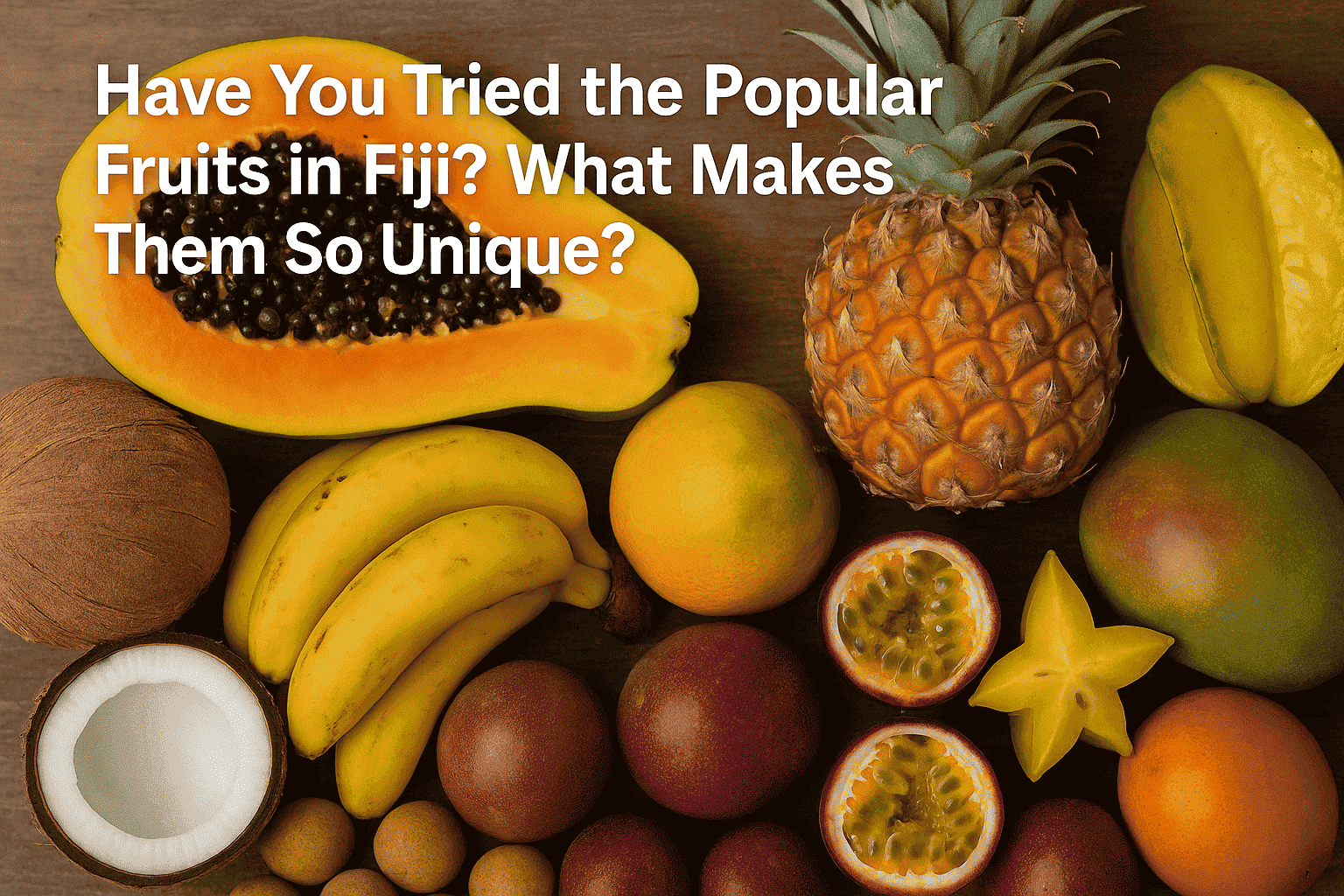
    Visitors to Fiji quickly discover a simple truth. The islands give more than simply lovely beaches. A world of diverse flavors awaits at roadside vendors and little marketplaces. A seller provides a slice of unknown fruit. The first bite reveals a taste entirely different from supermarket fruit back home. This is the authentic Fiji experience. The true essence of the islands is often found in their food. The fruits in Fiji are a central part of this discovery. They are not merely snacks. Each one provides a direct taste of the place. A Fijian mango defines tropical sweetness, its juice and flavor standing out even in a region known for fruit. This level of quality is typical for the popular fruits in Fiji, making eating them a highlight of a trip. The secret to their vibrant taste is found in the islands’ natural environment. An exploration reveals the reasons.

    It’s All in the Dirt and the Sun

    The unique quality of Fijian fruit begins with the soil. Fiji’s soil comes from volcanoes. It is rich in essential minerals for plants. The sun shines most days. It is always warm. This is what fruit needs to grow well. The fruit is picked when it is ready to eat. It is sold close by. It does not travel far. It is never put in cold storage for shipping. This means it tastes exactly how it should – like real fruit. It’s allowed to soak up every last ray of sun, developing a sweetness you can almost feel in the air. The reason that these tropical fruits of Fiji have become popular fruits in Fiji is that they don’t just taste different; they taste more: more flavor, more scent, more life.

    How Fruit Weaves Its Way into Fijian Days

    Fruit in Fiji is not merely a food item, but a constant presence in daily life. It appears in nearly every setting. Morning markets burst with activity, featuring tall stacks of papaya and bananas of various sizes, all amid the sweet smell of guava. A common gesture of welcome involves offering fresh fruit, such as a cold coconut or pineapple slice, and extending a simple and refreshing greeting. Even within upscale resorts, morning meals prominently feature displays of locally grown fruits. This deep connection means that when you try these fruits, you’re not just snacking. You’re sharing in a little piece of daily Fijian life. Ready to meet the characters in this delicious story? Here are the popular fruits in Fiji you absolutely have to get to know.

    Your Handy Guide to Fiji’s Fruit All-Stars

    Think of this as your cheat sheet for the market.

    1. Mango (Maqo):

    The king of the Fijian summer. When they’re in season, it’s a national celebration. They’re smaller, often a bit fibrous, but my goodness, the flavor is an intense, sticky, tropical punch. Eat them over the grass unless you fancy a sticky shirt for the rest of the day!

    2. Papaya (Pawpaw):

    This was my breakfast every single day. Its soft, orange flesh is subtly sweet, almost buttery. The standard way to eat papaya in Fiji is with lime. This combination makes the overall flavor brighter.

    3. Fijian Pineapple:

    This isn’t your standard supermarket pineapple. I bit into one expecting that familiar sharp tang and was blown away by pure, unadulterated sugar. It’s so sweet and low in acid that you can eat a whole lot without that prickly feeling on your tongue.

    4. Banana (Jaina):

    Forget the one variety you know. Bananas in Fiji appear in countless varieties. A perfect, natural snack for a busy day of sightseeing.

    5. Coconut (Bu):

    In Fiji, a coconut serves a direct purpose. You receive a freshly opened green coconut, providing cool water to drink and soft jelly to eat, straight from the shell. The water inside? Clean and sweet. Then you scoop out the soft jelly. It’s the real thing.

    6. Soursop (Serasera):

    Looks strange – green and spiky. But the inside is what counts. The white flesh is soft. The taste is hard to pin down. Maybe like strawberry and pineapple had a fruit. It’s strong. Good in a smoothie if you’re trying it first.

    7. Breadfruit (Uto):

    Important: don’t eat this raw. It’s not that kind of fruit. Cook it over a fire or boil it. Then it gets soft, like a fluffy potato. The flavor is plain, a bit nutty, like fresh bread. People eat it with meals instead of rice.

    Where Your Fruit Adventure Begins

    You can easily find fantastic fruit all over Fiji. Local markets offer the most authentic selection. Vendors can identify any unfamiliar fruit you point to. For a quicker stop, roadside stalls provide immediate access to fresh, sweet pineapples and coconuts. And your resort breakfast is the easiest place to start trying the local favorites. Just ask a staff member what’s good. They are usually very helpful. Fijian fruit does more than taste good—it creates a lasting impression. The unique flavors become permanently linked to the memories of where and when you tried them. The memory of trying a new fruit stays with you long after your trip is over.

    The Flavor That Stays With You

    What makes these popular fruits in Fiji so special, in the end, isn’t just the science of soil and sun. That first taste of coconut water after a hot day. The sticky, sweet mess of sharing a mango. These are the moments you take home. The flavor and the memory stick together. Long after you leave, the taste brings you right back. The flavor becomes part of the story. That’s what you actually carry home. The taste and the memory become one thing. A simple flavor can send you right back to the islands. These fruits become edible souvenirs – impossible to pack but unforgettable to carry home. The best approach is simple: choose local over familiar. Pass on the imported fruits and select something unfamiliar from a market stall. This single decision will lead to a more authentic and rewarding travel experience.
  • The Rich History behind Popular Fiji Food and Drink

    The Rich History behind Popular Fiji Food and Drink

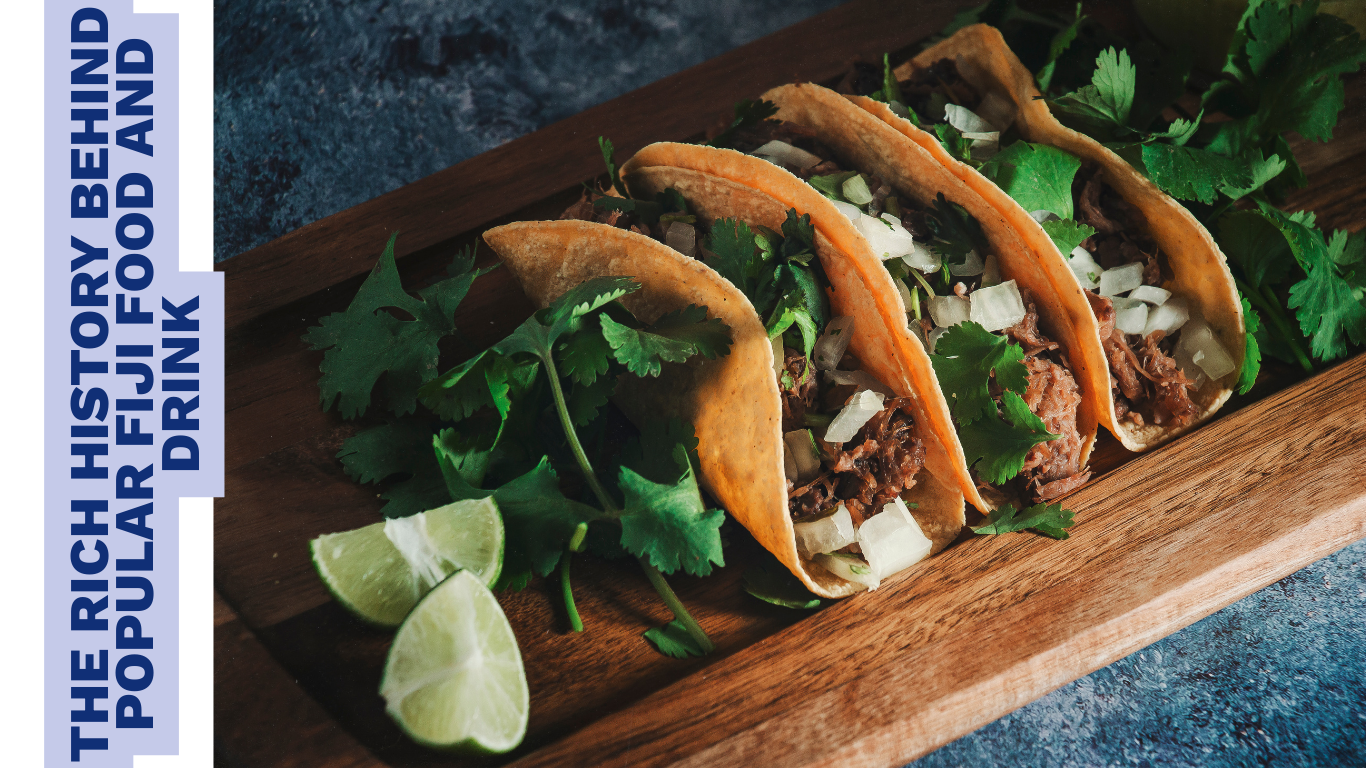
    What comes to mind when you think about food in Fiji? Fresh fish, coconut, and perhaps the well-known root beverage kava. But what if we looked more closely? What if every dish on the table represents a tale from a history book that is just waiting to be told? A resort buffet does not tell the real tale of Fijian cuisine and beverages. It simmers in pots that have been passed down through the centuries, is engraved into the landscape, and is murmured in time with the waves. The land, the ocean, and the travels of people from far and wide have all influenced this culinary legacy. To taste it is to understand Fiji itself. This isn’t just about what’s for dinner. It’s about how a meal can tell a story of survival, community, and fusion. Let’s pull up a chair and uncover the rich history behind popular Fiji food and drink.

    The Earth Oven: How the Lovo Built Community

    Imagine you are living centuries ago on these islands. There are no electric stoves, no supermarkets. Your community’s survival depends on shared resources and collective effort. This is where the lovo was born. Calling the lovo an “underground oven” doesn’t really do it justice. It was so much more than that—it was the original social network. This is where people truly connected. There’s something almost ceremonial about the whole process. First, you need to dig a pit. Then, you heat stones in a fire until they’re practically glowing. That alone can take hours. Once they’re ready, the real work starts. Everyone contributes to the creation of these tiny, steam-packed packages full of potential by wrapping meat, fish, taro, and cassava in banana leaves. To allow nature to do its slow, smoky job, those bundles are carefully put upon the hot stones, covered with additional leaves, and then buried with dirt. What comes out hours later is nothing short of incredible. The food takes on this deep, earthy flavor that you just can’t get from a gas stove or a grill. But here’s the secret—the best part wasn’t ever the food itself. It was what happened while everyone waited. The love forced people to slow down, to work together, and to talk. This was how communities celebrated big wins, comforted each other after a loss, and welcomed new family members or made peace with neighbors. The custom of gathering together has persisted. You will still experience the same thrill of anticipation as everyone assembles in anticipation of the moment they reveal the feast if you attend a lovo gathering in a hamlet today. It’s not just the meal; it’s the shared experience.

    From the Ocean: The Simple Genius of Kokoda

    Kokoda is a love letter to the sea, whereas the lovo honors the soil. This well-known treat, often called Fijian ceviche, demonstrates the creativity of early islanders. Without refrigeration, how can you preserve and enjoy the catch of the day? The answer was found in nature’s pantry. Fresh raw fish is “cooked” not by heat, but by the acidic punch of citrus juice, usually from local limes or lemons. This denatures the proteins, firming up the flesh and giving it a cured texture. Kokoda speaks of a deep understanding of the local environment. It’s a testament to making something extraordinary from a few simple, perfect ingredients. Every spoonful is a taste of the Pacific itself. It’s a perfect example of the ingenuity that defines the story of Fiji Food and Drink.

    The Roots of Survival: Taro and Cassava

    Walk through any Fijian market and you’ll see piles of strange, dusty, knobby roots. These are taro and cassava. A dependable supply of carbohydrates during hard times, these resilient crops flourished in the tropical environment and could be preserved for extended periods of time. Taro, in particular, holds a sacred place. It wasn’t just food; it was a cultural touchstone. The ability to cultivate a successful taro patch was a sign of responsibility and skill. Cassava, though a later introduction, was eagerly adopted for its similar versatility. These roots are the quiet, sturdy foundation upon which Fijian food is built. You can’t understand the history of Fiji’s Food and Drink without acknowledging these humble beginnings.

    A New Chapter: The Indian Influence on Fiji Food and Drink

    You know, if you really want to get how Fiji’s food got so good, you gotta rewind the clock. Picture this: it’s the late 1800s, and ships are pulling up with folks from India coming to work. Now, imagine leaving your home. You can’t pack much, right? But you can pack your flavors. You bring your spices. Your family recipes. That’s what they did. Like, someone’s grandma’s curry recipe met this gorgeous, sweet coconut milk that grows everywhere here. Seriously, walk through Suva or Nadi today. That smell that hits you? That’s not just any cooking smell. That’s the smell of history. It’s turmeric and mustard seeds sizzling in a pan—a sound that became the new normal. And my favorite part? The snacks. All of a sudden, you’ve got these crispy, spiced veggie fritters—bhajias—and flaky samosas being sold on street corners like they’d always been here. It stopped being “Indian food” a long time ago. Now? It’s just… Fiji food. The taste of two cultures deciding to share a kitchen and accidentally creating something entirely their own. It’s alive, you know? It’s still changing, still evolving, just like the people.

    The Drink of Connection: The Sacred Ritual of Kava

    If you really want to get Fiji, you have to understand kava. And the first thing to know is that thinking of it as just a drink is like calling a volcano just a hill. It doesn’t even come close. Kava or yaqona, as it’s known locally, is something else entirely. It’s how you show someone you honor them, and how communities have been coming together for who knows how long. And making it? That’s half the point. It’s not something you just pour from a bottle. The dried root has to be ground down into a fine powder, then added to that beautiful carved wooden bowl called the tanoa. Water is added, and the mixture is kneaded and strained through cloth until you get this cloudy, earthy-looking liquid. Then comes the serving. It’s all done with a specific rhythm. You get the coconut shell cup, the bilo. There’s a way to accept it. You’re supposed to give a single, sharp clap before you take it. Then you drink the whole thing in one go—no sipping. Every step means something. The taste is earthy, slightly numbing, and an acquired one for many. But the effect is a sense of calm relaxation and open conversation. Every significant community conversation, welcoming ritual, and reconciliation has revolved around kava for decades. It serves as the binding agent between communities. By sharing kava, you are accepted into the circle as a participant and are no longer considered a guest.

    A Sweet Ending: Tropical Abundance in Desserts

    The lush surroundings of the islands are reflected directly in Fijian sweets. Usually straightforward, they rely on the deep creaminess of coconut and the inherent sweetness of fruit. Ripe bananas cooked in sugar and coconut milk is known as vudu vakasoso, and it’s a traditional comfort dish. Cassava cake is a dense, satisfying treat that makes brilliant use of the versatile root. These aren’t complicated pastries. They are honest, heartfelt sweets that speak to a history of making the most of nature’s gifts. They are the perfect, simple ending to a story that began with an earth oven and was shaped by ocean currents and cross-cultural journeys. This progression from earthy staples to sweet treats illustrates the beautiful evolution of Fiji Food and Drink. The ongoing tale of food in Fiji is still being written. Family get-togethers, busy city eateries, and hamlet kitchens continue to tell this tale. It tells the tale of how a culture may be understood by its appreciation of communal meals, reverence for the abundance of nature, and amazing capacity to meld ancient customs with contemporary influences. You have to taste Fiji to get to know it well.
  • Exploring the Food Markets and Street Eats of Nadi

    Exploring the Food Markets and Street Eats of Nadi

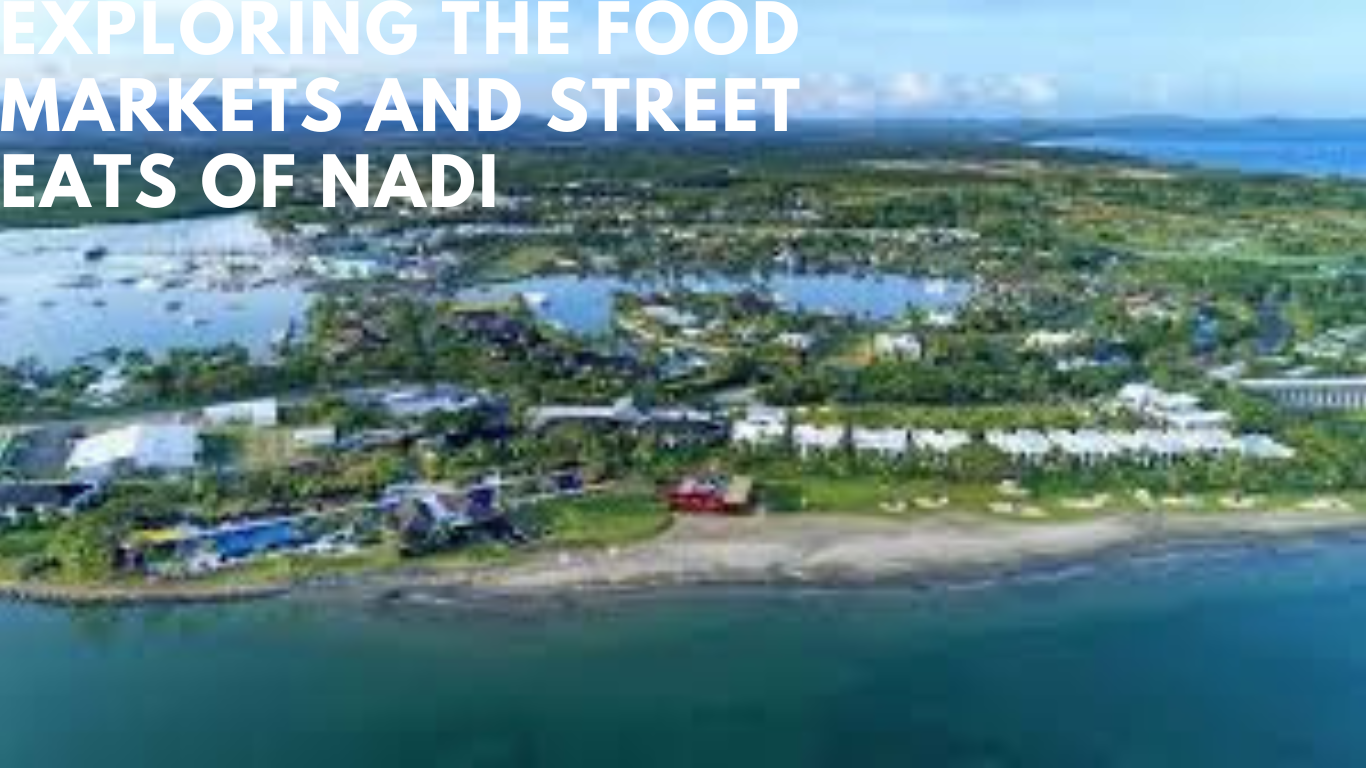
    Nadi Island Fiji is renowned for being a vibrant city in Fiji. Nadi’s population is as varied as the food they eat. Numerous ethnic groups, including indigenous Fijians, Indo-Fijians, and other Pacific civilizations, are represented in Fiji’s traditional cuisine. In addition to exquisite food, this cultural variety offers Fiji a gourmet insight into its past.

    Why Street Food and Markets?

    There is plenty to enjoy in Nadi Island, Fiji’s dynamic cuisine culture. Food vendors and the market will allow you to sample authentic Fijian cuisine. These local dishes are especially inexpensive because the majority of the cuisine is handmade, produced hot, and served directly from the kitchen.

    A glimpse at Nadi’s food culture

    Nadi is a destination where each meal is infused with history, tradition, and cultural fusion. The cuisine you can anticipate includes a healthy mix of Fijian local foods, Indian influences, and traditional Pacific Islander foods. Nadi Island Fiji, features a varied range of cuisine choices, including seafood, fruits, and spices.

    Combination of Tastes

    Like other Pacific cuisines, Fijian cuisine is a fusion of the finest regional ingredients found in Fiji. Traditional Fijian cuisine consists of local staples derived from the Fijian environment, such as fish, root crops, and coconut. It becomes a fragrant blend of spicy and sweet dishes with the addition of spices that the Indo-Fijian people introduced to the islands.

    Local and Fresh Ingredients

    The utilization of local and fresh ingredients is one of the things that makes food in Nadi, Fiji, so distinctive. Snapper and tuna, among other seafood, are likely caught from the nearby sea and used in the majority of the recipes.

    A Community-Related Thing

    In Nadi, Fiji, eating is not just a way to sate hunger but also a chance for people to have fun. Food is a social experience as most meals are consumed in groups, frequently within homes. Food, which is closely associated with eating, is essential, particularly on important occasions. One can just congregate around the kava bowl or have a full-fledged Fijian traditional dinner.

    Street Food

    Exploring the local food markets in Fiji, particularly Nadi, is still a fascinating experience, and street food is no exception. You may discover a new delectable side of the island by exploring the streets, which are lined with small, vibrant stores and carts selling varied street cuisine.

    A Fijian Delight – Kokoda

    Kokoda is perhaps one of the most popular delicacies offered on the streets of Nadi Island, Fiji. Fresh fish, such as tuna or snapper, is marinated in citrus juice and then mixed with coconut milk, tomatoes, onions, and a little chili in this Fijian ceviche dish. This is best enjoyed in warm weather and is served chilled. The fish “steams” in the lime or lemon juice, producing a delicious, delicate meal that goes well with the creamy coconut cream. You should eat kokoda if you want to sample some of the more traditional Fijian cuisine.

    Crispy and Tasty Fried Taro Chips

    For this reason, one of the most well-liked street snacks in Nadi, Fiji, is fried taro chips. Sliced raw taro root that has been fried until it is solidly crunchy is unquestionably one of the most straightforward yet enticing appetizers. While some sellers use chile or other spices, others only add a dash of salt. These chips are a great snack to have when strolling around town or while you’re at the markets. Perfect for snacking with coffee or any other beverage, or for eating while working.

    Vudi Vakasoso

    Vudi Vakasoso is a treat you should anticipate enjoying toward the conclusion of your meal if you enjoy sweet foods. This dessert, which consists of fried ripe plantains in coconut sauce, is also unique. The coconut sauce is thick and creamy, and the ripe plantains are sweet and soft. This is best enjoyed as a dessert after a meal or when you’re in the mood for something sweet while the afternoon sun burns brightly. Look for this dish at the neighborhood food vendors if you are with a group of folks who enjoy sweet foods.

    Samosa and Roti: Flavorful Street Food Mainstays

    In Nadi Island Fiji, roti and samosas are considered street food and are heavily influenced by regional Indian cuisine. Roti is a chewy, soft flatbread that pairs nicely with curries or merely chutney. Samosas, on the other hand, are fried triangles filled with meat, vegetables, or spicy potatoes. They have a deep, savory filling within and crispy outside. Whether you are a local or a visitor, they are simple meals that satisfy you quickly. You should try a roti and samosa for a tasty and filling street food experience.

    Fijian-Style Fried Fish: Crispy and Delicious

    Fried fish is another wonderful street snack available in Nadi, Fiji. Snapper is mostly fished locally and has a crisp, golden batter covering from deep frying. It is typically served with chips or coconut rice, although it is satisfying and substantial on its own. The fish is delicious, with tender meat and crispy outside. Have it with a refreshing drink.

    The Dynamic Market Environment at Nadi Island Fiji

    The experience of the open-air Nadi, Fiji local market is full of energy, closely reflecting the life of the locals. It is recommended to include it in your tour to enjoy the taste and nature of this fabulous Fijian city.

    Expectations of the Market

    You will notice a large number of merchants selling a variety of local goods when you visit the markets in Nadi, Fiji. Fresh fruits, vegetables, seafood, spices, and tropical goods will all be available at each station. It is not a food store; rather, it provides a chance to see the daily rhythms and sights of island life.

    The Fresh and Tasty Local Produce

    Some of the freshest markets you could encounter include those in Nadi, Fiji, which sell vegetables. The markets are stocked with fresh fruits as well as tropical fruits that are cultivated nearby, such as papayas, pineapples, guavas, and many more. They also contain fresh indigenous veggies that are constantly utilized in Fijian cooking, such as yam, cassava, and taro. Be sure to visit the markets if you want the freshest food possible to be used in your cooking.

    The seafood

    Naturally, you may anticipate seeing fresh fish shops in Nadi Island, Fiji, as it is a seaside location that relies largely on seafood. It is always ensured that a variety of fish, shells, and other marine delicacies will have been caught that same day. Fresh snapper, tuna, or other local seafood may occasionally be available, and as you make your way through the markets, you may enjoy the added advantage of seeing the fisherman land the catch. Now is a fantastic time to get some fresh fish to serve at the market food joint or to prepare back at your lodging. Exploring Nadi, Fiji, and sampling the cuisine, which is frequently available at food markets and street sellers, will be quite informative. Fiji’s food, from traditional dishes to tropical fruits, offers a tale about the country and its people. Nadi makes you think, whether you’re eating kokoda, snacking on crunchy fried taro chips, or simply perusing the markets. As a center of culture, Nadi Island Fiji has become a friendly and welcoming destination for anybody curious about the region. It is a dining experience that revitalizes the island’s spirit and goes beyond simple food.
  • Exploring the flavours of Fiji – A dive into Fiji Palau and other Indian Delights

    Exploring the flavours of Fiji – A dive into Fiji Palau and other Indian Delights

    Fiji is a gorgeous island country with an amazing coastal strip and mouthwatering cuisine – Indian spices as a special fundamental part of Fijian cooking make this area particularly invigorating. Indians immigrated to Fiji and among the things they carried with them was their culture of cooking food. This is how, over time, the dishes from India found ways to merge with the local food and spices and became quite distinct. Among the dishes, the most prominent one is Fiji Palau.

    What is Fiji Palau?

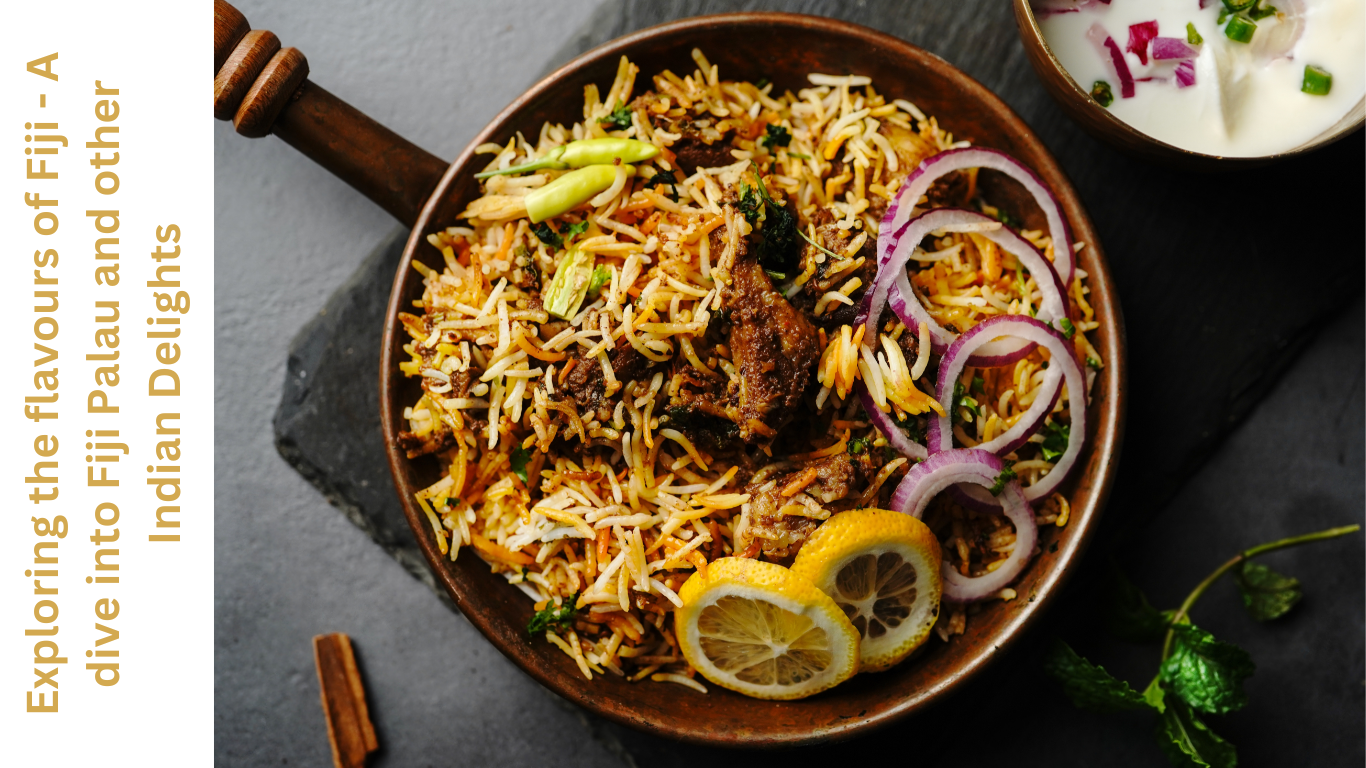
    Fiji Pulao also known as Fiji Pulao is delicious savory rice. Similar to the Indian pulao but has some measures different to suit the Fijian appetite. This is prepared from rice together with spices, vegetables and chicken or mutton. Fiji Pulao stands out because its cooking is Indian influenced but it uses local Fijian ingredients and the food has the best of both worlds – the familiar and the exotic.

    A Taste of Tradition

    Fiji Pulao is popular in special ceremonies, parties, and weddings. The spices, especially cumin, cinnamon, and cloves are more than apparent, and the smell is enough to trigger one’s appetite. It could be a wedding, or a religious feast and can also be a simple family dinner for Fiji Pulao people gather around the table to enjoy this special dish, its flavours are quite comforting while its texture is warm. It is a dish that reflects cultural diversity, preserving the families’ and generations’ recipes, and the effort that is put into preparing the food with affection.

    Ingredients of Fiji Pulao

    Rice

    Indian food often uses rice, especially basmati rice. It has a mild taste that goes well with spices. To keep the rice fluffy and not sticky, it is washed and soaked before cooking.

    Chicken

    Chicken is used as the main meat ingredient in Fiji Palau recipes because not only does it contribute taste it also lends fibre to the meal. The chicken pieces are normally spiced and marinated and this means that the spices get weaved into the tissues of the chicken. The chicken also gets soft and moist as it is cooked and combined well with the rice and spices.

    Spices

    Spices are the ones that make Fiji Pulao taste special. The dish typically includes a mix of traditional Indian spices such as:
    • Cumin Seeds: Makes it a bit sweet, with an earthy spicy undertone.
    • Cinnamon Stick: Gives the dish a sweet-spicy smell when added to it.
    • Star Anise: It also gives a hint of liquorice-like flavour.
    • Curry Leaves: It has mild bitterness that can be new to the palate giving the food preparing it a unique taste.
    • Pulao Masala: Particular for making pulao rice to enhance the taste and flavours of the rice.

    Aromatic Ingredients – Intensifying the taste of food.

    In addition to the spices, Fiji Pulao features a variety of aromatic ingredients that elevate the dish:
    • Onions: Severed and well caramelised to bring sweetness to the dish.
    • Garlic and Ginger: It is crushed and used in sautéing to make a powerfully aromatic dish.
    • Chili Peppers: Enhances heat to the food and brings some colour to the dish.
    • Cilantro: These are used in preparation of the whole dish and the freshly chopped cilantro leaves are also used as seasoning to give the dish an extra feel of wetness.
    • Ghee: This cuisine makes use of clarified butter known as ghee frequently in Fiji Palau to enrich the flavour. Besides the addition of buttery flavour, it is useful to cook spices because doing so helps to bring out the full flavour of spices.

    Variations of Fiji Pulao

    Fiji Pulao is a very popular dish prepared according to the classic recipe, there are many variations of it. These slight differences enable chefs to come up with slight differences and new ideas making the dish unique.

    Vegetarian Fiji Pulao

    This variation of the Fiji Palau is perhaps one of the most frequent where people take out beef or any type of meat to make it vegetarian. In place of chicken or meat, they add peas, carrots, potatoes, and bell peppers. The spices retained are the same but the addition of vegetables provides a new and stunning twist of colour. This variation is especially suitable for people who want to take more plant-based meals, or if one wants to include a vegetarian dish in a function.

    Seafood Fiji Pulao

    Since Fiji has a strong link with the sea, it is not strange that Fiji Pulao has seafood versions as well. This variation can be prawns, fish or even a mix of two or more kinds of seafood. Fish give this recipe an additional taste that complements the beautiful aroma of the spices and rice. This variant is commonly consumed in regions close to the seaside and incorporates the features of seafood into the stew.

    Spicy Fiji Pulao

    Now for all the chili lovers there is Fiji Palau hot & spicy. This variation increases the number of chilli peppers and hot spices in the foods.

    Other Indian Delights

    Curries: Fijian-Indian food always has curry, which mixes Fijian and Indian flavors. Curries are very popular among Fijian Indians, and you’d rarely find a Fijian-Indian home without one.

    Roti:

    This is a very tender and circular bread called chapati. Eaten almost every day in most homes, roti is prepared from very basic ingredients such as flour, water and oil. It is a staple food and can be eaten with almost all types of dishes, hence is a major component of Fijian Indian meals.

    Samosas

    Fijians have also embraced this dish called the samosas which dominate the markets as a snack. These are thin-layered breads that are fried and stuffed with spiced potatoes and both the green and pulled-apart pieces of peas and, for some Indian specialities like Chicken Tikka Masala, with meat. These are usually taken as a snack or appetizer and are famous during celebrations and festivals. Samosas are a favourite because of the crispy coat outside the pastry and the tasty and suiting filling inside it.

    Barfi

    This is a well-known sweet dish of the Indian subcontinent, consisting of thickened milk and sugar with the addition of spices, mainly cardamom, and toppings of nuts. Barfi is available in Fiji in different types including milk barfi, coconut barfi, and mango barfi among others. These sweets are prepared mostly during celebrations such as Diwali and they are popular because of the softness in their texture. Fiji Palau, curries, roti, samosas, bhajia, and barfi strongly demonstrate the contemporaneous generation of rich culinary tradition. While such foods make people happy, they also act as a signal of the cultures which Fijian-Indians share with the rest of the globe. When it comes to the world’s food and cuisine, Fiji offers an extremely rich taste, which represents the rich and diverse population of this beautiful country. The food of Fiji narrates a story of tradition, community, and the unbreakable bond between India and the South Pacific through spices used in Fijian dishes such as Fiji Pulao and sweets like barfi.
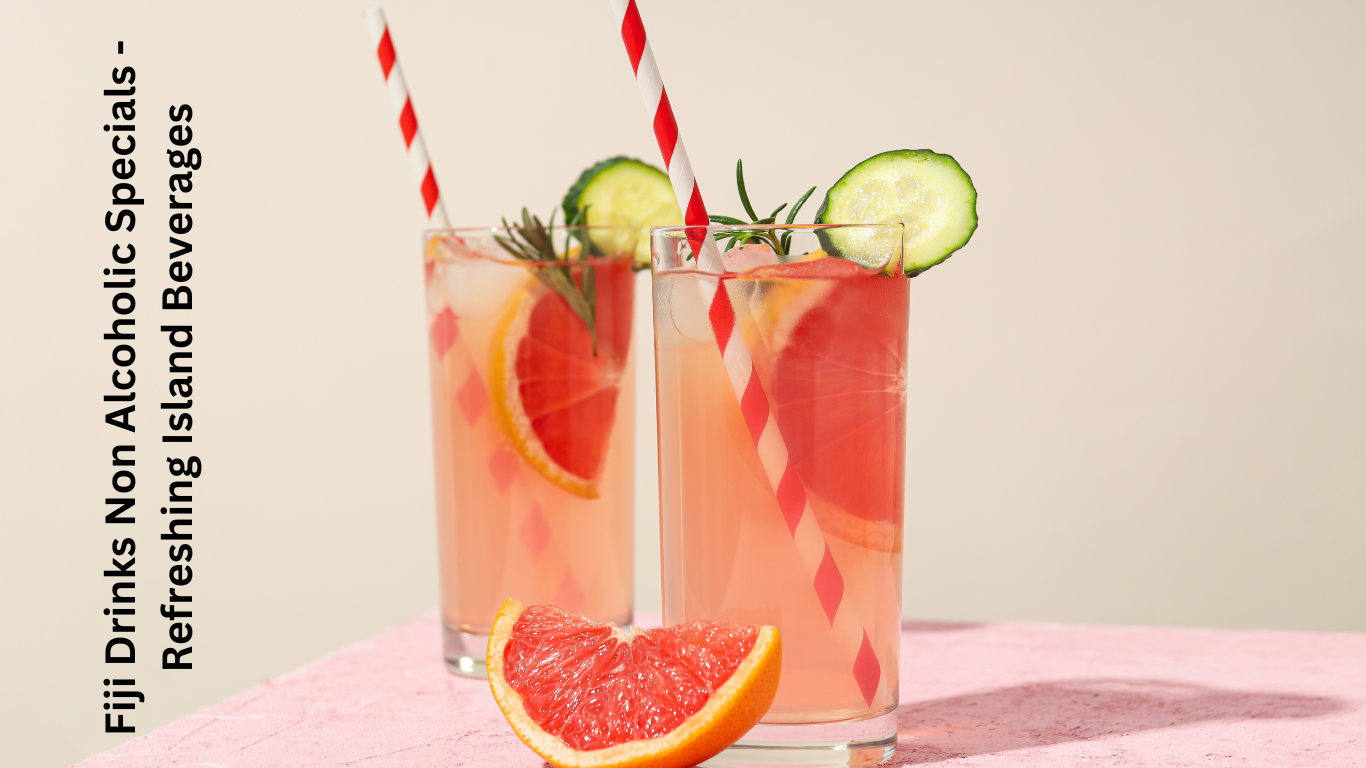
  • Fiji Drinks Non Alcoholic Specials – Refreshing Island Beverages

    Fiji Drinks Non Alcoholic Specials – Refreshing Island Beverages

    Do you know that there are many nice and good tasting Non-alcoholic beverages in Fiji? Let’s dive into the article to discover the fascinating possibility of Fiji drinks non alcoholic. Everybody should enjoy these drinks! Mingling with the Fijian people, you may find that they celebrate through the intake of non-alcoholic beverages. It is consumed by people of all ages and is mostly prepared using fresh goods within the region. These drinks are useful in maintaining body temperatures and ensuring you get enough water in the hot Tropical regions. The Reasons Why You Should Consider Drinking Non Alcoholic Fijian Drinks
    • Refreshing: Great for a hot summer day for sure.
    • Healthy: Prepared as natural syrups that are obtained from fruits and herbs etc.
    • Delicious: The flavours are rich with an interesting array of different tastes.

    The Essence of Fiji Drinks Non Alcoholic

    The most outstanding aspect of Fiji is that most of the non-alcoholic drinks are natural with a rich content of fresh fruits and other natural products. The tropical fruits that grow abundantly in the area include pineapples, coconuts and mangos among others that are freely available in the Fiji islands. These fruits are usually harvested directly from the trees and help in the preparation of tasty foods, especially drinks. These are quite healthy drinks since they are prepared using fresh fruits and this gives them a natural and fresh feeling. Fiji drinks Non Alcoholic are delicious and healthy to take, they will make you enjoy your feast. Be it fruits, alcoholic or non-alcoholic beverages prepared from different tropical fruits in Fiji, they are known to contain important ingredients such as vitamin C which can enhance a person’s immunity level.

    Cultural Significance

    In Fiji, consumption of carbonated and non-alcoholic beverages can be much more than a simple intake of fluids. It seems to be a method to communicate with the culture of the location. Some of these beverages are consumed during key events in communities and among families, including weddings and other festive occasions.

    Variety of Flavors

    Fiji non-alcoholic drinks have a variety of flavours. Below are some fruits that are most commonly used in drinks that are sweet, sour, creamy, or spicy. Pineapple: Tasty tangy fruit that is excellent for juice, a must-have. Coconut: Milky in texture; utilized as an essential component of most drinks. Mango: Sweet and delicious, enhancing any beverage with a hint of the tropics. Lemon: This fruit is both tangy and fresh; it makes for a great combination when one wants to add some zest.

    Traditional Fijian Non Alcoholic Beverages

    The things that Fiji is mostly associated with are the wonderful gorgeous islands and native people and their traditions. An equally significant aspect which we can consider today as the hallmark of their culture is the type of traditional Fiji drinks non alcoholic.

    Kava

    This drink is very special in Fiji, thus it is used mostly in local ceremonies and other social functions. In the preparation of kava, the root is dried and then pulverized to a fine powder. Its powdery form is then mixed with water and the drink is filtered to make it suitable for consumption. It has a really specific, rather earthen flavour.

    Fresh Coconut Water

    Coconut water is one of the most commonly consumed non-alcoholic drinks in Fijian islands. It is derived from within the tender coconut in its natural state of clear liquid form.

    Lemon Leaf Tea

    This is a hot drink of Fiji, it is made from the leaves of the lemon tree and it is known as lemon leaf tea. It has a citrusy taste and feels very soothing. At times, people add a little sugar or honey to it to make the tea a little less bitter. The beverage is also taken in the evening as an herb that acts as a way to calm one down.

    Mango Refreshment

    Ripe mangoes are used to make the sweet juice, which tastes best served cold. Additionally, high in vitamins A and C, mango juice has fibre that helps with bowel motions. One can eat this fruit alone or mix it with other fruit juices or herbs.

    Juice of papaya

    Made from fresh papayas, papaya juice tastes delicious and sweet. Together with other important digestive enzymes, it includes vitamins A and C. One can drink papaya juice straight or mixed with other fruits that are common in tropical regions.

    Fiji Drinks Non Alcoholic – Cocktails and Mocktails

    Virgin Colada

    Without the alcohol, Virgin Piña Colada is identical to the traditional “cocktail” beverage. Packed with ice, coconut cream, and pineapple juice, it’s an easy-to-make beverage ideal for hot summer days.

    Coconut Mojito

    One of the tasty mocktails made with coconut and mint and with little alcohol.

    Blend of Tropical Fruits

    One kind of punch appropriate for drinking on special occasions. To improve the taste, several fruit liquids are combined to make the drink.

    Mocktail of mango daiquiri

    It’s a non alcoholic drink that tastes tantalisingly of lime and mango. It is a drink devoid of alcohol, made from the combination of the daiquiri.

    Pineapple and coconut fizz

    Especially with the addition of vibrant and entertaining toppings, this specific recipe is another cool fruity beverage that will undoubtedly appeal to all! The taste of the two tropical fruits, pineapple and coconut, is combined with hydrogenated fizz in this non-alcoholic beverage.

    Watermelon Cooler

    A refreshing beverage that mostly consists of fresh watermelon. Best enjoyed in summer. Fiji Drinks Non alcoholic – The idea behind mocktails and non-alcoholic cocktails is a terrific way to savour tasty and revitalising mixes. The former are well-known to be delicious and easily made by anyone in the convenience of their own house. Every occasion has a great no-alcohol drink, from Coconut and Pineapple Fizz in a flute to Virgin Piña Colada in a tall glass. Fiji has a wide range of nonalcoholic drinks that are equally enticing and refreshing. Fiji can be felt and tasted in every glass – is crafted from natural, local Fijian ingredients to offer the true representations of the Fijian environment. That means if you are a tourist who desires to taste the Fijian culture you can enjoy the tropical fruits of Fiji with their non-alcoholic drinks.