Category: Marine Life in Fiji

  • Who Should Try the Shark Diving Fiji Experience?

    Who Should Try the Shark Diving Fiji Experience?

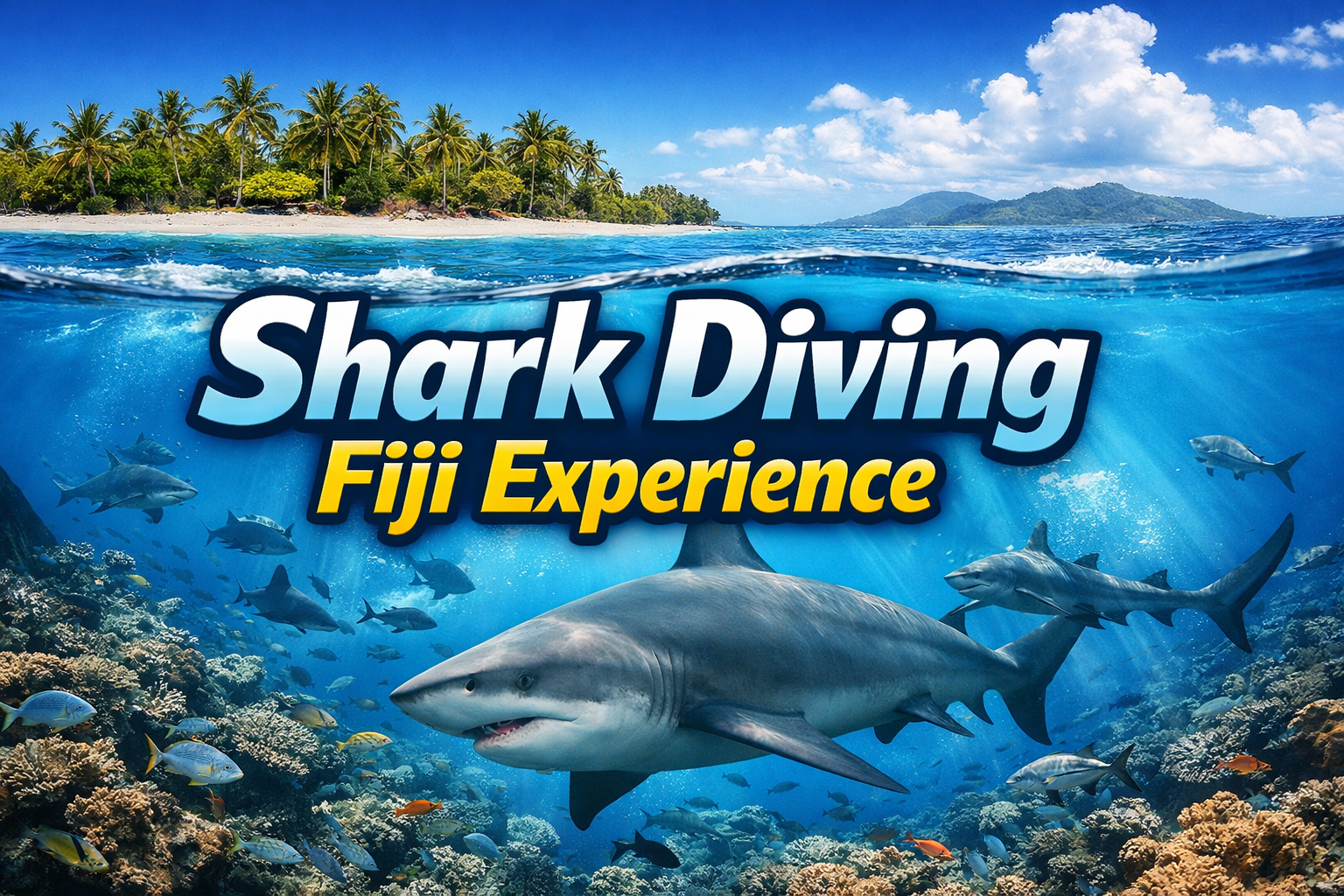
    So here’s how it usually goes. You book it, just like that. Maybe you’re up late looking at Fiji photos. Or a friend says, “Let’s go,” and you don’t want to be the one who says no. And for a minute, it feels cool. You feel brave. Then the night before hits. And you’re like… wait. What did I just sign up for? That excitement? Yeah. That wasn’t excitement. That was something else pretending to be excitement. Anyway. That feeling is normal. Let us tell you what actually happens. Not the pretty version. Just the real one. From the moment you get there to the moment you’re back on the boat, going “huh.” So what is the shark diving in Fiji experience actually like for someone who’s never done it?

    The Build-Up: Before You Even Get in the Water

    The morning of the dive starts earlier than you want it to. There’s coffee, some nervous small talk with other people at the dive shop, and a lot of checking your gear even though you already checked it twice. The boat ride is where it gets real. The water changes color as you leave the shore. Someone points at a bird. Someone else laughs too loudly. You can tell who’s done this before. The ones who haven’t are quiet. Just staring at the water. You reach the site. The instructors gather everyone. They don’t try to hype you up. No music. No big speech. That would make it worse. They talk calmly. They tell you where the sharks come from. How close they get. What to do. Mostly, they just say stay low, don’t move, and breathe. That last part sounds simple. It’s not. But hearing someone say it out loud helps a little. That’s the start of the shark diving in Fiji.

    First Glimpse: Entering the Water

    Getting in the water is the hardest bit. Nothing’s happening yet, but your body doesn’t know that. Your heart just starts going. The spot is usually near a reef or a channel. Nothing too deep. Maybe thirty or forty feet down. Not enough to hurt your ears, but enough that the surface feels far away. Then something changes. The water is more transparent than you anticipated. There’s a gentle blue shine around everything. Fish swim past you like you’re just another rock. And the noise in your head starts going away. All you hear is your own breathing through the regulator. In and out. In and out. It’s kind of calming, actually. You find a spot on the bottom. Sandy patch or behind some rocks. The guides put everyone in a loose circle. And for a minute or two, nothing happens. Just water and bubbles and some small fish looking at you. You came for the sharks diving experience and have heard of shark attacks in Fiji. So where are they? Which is dumb because that’s why you’re here. But waiting just messes with your head. Then someone points.

    The Sharks: What It Really Feels Like

    This is what the shark diving Fiji experience really looks like. They don’t show up like a movie. No music. No big moment. One second, the water is empty. Then there’s a shape. Just a shadow. Then a fin. Then the whole shark just glides past like it doesn’t care you’re there. Here’s the thing that got me. They don’t care about you. Not in a mean way. They just have other stuff going on. They swim along the reef. They circle back toward the guides who have a little bit of fish. Nothing bloody or gross. Just enough to keep the sharks around. And the sharks just do their thing. The first time one gets close, your stomach feels weird. Not scared exactly. More like your brain is trying to catch up, that’s a shark. A real one. And you’re right there. But then you watch for a few more seconds. And something happens. You calm down. You might see a bunch of them. On a good day, there could be several bull sharks circling around. Plus some smaller reef sharks that are more curious. They don’t crowd you. They don’t bump into you. It’s actually kind of organized. Even peaceful. You don’t really feel panic. Not after the first minute anyway. The waiting is worse than the actual thing. That’s the honest truth. Once you’re down there and you see the guides know what they’re doing, your body figures out pretty quickly that nothing bad is going to happen. It’s just a weird Tuesday. That’s the shark diving Fiji experience. Not what you expected, right?

    Safety, Without Making It Sound Like a Lecture

    The guides think about that, so you don’t have to. Every site used for a Fiji shark dive has been visited thousands of times. The operators know the shark behavior in that specific location. They know which individuals are more confident and which hang back. They’ve done this long enough to read the water in ways you can’t learn from a manual. You’re never alone down there. There are always instructors positioned between you and the main activity zone. They carry no weapons or anything dramatic—just experience and calm authority. If a shark gets too close for comfort (which rarely happens), they gently redirect it. No yelling. No stabbing. Just a soft push with a metal pole if needed. Most people come up from the dive surprised by how undramatic the safety side felt. No heroics. No close calls. Just professionals doing a job they’ve done a thousand times. That’s what makes the experience of shark or bull shark diving Fiji feel safer than you’d think.

    After the Dive: The Part No One Talks About

    Something odd occurs back on the boat. People sit for a minute just staring at the water. Someone laughs nervously. Someone else asks, “Did that really just happen?” And then the stories start. Did you see the big one? It came right toward me. No, toward me. Everyone saw something slightly different. But there’s more going on behind all that chatter. Your brain told you not to do what you just did for years. Nothing bad happened. You watched wild sharks. They let you stay in their world for a while. That’s part of the shark diving Fiji experience? No one warns you about it. That feeling doesn’t go away fast. Hours later, you’re back on land. You catch yourself smiling. No reason. You want to tell someone. But the words don’t come out correctly. It was just discovering you were afraid of something that wasn’t there.

    Who This Experience Is Actually For

    This isn’t just for expert divers. Or adrenaline junkies. Honestly, it works really well for curious beginners. People who want to push their comfort zone a little. Don’t jump off a cliff. This is doable if you are comfortable with open water and can follow easy directions. You don’t need perfect control or advanced certifications. The guides put you in a spot that makes everything easier. But I’ll be honest. If deep water truly terrifies you. Not just make you nervous. Actually terrifies you. Then this might not be the right fit.

    So what can you actually expect from the shark diving Fiji experience?

    You can expect to feel nervous on the boat. You can expect your heart to pound when you first see a fin in the water. You can expect to grip something too tightly and question your life choices for about ninety seconds. And then you can expect all of that to fade. Replaced by something quieter. A sense that maybe you misunderstood these animals your whole life. A sense that maybe you’re braver than you gave yourself credit for. That’s the part nobody puts on the brochure. But it’s the part that stays with you.
  • Are You Ready to Meet the Giants of Marine Life in Fiji?

    Are You Ready to Meet the Giants of Marine Life in Fiji?

    Let us get one thing straight right now. Fiji’s ocean is not an aquarium where creatures follow a routine. It’s a real, breathing planet where enormous creatures go about their everyday existence. You are the visitor here. The guest. And what incredible hosts await beneath those famous blue waves. Imagine yourself floating there and gazing down at a vibrant coral reef. Then something shifts. The small fish scatter. A shadow falls across the reef that’s way too big to be ordinary. You suddenly realize that you are no longer the biggest object in this ocean when your heart makes that amusing little skip.

    What Makes Fiji’s Waters So Special?

    Food and shelter are the two key reasons Fiji’s seas are perfect. The entire ecosystem is fed from the bottom up by the constant influx of plankton and tiny fish brought in by the ocean currents. Concurrently, the complex undersea structure is formed by the coral reefs. This gives larger animals places to hide, hunt, and reproduce safely. It’s this combination that allows incredible marine life in Fiji to not just visit, but to truly thrive here. But here’s the real secret: Fijians take ocean protection seriously. They understand that healthy waters mean healthy animals. Those marine protected areas aren’t just lines on a map – they’re working conservation zones where fish populations can thrive without pressure. This careful balance is why your chances of encountering giants here are better than almost anywhere else.

    Finding These Creatures Takes Some Know-How

    You’ve got two choices for meeting the giants that define the marine life in Fiji. You can go it alone, or you can tap into local knowledge. Let me be direct – option two works better every single time. Local guides don’t just know where the animals are. They understand their routines, behaviors, and preferred hangouts. They understand that manta rays visit particular coral heads at various times of day to clean. They recognize the water conditions that bring whale sharks close to shore. This isn’t guesswork – it’s generations of observation and respect for the ocean. Float still. Watch carefully. So, how do you pick a good guide? It is simpler than you think. Look for small groups. A boat with fewer people is always better. Ask them what their rules are for interacting with the animals. A good guide will talk about keeping a distance. They will explain why they do not feed the wildlife. You can also read recent reviews online. Other travelers will often mention if a guide was respectful to the ocean or if they rushed the experience. This little bit of research makes a big difference. It helps you find someone who will give you a better, more genuine encounter.

    Meet the Residents You’ll Never Forget

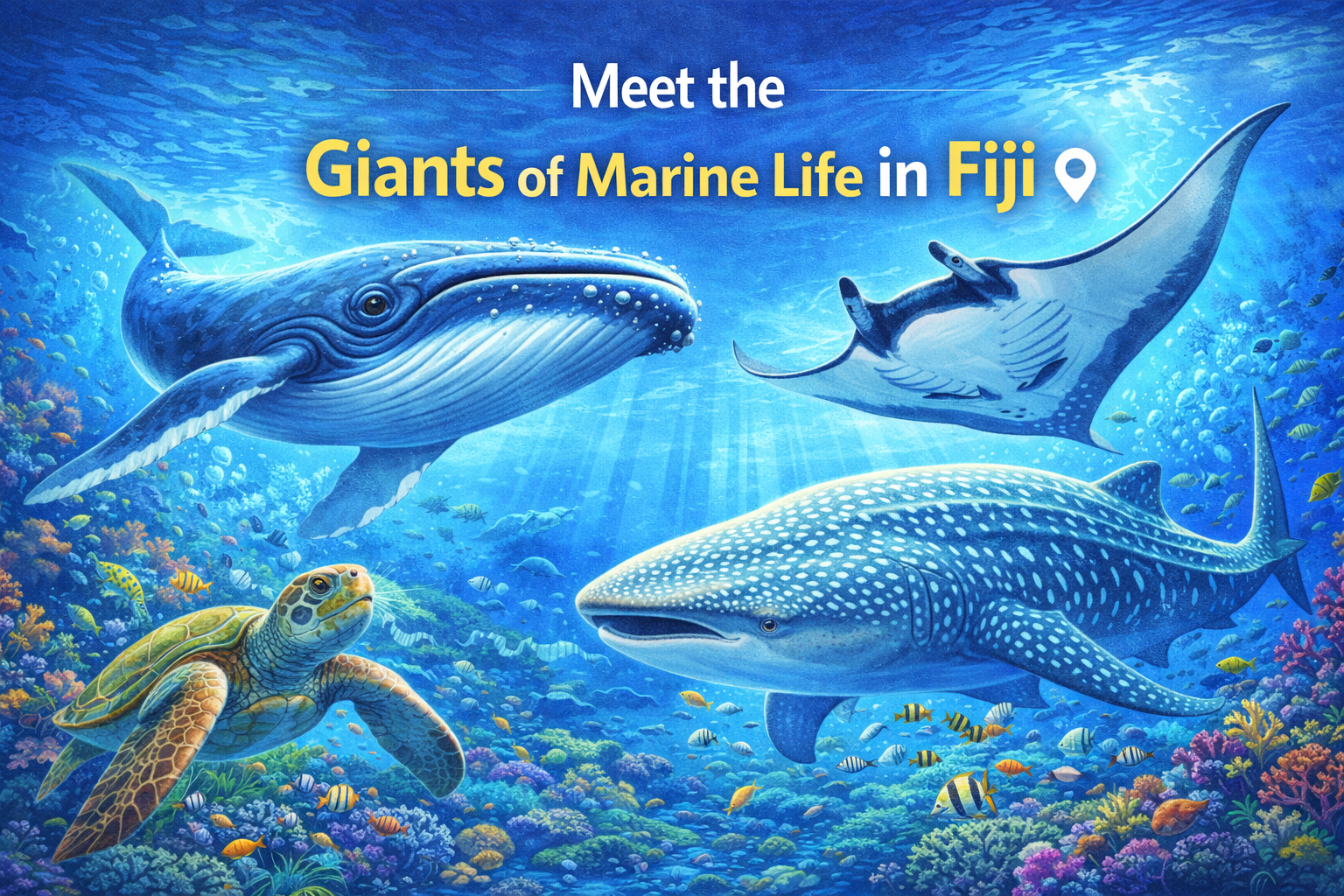
    Now for the main event – the legendary giants of the marine life in Fiji. The whale sharks come first. The elegance with which these speckled giants glide through the water seems unattainable for anything of their size. Although they are filter feeders and pose no threat to people, swimming beside one is both exhilarating and serene. It’s similar to having an audience with underwater kings and queens. You will also witness manta rays. They don’t truly swim; they fly across the water. Their large, black wings propel them along so effortlessly that it appears easy. They stop at certain spots on the reef to get cleaned by smaller fish. It’s a quiet thing to watch. It feels old. Come July, the whales show up. These humpbacks travel to Fiji to give birth in our protected waters. You might see a mother and calf swimming together. But nothing prepares you for seeing a giant whale throw its whole body into the air. The crash when it hits the water again is like nothing else you’ve ever heard. The crash is incredibly loud. It shows you how strong nature really is. And don’t forget the regulars—the fish that live here all year. Then there are the locals. A bold, blue Napoleon wrasse will often come right up to your face. Sea turtles paddle past, never rushing. You’ll see reef sharks too. They’re not risky. They simply swim back and forth, doing their own business. They belong here and are simply going about their day.

    How Not to Be “That Tourist”

    Listen carefully, because this matters. These are wild animals, not photo props. Your behavior in their home reflects on all of us who love the ocean. Allow the animals their room. Here’s a decent rule: if the animal behaves differently because you’re around, you’re too near. It might swim off or stop eating. Do not follow it. Do not reach for it. You are a guest watching from the sidelines, not someone who gets to join in. Watch your fins. Coral isn’t rock – it’s a living animal that takes years to grow. One wrong kick can break the coral. It grows very slowly. Please watch where you put your fins. Your guide knows this water better than anyone. Your guide isn’t being difficult. Keeping you safe and keeping the animals safe are their two main priorities.  Their rules come from experience and respect.

    Why This Experience Changes People

    There’s something about looking a giant in the eye that stays with you. It’s not just a vacation memory – it’s a perspective shift. You finally understand that the magnificent marine life in Fiji is real and thriving. Some moments stick. Like locking eyes with a manta ray. Or being close enough to a whale shark to trace its spot pattern with your finger. That feeling stays with you. It’s why people keep coming back to Fiji, hoping to see these giant animals again. The boats are ready. The water’s waiting. Just walk into the water from the beach. The real magic is right below you. Your giant is out there. The only question is – are you ready to meet it?
  • Shark Attacks in Fiji – What you should know about the myth and the truth

    Shark Attacks in Fiji – What you should know about the myth and the truth

    Fiji is renowned for its sand and ocean waters at beautiful beaches, together with vivid sea animals. Among all ocean dwellers, Fiji sharks generate the most fascination and fear among people. For multiple years, people have misconstrued sharks as threatening predators through widespread myths depicting sharks as killers who devour humans.

    Fiji Sharks – A Fascinating Part of the Ocean

    Sharks are an important element in sustaining Fiji’s oceanic ecosystems. The underwater environment of Fiji operates best when sharks maintain their essential role in environmental equilibrium. Instead of being indiscriminate killers, these animals demonstrate their hunting abilities while preventing fish overpopulation and maintaining coral reefs. Though sharks maintain a vital position in the ocean ecosystem they face extensive fear from human society which believes that shark attacks regularly occur in Fiji. But is that the case? The risk of shark attacks in Fiji remains exceptionally minimal throughout the year. The ocean activities of snorkeling diving and swimming are recognized as completely safe in Fiji. Fiji has sharks in its waters yet the dangerous species are extremely limited since most shark populations are nonthreatening to human beings. Shark attacks tend to occur randomly when predators confuse human beings with their natural food targets.

    The Diversity of Fiji Sharks – Key Species You Should Know

    A wide array of sharks inhabits the Fijian waters where each species has distinct traits. The existence of Fiji sharks promotes ecological stability because they serve as vital components that regulate food chain relationships in ocean environments. The majority of sharks dwelling in Fijian waters present no threat to human beings.
    1. Blacktip Reef Shark

    This shark can be distinguished through black markings at the fin tips. It avoids humans and instead eats small fish and crustaceans.
    • Dimensions: 1.6 meters or about (5.2 feet).
    • Food: Invertebrates, crabs, and small fish
    • Behavior: Shy and not dangerous to humans
    1. Grey Reef Shark

    Grey reef sharks can regularly be found in the Fijian reef environment. They are bigger in size compared to blacktip reef sharks. Frequent visitors of deeper waters but they sometimes swim near the shallow waters. The large body of grey reef sharks conceals a peaceful nature which causes them to stay away from humans.
    • Size: Up to 2.5 meters (8.2 feet)
    • Diet: Fish and squid
    • Behaviour: Curious but not aggressive
    1. Whitetip Reef Shark

    They are commonly seen in shallow coastal waters. These sharks mostly prey at night. People are not in danger from this species; they may swim about reef areas without causing harm to anyone.
    • Dimensions: Up to five feet, or 1.5 meters
    • Food: Crustaceans, octopuses, and small fish
    1. Hammerhead Shark

    The hammer-shaped head of this shark allows it to locate prey in deep waters as it detects and captures fish along with squid near the sea floor. The hammerhead sharks are generally not aggressive towards human beings.
    • Size: Up to 6 meters (20 feet)
    • Diet: Larger fish, squid, and rays
    • Behavior: They exhibit non-aggressive behavior but may exhibit territorial behavior patterns.
    1. Tiger Shark

    The tiger shark stands out as Fiji’s biggest shark as this species shows clear tiger-stripe markings that make it unique. Tiger sharks possess a strong reputation as dangerous animals because of their dimensions and muscular strength yet they rarely come in contact with humans. Tiger sharks inhabit the deeper regions of open ocean spaces instead of sticking close to coastal areas.
    • Size: Up to 5 meters (16.5 feet)
    • Diet: This shark species survives by feeding on fish along with seals and sea turtles as well as other prey types.
    • Behaviour: Solitary Hunters, avoid humans and hunt independently.
    1. Bull Shark

    The waters of Fiji contain the dangerous bull shark which has earned a notorious aggressive status because of its size. The tough reputation of bull sharks yet they seldom occupy areas near the shallow reef and prefer deeper aquatic environments. Bull sharks spend their time between saltwater and freshwater but manage to evade most human interactions.
    • Size: Up to 3.5 meters (11.5 feet)
    • Diet: Fish, dolphins together with other sharks make up their diet
    • Behavior: Territorial behavior instead of aggression.

    Why These Sharks Aren’t a Threat to You?

    The large and fierce appearance of specific shark species in Fiji can be frightening yet they do not view humans as their prey. Sharks that live in Fijian waters mostly eat small marine animals and fish while remaining uninterested in human interaction. Most shark species present in Fiji show curiosity towards humans resulting in short exchanges that present no threat. Those who want to experience Fiji’s ocean waters need to show proper respect for the marine animals and their habitat. Your appreciation for island predators will grow through understanding how sharks in Fiji behave which enables you to fully experience all that Fiji has to offer you.

    Myth vs. Reality: Debunking Shark Attack Misconceptions in Fiji

    The media tends to present sharks as frightening predators who continuously hide in water spaces only to attack humans although most people do not face dangers from these ocean creatures.

    Myth 1: Shark Attacks Happen Regularly in Fiji

    People believe Fiji sharks represent a severe threat while shark attacks occur exceptionally rarely throughout the entire archipelago. Research shows the occurrence of shark attacks Fiji stands at an extremely minimal rate. The clear waters along with beautiful coral reefs in Fiji make up a marine habitat home to many species including various types of sharks. The probability of encountering a shark attack during your stay in Fiji stands at a minimal level. The natural diet of sharks consists primarily of fish together with other marine animals.

    Myth 2: All Sharks in Fiji Are Dangerous

    People widely believe that every shark present in Fiji poses a threat to human life. Multiple shark species live throughout Fiji but most sharks in this region maintain peaceful behavior toward human divers which means they present no threat to human beings. The modest population of blacktip reef sharks along with whitetip reef sharks consider humans irrelevant to their existence because they show natural shyness and prefer avoiding interactions. Research shows that most sharks inhabiting Fiji waters exist without endangering human beings. The natural tendency of these sharks is to stay away from human contact rather than approach it.

    Myth 3: Shark Attacks Are Unprovoked

    Shark attacks occur rarely in the real world because sharks naturally choose to stay away from human beings. It is usually mistaken identity that leads to shark attacks. When a shark comes upon a weird object in its habitat it will explore it through biting. After sharks understand that their target does not match their diet they depart. An actual shark attack rare in occurrence primarily results from sharks mistakenly assaulting an object. Sharks maintain an indifferent relationship toward humans by failing to pursue them as prey.

    Myth 4: Shark Attacks Are Deadly

    The misconception about shark attacks leading to death at every instance does not align with factual data. Most sharks in Fiji do not present enough aggression to create serious injuries to humans. Small non-aggressive shark species that inhabit Fijian waters usually have bites that do not prove fatal. The medical treatment after a shark bite allows most individuals to recover completely. Most shark attacks on humans result in survival without any mortal consequences. Sharks throughout Fiji will generally avoid coming into contact with human beings.

    Myth 5: Swimming in Fiji’s Waters Is Dangerous Due to Sharks

    Fears of shark encounters make certain vacationers wary about swimming in Fijian waters. Snorkeling and diving in Fiji provide visitors with some of the most attractive and secure aquatic experiences worldwide. Many people find shark encounters in open waters exciting to experience and these events remain nonthreatening to people. Almost all visitors exploring Fiji’s beach and coral reef areas fail to see a shark in person during their stay. Sharks as a whole species have the reputation of attacking humans but this belief is entirely false. Fiji sharks demonstrate a far greater preference to stay away from human encounters than toward human encounters. The ocean’s ecosystem depends on sharks as its natural inhabitants who do not perceive human beings as things to hunt. Natural behavior shows that sharks maintain no aggressive tendency toward human beings. Most sharks living in Fiji remain friendly with others and maintain their physical space from humans.