Category: Fijian Culture
-
Fiji Tribal History: 7 Facts That Will Change How You See the Islands
The fact is, most people arriving in Fiji — a veritable paradise in the South Pacific, with white sand, turquoise water, and smiling faces everywhere you look. That part is real. Beneath all that, the resorts, the boat trips, the kava ceremonies put together for tourists — there lurks a remarkably surprising Fiji tribal history. Complex. Sometimes brutal. And still very much alive in the tradition that Fiji’s people now embrace. Its tribal past changes everything you think you know about Fiji — here are seven facts. -
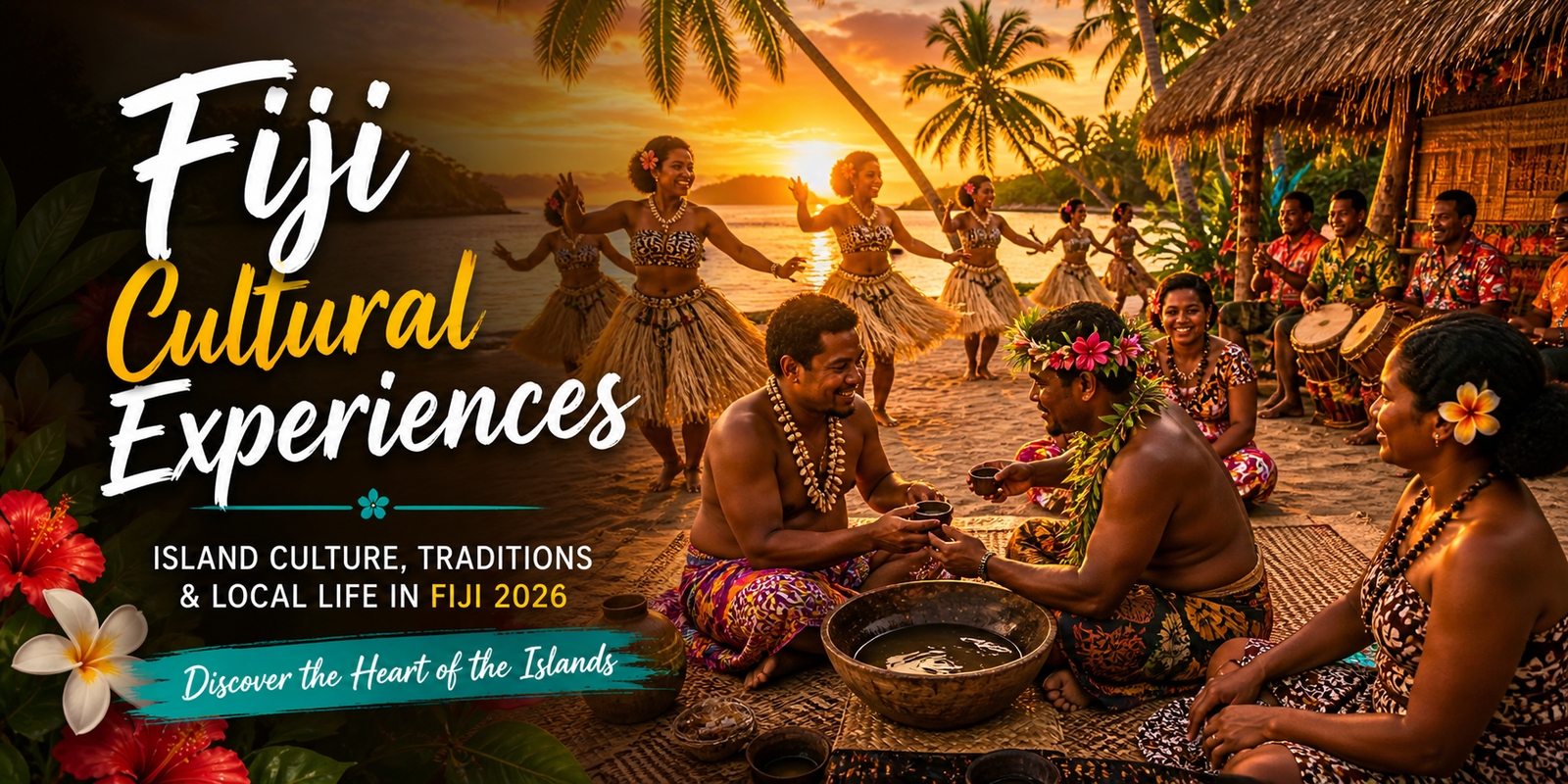
Can You Have a True Fiji Vacation Without Any Real Fiji Cultural Experiences?
You could technically spend a full week in Fiji and never leave the resort grounds. Not even once. Give it a thought. You roll out of bed, head to breakfast with the ocean sitting right there in front of you. Morning by the pool. Maybe you book a snorkeling thing through the activities desk—easy, no thought required. Dinner under those torchlights they set up around the restaurant. The staff smiles, gives you a warm Bula, and that feels like enough. Then you fly home. Relaxed. A little tan. Honestly? Totally fine. And look—nobody’s judging that. That version of a Fiji trip works just fine. Resorts sell that experience for a reason. But here’s the quieter question. The one that tends to pop up later, usually when someone back home asks something simple like “So what were the people like?” or “Did you actually learn anything about the place?” Does that still count as a real Fiji vacation? We are not trying to be tricky. It’s just one of those questions worth sitting with for a minute.What Most People Picture as a Fiji Vacation
Let us be honest about what draws most travelers in the first place. Those classic Fiji pictures. Water that shifts color in the light. Beaches where the sand makes that soft sound when you walk on it. Resorts designed so that every sunset feels like a postcard you accidentally walked into. Poolside lounging with something cold in your hand. Maybe a day trip to an island that looks like a screensaver. None of that is shallow. None of that is wrong. Relaxation is a legitimate reason to travel. Rest has value. You don’t have to dig deep into everything. Some things are fine just looking nice. You can like a painting without knowing the artist’s name. Still. Under all those pretty brochure photos — the empty beaches, the perfect light — there’s a whole country. And people. Just living. Normal stuff, mostly. Some of it is amazing. But mostly just… real life happening.What We Mean by “Fiji Cultural Experiences”
Probably worth explaining what I’m even talking about here. The phrase Fiji cultural experiences — honestly, it can start to sound like a checklist. Like something you just tick off. If you’re not paying attention, anyway. Village visits. A kava ceremony. Watching a meke dance performance. Tasting food cooked in a lovo underground oven. Learning a few words of Fijian. Sitting with someone while they explain what vanua actually means—because the translation gets tricky. But stripped down, it really just means spending time with Fiji culture on its own terms. Not through a glass partition. Not from a distance. It means being invited rather than just observing.Seeing vs Experiencing
Here is where the reflection gets interesting. You can see plenty. Doesn’t mean you experience much. Watch someone weave a basket? Fine. Sit beside them while they show you how to start that first loop? That’s different. Photograph a village from a bus. Or walk in blind. Totally different. One is collecting images. The other is collecting moments that stick in a different way. Participating in something asks something small from you. Attention. Patience. A willingness to feel slightly out of place for a minute. Most Fiji cultural experiences are not complicated. Nobody’s expecting an expert. The bar’s low. Really low. Show up. Be curious. Say vinaka when someone offers you something. That is basically it. But the gap between passive tourism and actual interaction is where the memory lives. One fades. The other tends to linger.Can You Still Enjoy Fiji Without It?
Yes. Absolutely. Thousands of people visit Fiji each year. Nice resorts. Never touch a single “cultural activity.” And honestly? They go home happy. Genuinely. Their trip was not fake. Their enjoyment was no less valid. Some travelers go to Fiji specifically to disconnect. From work. From plans. From the mental load of coordinating things. For those people, the idea of adding one more thing to do in Fiji—even something meaningful—feels like homework. That is fair. That is honest. People travel for different reasons. Someone running on empty? They don’t need philosophy. They need a nap. They need sleep, sunlight, and nobody asking them for decisions. So the question is not whether a trip without cultural depth can be enjoyable. Clearly, it can. The question is whether it counts as a true Fiji vacation. And that just depends on what “true” means to you. Simple as that.What Might Be Missing
Let us gently explore the other side, without turning this into a lecture. If a trip to Fiji includes nothing but resort life and organized excursions with other tourists, something does get left behind. Not intentionally. Not maliciously. Just by default. What gets left behind is understanding. You leave knowing how the water looked but not how the people laugh. You remember the cocktails but not the way someone says “no worries” like they actually mean it. You saw the place. You just did not meet it. There is also something about the unpredictability of real interaction. A scheduled snorkeling trip goes exactly as planned. A village visit where a child grabs your hand and pulls you toward something unexpected? That is not on any itinerary. That cannot be booked. And that is precisely why it ends up being the part people talk about years later. Without stepping into Fijian culture at all, you miss the chance to be surprised by a place. And surprise is often where the best travel stories come from.Why Cultural Moments Tend to Stay Longer
Human connection works differently from scenery. A beach is beautiful. But a beach does not look at you and smile. A sunset does not ask where you are from. A resort pool does not laugh when you mispronounce a word and then gently correct you. Authentic Fiji travel—the kind where you actually interact with people—creates memories that have an emotional texture. They are not just images. They are feelings wrapped in specific details. The sound of someone singing while preparing food. The weight of a woven fan someone handed you as a gift. The slight bitterness of kava and the way everyone claps once afterward. Scenery fades into a general impression of “it was gorgeous.” But the unexpected moments tend to stay sharp. Doesn’t mean one’s better. Just different. Different souvenirs, different feelings. One fits in a photo album. The other fits somewhere deeper.So, What Makes a “True” Vacation?
This is where we stop trying to give you a straight answer. There’s more than one answer. For some, a true vacation is just… getting away. No strings. No obligations. No learning curve. Just rest. For another person, true means returning home with a different understanding of the world. Most people? They land somewhere in the middle. So here’s a thought. Maybe that whole question — “Can you have a true Fiji vacation without real Fiji cultural experiences?” — maybe that’s the wrong question entirely. Try this instead. What kind of traveler am I today? And what do I really want to bring back? Not what sounds good on paper. What actually matters to me. That shifts everything. Here’s the thing. Once you go there, it stops being about Fiji. It becomes about you. Take a family that’s had a hard year. They just need rest. Sleep. Not having to think. Cultural stuff can wait. But a solo traveler looking for meaning? That person might feel ripped off if they never stepped outside the resort. And honestly? That’s fair too. Neither is wrong. Both are making choices that fit their own version of truth. So anyway. Back to the original question. True Fiji vacation — can you have one without a village visit? Without kava? Without ever learning what vanua means? Yes. Probably. But when you do include that stuff? Yeah. Different vibe. Not saying it’s morally better. Just… more textured. More human. More likely to hit you out of nowhere six months later — stuck in traffic, and boom, you remember someone singing on a hot afternoon. Maybe that matters to you. Maybe not. Both are fine. -
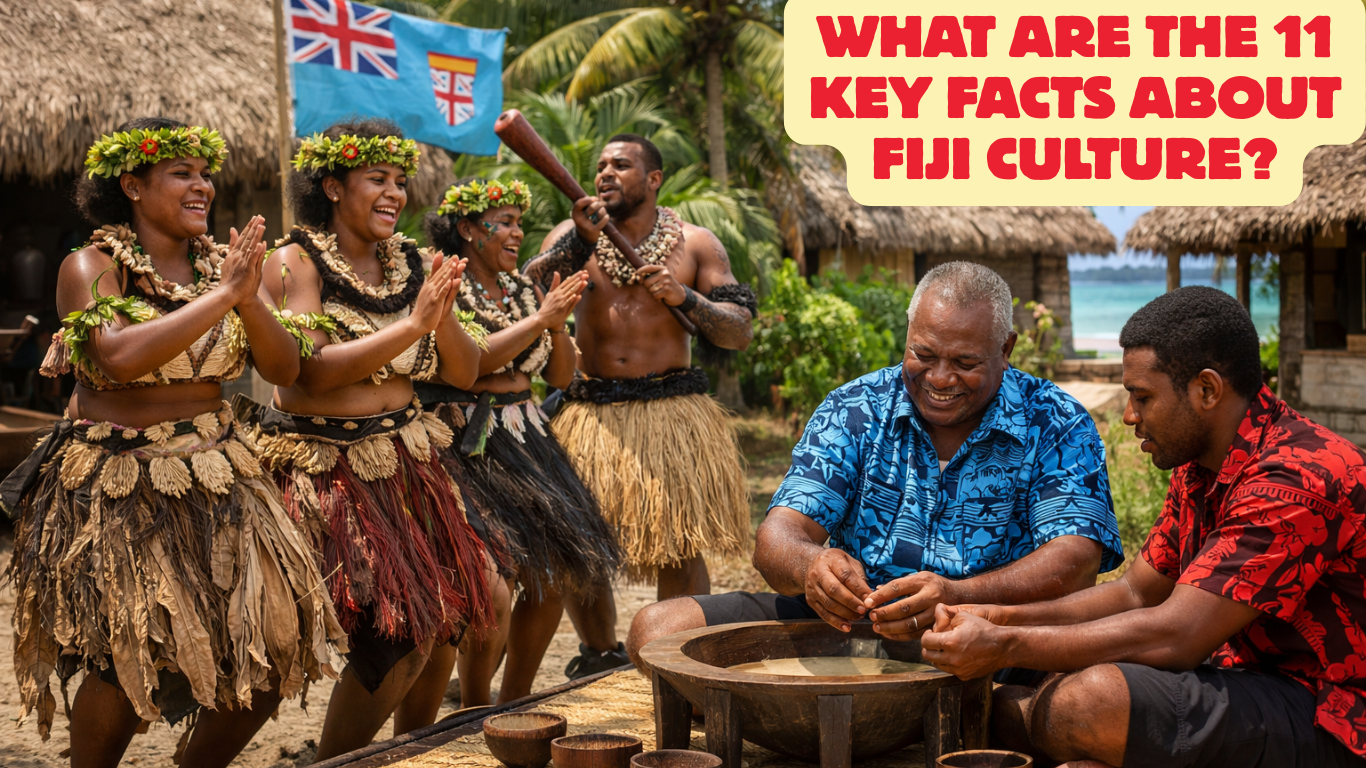
What Are the 11 Key Facts About Fiji Culture?
Okay, you made it. The flight’s over, the doors of Nadi airport hissed open, and that first hit of Fiji air—thick, warm, smelling of plumeria and just…green—wrapped around you. Someone slid a flower lei over your head. You’re here. Now what? We’re talking about understanding the why behind the warm smiles, which completely changes how you experience this incredible country. Forget dry lists. Here’s the honest take on the 11 things that really matter and are facts about Fiji culture.1. The “Village First” Mindset Will Reset Your Perspective
Individualism? Not so much here. Forget the picture-perfect hotel zones. To see the real Fiji Culture, look to the village — the koro. Here, community isn’t just a word. It’s your neighbor bringing food when someone is sick. It’s every adult keeping an eye on every child. It’s everyone showing up to mend a roof or prepare for a wedding, without being asked. That incredible sense of welcome you feel? It springs directly from this “we’re all in it together” mentality.2. Respect Isn’t Just Manners; It’s the Social Operating System
You can’t overstate the role of respect (vakarokoroko). It’s the invisible framework holding everything together, and it’s one of the first key facts about Fiji culture to understand. It flows upwards: to elders for their wisdom, to chiefs for their leadership, and to tradition itself. As a visitor, you step into this flow. That’s you speaking the local language of respect.3. Kava: The Muddy Drink That Opens Doors
You’ll be offered kava. It looks like dishwater and tastes like earthy pepper. Charming, right? But the taste is the least important part. Sitting on the floor for the yaqona ceremony is your golden ticket. The rhythmic clapping, the shared bowl, the quiet conversation that blooms—this is where you stop being a tourist. Accepting that bilo (cup) is a sign of trust.4. Why That Wrap-Around Skirt is Your Secret Weapon
Pack a sulu. Seriously. This versatile piece of fabric is the national uniform for a reason. Tying one on before you head into town or a village does two brilliant things: first, it shows you bothered to learn (massive respect points), and second, it’s insanely practical and cool in the heat. Watching a Fijian policeman rock his perfectly pleated sulu with polished boots shows you this isn’t a costume; it’s a point of pride.5. Sunday is a Deep, Collective Exhale
Saturday is for errands. Come Sunday (Siga Tabu), the nation slows to a sacred crawl. In Fiji, Sunday is different. Stores close. Towns go quiet. What you hear instead is music—hymns drifting from village churches. It’s more than faith. It’s a shared pause. A day for family, stillness, and catching your breath. Go for a slow walk. Listen to the singing. Let yourself slow down with the rest of the country. You’ll leave feeling more refreshed than any beach nap could make you.6. Their History Books Have Rhythm and Dance
Forget museums. Fiji tells its history through the meke—a powerful mix of dance, song, and story. This isn’t just a performance. It’s how legends are passed down. The dancers’ steps recall voyages and battles, while their hands trace the motion of the sea and trees. Watching a meke doesn’t feel like watching a show. You’re being let in on the story of who the Fijian people are.7. Food is a Language of Generosity
One of the most delicious facts about Fiji culture is how food expresses generosity. You will be fed. And then fed again. A meal is shared among family and friends. There will be talking and laughing. If you are offered more food, that is their way of saying you belong here. They’re saying, “You are welcome here.”8. “Bula!” is an Attitude, Not Just a Word
You’ll hear it constantly. But “Bula” is more than “hello.” It’s a wish for life and health, delivered with a disarming sincerity. That famous Fijian friendliness isn’t a service industry tactic. It’s a deeply held cultural value. Try matching that openness.9. The Ocean Isn’t a Backdrop; It’s a Relative
For Fijians, the ocean and land are family. This connection is called vanua—meaning the people, their ancestors, and the land are one. You see it when a fisherman takes only what he needs, or when a place is kept tabu—sacred. It is not just conservation. It is respect for a living relative.10. Parties are Epic, Inclusive Affairs
Fiji comes alive during its celebrations. Take Diwali, where the night sky fills with light. Or a Fijian wedding—it’s not a short event, but one that goes on for days with shared meals and constant music. Everyone is included. Someone may invite you to join. You should go. You will eat with your hands, try to dance, and laugh a lot. This is how you feel in real life here.11. Rugby is the Modern-Day Warrior Spirit
You have to see a Fijian rugby match to understand it. When the national team plays, the country watches. Bars are full. Streets are empty. It feels like the whole nation is watching together. This rugby is more than a sport. It is about pride, community, and incredible skill. It’s pure, electrifying national joy.The Real Souvenir You’ll Take Home
So, after all these facts about Fiji culture, what’s the real takeaway? It’s what Fiji offers a masterclass in connection. Fiji shows us a different way to live. You see this in how people live: together, with respect, and by sharing. When you understand this way of life, you don’t just visit Fiji. You feel welcome in it. That feeling, and the people who shared it with you, becomes what you remember. -
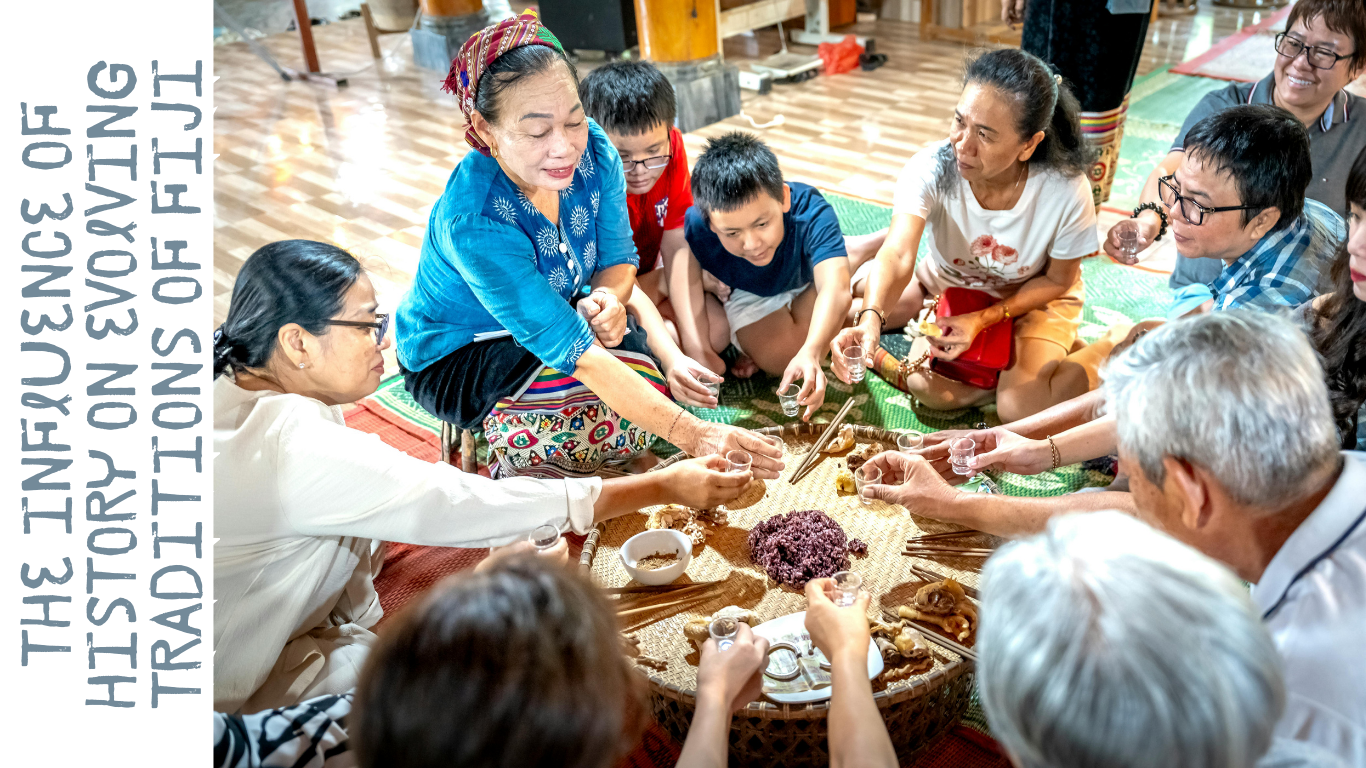
The Influence of History on Evolving Traditions of Fiji
Vacation resorts, palm palms, and blue ocean may be the first images that come to mind when you hear the name Fiji. The postcard version is that. The true Fiji is far more profound. Every ritual, shared meal, and dance has a lengthy backstory that has been influenced by history. Fijian customs did not emerge spontaneously. History has had a profound impact on the traditions of Fiji for a long time—migration, outside influence, and colonization, all leaving their lasting marks. That’s why the meke isn’t just a performance. It’s like opening a window into the past, where every movement tells part of an old story. Let’s take a historical tour to observe how each period contributed to the customs that Fijians still follow now to comprehend that.How it all began
Long before outsiders arrived, the Lapita people came. They crossed huge stretches of ocean in canoes and ended up here in Fiji. They brought pottery, farming, and fishing practices that shaped everyday life. But even more importantly, they brought a way of seeing the world. For those early groups, the land and the ocean weren’t just resources; they were life itself. Growing yams or taro wasn’t only about filling your stomach—it was part of how their whole culture worked. The sea gave fish, but also spiritual meaning. Everything connected back to what they called the vanua, a word that still carries weight in Fiji today. Vanua is not just “land.” It’s not just about people and land—it stretches to their ancestors too, and even the spirits they believed kept an eye on things. And since nobody back then was writing books, everything had to be passed along the old way. They carried the rules—how to respect chiefs, how to live together, even how to survive when times got tough. Even today, when a meke is performed, it’s not random. The dance movements are retelling events and lessons from those early times.First Encounters: Europeans and Missionaries
Back in the 1700s and 1800s, Europeans started showing up. First, it was sailors and traders, and then later on, the missionaries came too. This was a turning point. Iron tools made farming and construction easier. Guns, unfortunately, made conflicts between tribes more deadly. And then came Christianity. Missionaries introduced a new religion that often clashed with old beliefs. But here’s the thing: instead of wiping out traditions of Fiji, Christianity in Fiji got woven into them. Villages built churches, yes, but many ceremonies still carried echoes of older practices. For example, hymns became part of Sunday gatherings, but the communal singing carried the same energy as ancient chants. You can still hear it today—deep voices rising in harmony, filling a village with sound.Colonial Rule: New Layers, New People
In 1874, Fiji was brought under British rule. This period left marks everywhere. Colonial administrators changed governance, while schools run by missions introduced Western education. However, the entrance of Indian indentured laborers brought about the most significant impact. Thousands arrived to labor on sugarcane plantations between 1879 and 1916. They brought more than just work, but their lives were difficult. They introduced their own festivals, dishes, music, and faith. Even now, you’ll often find kokoda on the same table as curry and roti, a mix that tells Fiji’s story. This mix tells you everything about history.Holding On and Letting Go
Colonial powers often tried to “freeze” Fijian culture. They wanted to preserve village structures and chiefly systems in rigid ways. Some traditions of Fiji, like ritual warfare, were pushed aside or slowly faded with time. But Fijians didn’t let go of everything. Some traditions, especially the yaqona (kava) ceremony, stayed strong. In fact, even colonial officials began to use kava ceremonies when meeting chiefs.Independence and the Search for Identity
Creating one national identity in Fiji was never simple. Traditions became part of the answer. On one side, indigenous arts and rituals were brought back as symbols of identity. On the other hand, Diwali and Eid became national occasions, reflecting the contributions of Indo-Fijians. You see the blending most clearly in celebrations. A school might host both a meke performance and a Diwali program in the same year. A village feast might include both lovo (earth oven cooking) and Indian sweets. History had created a shared rhythm that people continued to play out together.Modern Fiji: Global but Traditional
In today’s Fiji, you’ll notice something interesting. On the one hand, globalization is pervasive; young people in Nadi and Suva are eating fast food and listening to international music on TikTok. However, customs continue to exist and are evident. You’ll notice that even kids who grow up in the busy towns don’t really lose the pull of tradition. It sneaks back in. Maybe they show up at a wedding wearing the old style of dress. Maybe they decide to join in a festival, or ask their grandparents to teach them an old chant. It doesn’t vanish just because they’re in the city. If anything, the more the modern world pushes in, the more some people feel like hanging on to what’s theirs.The Living Legacy
What makes Fiji special is that its traditions are not museum pieces. They are living practices shaped by history at every turn.- The Lapita settlers laid the first foundation.
- European explorers and missionaries reshaped beliefs.
- British colonial rule and Indian migration added new layers.
- Independence brought a sense of unity through diversity.
-
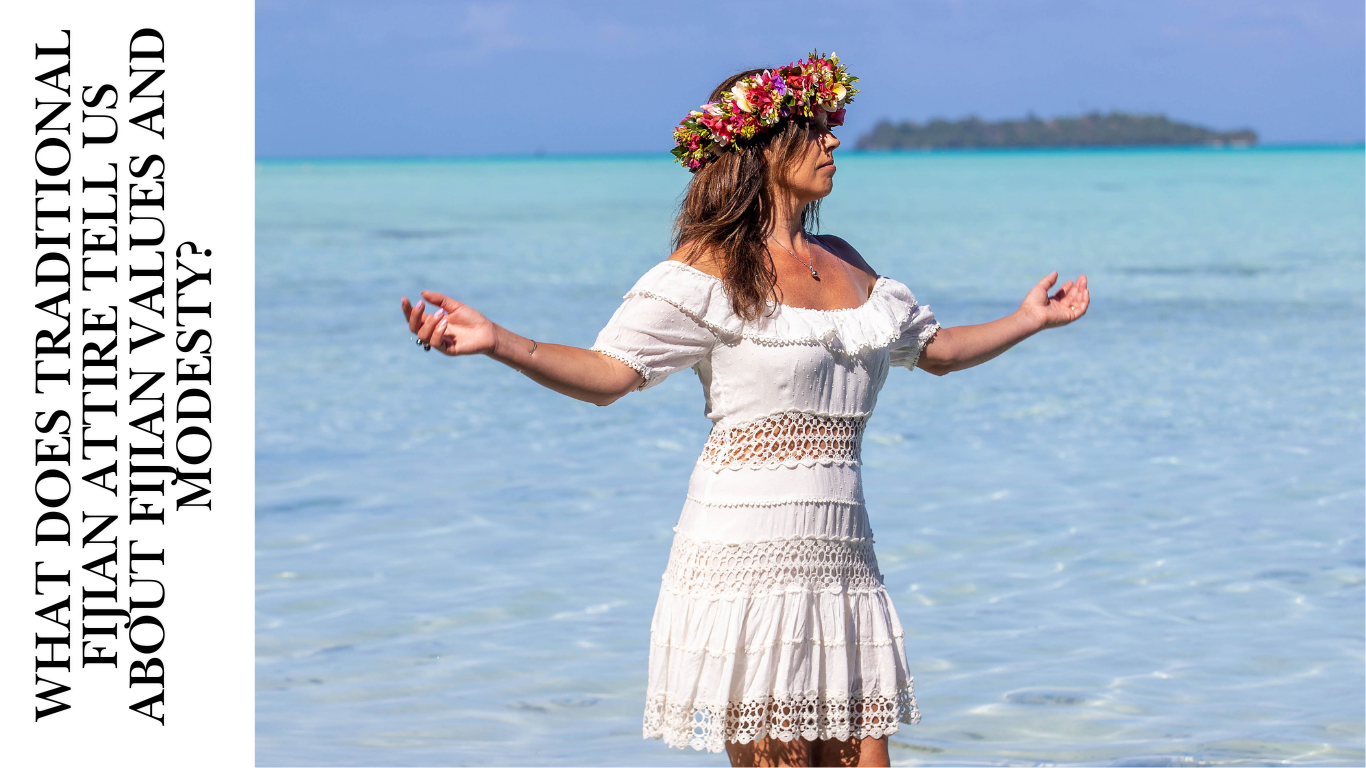
What does traditional Fijian Attire tell us about Fijian Values and Modesty?
Regarding Fijian customs, beliefs, time, and life, clothing symbolizes so much more than just clothes. Fijians use dance and clothing to express their identity, ancestry, and traditions. One way that individuals show their respect, decency, and communal cohesion is via their traditional Fijian attire. These garments, worn for rituals, significant events, or festivities, reflect the social culture of Fijian households.Traditional Fijian clothing – what is it?
It is important to note that their clothing represents certain Fijian cultural values and is created entirely of natural materials like coconut fiber, pandanus leaves, and masi (tapa fabric). The materials, colors, and shapes used indicated Fijian culture and its relationship to the land and ocean.Described as a representation of Fiji’s rich cultural heritage.
Fiji’s traditional attire has evolved over many hundred years. Any article of clothing that has been passed down from one’s ancestors is considered traditional Fijian attire and it is usually handmade. This shows how Fijians preserve their culture by passing traditions and skills from one generation to the next. The Fijians assert their heritage and feel connected to their ancestors by wearing traditional garb. Wearing these garments is like walking in the footsteps of one’s ancestors, keeping their stories alive.Wearing Clothes to Reflect the Commitment of the Heart
Traditional Fijian clothing emphasizes humility and respect for community values. Ethnicity shows how individuals accept or reject other members of the community and deal with decency concerns.Cultural Significance of Traditional Fijian Attire
Wearing traditional clothing is only one aspect of traditional Fijian attire; it is also a caricature, a statement, and an echo of the Fijian identity. Fijians have always seen clothing as more than simply everyday clothing; it was a sign of the country’s principles, culture, legacy, and viewpoint. The designs and fabrics often symbolize harmony with nature and respect for ancestors. For example, the bulk product, tapa fabric, is as ancient as the process of producing it and is made from the inner section of the mulberry tree and the zigzag patterns on masi cloth represent ocean waves, highlighting Fiji’s bond with the sea. For the Fijian people, the cloth is more than just that; it symbolizes their culture and their connection to the land. Every time Fijians wear traditional attire, they honor their ancestors.Rituals and ceremonies related to the attire
In the majority of Fijian events and other cultural rituals, Fijian attire is customary. For these events, whether it’s a wedding, funeral, or the installation of a new chief, ceremonial attire is crucial. To demonstrate their status as chiefs and their aristocratic ancestry, chiefs, for example, are dressed in masi, which are colorful garments that cover their entire body. At weddings or the installation of chiefs, traditional attire transforms the event into a vivid display of unity and respect for heritage. How people dress for these events is one approach to preserve the culture’s brilliance and emphasize the value of transferring it to future generations. The vibrant masi patterns and pandanus leaf skirts create a scene rich in cultural pride.Symbols in the Design and Material Selection
It should be mentioned that every element of the Fijian clothing has a purpose. Materials like masi, pandanus leaves, and coconut fibers are chosen for their cultural and symbolic meaning. Fijians are particularly interested in the natural environment, as seen by the designs on clothing, such as triangles for the mountains and zigzags for the waves.An Ongoing Custom
Despite modernization, Fijians still wear traditional clothing, especially during cultural events. Fijians continue to wear traditional clothing for ceremonial events, however, modern clothing is utilized now for ease of wear.Fijian Values and Modesty in Clothing
Fijian attire is seen as an expression of who they are.The Importance of modesty
Traditional Fijian clothing reflects the community’s values, emphasizing modesty and respect. Depending on the situation, Fijian dress places a lot of emphasis on how the body—especially the intimate areas—should be hidden. To show respect for elders’ customs and traditions, women are supposed to wear modest clothing at rituals. For example, both sexes dress to conceal a major portion of their skin at events like marriage ceremonies or other traditional dances. This allows them to dance freely without drawing unwanted attention.The Clothing of Fijian People for Formal Occasions
Regarding the functions, the Fijian dress code is appropriate and tailored to the individual and the event. Typically, the ladies wear skirts made from the bulk or woven pandanus leaves. Despite their modest appearance, they are exquisite works of art crafted from culturally significant natural materials. The fig leaf legalism is seen in the men’s clothing code, where they wear sulus and, for accessories, may button shirts or knot sashes over them. These garments’ sleek, minimalistic appeal is not in opposition to the idea of sophistication; rather, it denotes tolerance for many cultures, composure, and refraining from provocations.Modesty in Everyday Life
Fijians often wear modest clothing with little skin exposure for events that do not call for formal attire. They hold humility and respect in high regard. Dressing modestly preserves a person’s innocence and, thus, their relationship with other people. It tends to convey the idea that family, generosity, and respect are more important than fashion or following trends.A Reflection of Fijian Values
Respect, modesty, and ties to the community are all important components of Fijian fashion. More than merely fabric, Fijian traditional attire reflects a way of life in which individuals rely on one another and acknowledge their obligations to the community. According to Fijian norms, what one wears is not as important as what one does and says, which explains the somewhat limited approach toward clothes. To preserve their integrity when interacting with others and to be mindful of the customs that are being followed, the people of Fiji dress correctly.Rules of Community and Dress Code
In Fijian culture, modesty isn’t just about clothing—it’s a way of showing respect through both dress and behavior. For example, people cover their bodies when welcomed to someone’s home out of respect for the host and the space. Wearing appropriate clothing is seen as a way to show the host respect and preserve good interpersonal relationships. However, how people dress for church services or other religious ceremonies also carries greater weight. Wearing their finest traditional Fijian attire with a dash of reverence for their faith and community, Fijians are always astute during these occasions. It is anticipated that traditional Fijian clothing rules would serve as the foundation for contemporary fashion given the recent changes in Fijian culture. Traditional Fijian attire is an important aspect of Fijian history since it may preserve cultural references while embracing current design trends. In addition to introducing the culture into modern society, this fusion protects it for the next generations. -
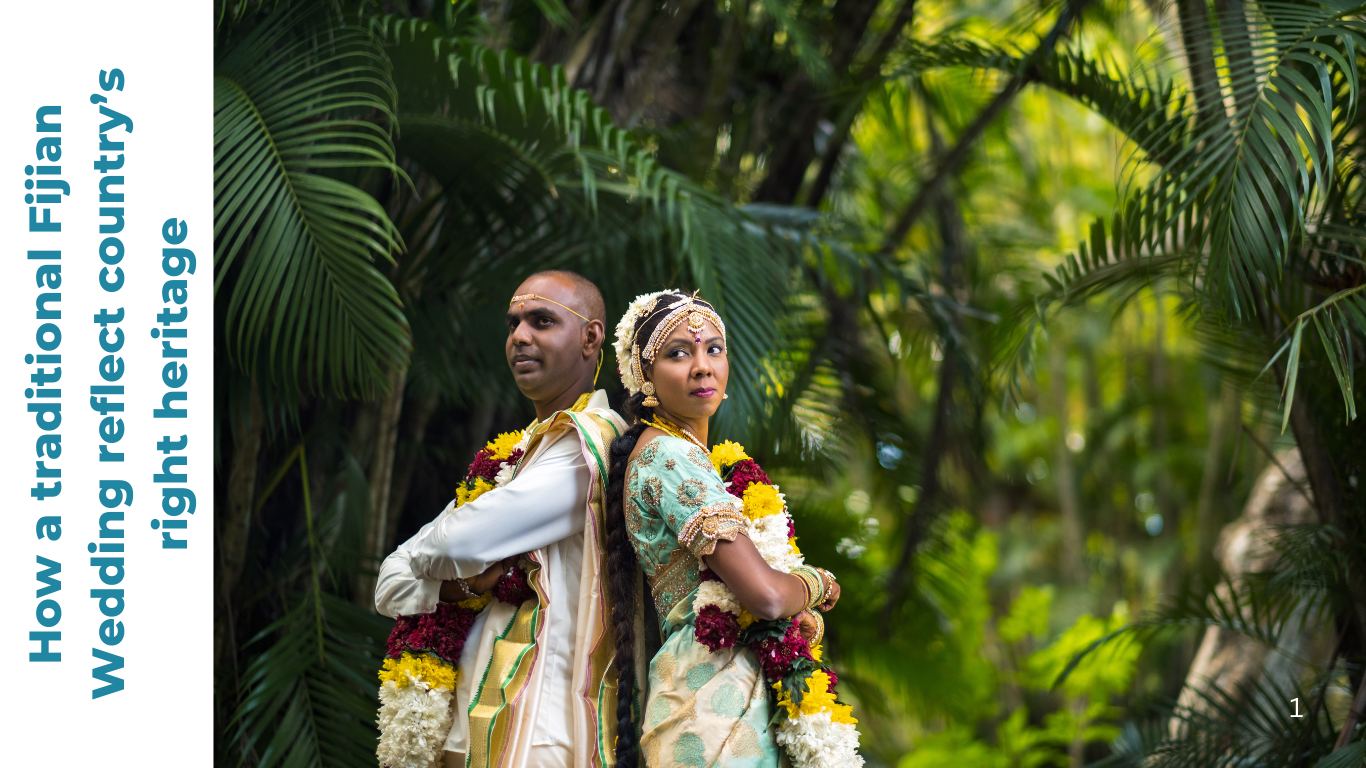
How a traditional Fijian Wedding reflect country’s right heritage
Weddings are deeply rooted in Fijian culture, honoring ancestors, the land, and the community. These celebrations emphasize the importance of familial and social connections in Fijian life. An authentic representation of Fijian culture, a traditional Fijian wedding entails much more than just two people joining forces. It represents the meeting point of the past and present and the peaceful coexistence of the themes of community, family, and tradition. In the Fijian tradition, there is nothing as significant as a wedding because it unites families, villages, and communities. It is important to understand that each part of the wedding includes rituals with meaning. A traditional Fijian wedding is not just an ordinary event but also grounds people to their roots.What Makes Traditional Fijian Wedding Unique?
There are significant distinctions between a traditional Fijian wedding and many other wedding traditions throughout the world. It is deeply embedded in Fijian culture, and the commemorating in which the occasion reflects the people’s strong links to their families, communities, and the environment.Community and Family Focused
A characteristic of the typical Fijian marriage ceremony is a high degree of emphasis on the role of many people, mainly the family members, who are involved in the ceremony. Different from wedding ceremonies where two individuals, particularly the bride and groom, or two families form the focal point, the Fijian wedding encompasses more than the couple or their families, more so their village or the larger Fijian community. Relatives of both groom and bride are involved starting from the music and dancing to helping in the actual ceremony. At the heart of the Fijian wedding is a spirit of togetherness, where the wedding is viewed as a communal event that strengthens social bonds and family ties, as is reflected by the whole community supporting the couple; one of the basic tenets of Fijian culture.The Role of Kava
Drinking Kava after the couple has exchanged their wedding vows is a traditional element of the Fijian wedding ceremony. Fijians regard kava as a sign of paying respect, coming together as one people, and welcoming peace. In the wedding rites, kava is offered to the bride’s relatives by the groom’s side. Preparing and drinking kava is the provisional union of two families and symbolizes the trust of two clans.The Wedding Attire
The groom wears a sulu (a traditional Fijian garment), while the bride dresses in tapa cloth. These outfits are frequently made by the couple’s families and symbolize their ties to the land and tradition.Connection to the Land
Outdoor wedding ceremonies are common in many of the conventional Fijian weddings. The choice of venue, often by the sea or within a village setting, reflects Fijians’ deep reverence for nature. The land and sea are not only practical resources but also sacred symbols of life, fertility, and prosperityRituals and Blessings
The ceremony is rich in blessings and prayers, with village elders offering spiritual protection to the couple. These blessings are considered vital for a prosperous marriage and are believed to honor both the ancestors and the spirits of the land.Reflection of Fiji’s Heritage in Wedding Rituals
For Fijians, a wedding is more than a compatibility of two individuals but is a symbol of Fiji’s unique heritage and way of life. Every aspect of the ceremony is symbolic representing a continuity of tradition and a beginning of hope for the future. From the entrenchment of elders in the ceremony to the use of motifs and icons in the ceremonial rite, Fijian weddings depict the life of the country. To the people of Fiji marriage is not just a joining of two people but joining two families and two communities. Like most Fijian customs, a Fijian wedding is typically an event that focuses on the central idea of togetherness — usually the union of two families. The elders and chiefs also participate in this event in a way that they provide blessings as well as direction. Fijian wedding traditions are a living reflection of the country’s rich heritage, blending ancient customs with modern practices. While contemporary weddings may incorporate Western elements, core traditions like kava ceremonies and family involvement remain centralThe Meaning of Traditional Ceremonies
It is a customary practice for Fijians that most of the practices in traditional Fijian wedding ceremonies have been handed down for generations. For example, actions like kava, the tying of the yaqona rope, and giving gifts are related to the rich foothold of Fijian tradition. These practices bring the couple to their forefathers and foremothers and the history of the people. Through these events, the couple is also empowering the next generations, for these rituals have to continue, people have to understand and respect them. The rituals are a great pride of cultures but they also provide a call that reflects the values of teachings of Fijian society for centuries.Nature and spirituality symbols
Geography plays an amazing role in the lives of the people in Fiji especially the natural physical factor embracing land and sea. Significantly many aspects of a traditional Fijian wedding embody this strong environmental relationship. For instance, the flowers, local tapa cloth, and mats used in the wedding celebrations represent the love of people with nature. Elements such as fire and kava are potent symbols in the wedding, representing the couple’s spiritual ties to their ancestors and the divine. Fire is seen as a purifier, while kava signifies peace and unity. More importantly, Fijian weddings have a strong spirit attached to them. Gifts from elders, or the importance of fire and kava all stress the ties between the newlyweds and gods. These elements reflect religious tradition inherent in the life of Fijians, their reverence towards the earth, ancestors, and God.Culture Identity Protection
The cultural diversity of Fijians is evident in the rituals observed, the type of functions performed, and even the bridal wear. Retaining cultural attire like the sulu, and the tapa cloth reflects the cultural work and the art of the Fijians. The Fijian wedding is not only an event but a demonstration of the Fijian culture with people’s joy and bonding between families. It is seen that customs, rituals, and participation of elderly people have depicted the cultural history of the country inherited from generations. Such weddings are not only for couples but for traditions which create such a unique and beautiful ceremony. Components borrowed from the outside have replaced specific aspects, however, the core of a traditional Fijian wedding is still apparent. These weddings remain an excellent symbol of Fijian values in the sense that the customs and traditions are upheld, although the weddings have been taken into the modern times. The core content of these ceremonies is the continuity of time, love, tradition, and people. -
How Fiji Traditional Music Tells the Story of the Islands
The Fijian people rely on their traditional music for more than simply amusement; it is their lifeline. The shrill but calming voices of chanting or the thumping beat of drums are only two examples of how Fijian music narrates the history of the islands and its inhabitants. The Fijians convey the richness of their culture, recognize the present, and commemorate previous generations with these sounds. Through these sounds, the Fijians celebrate past generations, honor the present, and share the richness of their culture. The Fijians have always used music to recall past generations, celebrate the present, and share their culture with everyone. Every note and rhythm in Fiji traditional music holds significance. They express history, traditions, and values through songs, and the culture that makes Fijians unique has been nurtured through sound. This music is not just listened to—it is often experienced with joy by the people of the islands, as it carries the feelings, heritage, and soul of the land.Musical Literacy – Telling the Musical Story
While many cultures use written language to convey stories, music has traditionally been the main storytelling medium in Fiji. A vital part of celebrations, rituals, and daily life, Fijian music has been passed down through the ages. A vital component of Fijian culture, traditional music connects the past and present via everything from mythical themes of gods and heroes to actual tales of love and conflict.A Tool for Preserving History
Fiji traditional music is particularly special because it serves as a means of preserving history. Through songs, Fijians have expressed their hardships, achievements, and changing territorial landscapes. These songs bring back memories of important occasions like harvest celebrations, the days of conflict, and the coming of new tribes. Every song preserves Fiji’s culture and ensures that it is passed along to future generations.Fiji Traditional Music – A Living History
Traditional Fijian Music is particularly special because it serves as a means of preserving history. Through songs, Fijians have expressed their hardships, achievements, and changing territorial landscapes. These songs bring back memories of important occasions like harvest celebrations, the days of conflict, and the coming of new tribes. Every song preserves Fiji’s culture and ensures that it is passed along to future generations.Songs That Tell Stories
All of the music in this genre is a kind of narrative that captures the past of people’s lives, events, gods, and spirits. In this sense, traditional Fijian music serves as a teaching tool, conserving priceless and age-old information that may have been lost otherwise. From the formation of the islands to the bravery of the forefathers, these songs have preserved oral history over the years. More than just musicality, music in Fiji embodies both bodily rhythm and lyrics, each telling the story of history. For instance, many traditional Fijian songs recount the arrival of various tribes, the struggles they faced, and how they overcame those challenges. These songs remain powerful symbols and serve as a testament to Fiji’s cultural past, uniting people in pride and shared heritage.A Connection to Nature
Fijian music is deeply connected to the islands, drawing inspiration from the natural sounds around them. Fiji traditional music incorporates many aspects of nature, including the sound of crashing waves, rustling foliage, and bird sounds. These organic sounds are mimicked by instruments like the bamboo flute known as the “Katara” and the wooden drum known as the “Lali,” which produce music that appears to come straight from the ground. In addition to paying respect to its ancestors, the Fijian people tells the world about themselves via traditional music. The spirit of the islands is preserved and transmitted via this music, guaranteeing its survival for many years to come.Music and Storytelling – The Unique Structure of Fijian Songs
Fijians saw traditional music as a potent tool for message delivery, not merely a collection of songs. Numerous Fijian songs, which are firmly ingrained in the culture, relate stories, historical events, and personal experiences. These songs preserve the knowledge and legends of their people and teach important lessons that are frequently passed down from one generation to the next.The art of musical storytelling
The art of musical storytelling in Fiji is distinguished by the way it integrates melodies with narratives. Fijian songs are more than just music—they are stories that recount historical events, myths, and real-life experiences. Similar to how rap and hip hop often convey messages or morals through rhythm and lyrics, traditional Fijian music uses its melodies to tell stories. This form of musical narration is unique to Fiji and has been practised for generations, preserving the essence of the culture up to the present day.The Structure of Fijian Songs
The structure of traditional Fijian music is designed to guide the listener through the tale. These songs have a call-and-response structure, in which the chorus or group answers to a line sung by the principal singer. This back-and-forth interaction involves the audience in the storytelling process while also boosting the narrative flow. Fijian songs, in contrast to many Western musical genres, usually do not have backing singers; instead, the solo and chorus voices alternately emphasize significant parts of the story. Important plot points are highlighted and made easy for the audience to understand because to this framework. Traditional Fijian music uses a call-and-response framework to guide the listener through a story, with a lead vocalist singing a line and the chorus responding. This back-and-forth approach guarantees that the tale is well delivered and maintains listener interest. The accompanying dance flows in time with the music, increasing the narrative component. Fijian songs frequently use basic, repeating lyrics that are easy to memorize, akin to children’s songs. This repetition serves to implant the tale in the listeners’ brains, making the songs not only enjoyable to sing along to, but also unforgettable. Because of its simplicity and repetition, the song’s tale may be readily passed down from generation to generation. Fijian traditional music is more than just entertainment; it is a vital cultural identity that unites generations past, present, and future. The Fijian people’s tales, beliefs, and lessons are handed down via music, assuring the preservation of their cultural legacy. In an ever-changing world, the preservation of Fijian traditional music is even more important. Elders, community members, and especially young learners work together to preserve this cultural treasure alive, ensuring that Fijian music remains an important part of the country’s legacy for future generations. -
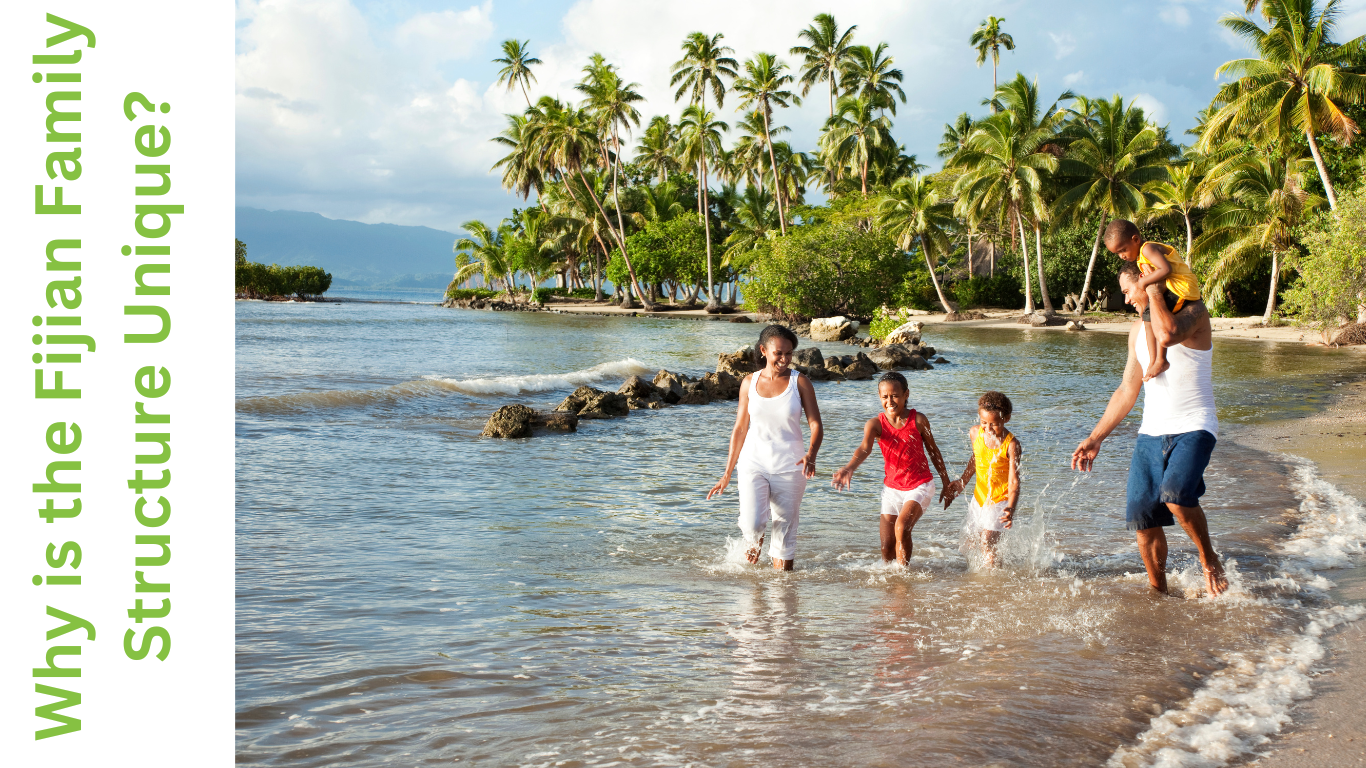
Why is the Fijian Family Structure Unique?
Fijian family structure is defined as a multiplex of relations, cultures, and beliefs about the rights and wrongs in a society. Fijian culture is specific to the island and has taken centuries of development. In Fiji, the family goes beyond a group of narrowly related people by blood. It covers households with grandparents, aunts, uncles, and cousins who are considered important family members. The relationships offer protection and thus give the individual a place they belong. Fiji has one of the most vigorous family values of all the cultures across the world. It defines the person and controls interactions and events in society. Family members assist each other in several ways, be it in celebrations or in difficult times of their lives.Historical Context
Ancient Fijian Society
The social structure of Fijians comprised of smaller units which can be translated as tribes or clans. Every tribe also has its own land and resource owner. This type of cohesive living made everyone and everything strong enough to survive and be productive. The family is very important to the Fiji people. Women particularly are valued for their age and normally whoever is older is the one to make decisions in the family. Values mentioned were respect and community and they described relations between families or how families should be.The Influence of Colonialism
Colonialism brought lots of changes within the region. Their arrival brought new concepts and ways of operation within their assemblies. The colonizers affected the aspects of land and family. Thus, families started to get differentiated, especially by the adoption of cash crop economies. Males headed a plantation while females were the ones to provide for the upkeep of the home and children. This division of labour was seen to affect how families operated.Modern Changes and Resilience
Fijian family organization has received changes in recent years as well. These factors have affected the place where families live and the way they live. Due to employment and studies, many youths migrate to cities changing the family structure. But support is still observed and valued in a similar way as before.Core Family Units
The structure of Fijian families is complex and varied, but the focal ones are the nuclear families. These units have significant utility and functionality in the lives of Fijians and are instrumental in molding the culture of Fiji. A core family can be a mother, a father and their children. But here it is necessary to note that ‘Family’ concerns not only this group. The Fijian family structure is a little broader because close relatives in the large family are also involved in raising the children.The importance of an extended family
Family members’ interdependence is a common feature in Fiji and many individuals have large families. This is a family structure with grandparents, aunts, uncles as well as cousins in a single family. It also allows the kind of closeness that offers emotional and/or financial support.Status of Core Family Units
There is a specifically assigned role and duty for each member of the core family unit. As has always been the role portrayed in most families, the father is primarily responsible for earning a living. They practice their professions outside the home in a bid to contribute to family income. While fathers are normally providers of the family income, mothers are normally expected to supervise the home and look after the children. However, there distinctions may exist. In many families of the present generation, both parents get engaged in a paid job or employment. They make some adjustments in sharing the chores relevant to the home and or children over which everyone gains more responsibility.Family Values and Support
The base of the Fijian family is built on positive ethics, principles, and values such as respect, love, and care. People gather during meals and other special occasions to celebrate events and other incidents.Extended Family Dynamics
The Role of Extended Families
Families can also be compared to a large support group. Living in one or even nearby is not strange in Fiji because there is a tradition where many generations live closely. The living arrangements enable parents or other family members to assist each other daily. The children are often taken care of by grandparents when parents go to work. Aunts and uncles provide education and teach life lessons. This sharing brings about the unity of families and acquires good relationships with all the members of the family.The importance of Love, care and Counselling
Fijian families are large, and they both give emotional support and impart wisdom to the family members. Family celebrations are often unique. It’s at this time that many people sit and listen to stories and anecdotes, respect cultural practices, and crack jokes.Financial Assistance and Simply Support
Many individuals in an extended family pull one another through hard times. There are cases when a family has to pay medical bills or needs someone to help them with carrying out their daily needs – these are the moments when relatives help out. Such cooperative help or security lets no one feel sad when things get rough. It also assists families to combine resources to achieve similar objectives which are likely to be purchasing a house or educating their children. Fiji’s culture is based in large part on extended families. Traditionally, families come together to celebrate various occasions by singing and dancing with lots of tasty food. Joyous occasions such as weddings, birthdays, and festivals are what pull everyone close and allow people to make and cherish memories.Living Arrangements and Housing
Living patterns are very important among Fijian families to determine family life. Families as social units provide for, and share duties.Traditional Housing
Bure is a native house for many Fijian families, where they live. These are round and small huts constructed with local materials including wood, bamboo, and palm leaf.Urban vs. Rural Housing
Housing structures can be different in different areas. Self-contained homes are found, in the rural setting, families dwelling in traditional bures or simple houses with adequate compound space. These homes are usually close neighbourhoods, and people living in these homes know each other very closely. That is, whereas the urban setting has 3-roomed houses, the urban has modern apartments or better houses.Impact of Modernization
It is so apparent that recent trends have affected the way some Fijian families dwell. Owning simple houses with greater privacy is becoming popular in many families as they mimic Western-style homes. Although this may be reassuring, it can also result in minimal contact with other members of the family as well as neighbours. Conflict between old and new ways of life remains an issue of interest for the Fijians who are finding it hard to determine how to live a modern life. The Fijian family structure is a rich blend of tradition, community, and shared values. It emphasizes the importance of both immediate and extended family members, fostering a strong support system that helps individuals thrive. As Fijian society continues to evolve, the core values of love, respect, and unity remain steadfast. The adaptability of the Fijian family structure allows it to embrace new ideas while honouring its rich heritage. This balance ensures that family ties remain strong, nurturing the next generation in a world that is constantly changing. -
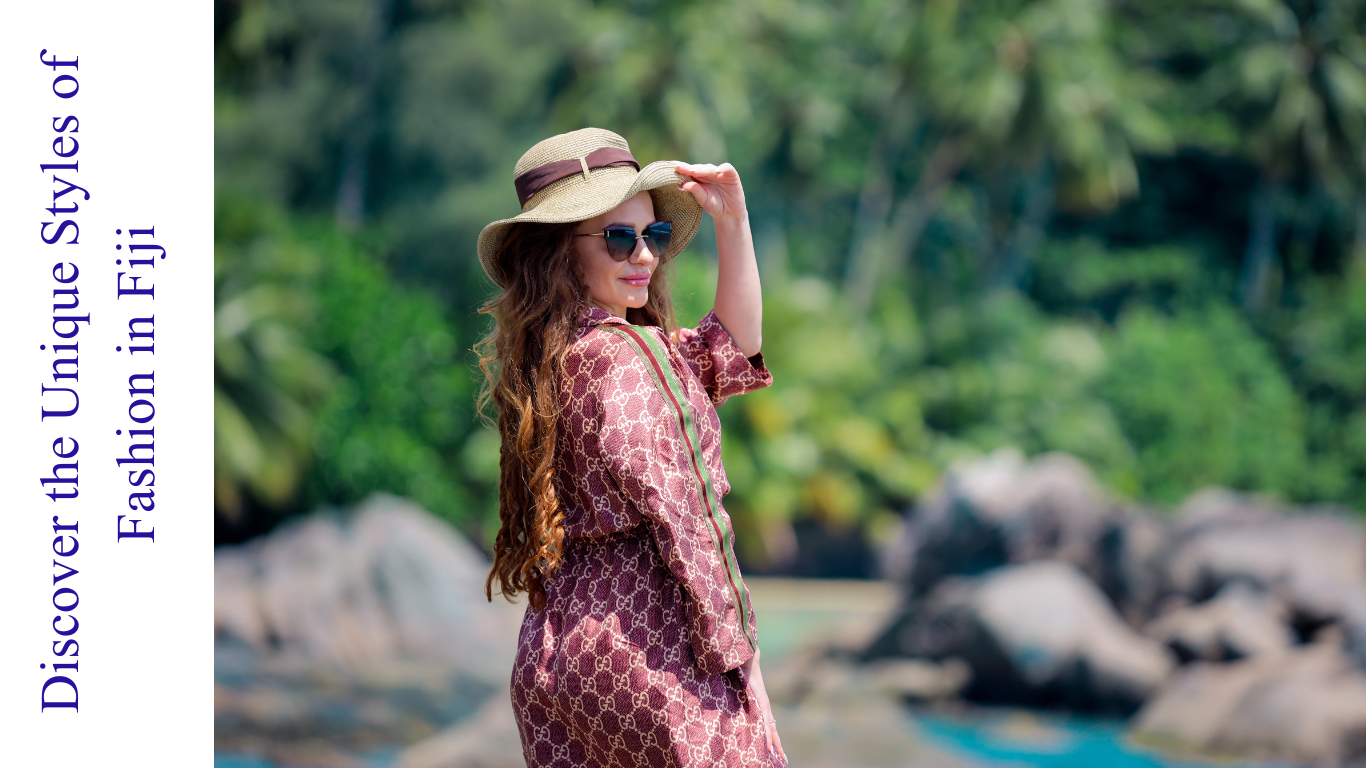
Discover the Unique Styles of Fashion in Fiji
Fashion in Fiji is dynamic and features both the traditional and the contemporary. This Pacific country with beautiful views is famous for its gentle people and diverse fashion industry tied to its cultural background. Be it the original garb that uses native fabric or the modern-day outfits that incorporate international fashion with Fijian fusion, Fijian fashion is in a league of its own. The fashion scene in Fiji encompasses more than mere wardrobe; it is an outpour of Fiji’s history, culture and inventiveness. Currently, Fijian designers are gaining popularity locally and internationally, making people note their creativity in designs and use of sustainable materials.Historical Background of Fashion in Fiji
The traditional Fijian clothing was produced from fabrics which were easily available in the forests. The most dominant of these is Masi, locally referred to as tapa cloth, which is made from the bark of a tree – the Mulberry tree.Traditional Attire
Men used to wear the sulu- a type of skirt made from masi or woven pandanus leaves. Liku was a type of grass or leaves that women of the community used to wear skirts made from them. Men and women wore ornaments using shells, bones and any other material that could be obtained from the surrounding environment. These traditional wears apart from being mere dresses also symbolized the culture in as much as they depicted the status of the wearer in society.Influence of Europeans
The main changes in Fijian fashion were realized after the coming of European explorers and missionaries in the 19th century. Western codes of dressing were adopted and the replacement of conventional cloth was slowly done with European-styled clothes. But even today, the majority of the native Fijian population wears some sort of traditional outfit on formal occasions and ceremonies. Since the last few decades, Fiji fashion has become a fusion of conventional and contemporary. This has been made possible by local designers who have risen been designing clothing that is close to traditional Fiji, yet fashionable. The combination of traditional and modern elements in clothing has created a new fashion look that can be attributed to Fijian. Though the value of traditional Fijian outfits has been dwindling over the recent past, there has been some sort of revival recently. Many designers are now returning to what is more basic, using traditional procedures and fabrics. Events such as the Fiji Fashion Week help in this revival in as much as they afford the designers the chance to present their work while at the same time promoting Fijian traditions.Modern Fashion Trends in Fiji
Modern fashion in Fiji is gracefully fused between the indigenous and the new generation styles.Vibrant Colors and Patterns
Fijian fashion is relatively bright and colourful with beautiful patterns and skillfully made accessories. Fijian printed outfits have vibrant colours as a sign of the island’s natural texture and those colours are the Fijian fashion emblem. Often patterns are used, they reflect geometric ornaments and are typical for the given climate floras and landscapes such as flowers, leaves, water waves, etc. These aspects make the fashion of Fijian unique.Casual and Comfortable
Due to the tropical weather experienced in Fiji, comfort is paramount when it comes to fashion in Fiji. Loose and light garments, thin materials, and plain dresses are preferred. The sulu, a kind of wrap-around skirt is popular with men and women of all ages, mostly because of its practicality and ease of use. Currently, environmental conservation is part of the fashion industry trends in Fiji. Sustainability is widely implemented by designers by Incorporating sustainable materials into the creation. This entails organic fabrics, naturally sourced dyes and environmentally friendly processes of production. This trend spares the environment and also corresponds with Fijian people’s mentality which is deeply intertwined with nature.Influence of Global Trends
Fijian fashion has a style while at the same time, it is not rigid and can follow the trends in the global market. Global fashion influences such as international fashion weeks, social media, and global brands influence fashion in Fiji. While incorporated into their creations, local designers may borrow the trends from them while putting a local twist into the fashion industry, thus making it vibrant.Rise of Local Designers
There is a rise of designers in Fiji who are into fashion design and their creations are being sold in international markets. They are creating unique designs which have a Fijian feeling and incorporating traditional Fijian mannerisms in their work. These designers get opportunities in events such as Fiji Fashion Week where they exhibit their work technically upping the status of Fijian fashion internationally.Spotlight on Fiji Fashion Week
Fiji Fashion Week is an event that enshrines fashion in Fiji. Taking place every year, this entertaining week aims at presenting the new tendencies, youthful designers and aspiring talents from the Fijian fashion industry. The event gathers local fashion designers, models and lovers of fashion who stage several fashion shows and related activities. Fiji Fashion Week is to promote Fiji-born designers. This enables them to show their collections to an even larger market hence increasing the chances of them selling their products. Here this exposure leads them to have their careers grow and even earn recognition locally and even internationally.Exciting Runway Shows
This is the case with the Fiji Fashion Week where the presentation of the fashion show is the main event. They have all sorts of clothing, from formal wear to sportswear, even swimwear. Every show is a platform whereby designers display their new trends and where the audience can see events of new trends in Fijian Fashion. The shows are characterized by bright colours, distinguishing patterns, and both, conventional and modern styles.Collaboration and Innovation
Sometimes the Fiji Fashion Week hosts designers with other artists in what can be regarded as fashion-related entertainment. Such partnerships introduce new concepts and trendy wear on the fashion show. For instance, designers might collaborate with renowned artists to design the pieces and utilize organic resources to make them. It also does so through partnerships because such arrangements ensure that fashion in Fiji does not become stagnant and conservative.AZA Design Studio Fiji
The face of the fashion market in Fiji is AZA Design Studio. Launched by Zulfikar Ali, this fashion studio has gained a relatively fast track in the fashion market. Based in Raiwai, Garden City, AZA Design Studio retails fashionable and quality clothing products that have a rich traditional Fijian touch on products. Zulfikar Ali, the founder of AZA Design Studio has experience in the fashion industry. He was a fashion buyer employed with Tappoo’s, one of the largest retail outlets in Fiji before opening his studio. His feeling of fashion prompted him to be able to design and come up with more styles that would suit the Fijian people.Overcoming Challenges
Ali always wanted to be his boss but starting a new business is always a difficult task. The COVID-19 pandemic specifically was not easy to deal with. But to Ali, this was a chance to do what he wanted to do in life. With the help of family and friends, he was able to open AZA Design Studio out of adversity.Unique Designs
The firm known as AZA Design Studio is one of the most renowned for its different approaches to designing. His collections have vivid colour combinations, patterns and shapes; they contain elements of both classic and contemporary styles. Such style has pulled many fashion lovers in Fiji toward AZA Design Studio. In Fiji, fashion ranges from the creativity provided during Fiji Fashion Week to designs from AZA Design Studio Fiji, which is quite interesting. Sustainability and the concept of Fijian craftsmanship lie at the core of fashion in Fiji – as does the appreciation of the historical values of the Fijian culture as well as the notion of that of the future. Thus, it is safe to conclude that as this industry is growing, it has the potential to remain a regional force. -
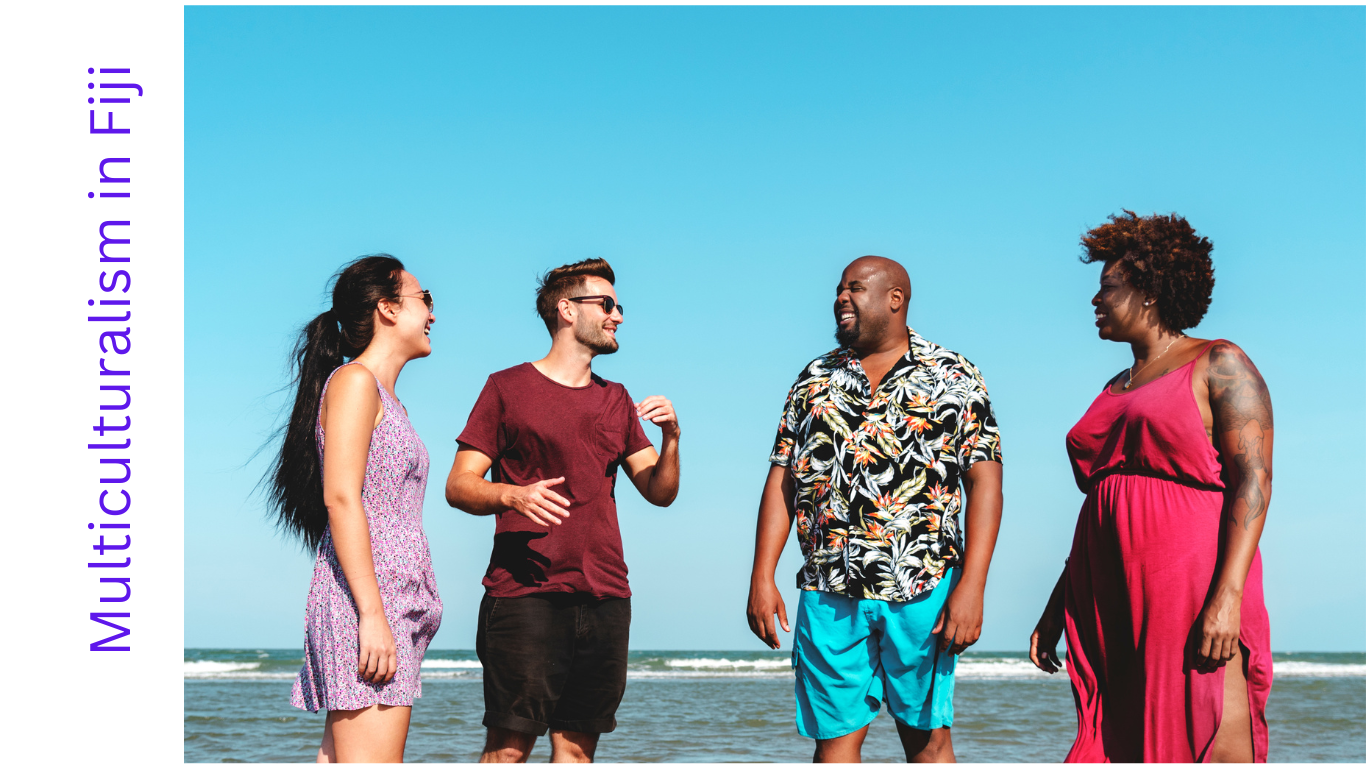
Multiculturalism in Fiji and Its Impact
In the South Pacific Ocean, there is a display of a beautiful blanket of cultures, a place where people with various traditions, backgrounds, and beliefs are whole. This stunning mix of homes with diverse backgrounds is the meaning of multiculturalism in Fiji.What is Multiculturalism?
Multiculturalism is much like a garden packed up with beautiful flowers of different colors. It means respecting and yes, celebrating the unique culture of different groups, together they form nations in this country, it’s their condition, heritage, language, food and beliefs. Think about a place where Fijians, Indians, Chinese, Europeans, Pacific Islanders, and other people of diverse cultural backgrounds come together, everyone cherishing their origin, traditions, and things unique to the others unknown. This is the true mix of Fiji. Fijians enjoy the advantages of multiculturalism more than most people. It is the building block for unity, peace and harmonious co-existence among members. It also adds variegation to the loom of the nation, making Fiji an incredibly distinctive and interesting country. When read alongside the negative attributes of multiculturalism, one can only notice that it offers also more benefits than it is a curse. Competing values and traditions can develop prejudices, but patience and empathy will get us through these pitfalls that can eventually unite multiple cultures. Even through these differences, you can easily notice the “oneness” or the “unity” of the Fijian multicultural society. People become one in a united crowd of festival-goers, community event attendees and people faced on an everyday basis: This mix equates to a spirit of multiculturalism that is impossible to define. Fiji lives with the value of multiculturalism, instead of just having the word. It is centred around valuing individuality, rejoicing in variation, and creating a network of collective empathy that joins people of all origins and backgrounds. The distinct identity and cultural heritage of Fiji doesn’t go down this road, but rather it is the constant heartbeat of a developing nation.Historical Background of Multiculturalism in Fiji
The multi-cultural journey of Fiji began in the early days when the indigenous Fijians set foot on the archipelago that is present. The pioneers of that period could practice their cultural practices that included unique languages, lifestyles, and beliefs. They lived in harmony with nature, utilizing these activities: fishing, farming, and gathering for food as the means of supporting the family. In the 18th century, European explorers explored the beaches of Fiji because of the beauty of the island and its resources. The most significant mark on Fiji’s multiculturalism was the 1874 by the British during their colonization. They carried along not only their governance structures but also how they lived their language and social orders. These years became a reason for the appearance of Christianity and the English language as the main features of the Fijian society. Yet, as part of British rule in the colonial era, indentured labourers from India migrated to Fiji as well. This amount of Indian labourers came from India with many of their preowned customs, languages, and beliefs which indeed expanded the cultural richness of Fiji. Indians, Chinese and Europeans were the main citizens paired up with the Fijians after settling in Fiji which was a cultural melting pot.Challenges and Resilience
Multiculturalism in Fiji was once not so liked but its people fought back. The historical events where Fiji represented and has come to grasp the importance of dialogue, understanding, and respect have seen the nation become a society in which all cultures are embraced and have thrived as one people. Now, Fiji has embraced diversity as the foundation upon which it has built its heritage. It’s visible throughout the daily routine, from streets’ various vernaculars to communal feasts which have turned into local cuisines. The heritage of Fijians provides the society with meaning and cherishes belief in unity, respect, and harmony.Ethnic Groups in Fiji
Indigenous Fijians (iTaukei)
The iTaukei, in simpler terms referring to the indigenous Fijians, are the real native people of Fiji inherently entrenched with cultural traditions. They are part of the country’s population’s significant role in the country’s past as well as the nation’s current and future identity.Indo-Fijians
In the British colonial days, Indo-Fijians’ ancestors were employed as Indian indentured labourers and as a result, they made up Fiji’s population. They have been keen and continue to persist with their Indian heritage, which includes languages, religions such as Hinduism and Islam, and cultural practices such as Diwali and Eid.Fijians of Mixed Heritage
A lot of Fijian people have a dual heritage. They are indigenous Fijians, Indo-Fijians (People who are descended from Indians), Europeans and other ancestors as well. The members of this group come from different cultures hence multiculturalism in Fiji – a fusion of different backgrounds but what ties them together is also the similarities that they share.The Pacific Islanders
In particular, Fiji has accepted Pacific Islanders from neighbouring countries thus making it a multicultural country. The same case goes for other smaller ethnic communities in the country such as the Chinese and Europeans including Rotumans who all add to the multiculturalism in Fiji.Cultural Exchange and Harmony
Withstanding contradictory features, however, major ethnic groups still peacefully cohabit, contributing languages, traditions, and customs to each other. The encounter between communities has been the main source of cultural reattachment as well as knowledge, resulting in a culture of union despite diversity. Whereas some issues that have a section of the stakeholders detached and other times pulling each other are common spats, the people of Fiji are largely united to the notion of togetherness and inclusivity. Initiatives that are geared towards the enhancement of cultural awareness and contact among ethnic groups in Fiji build the basis of cohesiveness in the nation. Multiculturalism in Fiji is welcomed through events, get to know me, dance, and anything else that permits mixing young and old in a common arena. One nation will be represented by the mixing of people originating from different backgrounds celebrating the diversity by dance, song, cuisine, and holidays.Inclusive Society
The Fijian culture taps into the inclusiveness of Fijian society whereby, everyone in terms of their ethnicity, is significantly incorporated which not only makes people feel valued but also accepted. The shared respect and sense of belonging inherent in cultural diversity are major factors in multicultural communities.Cultural Traditions in Multicultural Fiji
Indigenous Fijian Traditions
The indigenously Fijians are linked to the culture of iTaukei where old traditional practices are passed down through the generations. The traditions comprise ceremonies like yaqona as well as dances that illustrate historical events and legends.Indian Cultural Influences
Fijian culture as we know it today took shape with heavy Indian influence in terms of bright festivals such as Diwali (Festival of Lights) and Holi (Festival of Colors), traditional group dances like the Bhangra and Bharatanátyam, and tasty dishes incorporating curries, rotis as well as desserts including ladoos and gulab jamuns.Chinese Cultural Contributions
The Chinese community is a contributor to the rich taste of multiculturalism in Fiji highlighted through its festival which is called the Chinese New Year which includes a dragon dance, fireworks display and traditional food like dumplings and noodles. Chinese arts including calligraphy and martial arts also harvest some expressions in Fiji’s diverse cultural settings.European Heritage and Festivities
The European Fijian tradition which is very evident in things like Christmas, Easter, and Oktoberfest but still very much in colonial architecture, music, and cuisine that includes pastries, roasts, and wines proves this. This is a colourful mélange of traditions that keep Fiji’s cultural pot continually boiling.Pacific Islander Festivals
In addition to neighbouring islands, the Polynesian and Melanesian culture assimilates with the history of the Pacific islands, thus being evident in lively island fiestas, music, dances such as the hula and siva, and exquisite seafood, tropical fruits, and taro cuisine.Respect and Understanding
Cultural acceptance, tolerance and understanding for people of different calibres are the Fijian ways of life. People love and enjoy diversity and consider opportunities to become acquainted with and familiarized with many cultural heritage. We observed the threads of different traditions coming together and making the fabric of Fiji’s multiculturalism which is so colourful. Rather than being just about cohabitation, multiculturalism in Fiji is about collaborating and harmonizing, which involves the appreciation of every ethnic group’s contributions that bring everyone together, while simultaneously creating a sense of belonging among all. It is evident that in the context of cultural aspects where shared experiences, cultural exchanges, and mutual respect are the base, Fiji is no doubt, the world’s beacon of how diversity can be a force to be reckoned with. However, looking into the future of multiculturalism in Fiji, it can be termed that there are a lot of opportunities. That is the future where equity, recognition, and collaboration bring in the ways for people to live in peace, to enjoy the benefits of the economy and to make the world truly a global village. With Fiji’s progressive approach to multiculturalism, it provides for the construction of a foundation of unity and joint development, where diversity is celebrated, instead of just accepted.