Category: Environment in Fiji
-

Can You Still Enjoy Fiji During the Rainy Season? Yes – Here’s How (Travel Tips Inside)
You’ve been looking at photos of Fiji for weeks. Crystal clear lagoons. Palm trees leaning over empty beaches. And then you check the weather forecast for your potential travel dates. Rain. Lots of it. Suddenly, that dream trip feels like a bad idea. We get it. The words “rainy season” have a way of making anyone second-guess their plans. You’ve been looking at photos of Fiji for weeks. Clear water, lazy palms, the whole thing. Then you pull up the weather forecast for your dates, and it’s just rain icon after rain icon. Suddenly, that trip you were excited about feels kinda dumb. Can’t blame you. “Rainy season” basically sounds like a nice way of saying “yeah, don’t go.” But here’s the thing, though — a few simple Fiji rainy season travel tips can completely change how you see it. Does rain ruin the whole trip? No. Unless you go in thinking every day will look like a postcard. What you’ll usually get is this: warm, humid mornings. Maybe some sunshine. Then, around midday or afternoon, the sky darkens quickly. A short, heavy burst of rain comes down — sometimes twenty minutes, sometimes an hour. Then just as fast as it started, the sun comes back out. The ground steams a little. Everything looks greener. And you go back to whatever you were doing. Some days are completely dry. Some days have two or three of these short showers. That’s just how the Fiji rainy season works — it’s rarely what people expect. Once you pick up a few Fiji rainy season travel tips, none of this feels like a big deal. The humidity is real, though. You’ll feel it. Clothes dry more slowly. You might shower twice a day. That’s just part of being in the South Pacific during the wet season. The other thing people don’t expect? The sky is dramatic. Dark clouds roll in fast, then break apart just as fast. Sunsets can be incredible because of the cloud cover. It’s not the flat, predictable blue sky you get in the dry season. It’s more alive, in a way. So no, the rainy season isn’t a washout. But it does require a different mindset than traveling during the dry months. -
The Impact of Climate Change on Kadavu Fiji
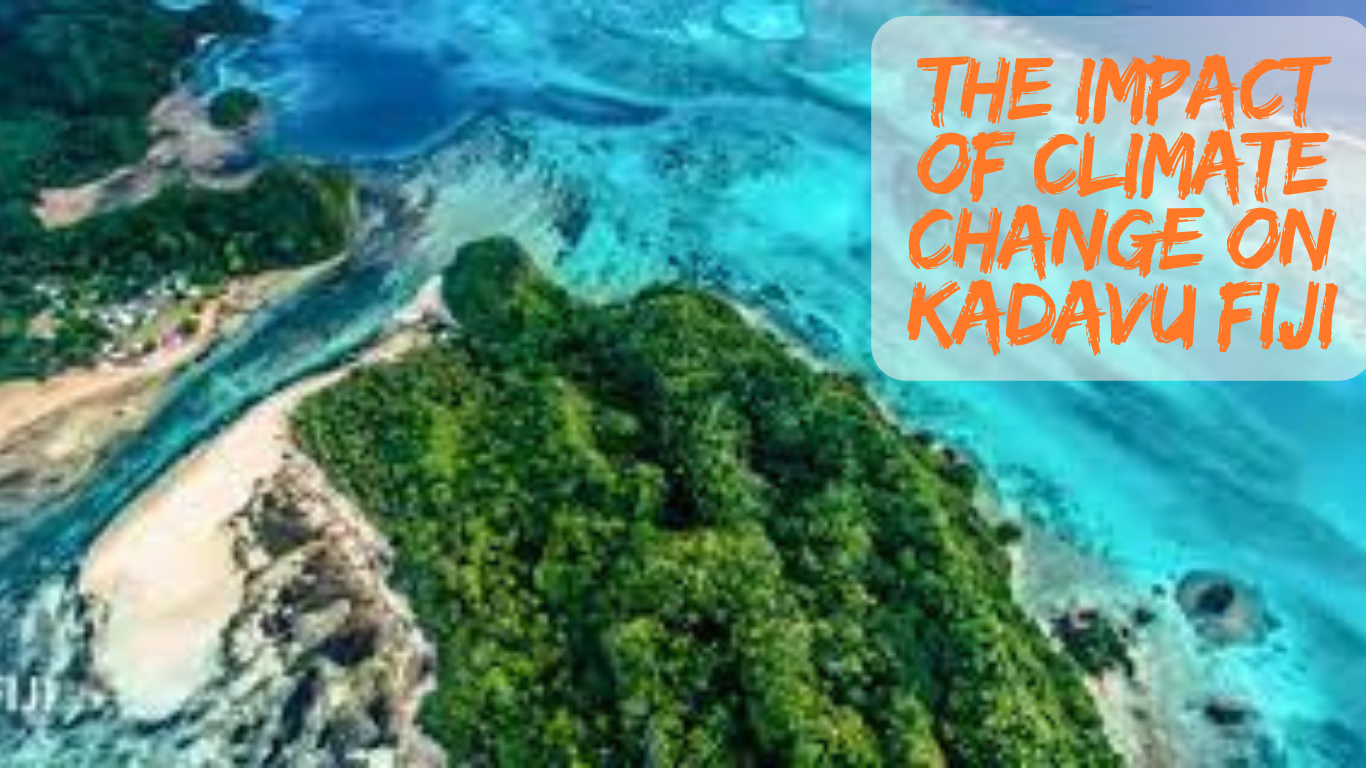
You know how travel articles love to call places “untouched”? They toss around words like pristine and unspoiled whenever they talk about Kadavu Fiji. And honestly? For ages, they weren’t wrong. Those sharp green peaks, the jungle so dense it feels solid, the reef circling the shore like it’s standing guard—Kadavu didn’t just feel far away. It felt like it existed outside of time completely. But something’s changing. A different kind of tide is turning here, the kind you won’t read about in any glossy magazine. It’s not loud. It’s slow, persistent, working its way into the foundation of the place. Climate change isn’t some far-off idea here—it’s rewriting the rhythm of the ocean and the life in the village’s day by day. This isn’t about what might come later. This is the story of what’s already happening.The Reef That Feeds the Island
The Great Astrolabe Reef isn’t just a dive site. For the people of Kadavu Island, it’s a supermarket, a boundary marker, a sacred space, and the foundation of their livelihood. The reef provides most of the protein for local communities through fishing. It draws tourists, whose visits support family-run resorts and guides. It’s a living wall that buffers the island from the full force of ocean storms. Now, that wall is under stress. The ocean isn’t just warm—it’s staying warm. And the corals are feeling it. They’re turning white, not just for a season, but over and over. When the heat doesn’t let up, the coral gets so stressed it rejects the very algae that gives it life and color. What’s left is a frail, spectral shell of what was once coral, not just dead coral. The coral dies without those algae. But it’s worse than just losing coral. The whole world that depends on it starts to fall apart. Fish that need the reef to hide or eat begin to disappear. Everything connected to it suffers. The consequences are immediate. The fishermen return with half-full boats after longer days at sea. Divers now see more white, broken coral than bright fish. Life is quietly disappearing. The very thing that defines Kadavu is growing quieter.The Encroaching Sea and Shifting Seasons
On land, the changes are just as hard to ignore. Coastal erosion has become something people measure with their own eyes—not just an idea in a book. In certain villages, locals can show you exactly where the beach used to be. Even burial grounds, places wrapped in deep cultural respect, aren’t safe from the rising water. Families are now facing painful conversations about moving their ancestors’ resting places, something once unthinkable. The old rhythms are off. The signals that guided planting and fishing for generations no longer hold. The rain arrives late or heavy—too little, then too much. Dry wells. Washed-out roads. For families living close to the land, this isn’t climate change as a debate. It’s a shaky foundation under daily life.How Kadavu Fiji is Fighting Back
You won’t find people on Kadavu Island sitting around waiting for the world to save them. They’re too busy working with what they have—and what they’ve always known. Along the coast, villagers are bringing back the mangroves. This is wisdom that has always existed, not flashy enterprises or large sums of money. The advice given by their grandparents still holds true: mangroves protect the land, harbor fish, and maintain a clean sea. One mangrove at a time, they are transforming ancient wisdom into innovative action. So they’re planting them. One stubborn, muddy root at a time. Out on the reef, it’s the same hands-on spirit. Fishermen who’ve known these waters since they were kids are now gently tying pieces of healthy coral onto struggling parts of the reef. It’s patient, humble work. Nobody knows if it will truly be enough—but they aren’t doing it for certainty. They’re doing it for hope. And they’re taking it into their own hands. There’s a growing movement to combine traditional wisdom with climate data. Village elders are sitting down with weather scientists and marine biologists, blending old knowledge with new data. They’re not throwing out tradition—they’re weaving it into today’s world, creating forecasts that respect both the moon phase and the satellite image. It’s not one replacing the other. It’s both, working together.The Double Bind of Tourism in Kadavu Fiji
Tourism here cuts both ways. The money visitors spend helps put food on the table and pays for projects that protect the land and sea. It gives people options beyond fishing the reefs thin or cutting down trees. But that same opportunity comes with a cost—one that the island feels deeply. Many resorts here walk the talk: running in the sun and rain, teaching guests about the fragile world around them. But there’s no ignoring the cost. Every flight and boat delivering tourists also brings carbon, erosion, and waste – the very pressures Kadavu is struggling under. The real challenge? Finding a balance. How do you welcome people without wearing out the welcome? The answer may lie in attracting fewer, but more deeply engaged visitors—travelers who come not just for photos, but to feel the place, respect it, and leave something good behind.A Global Problem with Local Consequences
Kadavu’s story reflects one of climate change’s cruelest truths: those who did the least to cause it are feeling it the most. This island’s carbon footprint is tiny—almost nothing in global terms. Yet its people are living with some of the heaviest consequences. Climate injustice is the term used to describe such a type of unfairness. It implies that groups like Kadavu, who have led modest lives for many generations, are now bearing the consequences of a crisis that they did not start. Support from outside the island is thus not charity. It’s a responsibility. Helping fund stronger infrastructure, reef research, or sustainable economies isn’t just aid. It’s a moral response to an uneven crisis. Kadavu Fiji, isn’t giving up. It’s pushing back, blending old ways with new methods in a quiet, stubborn display of resilience. Change here isn’t always dramatic. It’s in the slowly warming water, the creeping acidification, the shorelines wearing away bit by bit. So the effort to survive must be just as steady—day by day, choice by choice. What happens next on Kadavu won’t just depend on its people. It will depend on all of us. -
How Waste Recycling in Fiji Helps Local Communities and Ecosystems
Waste recycling in Fiji is an issue of interest because it impacts the environment of Fiji and people living in this country. Fiji has started recycling more in the past few years to reduce trash that harms the islands.Why is recycling important?
Recycling assists in the mitigation of waste produced in several ways; it involves the conversion of products such as plastic, paper, metal and many more into other useful products instead of being discarded. This not only minimizes on dumping of waste at the dump sites but also ensures that natural resources are conserved. Waste recycling is very compulsory in Fiji, because of the ecological condition and the enhancing impacts of tourism and population increase in the country.Historical Context of Waste Recycling in Fiji
The recycling of waste in Fiji initially started on a small scale. Some of the earlier methods used for its disposal were to just bury it or to incinerate it. This approach to waste disposal was not only disadvantageous to the environment but also incapable of addressing the increasing pile of waste. It was during early 2000 that Fiji realized the imperative for change. With an increase in the country’s population density and the development of tourism activity, cleaning the territory from garbage also became problematic. Recycling was considered an option by the government and other local organizations as a way of dealing with the problem of waste. These undertakings, therefore, signified a paradigm shift in how waste was disposed of, especially in Fiji.Community Involvement and Local Initiatives
Waste recycling in Fiji goes beyond formulating policies and putting in place regulations of the government. Local communities and local initiatives have a big hand in making the recycling process a success. Schools, local groups, and everyone in between are now joining to contribute in several ways to help continue the cleanliness and greenness of Fiji.School Recycling Programs
Many schools in the Fiji Island have embarked on encouraging recycling programs in their schools. These programs enlighten the students on the program of recycling and how the process should be accomplished. Students can make distinctions concerning different types of waste including paper, plastic and glass. In some instances, they conduct competitions such as, ‘recycling wars’ where children are asked to bring more recyclable items to school. These ideas make children learn the importance of recycling at a tender age which eradicates the throwing of garbage on the streets.Community Clean-Up Events
It is common to have cleaning events by participating residents of a certain area. These events make volunteers help pick the litter from the beaches, parks, as well as streets. They assist in the elimination of wastes that would otherwise be dumped into the seas or the dumping grounds. Such fairs people help their community to clean their environment. These clean-up days also serve the purpose of creating awareness of environmental conditions, especially on issues of waste management.Local Recycling Centers
Local recycling facilities are built to help the environment. These centres are usually operated by a local association or non-profit organization. They also offer an opportunity where individuals can drop their materials which are declared to be recyclable. Some of these centres also provide information on how to recycle in the right manner through the provision of educational sessions. These centres create a convenient way for people to recycle hence contributing to waste recycling in Fiji.Business Contributions
Fiji’s local businesses are also participating in the recycling of waste. Some have embraced recycling by starting their own programs for recycling. Most of them like to get back the products or the packaging once used. For instance, some stores provide special coupons to clients if the latter present their reusable bags or containers. Thus, using these practices, companies do a great job in the reduction of waste and proper recycling.Environmental Awareness Campaigns
It is the local community groups and organizations that initiate recycling awareness campaigns in the community. These campaigns employ different mediums including; postings, social media, and community gatherings among others. They remind the benefits of recycling and give some tips on how to recycle at home. It just assists in making the public know why the issue of recycling is vital, and the things that one can do to make it effective.How Waste Recycling in Fiji is Good for Nature
Reducing Pollution
There are numerous benefits of waste recycling; one of these is the avoidance or prevention of pollution. Recycling means that less wastes are incinerated, and or buried in the landfill. This helps to emit less injurious smoke and chemicals in the atmosphere and the water bodies. You can reduce what is polluting our surroundings by recycling which will make the world a much safer place for all of us.Conserving Natural Resources
Waste Recycling in Fiji also has the effect of preserving the natural resources in the country. Most products are manufactured from materials such as trees, minerals and oil. This means that we distance ourselves from using new papers, glasses and other metals, by reusing the already used ones. This in turn minimizes the requirement to pull new resources out of the ground and process them, which saves wild places and their inhabitants.Saving Energy
Recycling is usually more environmentally friendly than using new material every time because it requires little energy to accomplish. The recycling of wastes has the effect of fighting the causes of climate change; greenhouse gases.Preventing Landfill Overflow
They are actual areas where waste is disposed of and buried and hence are bound to be filled up at one point in time. Waste recycling in Fiji offers an opportunity to cut down on the dumping of wastes in the limited land and facilities available for disposal to prevent over-spill. With less waste going into landfills, there are reduced opportunities for dangerous chemicals to seep into the ground and water.Protecting Marine Life
The plastic wastes and others endanger the lives of fish, turtles and other sea animals, so recycling keeps our seas cleaner. Recycling of waste in Fiji has enormous effects on the surrounding ecosystem. Recycling means the protection of marine life, preservation of habitats on land, less pollution, more support for different species, and encouraging people to use the resources wisely. By measuring the benefits, we can understand how crucial recycling is in the health and sustainability of our natural surroundings. More work has to be done for recycling if we are to succeed in protecting the ecosystems and the animals that inhabit them.